What is AI Text-to-Speech (TTS)
AI Text-to-Speech (TTS) is a voice synthesis technology that converts text into natural, fluent speech. It uses artificial intelligence and deep learning to enable computers to "speak," generating human-like voice output. With rapid AI development, TTS has evolved from early mechanical synthesis to generating nearly human-indistinguishable natural speech.
The core value of TTS technology lies in improving content creation efficiency and supporting multilingual voiceovers, making text content more engaging. Whether for virtual character voiceovers, enterprise applications, or content creation, TTS plays a crucial role. Modern TTS tools not only generate high-quality speech but also support emotion expression, tone adjustment, speed control, and other advanced features.
Voice synthesis technology dates back to the 1950s, but breakthroughs came with deep learning. Today's TTS tools use neural network models that understand text semantics and context, generating more natural and expressive speech. These tools are widely used in audiobook production, video voiceovers, smart customer service, virtual assistants, and more.
AI TTS Technology Overview
Modern AI text-to-speech technology is based on deep learning and neural network models that understand text semantics and context, generating natural and fluent speech. Compared to traditional TTS technology, AI TTS has significant improvements in voice naturalness, emotion expression, and multilingual support.
Core advantages of AI TTS technology include: generating high-quality speech close to human voices, supporting multiple emotions and tone adjustments, supporting dozens or even hundreds of languages for text-to-speech, cloning specific voices through short audio samples, and supporting real-time voice synthesis and batch processing.
As AI technology continues to develop, TTS tool application scenarios are expanding, from initial audiobook production to virtual character voiceovers, enterprise applications, multilingual localization, and more. Choosing the right TTS tool is crucial for improving content creation efficiency and quality.
Best AI Text-to-Speech Tools 2025
Here are the most recommended AI text-to-speech tools for 2025, covering all-in-one platforms, commercial-grade tools, developer tools, and integrated tools, helping you choose the most suitable TTS solution based on your needs.
1. VoiSpark: Unified Platform Integrating All Mainstream TTS Models
VoiSpark is an integrated AI voice tool platform that integrates nearly all mainstream TTS models on the market, including ElevenLabs, Cartesia, MiniMax, Orpheus, OpenAI, FishAudio, Nari Labs, and Sesame. Through a unified interface, users can access all mainstream models from one platform without registering multiple services, quickly compare effects and flexibly switch. VoiSpark offers text-to-speech, voice generation, voice changing, voice cloning, and voice editing features, particularly suitable for users who need to compare different model effects or flexibly switch models based on project requirements.

VoiSpark's integrated design allows users to experience all mainstream TTS models on one platform, greatly simplifying tool selection and usage workflows. Whether you need to compare different model effects or flexibly switch models based on project requirements, VoiSpark provides convenient solutions.
2. ElevenLabs
ElevenLabs is one of the most popular text-to-speech tools on the market, renowned for its natural and fluent voice synthesis quality. The platform supports multilingual voice synthesis, including English, Chinese, Japanese, French, German, and dozens of other languages, generating high-quality speech that closely resembles human voices. ElevenLabs supports multiple emotions and tone adjustments, voice cloning, fine-grained voice parameter adjustments (speed, pitch, pauses), and provides comprehensive APIs. Particularly suitable for virtual character voiceovers, audiobook production, video voiceovers, and other scenarios requiring high voice naturalness.
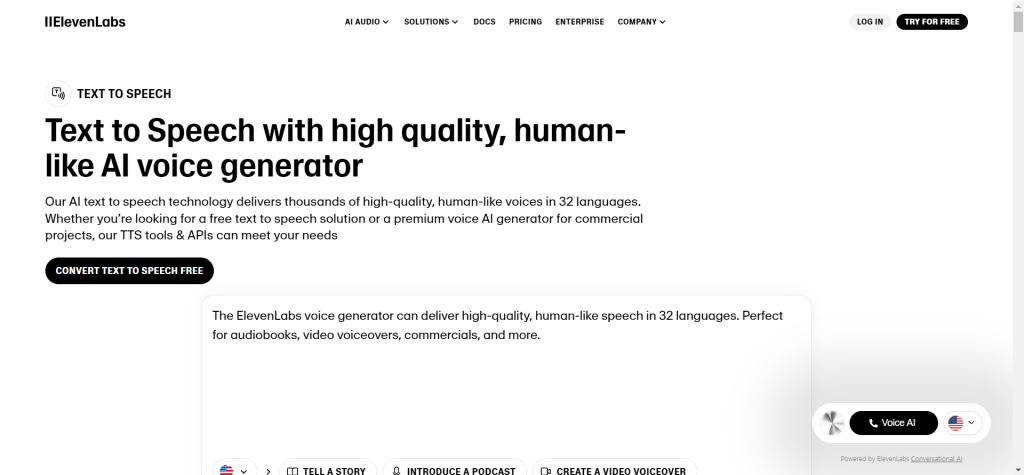
ElevenLabs' voice synthesis technology is at the forefront of the industry, especially suitable for content creation projects requiring high voice quality. Whether for virtual character voiceovers, audiobook production, or video voiceovers, ElevenLabs can provide high-quality voice output.
3. PlayHT
PlayHT is a platform focused on providing commercial-grade text-to-speech services, known for high realism and stability. PlayHT offers over 800 voice options, supports 130+ languages, SSML fine-grained control, and batch conversion, particularly suitable for enterprise applications and bulk content production. Its API interface is well-designed with detailed documentation, making it easy for developers to integrate, ideal for smart customer service systems, phone systems, and enterprise training.
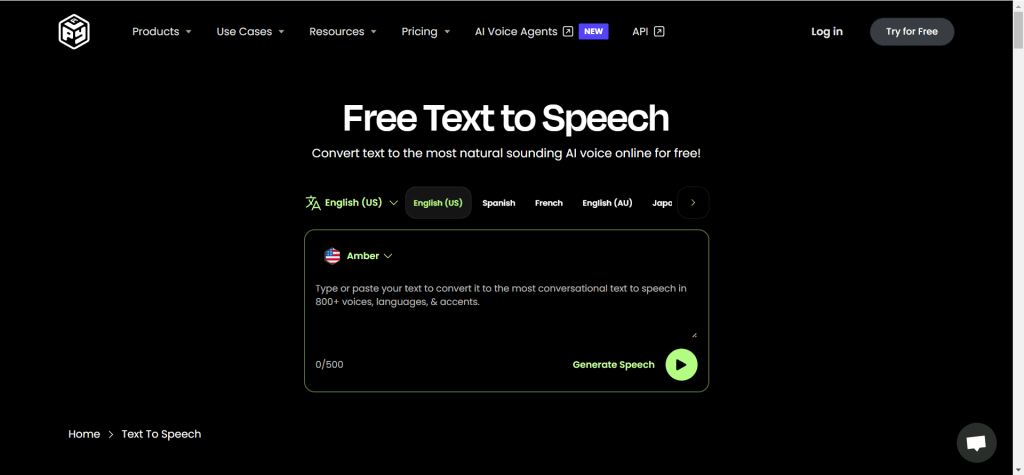
PlayHT's enterprise-grade service characteristics make it the preferred choice for large-scale applications. Whether for smart customer service systems, phone systems, or enterprise training, PlayHT can provide stable and reliable voice synthesis services.
4. Lovo
Lovo is a platform specializing in Asian language voice synthesis, excelling in text-to-speech for Chinese, Japanese, Korean, and other Asian languages. Lovo offers over 500 voices, supports 100+ languages, multiple emotions and tones, voice cloning and customization services, and provides comprehensive API interfaces. The platform offers various Chinese voice options, including different regional Chinese accents (Mandarin, Cantonese), particularly suitable for Chinese audiobooks, Japanese video voiceovers, Korean podcasts, and other Asian language content creation.
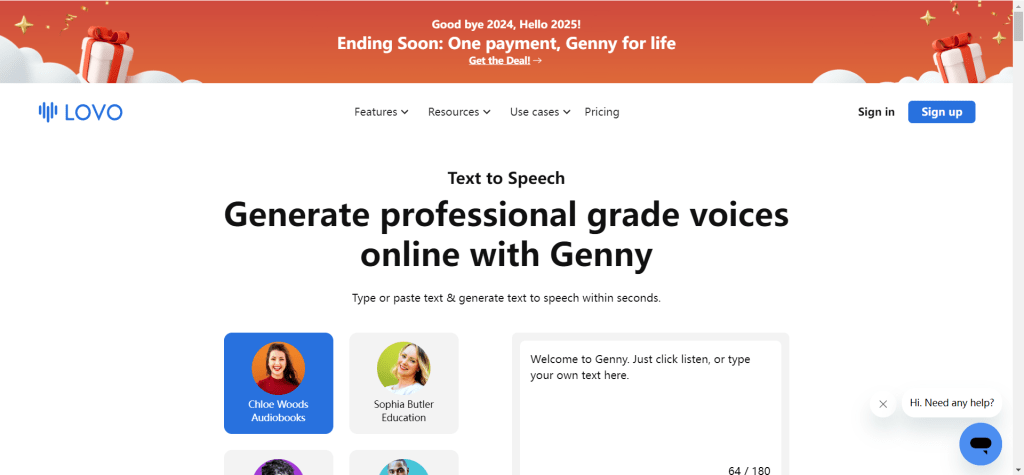
Lovo is particularly suitable for users creating Chinese, Japanese, Korean, and other Asian language content, such as Chinese audiobooks, Japanese video voiceovers, and Korean podcasts. Its optimization for Asian languages makes it the preferred tool for regional market content creation.
The platform offers various Chinese voice options, including different regional Chinese accents, such as Mandarin and Cantonese. Lovo also supports Chinese emotion expression and tone adjustment, making generated speech more natural and vivid.
5. Deepgram
Deepgram is a deep learning-based real-time speech recognition and synthesis platform with a developer-focused tech stack. Deepgram provides powerful API interfaces, supports real-time voice synthesis and batch processing with low latency, and provides comprehensive REST API and WebSocket API. The platform offers SDKs for multiple programming languages (Python, JavaScript, Go) and detailed documentation with code examples, developer-friendly, particularly suitable for developers needing real-time voice synthesis functionality, such as voice assistants, real-time translation, voice announcements.
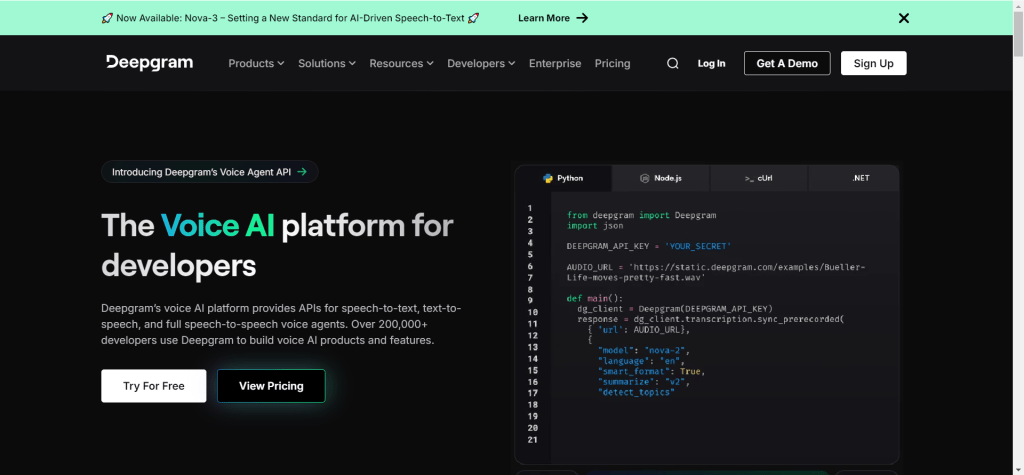
Deepgram's developer-friendly features make it an ideal choice for projects requiring API integration. Whether for voice assistants, real-time translation, or voice announcements, Deepgram can provide high-performance real-time voice synthesis services.
6. Dubverse
Dubverse is a platform integrating AI translation and voice synthesis, supporting one-click multilingual voiceover generation, automatically adjusting lip movements to match new languages, and supporting batch generation of multilingual versions in dozens of languages. The platform supports both video and audio content processing—users can upload video or audio files, and the system will automatically translate and voiceover, generating multilingual versions. Particularly suitable for creators and enterprises needing to localize content for different markets, such as YouTube video multilingual versions and enterprise training material multilingual production.
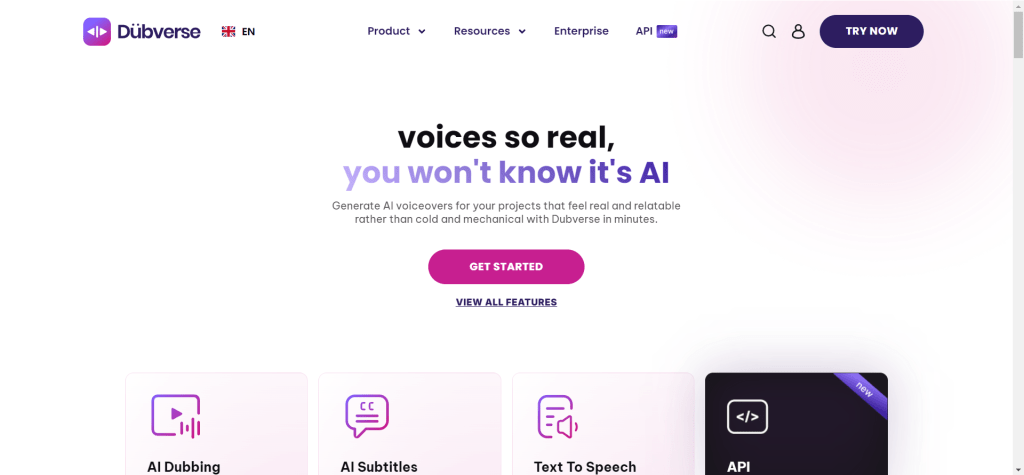
Dubverse's integrated design makes multilingual content production simple and efficient. Whether for YouTube video multilingual versions or enterprise training materials, Dubverse provides all-in-one solutions.
7. Typecast
Typecast is a text-to-speech platform featuring virtual actor voiceovers, where users can specify character personalities to generate corresponding voice lines, supporting multiple emotions and tones, multi-character dialogue scenarios, and can directly generate videos with voiceovers. The platform offers various character types (male, female, children, elderly), each with multiple voice options, particularly suitable for content creators creating character voiceovers for animations, advertisements, games, and more.

Typecast's character-based voiceover features make it the preferred tool for animation, advertising, and game production. By generating corresponding voice lines based on character personalities, voiceovers become more aligned with character images.
Mainstream TTS Tools Comparison
The following comparison table of mainstream text-to-speech tools helps you quickly understand each tool's features and suitable scenarios:
| Tool Name | Core Features | Language Support | Use Cases |
|---|---|---|---|
| VoiSpark | Integrates all mainstream TTS models, unified interface | Multilingual (depends on integrated models) | Scenarios requiring model comparison and flexible switching |
| ElevenLabs | High-quality voice synthesis, emotion expression | 30+ languages | Virtual character voiceovers, audiobooks, video voiceovers |
| PlayHT | Enterprise-grade service, stable and reliable | 130+ languages | Smart customer service, enterprise training, bulk content production |
| Lovo | Asian language optimization, excels in Chinese | 100+ languages (Asian language optimized) | Chinese audiobooks, Japanese videos, Korean podcasts |
| Deepgram | Real-time voice synthesis, developer-friendly | Multilingual support | Voice assistants, real-time translation, developer integration |
| Dubverse | AI translation + voice synthesis, multilingual voiceover | Dozens of languages | Video multilingual versions, content localization |
| Typecast | Character-based voiceover, virtual actors | Multilingual support | Animation voiceovers, advertising production, game characters |
Use Cases
Virtual Character Voiceovers
Text-to-speech tools are widely used in virtual character voiceovers, creating character voices for games, animations, virtual streamers, and more. TTS tools can quickly generate speech that matches character settings, improving content production efficiency and diversity.
In game development, text-to-speech tools help developers quickly generate dialogue voices for NPCs (non-player characters), significantly reducing voiceover costs. In animation production, TTS tools can quickly generate temporary voiceovers in the early stages, helping animators better understand character emotions and rhythm. Virtual streamers can directly use TTS tools to generate real-time speech for interaction with audiences.
Enterprise Applications
Enterprise-grade text-to-speech solutions can provide 24/7 voice services, reducing labor costs and improving service efficiency. Main application scenarios include smart customer service, voice assistants, phone systems, and more.
Smart customer service systems use TTS technology to automatically generate voice responses, handling large volumes of common questions and improving customer service efficiency. Voice assistants enable voice interaction through text-to-speech technology, allowing users to communicate with systems via voice. Phone systems use TTS technology for automatic voice announcements, such as balance inquiries and order status queries.
Enterprise applications typically require: high stability, low latency, multilingual support, API integration capabilities, and more. Choosing suitable enterprise-grade TTS tools can significantly improve operational efficiency.
Content Creation
Content creators can use text-to-speech tools to quickly generate high-quality voice content without professional voice actors. Main application scenarios include audiobooks, podcasts, video voiceovers, and more.
Audiobook production is an important application of TTS technology. Through text-to-speech tools, publishers and authors can quickly convert books into audio versions, significantly reducing production costs and time. In podcast production, TTS tools can be used to generate introductions, advertisements, or specific character voices. Video voiceovers help content creators quickly add multilingual voiceovers to videos, expanding content audiences.
Modern text-to-speech tools can generate very natural speech. In most scenarios, average listeners can hardly distinguish between AI-generated speech and real human recordings. This makes TTS technology an important tool for content creators.
Multilingual Localization
In cross-border content production, text-to-speech tools support one-click multilingual voiceover generation, helping content creators quickly achieve multilingual localization.
Typical multilingual localization scenarios include:
- Video Content Localization: Translate and voiceover video content into different language versions
- Enterprise Training Materials: Create multilingual training materials for multinational enterprises
- Marketing Content: Create localized marketing audio for different markets
- Educational Content: Create multilingual online courses and teaching materials
Integrated text-to-speech tools (such as Dubverse) are particularly suitable for multilingual localization scenarios. They typically integrate translation functionality, enabling one-stop service from text to multilingual voiceovers.
Accessibility Services
Text-to-speech technology provides important accessibility services for visually impaired users, helping them access text content. Through TTS technology, visually impaired users can "read" web pages, documents, e-books, and other content via voice.
Accessibility services require text-to-speech tools with: high accuracy, natural and fluent speech, multilingual support, easy integration, and more. Many TTS tools provide optimization solutions specifically for accessibility services.
How to Choose a Text-to-Speech Tool
Choosing the right text-to-speech tool requires considering multiple factors, including voice quality, language support, feature requirements, budget, and more. Here are key factors to consider when selecting a TTS tool:
1. Voice Quality Requirements
Voice quality is the most important factor when choosing a text-to-speech tool. When evaluating voice quality, consider:
- Naturalness: Whether generated speech is close to human voices, any mechanical feel
- Fluency: Whether speech is smooth, any stuttering or unnatural pauses
- Emotion Expression: Ability to express different emotions and tones
- Pronunciation Accuracy: Especially for complex languages like Chinese, pronunciation accuracy
Different tools vary in voice quality. Try before deciding. For scenarios requiring high voice quality (such as audiobooks, advertising voiceovers), consider high-quality tools like ElevenLabs. For simple voice announcements, choose more cost-effective tools.
2. Language Support Needs
Confirm whether tools support required languages and dialects. Different tools vary significantly in language support:
- Multilingual Support: If multiple languages are needed, choose tools supporting more languages
- Specific Language Optimization: If primarily using Chinese, choose tools optimized for Chinese, such as Lovo
- Dialect Support: Some tools support specific dialects, such as different Chinese accents
- Language Quality Differences: The same tool may have different quality for different languages
If primarily using Chinese, prioritize tools optimized for Chinese, such as Lovo and Baidu Voice Synthesis. If multilingual support is needed, choose tools supporting more languages, such as PlayHT and ElevenLabs.
3. API Integration Needs
If you need to integrate text-to-speech functionality into existing systems or applications, choose tools providing comprehensive API interfaces. API integration requires considering:
- API Documentation: Detailed API documentation and code examples
- SDK Support: SDKs for multiple programming languages
- Call Limits: API call limits, rate limits, etc.
- Stability: API service stability and availability
- Response Speed: API response latency
For scenarios requiring API integration, consider tools providing comprehensive APIs, such as PlayHT, Deepgram, and ElevenLabs. These tools typically have detailed documentation and good developer support.
4. Budget
Different text-to-speech tools have significantly different pricing strategies. Consider:
- Free Tiers: Many tools offer free trial tiers for testing
- Subscription Pricing: Monthly or annual subscription prices
- Pay-as-You-Go: Pricing based on character count or duration
- Enterprise Plans: Enterprise plans typically offer better pricing and services
Budget should be evaluated based on usage:
- Small-Scale Use: Choose tools with free tiers, such as ElevenLabs' free plan
- Medium-Scale Use: Choose pay-as-you-go tools, pay based on actual usage
- Large-Scale Use: Consider enterprise plans, typically with better pricing and services
If you need to switch between multiple models or compare effects, consider integrated platforms like VoiSpark, which provide unified interfaces and flexible pricing.
5. Special Feature Requirements
Different text-to-speech tools offer different special features. Choose based on needs:
- Voice Cloning: If cloning specific voices is needed, choose tools supporting voice cloning, such as ElevenLabs
- Emotion Expression: If expressing different emotions is needed, choose tools supporting emotion adjustment
- Multilingual Translation: If multilingual content production is needed, choose tools integrating translation, such as Dubverse
- Character-Based Voiceover: If character-based voiceover is needed, choose specialized tools like Typecast
- Real-Time Synthesis: If real-time voice synthesis is needed, choose tools supporting real-time APIs, such as Deepgram
If requirements are complex or you need to choose between multiple features, consider integrated platforms like VoiSpark, which integrate multiple models and can meet different feature requirements.