What is AI Voice Cloning
AI voice cloning tools are software or online services that use artificial intelligence and deep learning technology to clone specific voice timbres through short audio samples. These tools can learn the characteristics of target voices (including pitch, timbre, speech rate, accent, etc.), then convert any text into natural and fluent speech using that timbre. Modern AI voice cloning technology can already generate cloned voices that are almost indistinguishable from real human voices.
The core value of AI voice cloning tools lies in providing personalized voice experiences, allowing users to create unique voice content. Whether for content creation, audiobook production, virtual characters, or enterprise applications, voice cloning tools can provide users with powerful voice generation capabilities. Modern AI voice cloning tools not only clone timbres but also support advanced features such as emotion expression, tone adjustment, and batch processing.
The development of voice cloning technology can be traced back to early speech synthesis technology, but the real breakthrough occurred after the rise of deep learning technology. Today's AI voice cloning tools are based on neural network models that can understand complex voice characteristics and generate more natural and expressive cloned voices. These tools are widely used in audiobook production, video dubbing, game development, enterprise services, virtual assistants, and many other fields.
AI Voice Cloning Technology Overview
Modern AI voice cloning technology is based on deep learning and neural network models that can understand the semantics, structure, and characteristics of voices, generating high-quality, natural and fluent cloned voices. Compared to traditional speech synthesis technology, AI voice cloning technology has significant improvements in sound quality, naturalness, and personalization.
Core advantages of AI voice cloning technology include: cloning timbres through short audio samples, supporting text-to-cloned-speech conversion, generating natural and fluent voice output, supporting emotion expression and tone adjustment, supporting batch processing and API integration, providing multilingual and multi-style support.
As AI technology continues to develop, the application scenarios of voice cloning tools continue to expand, from initial content creation assistance to commercial applications, enterprise services, and professional production. Note that voice cloning involves ethical and legal issues; using others' voices requires authorization to avoid fraud or misleading purposes.
Best AI Voice Cloning Tools 2025
Here are the most recommended voice cloning tools for 2025, covering personalized audiobook reading, enterprise applications, film production, music creation, and other scenarios, helping you choose the most suitable voice cloning solution based on your needs.
1. Speechify
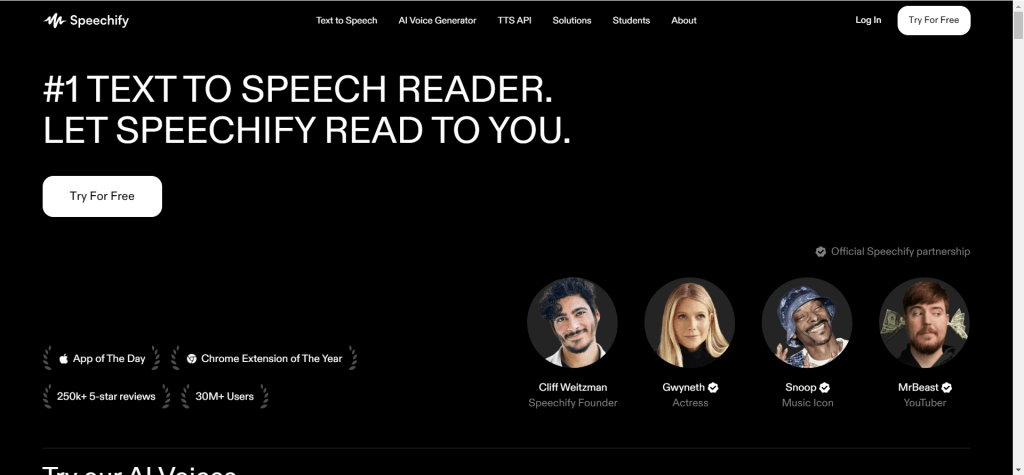
Speechify clones voice timbres through short audio samples, supporting text-to-cloned-speech conversion, commonly used for personalized audiobook reading. Users only need to provide a few minutes of audio samples to create personalized voice models, then use that voice to read any text content.
2. Resemble.ai

Resemble.ai provides high-fidelity voice cloning APIs. Enterprise users can use it to create brand virtual spokespersons. The platform provides strict data security and privacy protection, suitable for enterprise application scenarios.
3. Uberduck
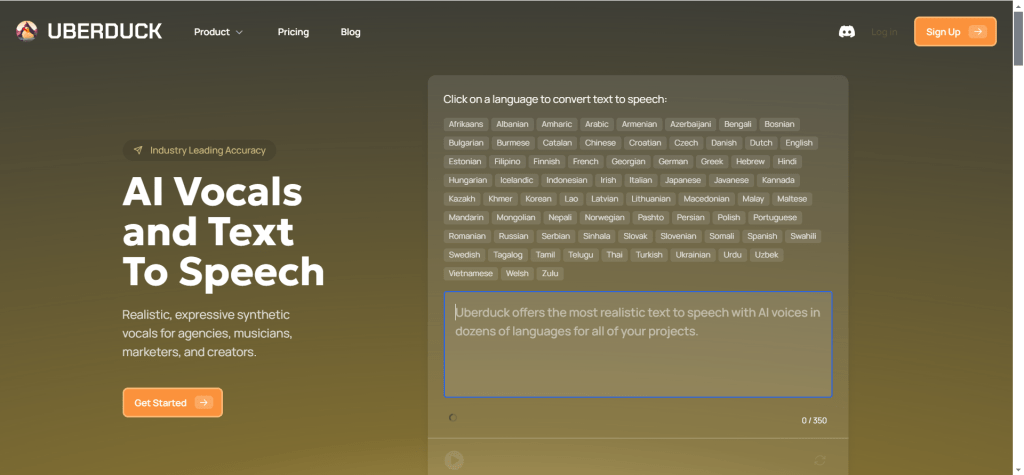
Uberduck features celebrity voice timbre cloning. Users can generate celebrity voice content, though copyright risks are high. The platform provides a large number of preset celebrity voice models, suitable for entertainment and content creation scenarios.
4. Kits AI

Kits AI targets musicians, supporting singer voice timbre cloning and AI singing track generation, with both controversy and potential. The platform focuses on music creation scenarios, providing professional singer voice cloning services.
5. Respeecher
Respeecher is a film-grade voice cloning tool, previously used for recreating deceased actor voices in films, with strict ethical review. It's a lightweight personal tool suitable for regular users creating personalized voice content.
Mainstream Voice Cloning Tools Comparison
| Tool | Main Features | Use Cases |
|---|---|---|
| Speechify | Personalized audiobook reading, simple operation | Individual users, audiobook production |
| Resemble.ai | Enterprise-grade API, high-fidelity sound quality | Enterprise applications, brand voices |
| Uberduck | Celebrity voice models, strong entertainment value | Content creation, entertainment scenarios |
| Kits AI | Musician-specific, singer voice cloning | Music creation, AI singing |
| Respeecher | Film-grade quality, strict ethical review | Film production, personal creation |
Use Cases
Content Creation
Voice cloning tools are widely used in content creation, creating specific character voices for videos, podcasts, making content more vivid and interesting. Creators can use voice cloning tools to create unique voices for different characters, improving content professionalism and appeal.
Audiobook Production
Voice cloning tools play an important role in audiobook production, reading books with specific voices, providing personalized audiobook experiences. Producers can clone author or specific character voices, making audiobooks more vivid and immersive.
Virtual Characters
Voice cloning tools can create character voices for games, animations, enhancing immersion. Developers can use voice cloning tools to create unique voices for different characters, improving game and animation professionalism and appeal.
Enterprise Applications
Voice cloning tools play an important role in enterprise applications, creating brand voices, customer service voices, improving brand image and service quality. Enterprises can use voice cloning tools to create unified brand voices, improving brand recognition and user experience.
How to Choose a Voice Cloning Tool
When choosing a voice cloning tool, consider multiple factors: voice quality requirements, sample requirements, processing speed, language support, API integration, cost budget, ethical review, and ease of use. Choose the most suitable tool based on specific needs.
For individual users, recommend choosing tools with simple operation and reasonable prices; for enterprise users, recommend choosing tools with API interfaces and guaranteed data security; for professional production, recommend choosing tools with high sound quality and powerful features.