Introduction
In today's rapidly evolving AI landscape, users face the overwhelming challenge of discovering the right AI tools among thousands of available options. AI directory platforms emerge as essential guides and maps for the AI tool ecosystem. This comprehensive guide explores 8 leading AI directory platforms in 2026, offering complete tool discovery, intelligent categorization, and personalized recommendations to help you efficiently navigate and find the most suitable AI solutions for your specific needs.
What Are AI Directory Tools
AI directory tools serve as comprehensive online platforms that help users discover, filter, and utilize AI applications effectively. Acting as intelligent maps and guides for the AI tool ecosystem, these platforms provide smart categorization, search capabilities, and recommendation systems that make finding relevant AI solutions intuitive and efficient.
Unlike traditional search engines, AI directories specialize in the AI domain, offering professional classification systems, detailed usage guides, and user evaluations that enable informed decision-making. Leading platforms also feature regular updates on emerging AI tools, ensuring users stay current with industry developments.
The dual-value proposition of AI directory tools creates mutual benefits for both users and developers. Users gain streamlined access to quality AI tools, while developers receive fair exposure opportunities through well-structured submission processes. This ecosystem approach fosters community interaction and collaboration, driving the healthy development of the broader AI tool industry.
How AI Directory Tools Work
AI directory platforms operate through a sophisticated three-tier architecture combining data collection, content organization, and intelligent recommendations. The foundation begins with comprehensive data gathering through human curation and automated crawling, ensuring accuracy and timeliness of tool information.
Content management systems form the core infrastructure, processing vast amounts of tool data, user reviews, and practical examples. Professional platforms maintain rigorous quality controls and implement community features that enable users to share experiences and provide valuable feedback.
These platforms serve as crucial bridges connecting users with developers, facilitating tool discovery while offering developers structured channels for product showcase. This bidirectional ecosystem not only promotes AI tool proliferation but also contributes significantly to the advancement of the entire AI industry.
Best AI Directory Tools 2026
1. There's An AI For That: AI Tool Discovery Platform
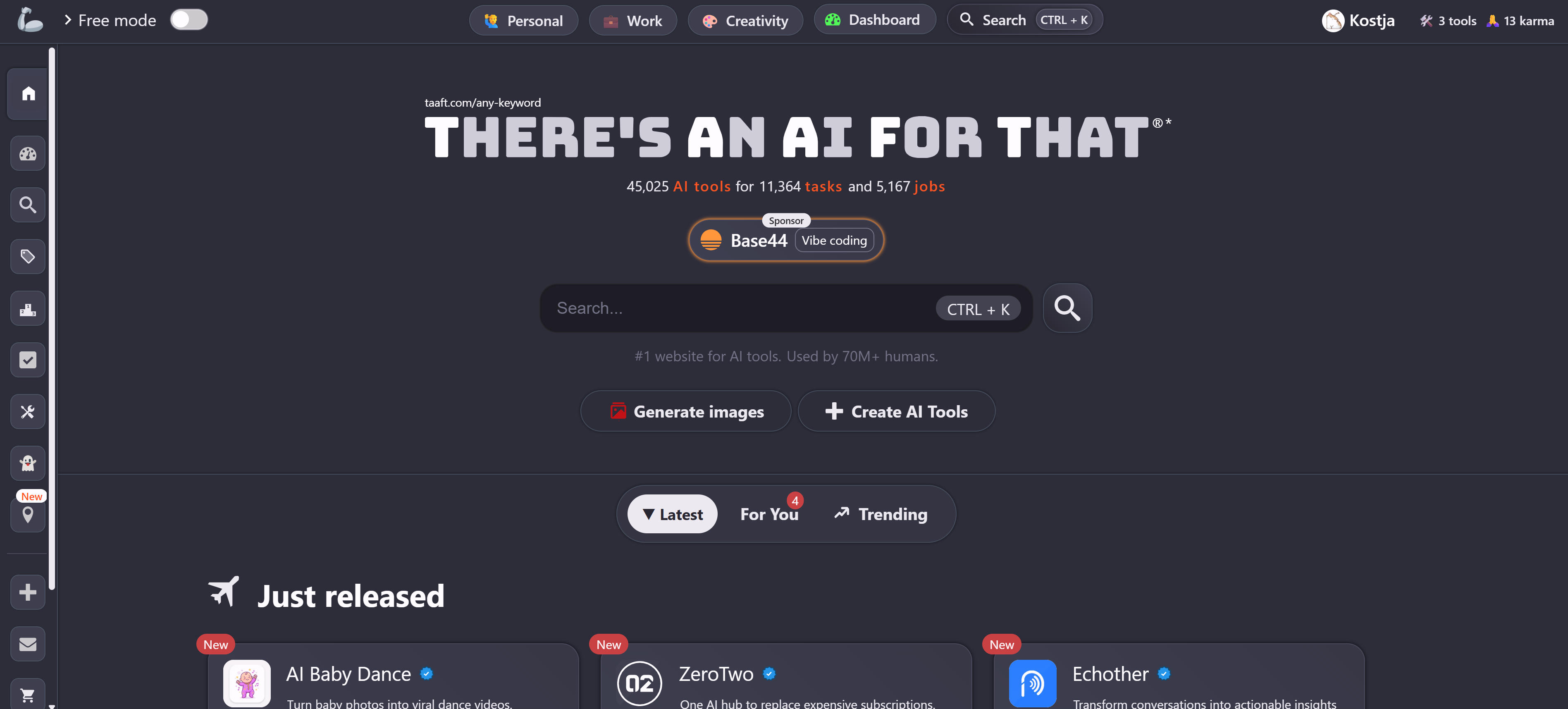
There's An AI For That stands as a premier AI tool discovery platform dedicated to helping users navigate the vast landscape of AI applications to find their perfect matches. The platform employs sophisticated categorization systems that organize AI tools across text generation, image processing, data analysis, and automated workflows, ensuring comprehensive coverage of available solutions.
The platform's distinctive strength lies in its rigorous quality assurance framework, where every listed tool undergoes thorough human review to guarantee information accuracy and reliability. Users benefit from advanced search capabilities and category filtering, along with tool comparison features that enable side-by-side evaluations of similar solutions.
For AI developers, There's An AI For That provides equitable showcase opportunities through structured submission processes that lead to professional tool pages and substantial traffic exposure. This balanced approach creates a thriving ecosystem where quality tools receive appropriate recognition and user engagement.
2. Toolify: AI Tool Aggregation Platform
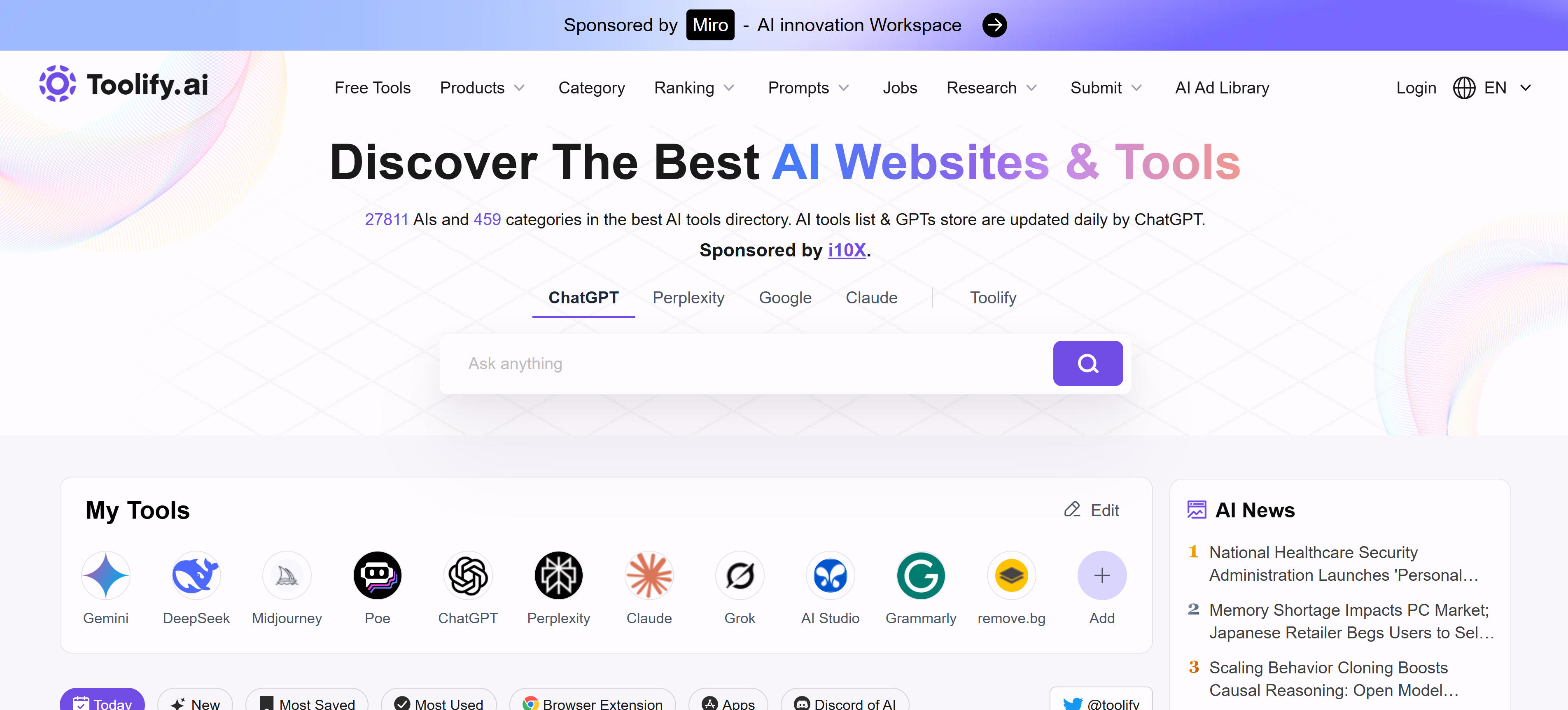
Toolify serves as a comprehensive AI tool aggregation and recommendation platform, consolidating the finest AI applications and solutions from across the global market. Beyond mere tool discovery, the platform integrates detailed usage guides, pricing comparisons, and user reviews to provide thorough evaluations of each tool's value proposition.
Toolify's intelligent recommendation engine analyzes user search patterns and preferences to deliver highly relevant AI tool suggestions. The platform also features tool collection and comparison capabilities, enabling users to systematically manage their personal AI tool ecosystems.
The platform offers developers streamlined tool submission channels, facilitating rapid integration of new products into the platform and providing access to a global user base. This open ecosystem approach drives innovation and development within the AI tool industry.
3. AI Mojo: Smart AI Tool Matching
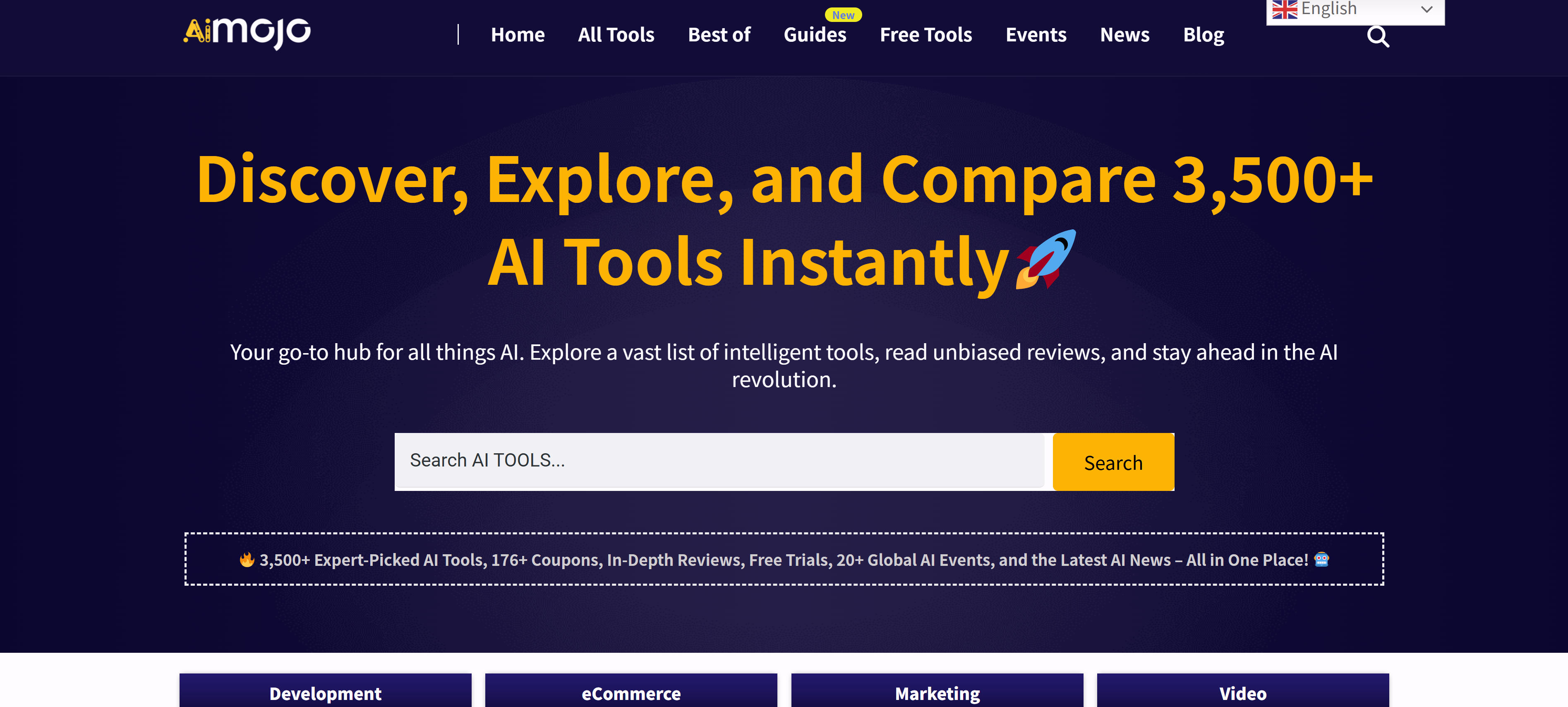
AI Mojo employs intelligent matching algorithms to deliver personalized AI tool recommendations tailored to individual user requirements and scenarios. Unlike traditional directory platforms, AI Mojo intelligently combines complementary AI tools to create optimized solution packages that address specific user needs.
The platform integrates comprehensive tool tutorials and best practice guides, facilitating seamless user onboarding and proficiency development. AI Mojo also provides detailed tool performance comparisons and testing data, enabling objective evaluations of practical tool effectiveness.
AI Mojo offers developers professional showcase and promotion services, utilizing data-driven insights to help creators understand user requirements and refine their product positioning. This analytics-powered approach provides substantial support for continuous product improvement and market adaptation.
4. TopAI.tools: AI Tool Rankings
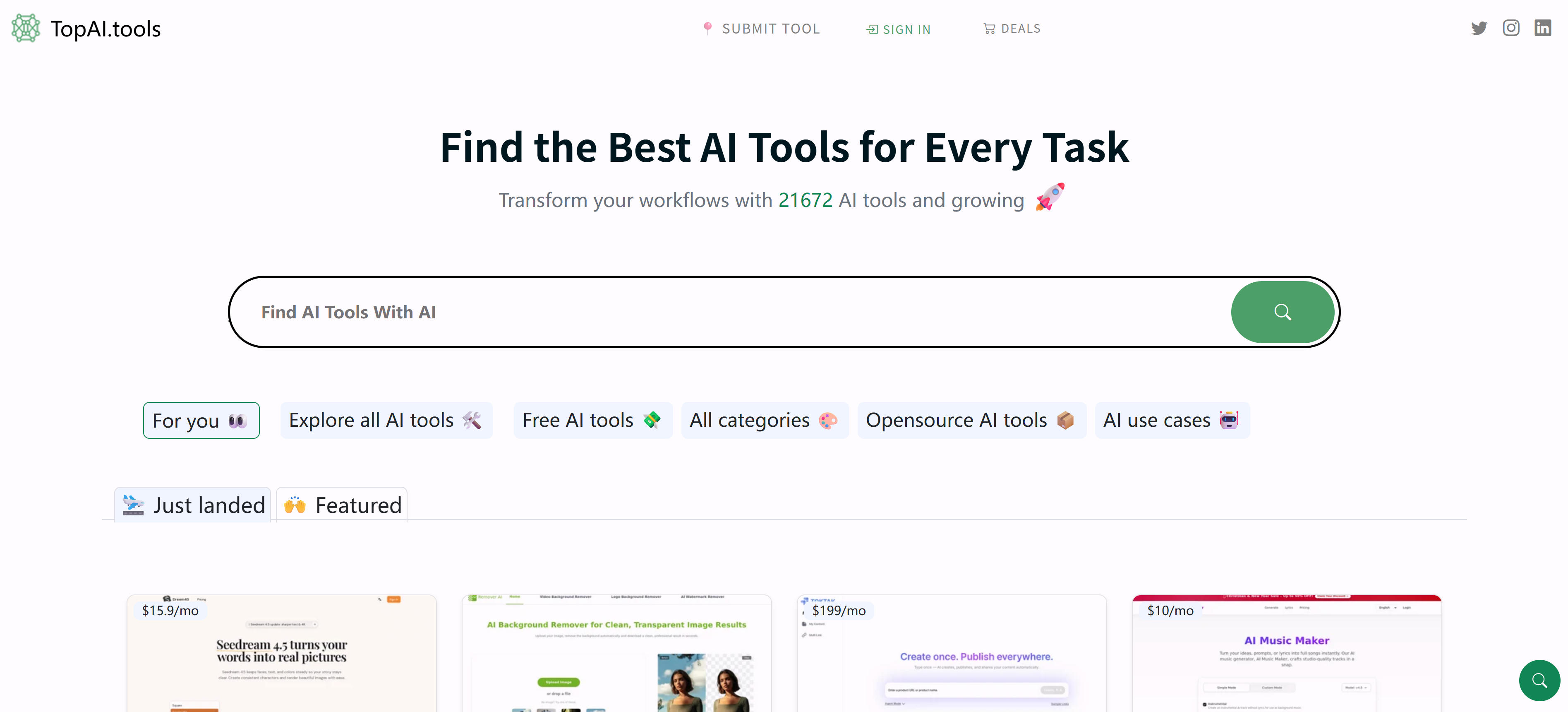
TopAI.tools specializes in objective AI tool evaluations and comprehensive ranking systems, conducting systematic testing and user feedback analysis to provide detailed scoring and rankings for every featured AI tool. The platform assesses multiple dimensions including feature completeness, user experience, and technical performance to guide informed decision-making.
The platform's transparency in evaluation methodologies, backed by concrete testing data and community feedback, ensures ranking credibility. TopAI.tools also delivers industry trend analysis, helping users track the evolving AI tool landscape and emerging developments.
TopAI.tools provides developers with fair evaluation opportunities, utilizing professional assessment frameworks to highlight exceptional products. The platform also offers improvement recommendations to help developers enhance their tool performance and user experience.
5. AIxloria: Comprehensive AI Tool Navigation
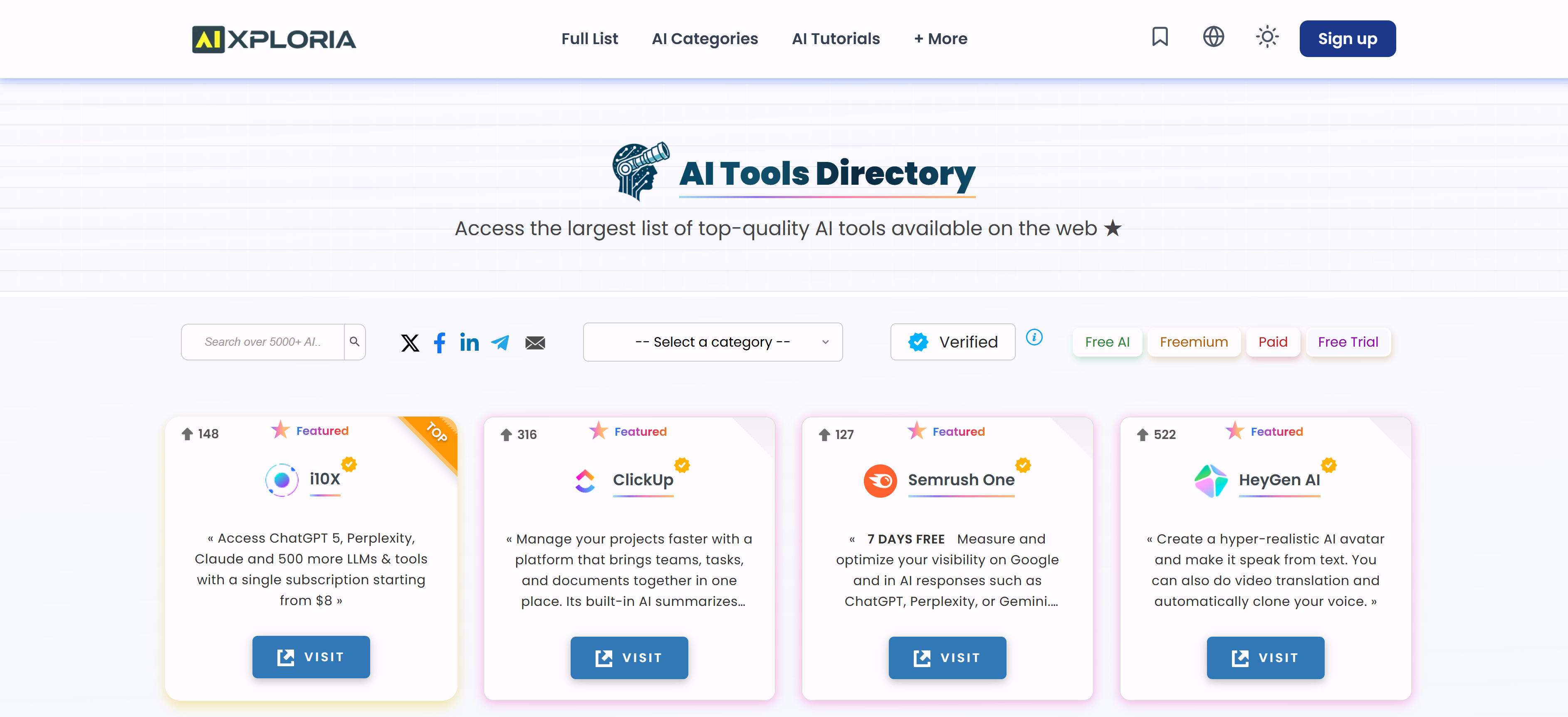
AIxloria functions as an internationalized AI tool navigation platform supporting multiple languages and serving global users. The platform organizes AI tools across geographical regions and languages, delivering localized AI tool discovery experiences tailored to different countries and cultural contexts.
AIxloria's global perspective encompasses both mainstream and emerging market AI applications, providing localized introductions and usage guidelines that reduce language barriers in tool selection. The platform's international approach broadens the accessibility of AI tools across diverse user communities.
AIxloria offers developers international showcase opportunities, facilitating product expansion into global markets. The platform also fosters cross-cultural exchanges that promote worldwide AI technology sharing and collaborative innovation.
6. Creati AI: Creative AI Tool Aggregation
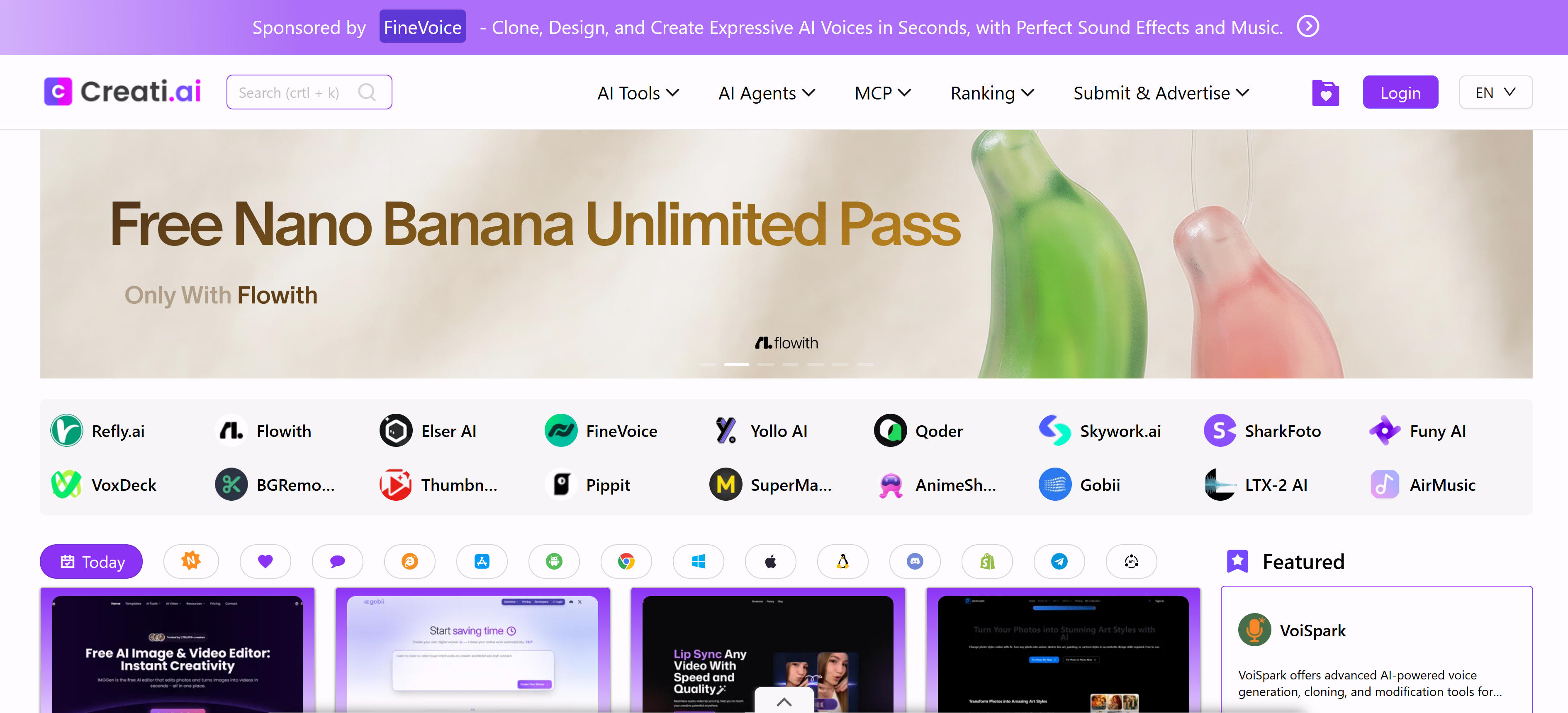
Creati AI specializes in creative and artistic AI tool aggregation, providing professional tool discovery services specifically designed for designers, artists, and creative professionals. The platform covers comprehensive creative AI applications including image generation, UI design, video editing, and music composition, accompanied by detailed professional assessments and usage guidelines.
Creati AI's professional approach delivers in-depth analysis for each creative tool, featuring practical case studies and technique sharing. The platform actively tracks creative AI developments, helping users remain at the forefront of industry innovation.
Creati AI provides creative AI developers with specialized showcase platforms, increasing visibility within creative communities. The platform also facilitates collaboration and knowledge exchange among creative AI tools and their user communities.
7. Product Hunt: AI Product Discovery Community
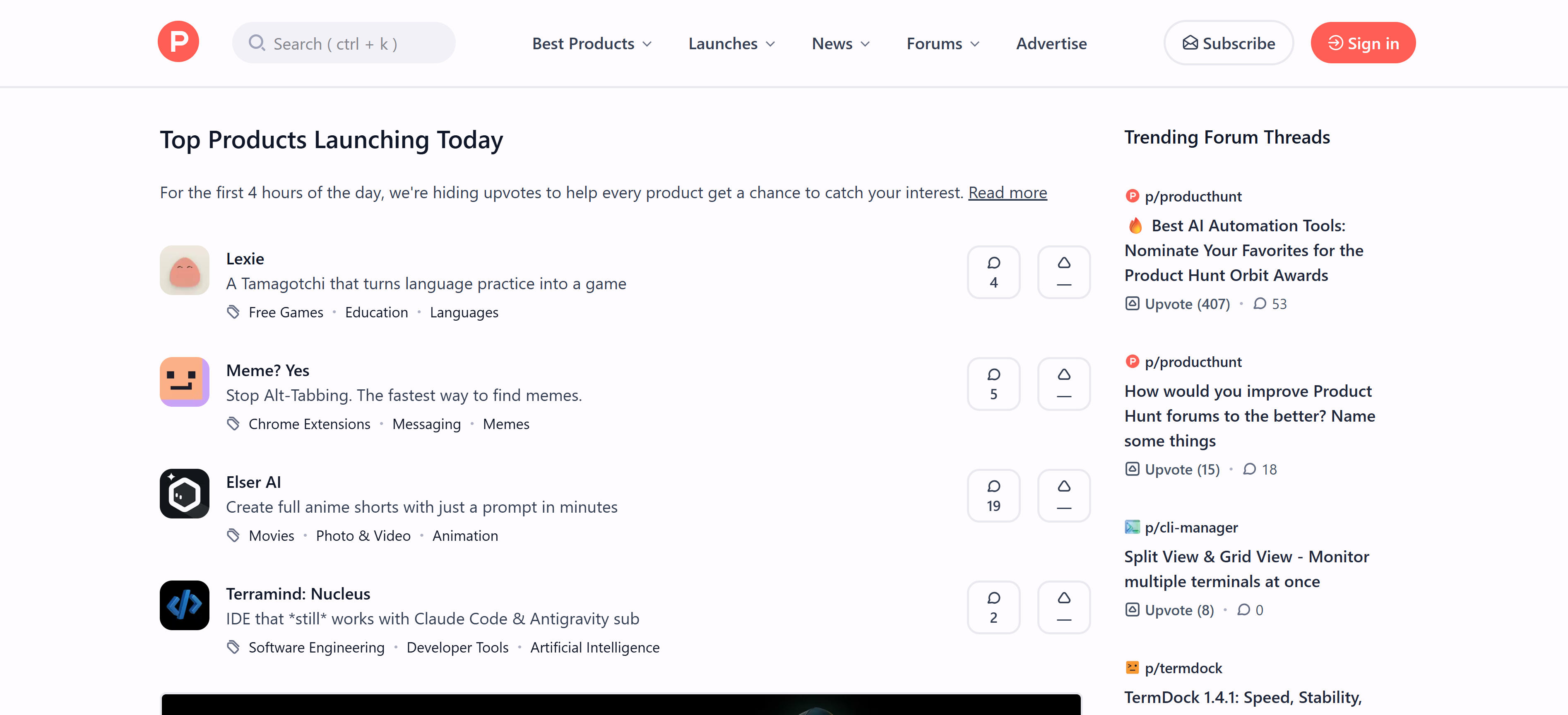
Product Hunt operates as a global product discovery community that daily showcases innovative products and solutions, serving as both a user discovery channel and developer product promotion platform within the AI ecosystem. Through community-driven voting mechanisms, the platform ensures exceptional products receive appropriate attention and user engagement.
Product Hunt's community-powered discovery model subjects daily product selections to rigorous screening and community validation. The platform features comprehensive product discussions and detailed user reviews, enabling thorough evaluation of tool advantages and limitations.
For AI developers, Product Hunt represents a competitive showcase arena where companies and independent creators alike can gain user recognition through quality products. This community-driven promotion approach fosters healthy development within the AI tool industry through fair competition and user feedback.
8. Futurepedia: AI Tool Knowledge Base

Futurepedia serves as a comprehensive AI tool knowledge base platform committed to delivering the most accurate and detailed AI tool information available. The platform catalogs thousands of AI tools while providing comprehensive technical specifications, usage tutorials, and performance evaluations for each solution, enabling data-driven decision-making processes.
Futurepedia's professional and comprehensive approach applies rigorous quality standards to ensure authoritative content reliability. The platform also offers tool trend analysis and industry insights to help users navigate the evolving AI tool landscape effectively.
Futurepedia offers developers specialized technical showcase platforms to present detailed product capabilities and innovations. The platform actively collects user feedback to support developers in continuous product optimization and enhancement.
AI Directory Tools Comparison: Choose the Right One
AI Directory Use Cases: 6 Practical Applications
1. Content creators finding writing AI tools
AI directory platforms help content creators quickly identify suitable writing assistants, from text generation to content optimization, SEO writing to multilingual translation. These platforms typically provide tool feature comparisons, difficulty assessments, and user reviews to help creators make informed choices about workflow integration.
2. Designers discovering visual AI tools
For designers, AI directories serve as comprehensive resources for finding image generation, UI design, brand creation, and lighting tools. Platforms showcase tool capabilities and provide design case studies and technique tips to help designers evaluate professional suitability and practical value.
3. Developers finding programming assistants
AI directories provide developers with comprehensive information on code generation, debugging optimization, and testing automation tools. Platforms typically include technical specification comparisons, programming language support details, and developer reviews to help select tools that best match technical requirements.
4. Marketers finding data analysis tools
Marketing professionals can discover market analysis, user behavior insights, competitive monitoring, and automated reporting tools through AI directories. Platforms detail tool data processing capabilities, analysis dimensions, and report generation features to help marketers make strategic choices.
5. Educators finding learning AI tools
AI directories help educators identify personalized learning, course generation, intelligent assessment, and teaching support tools. Platforms evaluate educational value, learning outcomes, and age appropriateness to help educators select tools that best serve student learning objectives.
6. Businesses finding workflow automation tools
Companies can discover workflow automation, customer service chatbots, data processing, and enterprise-grade AI solutions through AI directories. Platforms assess integration capabilities, scalability, and enterprise security to help businesses select reliable solutions for operational efficiency.
How to Choose AI Directory Tools
1. Evaluate content quality and update frequency
When selecting directory platforms, first assess content quality and update frequency. Leading platforms maintain rigorous quality controls and regular updates to ensure comprehensive, current AI tool information.
2. Check classification systems and search capabilities
Excellent AI directories feature clear classification systems and powerful search functionality. Users should navigate tools by functionality, industry, and use cases, with advanced search supporting keyword matching and intelligent recommendations.
3. Assess user experience and interface design
Beyond functionality, evaluate platform responsiveness, interface design, and navigation logic. Test mobile compatibility, loading speeds, and onboarding experiences. Detailed tool pages should include comprehensive information, clear user reviews, and pricing details.
4. Consider community activity and feedback systems
Active communities represent a platform's true value. Evaluate user review systems, discussion forums, and feedback mechanisms that enable experience sharing and community support. Strong community engagement indicates platform vitality and user satisfaction.
5. Evaluate international support and localization services
For global audiences, prioritize platforms offering multi-language interfaces and localized services. International platforms provide broader tool access and cross-cultural insights, though local service quality should be verified.
Conclusion
AI directory platforms play increasingly vital roles in the AI tool ecosystem, serving as essential bridges connecting users with suitable AI solutions while providing developers equitable product promotion opportunities. From professional tool discovery platforms to community-driven product showcases, each platform offers unique value propositions addressing different user requirements.
When selecting AI directory tools, consider content quality, user experience, community engagement, and specific use cases. Leading platforms maintain rigorous quality standards, clear categorization systems, and active community participation, ensuring reliable, comprehensive AI tool discovery experiences.
As AI technology continues evolving, directory platforms will remain crucial for ecosystem navigation. Both AI tool users and developers should recognize their importance in fostering healthy industry development. Through informed platform selection and effective utilization, users can maximize AI tool potential while contributing to broader ecosystem advancement.