Introduction
Affiliate marketing is a powerful strategy for AI and SaaS companies looking to expand reach and increase sales. The global affiliate marketing market is projected to reach $15 billion by 2025, with over 10% annual growth. In SaaS, affiliate marketing has become one of the most important customer acquisition channels, with many successful AI and SaaS products acquiring 30%-50% of new customers through affiliate programs.
By leveraging affiliate efforts, businesses can promote products to wider audiences without significant marketing costs. Unlike traditional advertising, affiliate marketing uses a CPS (Cost Per Sale) model, paying commissions only when actual sales occur, making marketing costs more controllable and ROI easier to track and optimize. This guide explores affiliate marketing fundamentals for AI and SaaS products, providing insights on building effective affiliate programs and maximizing their potential.
What is Affiliate Marketing?
Affiliate marketing helps merchants promote products or services by sharing links with friends or followers. If they purchase through your link, you earn a commission. There are three main commission models:
Pay-Per-Sale (Commission Based on Sales): The most common affiliate marketing model. Affiliates earn commissions (typically 10%-50%) based on actual sales generated through referral links. For example, if a SaaS subscription costs $100/month with a 30% commission rate, affiliates earn $30 per successful subscription. This model has lower risk for merchants since commissions are only paid when actual sales occur.
Pay-Per-Lead (Commission Based on Potential Customers): In this model, affiliates don't need to generate actual sales, but guide users to complete specific actions (account registration, form filling, trial download) to earn fixed commissions. For example, affiliates can earn $5-$50 per user registration. This model suits products needing large numbers of potential customer leads, such as B2B SaaS tools and online education platforms.
Pay-Per-Click (Commission Based on Clicks): The simplest affiliate marketing model, where affiliates guide users to click referral links to earn fixed commissions (typically $0.01-$0.50 per click). Although single commissions are low, with sufficient traffic, this can generate considerable income. However, due to potential abuse (bot clicks), this model is now used relatively less, with more merchants preferring Pay-Per-Sale or Pay-Per-Lead models.
Core Value of Affiliate Marketing
Affiliate marketing is standard for software services and an important part of building website architecture and product ecosystem SOPs. In overseas markets, Affiliate Programs are a necessity rather than an alternative. By checking the AI/SaaS Affiliate Program List, you'll find that the vast majority of successful AI and SaaS products offer affiliate programs.
The core value of affiliate marketing lies in its CPS (Cost Per Sale) model, paying only for sales, unlike traditional advertising where you pay for impressions, clicks, or registrations. You only pay commissions when conversions succeed. According to industry data, affiliate marketing average ROI typically ranges from 5:1 to 10:1, far higher than traditional advertising's 2:1 to 3:1, with average customer acquisition cost (CAC) usually 40%-60% lower than paid advertising. At the operational level, affiliate marketing is very easy to implement. A Landing Page or form with a unique tracking URL can launch an affiliate program, with extremely low startup costs, typically just a few hundred dollars for tool fees and landing page creation.
Beyond direct sales conversions, affiliate marketing attracts high-quality Affiliates to promote your products. These affiliates generate substantial content during promotion, which helps SEO, influencer marketing, and overall brand exposure. While most affiliate links are nofollow, they can still bring some backlinks to your website, helping increase brand awareness. According to research, customers acquired through affiliate marketing typically have 20%-30% higher lifetime value (LTV) than customers acquired through paid advertising.
Components & Key Terms
An affiliate program consists of four core roles: Advertiser (merchant) provides products or services, promoting through affiliate programs and paying commissions to affiliates; Affiliate (promoter) promotes products as individuals or organizations, bringing traffic and sales through referral links and earning commission rewards; Affiliate Network connects merchants and affiliates, providing tracking, payment, and management services; Customer is the end user who purchases products through affiliate links.
Beyond core roles, affiliate programs involve multiple key elements and terms. Below are the most important professional terms and definitions in affiliate marketing:
| Term | English | Definition |
|---|---|---|
| Affiliate Link | Affiliate Link | Promotional link containing unique tracking code for tracking affiliate promotion effectiveness and attributing sales |
| Commission Rate | Commission Rate | Percentage of commission affiliates earn from each sale, typically 10%-50% |
| Cookie Duration | Cookie Duration / Cookie Length | Validity period of cookies after users click affiliate links (typically 30-90 days), during which purchases are attributed to affiliates |
| Conversion | Conversion | Users completing purchases, registrations, or other target actions through affiliate links |
| Performance Bonus | Performance Bonus | Additional rewards affiliates earn when reaching specific sales targets, used to incentivize better performance |
| Sub-Affiliate | Sub-Affiliate | Other affiliates recruited by affiliates, original affiliates can earn additional commissions from sub-affiliate sales |
| Recurring Commission | Recurring Commission | For subscription products, affiliates can earn recurring commissions from users' ongoing subscriptions |
| Attribution | Attribution | Process of attributing sales or potential customers to corresponding affiliates, ensuring correct commission allocation |
Affiliate Promotion Channels
All promotion channels can feature affiliates. A simple way to understand: when you post in communities, it's community operations; when affiliates post in communities, it's affiliate marketing. When you post videos on social media, it's social media operations; when affiliates post videos on social media, it's affiliate marketing. The difference is you get a salary, affiliates get commissions.
Mainstream Promotion Channels
Content Creators: Includes bloggers (promote through guest posts, link insertion, etc.), YouTubers (create product reviews, tutorials, use cases, and other video content), podcasters (recommend and discuss products in podcast episodes), and social media influencers (share products on Instagram, TikTok, X/Twitter, and other platforms).
Publishers: Includes large media outlets (publish product reviews or recommendation articles on professional media websites), niche websites (publish relevant content on professional websites in specific industries), and email newsletters (promote products through email subscription lists).
Coupon & Cashback Sites: Publish product discount information on coupon websites and cashback platforms to attract price-sensitive user groups.
Professional Affiliates: Professional agencies or individuals specializing in affiliate marketing, typically with extensive promotion experience and resource networks.
Community Platforms: Includes Facebook Groups, LinkedIn Groups, Discord servers, and other community platforms, promoting products through community interactions and discussions.
Forums: Includes Reddit, niche forums (professional forums for specific industries), and others, promoting products through forum discussions and Q&A.
Other Promotion Channels
Mobile App Creators: Built-in promotion features within products, allowing app developers to earn commissions through in-app recommendations.
Co-Marketing: Cross-border collaboration promotions with other brands or products, achieving mutual benefits through resource exchange.
Brand Fans and Existing Customers: Leverage word-of-mouth from existing users, encouraging users to actively promote products through referral reward mechanisms.
Charity and NPOs: Partner with charitable organizations, donating part of commissions to charity, promoting products while taking on social responsibility.
Webinars and Workshops: Promote products through online educational activities, naturally integrating product recommendations and use cases into educational content.
Important Note: Google doesn't mind you buying links, but recommends using rel=sponsored tags to identify affiliate links, which complies with search engine guidelines and helps with transparency and trust.
How to Set Up an Affiliate Program
There are two main ways to set up an affiliate program: quick self-build and third-party tools. Which approach to choose depends on your technical capabilities, budget, and timeline.
Quick Self-Build Solution
If you want to launch quickly with a limited budget, you can use Typeform's Template or Google Forms to create an Affiliate Signup Form and Landing Page. If you have no prior experience, you can refer to competitor or similar service website pages and combine with SaaS software to quickly launch an affiliate program.
Third-Party Tool Selection
For most AI and SaaS products, we recommend using third-party SaaS tools to manage affiliate programs. The most popular tools include Rewardful (most used by AI/SaaS), Tolt, Tapfiliate, Lasso, Post Affiliate Pro, FirstPrompter, and Trackdesk. For detailed tool comparisons and selection guides, see our complete affiliate marketing tools guide.
Setup Process and Operations
The basic process for setting up an affiliate program includes: creating a landing page, writing terms, publishing, and observing results. After publishing, actively submit your Affiliate Program to sites like Affiliate.Watch to let interested affiliates promote for you. At the same time, contact third-party platforms you're integrated with to see if they're willing to publish articles or add backlinks. When negotiating partnerships, actively include distribution models, making affiliate marketing part of the collaboration.
How to Create an Affiliate Program Landing Page
An affiliate program landing page is key to attracting affiliate participation. A well-designed landing page significantly improves application conversion rates. Here's a complete guide:
Core Elements: An effective affiliate program landing page should include these core elements. Below is the standard structure and content for landing pages:
Hero Section:
Join Our Affiliate Program
Earn 30% recurring commission + automatic monthly payments
Promote our products, earn generous commissions, enjoy professional support and marketing resources
Clear Value Proposition: Clearly state benefits and opportunities affiliates gain from participating:
- Commission rewards: 30% recurring commission, earn from every sale
- Payment guarantee: Automatic payment on the 15th of each month, minimum payout threshold $50
- Marketing resources: Provide banners, logos, copy templates, and other marketing materials
- Professional support: Dedicated affiliate manager support, quick response to questions
Commission Structure: Detail commission calculation methods, payment cycles, cookie duration, and other key information:
Commission Details
- • Commission rate: 30%
- • Cookie duration: 90 days
- • Payment cycle: 15th of each month
Payment Information
- • Minimum payout: $50
- • Payment methods: PayPal, bank transfer
- • Payment currency: USD
Marketing Materials and Resources: Provide rich marketing materials to help affiliates start promoting quickly:
- Banner materials: Provide banners in various sizes (728x90, 300x250, 160x600, etc.)
- Logo and brand materials: Product logos, brand color guidelines
- Copy templates: Promotional copy templates for different scenarios (blog, social media, email, etc.)
- Product screenshots: High-quality product feature screenshots and use cases
Application Process: Provide clear application process using step-by-step display:
Fill Application
Provide basic information and promotion channels
Review
We review within 1-3 business days
Start Promoting
Get promotion links and marketing materials, start promoting
Success Stories Showcase: Showcase success cases of participating affiliates, including their promotion channels, commissions earned, promotion effectiveness:
@AffiliateName
YouTube Creator
Monthly commission: $2,500
@AffiliateName
Blogger
Monthly commission: $1,800
@AffiliateName
Social Media Influencer
Monthly commission: $3,200
FAQ: Answer questions potential affiliates may have:
How do I earn commissions?
You earn commissions when users purchase products through your referral links. Commissions are automatically paid on the 15th of each month.
How long is the cookie duration?
Cookie duration is 90 days, during which purchases are attributed to you.
How long does review take?
Typically 1-3 business days, we process applications as quickly as possible.
Clear CTA: Set prominent application buttons with attractive copy:
Tip: CTA buttons should appear in multiple locations (Hero area, after value proposition, after application process, etc.) to ensure users can apply anytime.
Using AI Coding Products to Create Landing Pages: If you use AI coding products (such as Cursor, GitHub Copilot, v0, etc.) to create affiliate program landing pages, you can use the following prompt:
English Prompt:
Create an affiliate program landing page with the following sections: 1) Hero section with clear value proposition (e.g., “Earn 30% recurring commission + automatic monthly payments“); 2) Detailed commission structure (commission rate, cookie duration, payment cycle, minimum payout threshold); 3) Marketing materials and resources (banners, logos, copy templates); 4) Three-step application process (Apply → Review → Start Promoting); 5) Success stories showcase (affiliate avatars, promotion channels, monthly commissions); 6) FAQ section; 7) Prominent CTA buttons (“Apply Now“, "Join Affiliate Program"). The page should be responsive, mobile-friendly, and use modern UI design consistent with the existing website style.
Since you already have a website, creating an affiliate program landing page only requires adding a new page to your existing website. Use the same tech stack as other pages (such as Next.js, React, etc.), maintain consistent design style, ensuring unified user experience and easier maintenance and updates.
How to Find and Attract Affiliates
There are multiple ways to find affiliates. You can search Google and YouTube for “AI affiliate program“ or use search commands like "site:getrewardful.com" to find products offering affiliate programs, understanding industry standards and best practices.
5 Methods to Find Affiliates
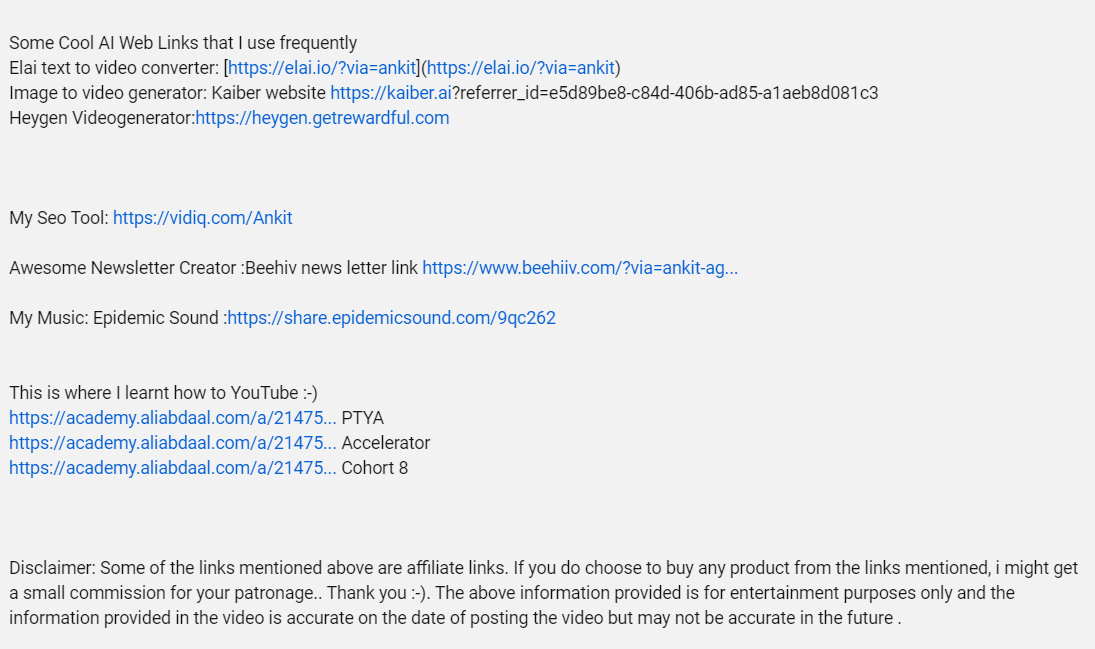
Reverse Research: Find creators promoting competitors, they may also be interested in your products. For example, this YouTube video is a typical case of a creator accepting an affiliate program.
Google Search: Search “AI affiliate program“ or use search commands like "site:getrewardful.com" to find products offering affiliate programs.
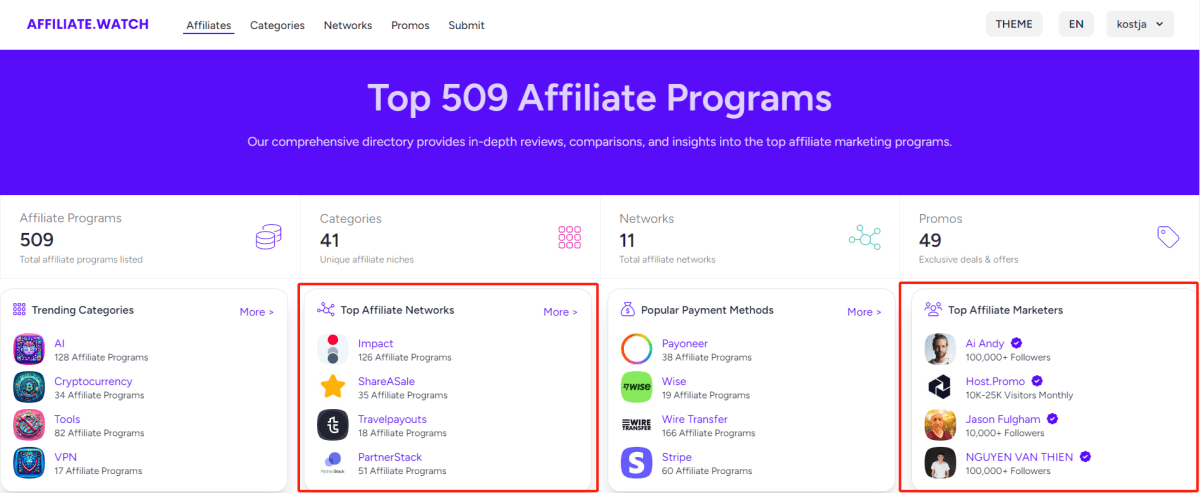
Affiliate Program Directories: Use platforms like Affiliate.Watch to quickly find suitable partners.
YouTube and Social Media: Search product review videos to find creators accepting affiliate programs.
Communities and Forums: Promote affiliate programs in communities like Indie Hackers, Product Hunt, etc.

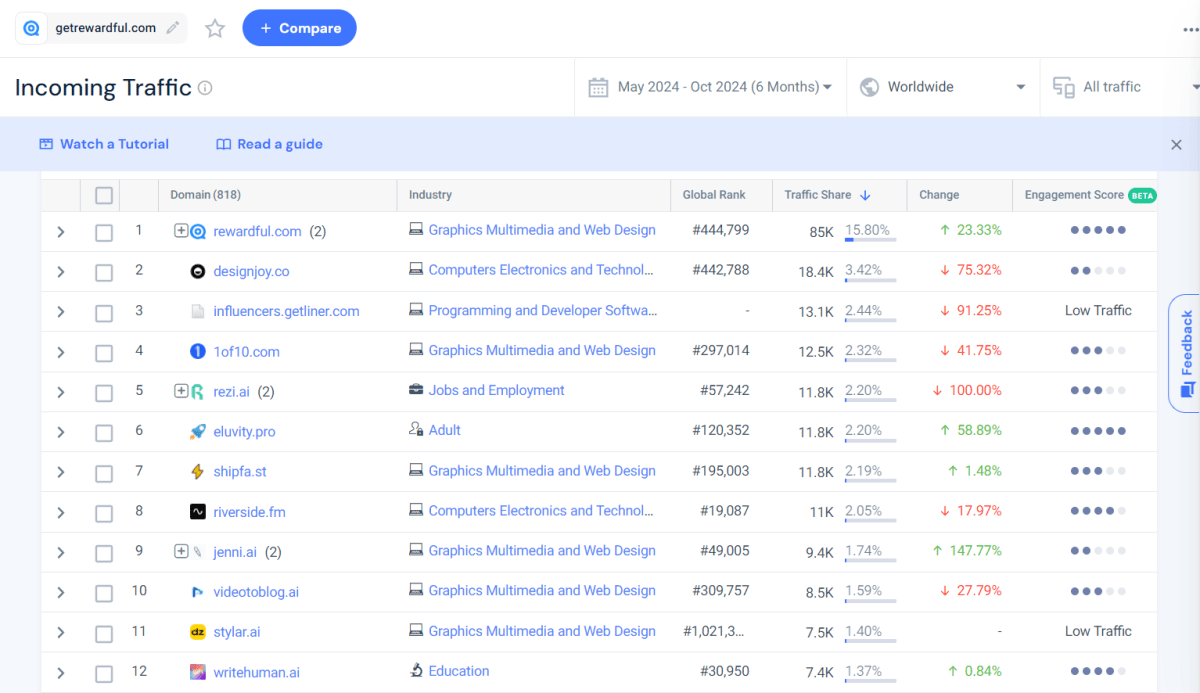
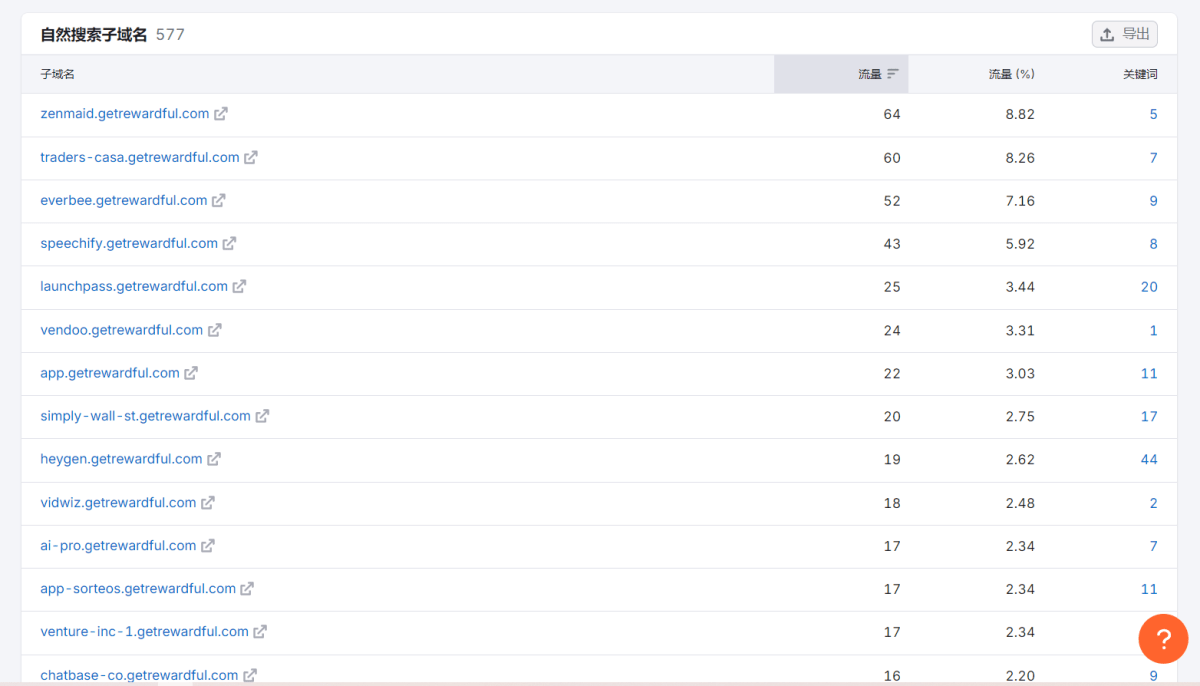
An effective strategy is to find influencers who accept affiliate programs, then reverse-find more products offering affiliate programs, and then find more influencers. This circular strategy can help you quickly build an affiliate network.
Affiliate Program Success Cases
Below are real enterprise cases demonstrating how to achieve significant business growth and revenue increases through affiliate programs.
Candy AI Success Case Analysis
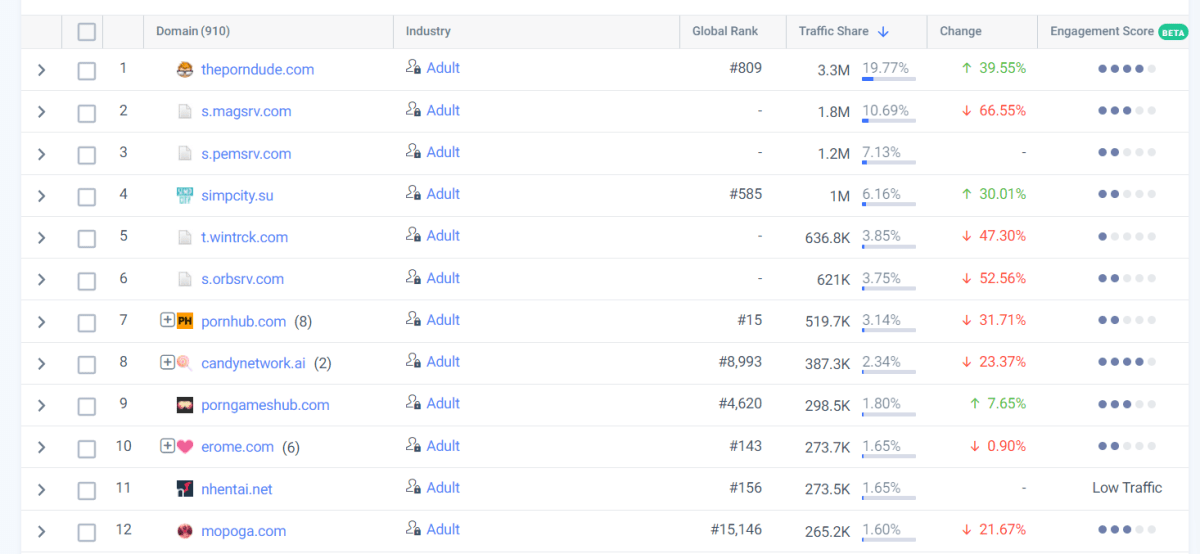
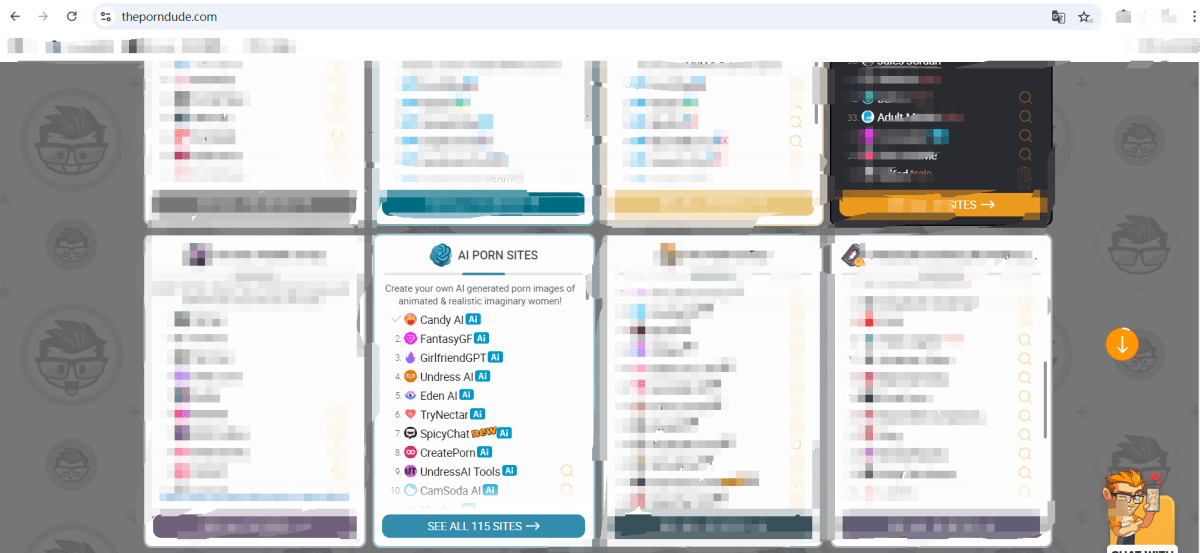
Candy AI gained 13.71M traffic from referral channels (backlinks + affiliate programs) in six months, accounting for about one-third of total site traffic. In contrast, its competitors CrushOn, Yodayo, and Talkie barely got any share from this channel. This case fully demonstrates the importance of affiliate marketing for AI and SaaS products.
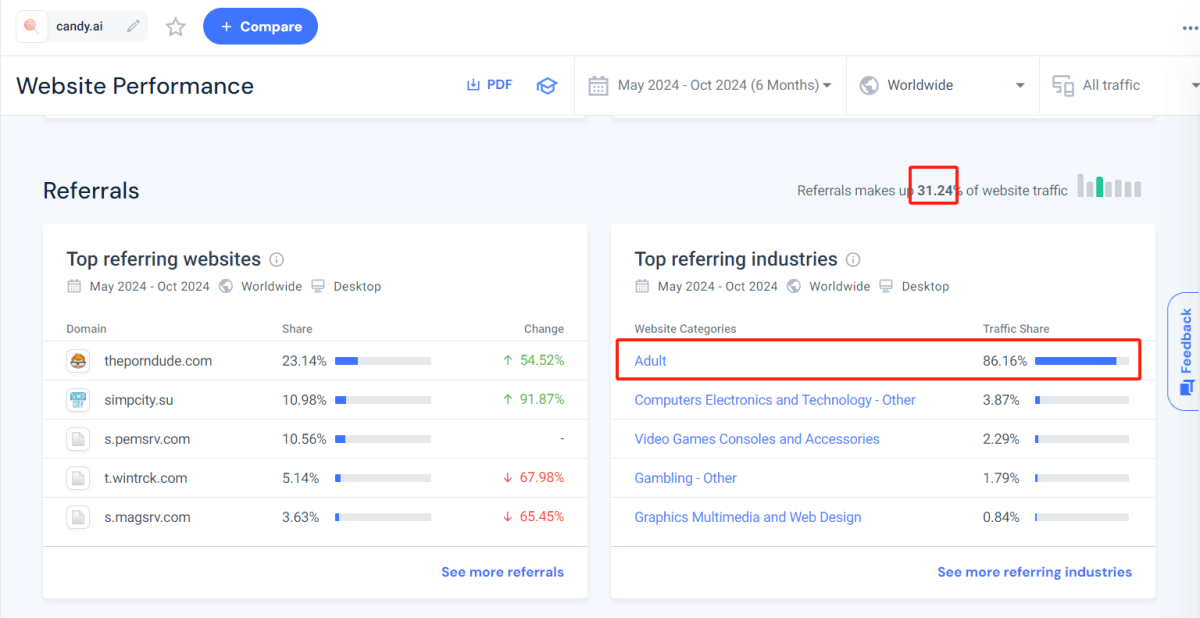
Referral channel traffic accounts for one-third of total site traffic
Through SimilarWeb data, we can see that Candy AI's referral channel (Referrals) traffic share is significantly higher than competitors. This is mainly due to its well-established affiliate program and active promotion strategy.

Canva: From Informal Partnerships to 9,000 Partners
Canva initially approached bloggers, content creators, and website owners informally, occasionally inviting them to host links. As global Canva fan numbers grew, the company realized the need to leverage this momentum more formally and efficiently. By establishing a formal affiliate program, Canva not only successfully recruited diverse partners (including YouTubers, bloggers, media publishers, podcasters, and B2B partners) but also offered over 25 customizable contract arrangements to meet different partner needs. According to Impact.com's case study, in the first six months of implementing the affiliate program, Canva's partner revenue consistently doubled month-over-month, with the partner network growing to approximately 9,000.
Appsumo: 255% Revenue Growth
Appsumo, as a leading software marketplace, previously used affiliate tracking software that couldn't keep up with the complexity and growth needs of its partner program. By partnering with Impact.com to optimize affiliate program management processes, Appsumo achieved remarkable growth: according to Impact.com's case study, revenue grew 255% YoY, actions grew 215% YoY, total affiliate partners grew 107% YoY, and active affiliate partners also grew 107%.
Hubspot: 50%+ Affiliate Revenue and Signup Growth
Hubspot is a CRM platform where affiliate partnerships are a key component of its marketing strategy. However, the previous platform had issues with insufficient reporting and payment flexibility, and difficulty recruiting partners. By improving affiliate program management, Hubspot achieved over 50% growth in affiliate revenue and signups, improved earnings per click (EPC), and continuously recruited affiliates matching its business goals. More details can be found in Impact.com's case study.
Semrush: 400% New Partner Signup Growth
Semrush, as a leader in digital marketing solutions, needed modern management solutions to meet evolving affiliate program and brand expansion needs. By adopting real-time data access, flexible attribution models, and user-friendly interfaces, Semrush's affiliate program reached new heights, achieving 400% growth in new partner signups and successfully leveraging affiliate marketing for sustained growth. Specific implementation details can be found in Impact.com's case study.
HeadshotPro: $50,000+ Monthly Revenue, 15% of Monthly Revenue
HeadshotPro is an AI headshot generation tool that achieved significant business growth through affiliate marketing. Founder Danny Postma found that traditional affiliate tools were inefficient, cumbersome, and couldn't integrate with existing systems. By implementing an affiliate program, HeadshotPro generates over $50,000 monthly through affiliate marketing, accounting for over 15% of monthly revenue. According to Rewardful's case study, the affiliate program's tracking system significantly improved SEO rankings by increasing backlinks, helping HeadshotPro maintain leading positions on search results pages.
OpusClip: From Zero to Six-Figure Affiliate Revenue
OpusClip is an AI-driven video repurposing tool that can transform long videos (such as podcasts and interviews) into short clips suitable for TikTok and Instagram with one click. OpusClip quickly recognized the power of affiliate marketing in the content creation industry. Since launching its affiliate program, OpusClip has witnessed significant revenue growth. According to Rewardful's case study, the program, comprising hundreds of active affiliates, has contributed over $100,000 in sales. While the affiliate program's share of total revenue is modest, its proportion continues to grow, reflecting success and potential for further expansion.
Uplisting: $700,000 Referral Sales Over 4 Years
Uplisting is an all-in-one vacation rental software and channel management system. In the short-term rental market, owners and property managers often rely on word-of-mouth referrals and networking to expand their businesses. Uplisting found that the most satisfied customers were the best evangelists, often bringing new business through referrals. By implementing an affiliate program, Uplisting generated approximately $700,000 in sales through referrals over more than 4 years of collaboration. According to Rewardful's case study, the commission payment process was reduced from 2 days to just a few hours, improving efficiency and saving costs.
Cometly: From Zero to $53.8k MRR in Launch Week
Cometly is a pre-launch and bootstrapped business with limited resources. Instead of choosing the traditional Product Hunt launch approach, they took a different strategy: partnering with top affiliates with existing audiences in their target market. By using an affiliate program for product launch, Cometly grew from zero revenue to $53.8k MRR ($646k ARR) in the first week of launch. According to Rewardful's case study, considering many customers paid annually, Cometly generated over $251,000 in cash flow from the launch ($147.5k on launch day, $103.5k for the remainder of the week), demonstrating the powerful force of affiliate marketing in product launches.
Pitfalls to Avoid
When operating an affiliate program, there are several pitfalls to watch out for to ensure healthy program operation and cost control.
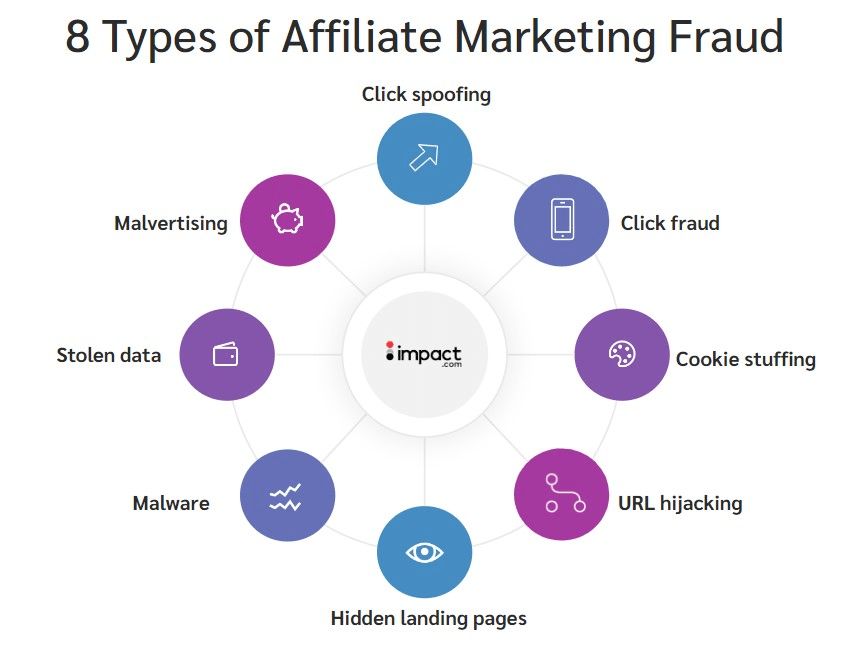
Affiliate Fraud
Using malicious methods to earn commissions from affiliate marketing programs, including fake clicks, fake conversions, self-purchasing, etc. Prevention measures include: establishing comprehensive monitoring mechanisms, regularly reviewing affiliate behavior; detecting abnormal clicks, fake conversions, self-purchasing, and other malicious behaviors; promptly identifying and handling abnormal situations; using professional tools (such as Rewardful, Impact, and other platforms) that provide anti-fraud features.
Bidding on Brand Terms
Affiliates purchasing Google ads for brand terms or trademark terms may compete with your brand ads, affecting ad performance and costs. Prevention measures include: explicitly prohibiting brand term bidding behavior in affiliate program terms; regularly monitoring Google ads to check if any affiliates are bidding on brand terms; using Google Ads' ad review tools for monitoring. For more prevention measures, refer to Rewardful's related article.
Program Terms
Program terms settings directly affect affiliate earnings and your cost control, including Cookie Length (cookie validity period), Performance Bonus, Sub-Affiliate, and other key parameters. Key elements include: Cookie Length setting reasonable cookie validity period (typically 60-90 days); Performance Bonus designing attractive performance bonus mechanisms; Sub-Affiliate considering whether to allow sub-affiliates and commission allocation methods; payment cycles and minimum payout thresholds ensuring smooth payment processes. Before officially launching, it's recommended to read Rewardful's Checklist to ensure all details have been considered comprehensively.
Conclusion
Affiliate marketing provides AI and SaaS companies with a favorable opportunity to increase market presence and drive revenue growth. By implementing well-structured affiliate programs and leveraging the right tools, businesses can effectively promote their products through a vast affiliate network. Compared to traditional marketing channels, affiliate marketing has advantages such as controllable costs, high ROI, and easy tracking, making it an important strategy for SaaS and AI product customer acquisition.
Key to successful affiliate marketing implementation includes: selecting appropriate tool platforms, designing attractive commission structures, creating professional landing pages, actively finding and attracting high-quality affiliates, and establishing comprehensive monitoring and anti-fraud mechanisms. With the right strategies, affiliate marketing can become a key component of a successful marketing plan, bringing sustained growth and profitability. It's recommended to start with lightweight tools like Rewardful, gradually optimizing and improving affiliate programs to achieve scalable growth.
Frequently Asked Questions
References
Rewardful. (2026). Affiliate Marketing Glossary: 50 Essential Affiliate Program Terms Defined. Retrieved from https://www.rewardful.com/articles/affiliate-marketing-glossary
Rewardful. Where and How to Promote Your Affiliate Program. Retrieved from https://www.rewardful.com/articles/affiliate-program-promotion
Rewardful. How to Prevent Affiliates Advertising on Google for Brand Terms. Retrieved from https://www.rewardful.com/articles/how-to-prevent-affiliates-advertising-on-google-for-brand-terms
Rewardful. Checklist for Launching Your Affiliate Program. Retrieved from https://www.rewardful.com/articles/checklist-for-launching-your-affiliate-program
Search Engine Roundtable. Google: Use rel=sponsored For Affiliate Links. Retrieved from https://www.seroundtable.com/google-use-rel-sponsored-for-affiliate-links-28951.html
Alignify. AI/SaaS Affiliate Program List. Retrieved from https://gx27ntqnm5z.feishu.cn/sheets/Ce06s3ksphRSXStUcYTcboiXng2