Search Engine Comparison Table
The table below summarizes basic information about major global search engines, including search engine types, main features, and usage scale, helping you quickly understand the positioning and advantages of different search engines.
| Search Engine Name | Type | Notes | Users/Market Share |
|---|---|---|---|
| General Search | World's largest search engine, PageRank algorithm, covers 200+ countries/regions | 91% globally, 8.5B daily searches, 1B+ daily active users | |
| Bing | General Search | Microsoft-owned, provides data to 20+ engines including DuckDuckGo and Ecosia, deeply integrated with Windows and Edge | 3.74% globally, actually influences over 8% of search traffic |
| Baidu | Chinese Search | China's largest Chinese search engine, founded in 2000 | 51% market share in China |
| Yandex | Russian Search | Russia's largest search engine, provides Russian and English versions, has Yandex Webmaster | 64% market share in Russia, 63.9M daily active users |
| Yahoo | General Search | Founded in 1995, now mainly relies on Bing indexing, traffic mainly from email and finance sections | 500M+ unique users globally, Yahoo Japan has 24.03% in Japan |
| DuckDuckGo | Privacy Search | Zero-tracking privacy search engine, relies on Bing indexing, unique Bangs shortcuts, launched in 2008 | 3B monthly searches, 100M+ monthly active users |
| Naver | Korean Search | South Korea's largest search engine and portal, pioneered \"comprehensive search\" service, has Naver Webmaster | 70%+ market share in South Korea, 38.8M monthly active users |
| Brave Search | Privacy Search | Brave browser-owned, no tracking, no data storage, provides real-time search API for Claude and Le Chat | 73.32M monthly active users, 26.26M daily active users |
| Ecosia | Eco Search | German eco-friendly search engine, uses 80% profits for tree planting, relies on Bing indexing | 20M+ monthly active users |
| Qwant | Privacy Search | French privacy search engine, EU GDPR compliant, does not track user data | Mainly used in France and Europe |
Note: Data sourced from public information and StatCounter statistics. User counts and market share data change over time. Some search engines rely on other engines' indexing (e.g., DuckDuckGo relies on Bing), so actual market share may be higher than direct statistics.
Search Engine Categories and Use Cases
Search engines can be categorized by function into general web search, privacy search, regional localized search, vertical professional search, AI generative search, and aggregated search. General web search engines (such as Google and Bing) are suitable for daily information queries and comprehensive searches, with large indexes, comprehensive results, and fast updates, but they have privacy tracking issues and personalization may create information bubbles. Privacy search engines (such as DuckDuckGo, Brave Search, and Qwant) are suitable for users who value privacy protection and sensitive information queries, as they do not track users and have no personalized recommendations, but their indexes may not be as comprehensive as Google's, and some results rely on other engines.
Regional localized search engines (such as Baidu, Yandex, and Naver) are suitable for searching content in specific countries or languages and local services, with good local content coverage and accurate language understanding, but they have geographical limitations and may be subject to censorship. Vertical professional search engines (such as academic search, image search, and video search) are suitable for in-depth searches in specific fields, with strong professionalism and precise results, but narrow coverage and may miss general content. AI generative search engines (such as Perplexity, ChatGPT, and Bing Copilot) are suitable for quickly obtaining answers and overview queries, providing direct answers and natural interaction, but may be inaccurate, have opaque sources, and require verification.
For academic research or professional material queries, it is recommended to combine Google Scholar, general search, and professional databases, cross-verify multiple sources, and pay attention to source authority. For privacy-sensitive queries, DuckDuckGo or Brave Search are recommended, but note that results may not be as comprehensive as Google's, and important information should be compared across multiple engines. For local services or content in specific countries, use the corresponding local search engines (such as Baidu for China, Yandex for Russia), but note that local engines may have insufficient coverage of international content. For quickly obtaining answers or overviews, AI search (Perplexity, ChatGPT) can be used with traditional search verification, but note that AI-generated content needs accuracy verification, and important decisions should verify original sources.
What is a Search Engine
A search engine is software that automatically collects and organizes web information using algorithms, providing search services. It helps users find content across web pages, images, videos, and documents. (Note: Search engines differ from browsers.)
Search engines emerged in the 1990s, evolving from manual directories to automated indexing systems. While Google dominates with 90%+ global search volume, other engines hold important markets through differentiation. Learn more in our "How Search Engines Work: Technical Deep Dive" guide.
Search Engine Development History: From Directories to AI
Search engines evolved from manual directories to automated indexing, then to AI semantic understanding. In the early 1990s, portal sites like Yahoo organized websites through manual directory editing, but as the internet grew, manual editing couldn't keep up. In 1998, Google introduced the PageRank algorithm, achieving automated indexing and ranking, establishing the foundation for modern search engines.
In the 2000s, regional search engines like Baidu and Yandex emerged, meeting different language and cultural needs. From 2005-2015, vertical search tools for images, videos, news, and maps appeared. In the 2010s, mobile search exceeded desktop, voice search emerged, changing user habits. From 2020, AI search engines like ChatGPT (2022), Perplexity, and Bing Copilot transformed from "searching for links" to "direct answers," reconstructing the search experience.
Global Mainstream Search Engines: Ranked by Market Share
1. Google: The World's Largest Search Engine, Industry Leader with 91% Market Share
Google was founded in 1998 by Stanford PhD students Larry Page and Sergey Brin. Its unique PageRank algorithm analyzed link relationships to rank pages, delivering fast, accurate results.
Google holds 91% global market share, making it the world's largest search engine. Key stats:
- Processes over 8.5 billion search queries daily
- Has over 1 billion daily active users
- Serves 200+ countries and regions worldwide
- Supports 150+ languages
- Indexes trillions of web pages

Google's clean search box design is one of the most familiar internet entry points worldwide.
Google uses multiple domains. Google Search corresponds to various URLs (e.g., Google China uses google.cn and g.cn). Rankings may differ across domains (you might rank 10th on .com but 1st on .com.hk). On January 15, 2025, Google announced all ccTLD versions will redirect to google.com.
| Google Supported Domains | Notes |
|---|---|
| .google.com | General/USA |
| .google.ad | Andorra |
| .google.ae | UAE |
| .google.com.af | Afghanistan |
| .google.com.ag | Antigua and Barbuda |
| .google.al | Albania |
| .google.am | Armenia |
| .google.co.ao | Angola |
| .google.com.ar | Argentina |
| .google.as | American Samoa |
| .google.at | Austria |
| .google.com.au | Australia |
| .google.az | Azerbaijan |
| .google.ba | Bosnia and Herzegovina |
| .google.com.bd | Bangladesh |
| .google.be | Belgium |
| .google.bf | Burkina Faso |
| .google.bg | Bulgaria |
| .google.com.bh | Bahrain |
| .google.bi | Burundi |
| .google.bj | Benin |
| .google.com.bn | Brunei |
| .google.com.bo | Bolivia |
| .google.com.br | Brazil |
| .google.bs | Bahamas |
| .google.bt | Bhutan |
| .google.co.bw | Botswana |
| .google.by | Belarus |
| .google.com.bz | Belize |
| .google.ca | Canada |
| .google.cd | DR Congo |
| .google.cf | Central African Republic |
| .google.cg | Republic of the Congo |
| .google.ch | Switzerland |
| .google.ci | Ivory Coast |
| .google.co.ck | Cook Islands |
| .google.cl | Chile |
| .google.cm | Cameroon |
| .google.cn | China |
| .google.com.co | Colombia |
| .google.co.cr | Costa Rica |
| .google.com.cu | Cuba |
| .google.cv | Cape Verde |
| .google.com.cy | Cyprus |
| .google.cz | Czech Republic |
| .google.de | Germany |
| .google.dj | Djibouti |
| .google.dk | Denmark |
| .google.dm | Dominica |
| .google.com.do | Dominican Republic |
| .google.dz | Algeria |
| .google.com.ec | Ecuador |
| .google.ee | Estonia |
| .google.com.eg | Egypt |
| .google.es | Spain |
| .google.com.et | Ethiopia |
| .google.fi | Finland |
| .google.com.fj | Fiji |
| .google.fm | Micronesia |
| .google.fr | France |
| .google.ga | Gabon |
| .google.ge | Georgia |
| .google.gg | Guernsey |
| .google.com.gh | Ghana |
| .google.com.gi | Gibraltar |
| .google.gl | Greenland |
| .google.gm | Gambia |
| .google.gr | Greece |
| .google.com.gt | Guatemala |
| .google.gy | Guyana |
| .google.com.hk | Hong Kong |
| .google.hn | Honduras |
| .google.hr | Croatia |
| .google.ht | Haiti |
| .google.hu | Hungary |
| .google.co.id | Indonesia |
| .google.ie | Ireland |
| .google.co.il | Israel |
| .google.im | Isle of Man |
| .google.co.in | India |
| .google.iq | Iraq |
| .google.is | Iceland |
| .google.it | Italy |
| .google.je | Jersey |
| .google.com.jm | Jamaica |
| .google.jo | Jordan |
| .google.co.jp | Japan |
| .google.co.ke | Kenya |
| .google.com.kh | Cambodia |
| .google.ki | Kiribati |
| .google.kg | Kyrgyzstan |
| .google.co.kr | South Korea |
| .google.com.kw | Kuwait |
| .google.kz | Kazakhstan |
| .google.la | Laos |
| .google.com.lb | Lebanon |
| .google.li | Liechtenstein |
| .google.lk | Sri Lanka |
| .google.co.ls | Lesotho |
| .google.lt | Lithuania |
| .google.lu | Luxembourg |
| .google.lv | Latvia |
| .google.com.ly | Libya |
| .google.co.ma | Morocco |
| .google.md | Moldova |
| .google.me | Montenegro |
| .google.mg | Madagascar |
| .google.mk | North Macedonia |
| .google.ml | Mali |
| .google.com.mm | Myanmar |
| .google.mn | Mongolia |
| .google.com.mt | Malta |
| .google.mu | Mauritius |
| .google.mv | Maldives |
| .google.mw | Malawi |
| .google.com.mx | Mexico |
| .google.com.my | Malaysia |
| .google.co.mz | Mozambique |
| .google.com.na | Namibia |
| .google.com.ng | Nigeria |
| .google.com.ni | Nicaragua |
| .google.ne | Niger |
| .google.nl | Netherlands |
| .google.no | Norway |
| .google.com.np | Nepal |
| .google.nr | Nauru |
| .google.nu | Niue |
| .google.co.nz | New Zealand |
| .google.com.om | Oman |
| .google.com.pa | Panama |
| .google.com.pe | Peru |
| .google.com.pg | Papua New Guinea |
| .google.com.ph | Philippines |
| .google.com.pk | Pakistan |
| .google.pl | Poland |
| .google.pn | Pitcairn Islands |
| .google.com.pr | Puerto Rico |
| .google.ps | Palestine |
| .google.pt | Portugal |
| .google.com.py | Paraguay |
| .google.com.qa | Qatar |
| .google.ro | Romania |
| .google.ru | Russia |
| .google.rw | Rwanda |
| .google.com.sa | Saudi Arabia |
| .google.com.sb | Solomon Islands |
| .google.sc | Seychelles |
| .google.se | Sweden |
| .google.com.sg | Singapore |
| .google.sh | Saint Helena |
| .google.si | Slovenia |
| .google.sk | Slovakia |
| .google.com.sl | Sierra Leone |
| .google.sn | Senegal |
| .google.so | Somalia |
| .google.sm | San Marino |
| .google.sr | Suriname |
| .google.st | São Tomé and Príncipe |
| .google.com.sv | El Salvador |
| .google.td | Chad |
| .google.tg | Togo |
| .google.co.th | Thailand |
| .google.com.tj | Tajikistan |
| .google.tl | East Timor |
| .google.tm | Turkmenistan |
| .google.tn | Tunisia |
| .google.to | Tonga |
| .google.com.tr | Turkey |
| .google.tt | Trinidad and Tobago |
| .google.com.tw | Taiwan |
| .google.co.tz | Tanzania |
| .google.com.ua | Ukraine |
| .google.co.ug | Uganda |
| .google.co.uk | United Kingdom |
| .google.com.uy | Uruguay |
| .google.co.uz | Uzbekistan |
| .google.com.vc | Saint Vincent and the Grenadines |
| .google.co.ve | Venezuela |
| .google.co.vi | US Virgin Islands |
| .google.com.vn | Vietnam |
| .google.vu | Vanuatu |
| .google.ws | Samoa |
| .google.rs | Serbia |
| .google.co.za | South Africa |
| .google.co.zm | Zambia |
| .google.co.zw | Zimbabwe |
| .google.cat | Catalan |
Google supports over 200 domains, including general domains (google.com), country domains (google.cn, google.co.uk, google.co.jp), and language domains (google.cat). These localized domains provide local language interfaces and adjust search results by region. View the complete list at Google's supported domains page.
2. Bing: Microsoft's Search Engine, World's Second Largest Search Platform
Bing is Microsoft's search engine, launched in 2009. It's the latest iteration of Microsoft's search products (previously MSN Search, Windows Live Search). In 2020, Microsoft rebranded it as Microsoft Bing.
Bing holds 3.74% global market share, ranking second. Its actual influence exceeds this:
- Pre-installed with Windows and Edge browser
- Provides data for 20+ third-party engines (DuckDuckGo, Ecosia), influencing 8%+ of search traffic
- One of ChatGPT Search's data providers
- Integrated with Microsoft 365 for enterprise users

Bing's homepage features daily updated background images. It supports 4K video filtering and commercial image libraries for content creators.
Bing integrates Copilot, which can generate images using DALL-E. As Windows' default search engine, it supports 100+ languages and covers major markets worldwide.
Bing Integration with Microsoft Ecosystem
Bing integrates deeply with Microsoft's ecosystem. It's the default search for Windows 10/11 and Edge browser, integrated with Office and Outlook, built into Xbox, and powers Cortana.
Bing Search API Services
Bing is also a major search API provider, powering 20+ third-party engines and AI apps (DuckDuckGo, Ecosia, ChatGPT Search, Yahoo, AOL). This makes Bing's actual influence exceed its direct market share, positioning it as a key infrastructure provider.
3. Yahoo: Pioneer of the Internet Portal Era, Now Relies on Bing Indexing
Yahoo was founded in 1995 by Jerry Yang and David Filo. It initially used directory categorization (the first generation of directory sites), later built Yahoo Search Technology (YST) through acquisitions.
Yahoo was a leading internet portal in the 1990s-2000s. After Google's rise, Yahoo's search declined. Today, Yahoo relies on Bing for indexing and lacks independent search technology.
Yahoo's current key data:
- Over 500 million unique users globally
- Operations in 24 countries and regions
- Yahoo Japan holds 24.03% market share in Japan
- In November 2021, Yahoo announced withdrawal from the Chinese mainland market

Yahoo's homepage integrates news, email, finance, and other services. Yahoo offers a diversified platform. Its search uses Bing indexing. Yahoo Mail is a major free email service; Yahoo Finance is a key traffic source. Yahoo also provides news, Flickr, maps, and local search.
Yahoo's Current Status and Features
Yahoo search relies on Bing and lacks independent technology. Search traffic comes mainly from email and Finance users. Yahoo Japan holds 24.03% market share in Japan, ranking second. Despite losing independent search, Yahoo's diversified ecosystem (especially email and finance) still attracts many users.
4. DuckDuckGo: Privacy Search Engine Leader, 100M+ Monthly Active Users
DuckDuckGo, launched in 2008 by MIT graduate Gabriel Weinberg, prioritizes privacy with zero tracking, no data collection, and no personalized ads.
DuckDuckGo's current key data:
- Processes nearly 3 billion search queries monthly
- Average of 100 million searches daily
- Over 100 million active monthly users globally

DuckDuckGo's clean design reflects its privacy focus. It uses onion routing to hide IPs; results come from 400+ partners (excluding Google). Privacy features include same results for all users (no personalization), no tracking, no IP/history recording, no search record storage, onion routing for IP hiding, and mostly open source.
DuckDuckGo's Unique Features
DuckDuckGo's unique "Bangs shortcuts" let users access sites directly: !a for Amazon, !w for Wikipedia, !yt for YouTube, !g for Google. This command-line style reduces clicks and improves efficiency.

DuckDuckGo Bangs example: enter "!" plus a site code to jump directly to that site, improving efficiency.
DuckDuckGo's Other Services and Platform Support
DuckDuckGo provides various services, including Email Protection service launched in 2024 (automatically generates anonymous emails to combat data tracking), browser extensions providing anti-tracking and encryption protection, App Tracking Protection mobile app tracking protection, and privacy-protected mobile browsers. DuckDuckGo provides multi-platform support: users can access duckduckgo.com through browsers, install plugins for Chrome, Firefox, Safari, download iOS and Android mobile apps, or set DuckDuckGo as the default search engine in browsers.
Localized Search Engines: Dominators of Regional Markets
5. Baidu: China's Largest Chinese Search Engine, 51% Market Share
Baidu was founded by Robin Li on January 1, 2000, in Zhongguancun, and is China's largest Chinese search engine. Baidu currently holds 51% market share in China, making it the absolute leader in China's search market.
Baidu provides comprehensive search services including web, images, videos, news, maps, and more, and has a rich product ecosystem including Baidu Baike, Baidu Zhidao, Baidu Tieba, forming a complete search and service system.
Baidu's key data:
- China market share: 51%
- Daily active users: Hundreds of millions
- Indexed web pages: Tens of billions
- Product ecosystem: Baidu Baike, Baidu Zhidao, Baidu Tieba, Baidu Maps, etc.

Baidu search engine homepage interface, clean search box design, integrating multiple search services.
Baidu's product ecosystem includes Baidu Baike (Chinese online encyclopedia), Baidu Zhidao (Q&A community platform), Baidu Tieba (topic discussion community), Baidu Maps (maps and local life services), Baidu Video (video search and playback platform), Baidu News (news aggregation service), etc., forming a complete search and service system.
Baidu Search Resource Platform
Baidu provides Baidu Search Resource Platform (formerly Baidu Webmaster Tools), offering website submission, indexing query, crawl diagnosis, and other functions. Compared to Google Search Console, Baidu Search Resource Platform has relatively simple functions, with significant gaps in user experience and tool practicality. Many website owners report that even after submitting websites and sitemaps through this platform, pages are not easily indexed by Baidu; even if pages are successfully indexed and ranked, they are often suppressed by paid bidding ranking results, making it difficult to achieve ideal organic search traffic.
Chinese Search Engine Market
Besides Baidu, the Chinese search engine market also includes Sogou (Tencent's search engine), 360 Search (360 Company's search engine), Shenma Search (Alibaba's mobile search engine), Quark (Alibaba's AI search engine), etc.
Baidu's Controversies and Challenges
Baidu has faced some controversies and challenges during its development. The 2016 "Wei Zexi incident" triggered widespread attention and criticism of Baidu's medical advertising and bidding ranking mechanism. This incident exposed Baidu's problems in medical advertising review and search result ranking, prompting Baidu to implement stricter review and rectification of medical advertising.
Baidu's bidding ranking mechanism (Baidu Promotion) has also been controversial, as paid ads appear at the top of search results, potentially affecting users' access to objective information. Although Baidu labels "advertising" identifiers, some users still question the quality and objectivity of search results. For website owners, even if they achieve natural search rankings through SEO optimization, they are often suppressed by paid bidding ranking results, making it difficult to obtain organic traffic.
In addition, Baidu faces competitive pressure from super apps like WeChat and Douyin in the mobile internet era. Users' ways of obtaining information have become more diversified, and their dependence on traditional search engines has decreased. Nevertheless, Baidu remains China's largest Chinese search engine and holds an important position in the Chinese search field.
6. Yandex: Russia's Largest Search Engine, 64% Market Share
Yandex (Russian: Яндекс, English name derived from "Yet another indexer") was jointly founded by Arkady Volozh, Arkady Borkovsky, and Ilya Segalovich in 1997, and is Russia's largest search engine and internet company.
Yandex's key data:
- Russia market share: 64%
- Daily active users: 63.9 million
- Service coverage: Russia, Ukraine, Belarus, Turkey, USA, Germany, etc.
- Yandex and Google have roughly a 40-60 market share split in Turkey

Yandex search engine homepage interface, providing Russian and English versions.
Yandex provides various search services including web, images, videos, maps, translation, and more, and has a complete internet ecosystem, including self-developed Yandex Browser, electronic payment system Yandex Pay, ride-hailing service Yandex Taxi (similar to Uber), map and navigation service Yandex Maps, multilingual translation service Yandex Translate, music streaming service Yandex Music, etc.
Yandex Webmaster
Yandex provides free Yandex Webmaster search engine optimization services. Through this tool, website owners can submit websites and sitemaps, monitor indexing status and crawl statistics, analyze search queries and click data, diagnose website health issues, and detect mobile-friendliness.
7. Naver: South Korea's Largest Search Engine, 70%+ Market Share
Naver, known as "Korea's Google," was launched by Korean media and technology group Naver Corporation in 1999. It is the first Korean portal website to develop and use its own search engine, pioneering "comprehensive search" service that integrates multi-source information on a single page.
Naver's key data:
- South Korea market share: 70%+
- Monthly active users: 38.8 million (75% of South Korea's population)
- South Korea's dominant search engine and largest portal website
- Provides comprehensive search services including web, images, videos, news, blogs, shopping, etc.

Naver search engine homepage interface, using "comprehensive search" design that integrates multi-source information on a single page.
Naver has a rich community and content product ecosystem, including Naver Blog (Korea's largest blog platform), Naver Cafe (online community platform), Naver News (news aggregation service), Naver Shopping (shopping search and price comparison service), Naver Map (maps and local services), Naver Webtoon (webcomic platform), etc.
Naver Search Advisor (Naver Webmaster)
Naver provides free Naver Search Advisor (Naver Webmaster) search engine optimization services. Through this tool, website owners can register websites and submit sitemaps, manage indexing and monitor status, analyze search performance, detect mobile-friendliness, and support structured data.
8. Qwant: French Privacy Search Engine, GDPR Compliant
Qwant is a search engine headquartered in France, launched in 2013. As Europe's first independent anonymous search engine, all its servers are located in Europe, fully compliant with EU GDPR regulations.
Qwant's privacy protection features:
- Zero tracking: Does not track user search behavior, does not collect personal data
- No browsing history: No recording, storage, or analysis of browsing history
- GDPR compliant: All servers located in Europe, fully compliant with GDPR regulations
- Innovative advertising model: Does not use cookies, advertisers cannot target specific users

Qwant search engine homepage interface, indeed has a children's mode, suitable for family use.
Qwant is Europe's first independent anonymous search engine, focusing on privacy protection, not tracking users, and not collecting personal data. All servers are located in Europe, meeting GDPR requirements. Qwant provides a children's mode, suitable for family use. Qwant partially relies on Bing to provide search results.
Website Submission
Qwant does not provide traditional webmaster tools, but website owners can submit a ticket to request website indexing. Qwant is mainly used in France and European markets, and is an important choice for privacy-conscious European users.
9. Other Countries
Swisscows
Swisscows is a Swiss privacy search engine, founded in 2014, with its own web crawler and indexing system, using semantic search technology, not tracking user data, suitable for family use. Swisscows also uses Bing as one of its data sources to supplement its own search results, mainly used in Switzerland and German-speaking regions, focusing on user privacy protection.


Seznam
Seznam is the Czech Republic's largest search engine and portal website, founded in 1996, providing localized search services including news, maps, email, and other functions. Seznam holds 12.78% market share in the Czech market, second only to Google, and is one of the most important local internet service providers in the Czech Republic.
Mojeek
Mojeek is a UK independent search engine, founded in 2004, established Mojeek Limited in 2009, with its own web indexing system, not tracking user data, providing privacy-protected search services. Mojeek does not provide manual submission functionality, mainly discovering and indexing websites automatically through crawlers, primarily used in the UK market.


Cốc Cốc
Cốc Cốc was founded in 2013, with over 30 million users, and is Vietnam's second-largest search engine and browser, deeply optimized for Vietnamese language, providing localized search services. Cốc Cốc has 18% market share and holds an important position in the Vietnamese market. Cốc Cốc has Cốc Cốc Webmaster free search engine optimization services, providing website submission, indexing monitoring, and other functions.
Sanook
Sanook is Thailand's largest portal website and search engine, providing localized search services including news, entertainment, shopping, and other content. Sanook holds over half of Thailand's search market share, dominating the Thai market, and is one of Thailand's most important internet service providers. Sanook currently does not have a public website submission method, mainly discovering and indexing website content automatically through crawlers.

Most countries do not have their own search engines, Google's local version is the first or only major search engine
Privacy, Security, and Content Quality Considerations
Different search engines have significant differences in privacy protection, data tracking, and content quality. Mainstream search engines like Google and Baidu conduct high levels of data tracking, providing strong personalized recommendations. Although they offer privacy settings, they track user behavior by default. Privacy search engines like DuckDuckGo and Brave Search do not collect IP addresses, search history, or personal data, and do not provide personalized recommendations. Brave Search also has an independent index and does not track users at all. Bing has moderate data tracking and provides privacy settings options.
Privacy risks include information bubbles, data breaches, and cross-platform tracking. Personalized recommendations may cause users to only see similar content, limiting information diversity. User search history may be used for ad targeting or data sales. Search engines integrate with browsers, email, and other services to form complete user profiles, further exacerbating privacy concerns.
Content quality issues include indexing coverage bias, content filtering and censorship, and algorithm bias. English content accounts for an excessively high proportion in global search engines, and content in minority languages may be ignored. Some search engines have incomplete indexing of content in specific regions due to policy or technical reasons. Different search engines have vastly different indexing update speeds, which may affect timeliness. Search engines in some countries or regions are required by law to filter specific content. Ranking algorithms may unintentionally favor certain viewpoints or sources. Paid advertising and business partnerships may affect natural search result rankings.
AI search has special risks including accuracy risks, source opacity, hallucination problems, and bias amplification. AI may generate inaccurate or outdated information, and important information should be verified against original sources. AI search cannot directly view information sources, so it is recommended to use AI search tools that support source citations (such as Perplexity). AI may fabricate non-existent information, requiring cross-verification from multiple sources. Bias in AI training data may be amplified, so it is recommended to compare results using multiple AI models.
Specialized Search Engines: Vertical Fields and Emerging Models
Ecosia (Germany)
Ecosia (Germany, 2009) is an eco-friendly search engine using 80% of ad profits for tree planting (1 tree per 50 searches). It uses Bing indexing with its own algorithms, has 20M+ monthly users, primarily in Germany and Europe.


Lilo (France)
Lilo (France) converts ad revenue into "water drops" that users allocate to public welfare projects (healthcare, environment, education). Users decide how ad revenue is used, mainly in the French market.
Yep (Supported by Ahrefs)
Yep (Ahrefs, 2023) returns 90% of ad profits to content creators, focusing on long-tail and high-quality content. It aims to redistribute search revenue, allowing creators to benefit from traffic, with rapid growth.


ResearchGate
ResearchGate (2008) is an academic search platform and social network for researchers. Users can search papers, request full texts from authors, share data, and build networks. It has 20M+ users across disciplines.
WolframAlpha
WolframAlpha is a computational knowledge engine developed by Wolfram Research, founded in 2009. Unlike traditional search engines, it directly outputs calculation results rather than web links. WolframAlpha can handle complex queries such as mathematical calculations, chemical structures, physical formulas, statistical analysis, etc., widely used in education, scientific research, engineering, and other fields. The platform is based on Wolfram language and a vast knowledge base, providing users with precise calculation results and visual data, and is an important tool for professional computing and data analysis.


MetaGer (Germany)
MetaGer is a German meta search engine, supported by university alliances, founded in 1996, focusing on user privacy protection. MetaGer simultaneously queries multiple independent search engines and aggregates results, including Google, Bing, Yahoo, etc., and also aggregates academic databases and special search sources. MetaGer does not track user data, does not store search history, mainly used in Germany and European markets, and is an important choice for privacy-conscious academic search and general search.
Lycos
Lycos was founded in 1994, evolved from a research project led by Dr. Michael Loren Mauldin at Carnegie Mellon University, and was a well-known search engine and portal website in the early internet era. In the late 1990s, Lycos was one of the most visited websites globally, with market share reaching 80%, operating in over 40 countries. In 2000, it was acquired by Terra Networks (owned by Spanish telecommunications) for $12.5 billion, then changed hands several times, and was acquired by India's Ybrant Digital in 2010. Currently, Lycos is still operating but only retains basic search functionality, maintaining a retro web design style, with market share significantly declined.


Ask.com
Ask.com, originally named Ask Jeeves, was founded in 1996, initially featuring Q&A-style search services, allowing users to ask questions in natural language and receive answers. In 2006, it transformed into a traditional search engine, and in 2010, it transformed again into a UGC (user-generated content) Q&A platform, now mainly relying on Google for search indexing. Currently, 70% of Ask.com's search results come from user experience sharing, adopting a Q&A community model where users can obtain information through asking and answering questions. Market share is small but still has a certain user base.
AOL
AOL (America Online) was founded in 1985, and was one of the first-generation internet portals and internet service providers, once one of the largest online service companies in the United States. AOL provides various services including search, news, email, instant messaging, etc., and had tens of millions of users in the 1990s and early 2000s. In 2015, AOL was acquired by Verizon and later merged with Yahoo to become Oath (now Verizon Media). AOL search functionality is now part of Yahoo's brand, mainly relying on Google for search indexing. Market share is small but still retains its historical status as an early internet portal.


Openverse (formerly CC Search)
Openverse is an open-source multimedia search engine supported by the WordPress Foundation, originally named CC Search, specifically searching for Creative Commons (CC) licensed multimedia content such as images and audio. Openverse integrates multiple open content platforms, including Flickr, Wikimedia Commons, Openverse, etc., supporting commercial use and derivative works. The platform provides free, commercially usable material resources for content creators and is an important tool for open-source content search.
Kagi
Kagi is a paid subscription search engine, founded in 2019, adopting an innovative business model with a monthly fee of approximately $10, ad-free, focusing on search quality and user experience. Kagi has its own search indexing system, supporting personalized weight adjustment functionality, allowing users to block low-quality sites and increase ranking weights for specific websites. Kagi focuses on providing high-quality search results for paid users. The paid user base is small but highly loyal, providing new business model exploration for the search engine industry.


Marginalia
Marginalia is a search engine focused on discovering niche websites, using unique search algorithms to filter overly SEO-optimized content, prioritizing websites with high text quality and strong content originality. Marginalia is committed to discovering quality niche websites overlooked by mainstream search engines, providing services for users seeking in-depth content and unique perspectives. The search engine adopts a text-first ranking strategy, focusing on content quality rather than SEO techniques, and is an important tool for finding high-quality niche content.
AI Search: Native AI Search or Search + AI
AI search engines are tools that reconstruct the information retrieval process through artificial intelligence technology. Their core breakthrough lies in shifting from "link aggregation" to "answer generation." These engines utilize natural language processing (NLP), machine learning (ML), and large language models (LLM) to directly parse user intent and provide structured answers, rather than traditional keyword matching results. Based on different technical architectures and application scenarios, AI search engines can be divided into the following two categories: For detailed information about AI search engines, usage tutorials, and selection guides, please see our Complete AI Search Engine Guide.
Native AI Search Engines
Designed specifically for AI search, with "direct answer generation" as the core goal, typically possessing stronger semantic understanding and multimodal processing capabilities, including:
Perplexity AI
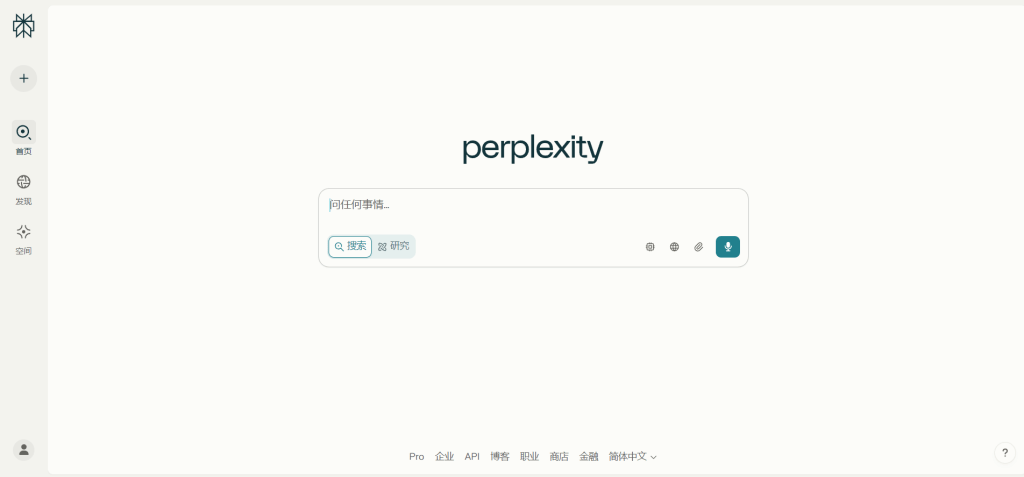
By integrating large models like GPT-4 and Claude, it crawls information from the entire web in real-time and generates answers with citation sources, supporting document uploads and multimodal search (such as image queries). Its "Focus Mode" can limit search scope (such as YouTube, academic papers), meeting deep research needs.
Phind
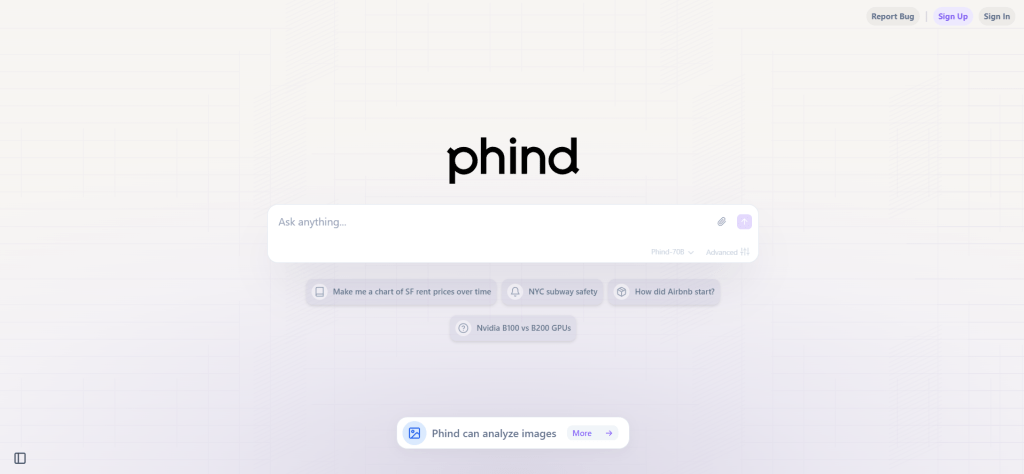
A professional engine for developer communities, capable of parsing complex programming problems and generating code examples, while integrating technical documentation libraries (such as Stack Overflow), directly linking solutions with original discussions.
You.com
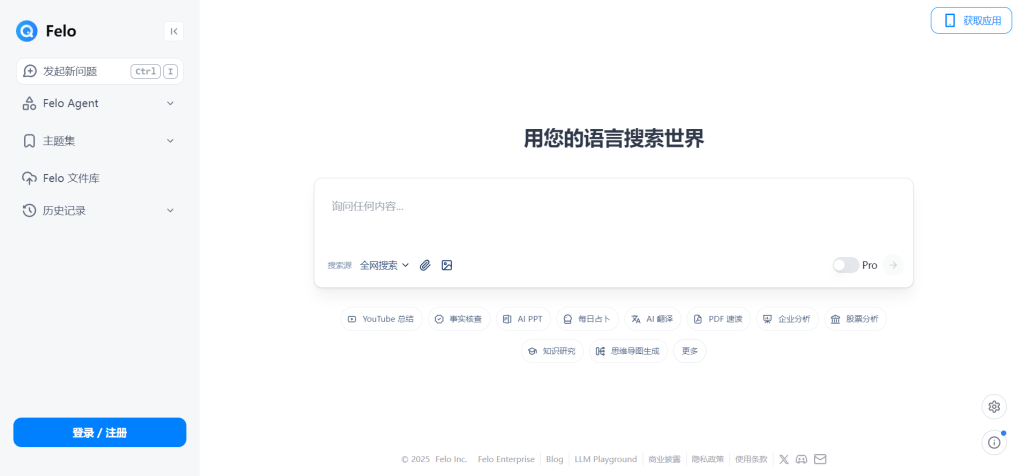
Emphasizes personalized experience, allowing users to customize AI model preferences (such as choosing different LLMs to generate answers), and provides visual charts and real-time news integration functions, suitable for multi-scenario information integration.
Felo AI
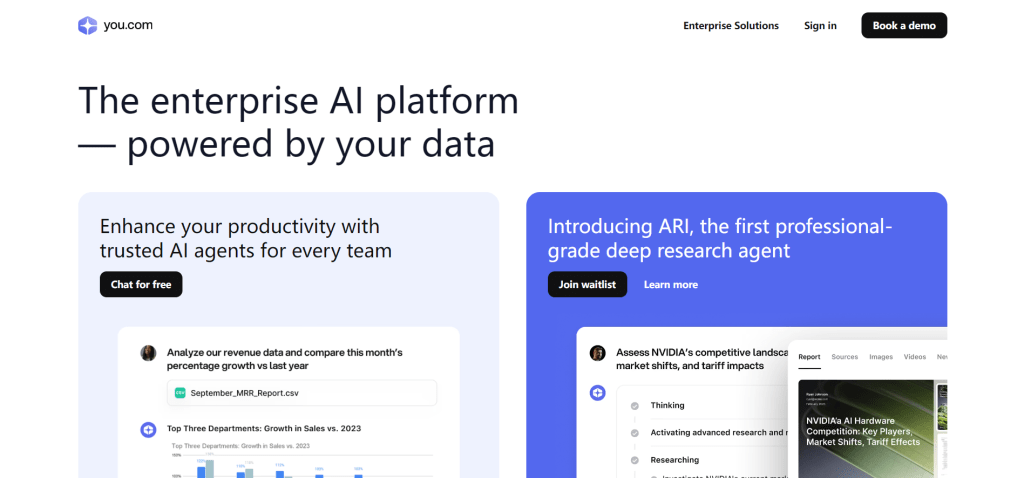
Breaking through traditional text output, supporting automatic conversion of search results into structured formats such as PPT slides and mind maps, and built-in academic paper translation tools, serving education and research scenarios.
Large Language Models with Web Search Integration
Integrating web search functionality into existing search engines or AI conversation tools to expand application boundaries. Typical cases are as follows:
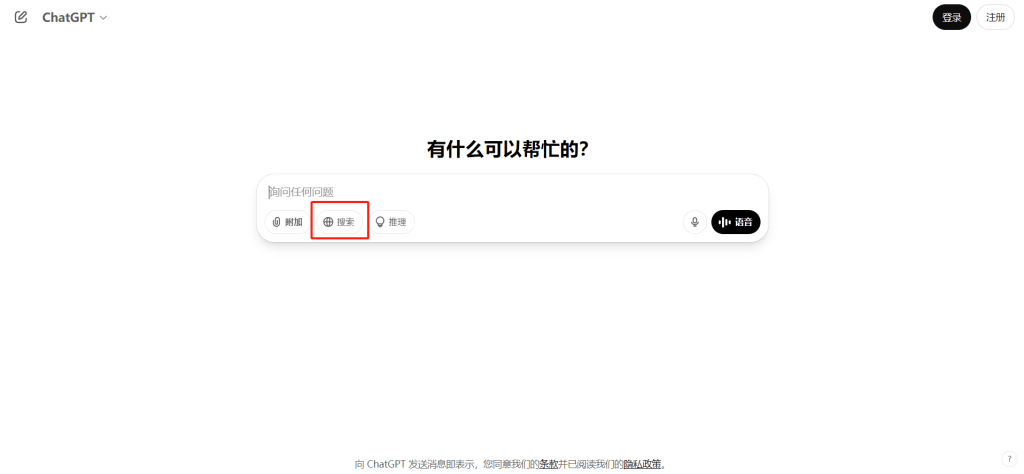
ChatGPT Search
Based on OpenAI's conversational model, with a new web search module, users can refine requirements through multi-turn conversations. The system combines context to generate answers with source links, especially good at handling open-ended long-tail questions.
Bing Copilot
Microsoft deeply integrates GPT-4 into Bing search, providing a dual mode of "traditional results + AI summary," supporting image analysis and multilingual real-time translation, becoming an efficient tool for enterprise office scenarios. Bing Copilot combines the comprehensiveness of traditional search results with the precision of AI summaries, supporting multi-turn conversations and context understanding, widely used in document analysis, data queries, and content creation scenarios.
Deepseek Web Search
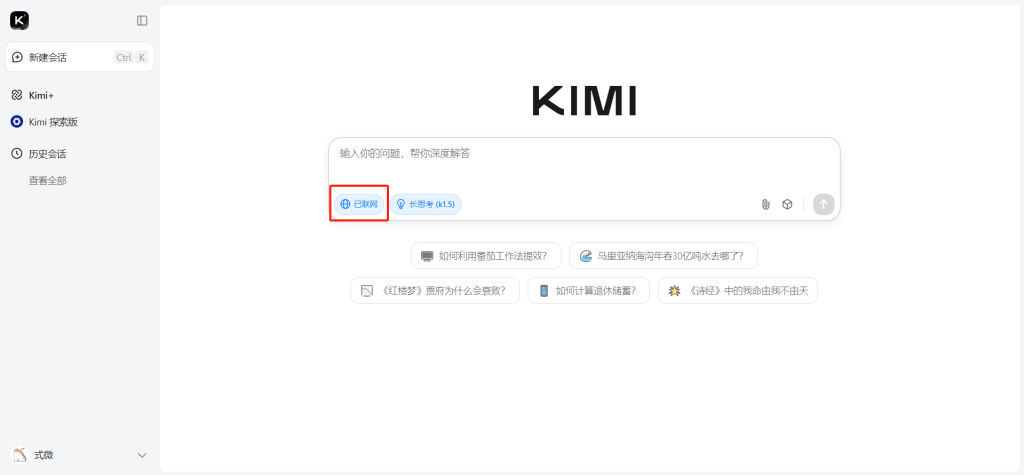
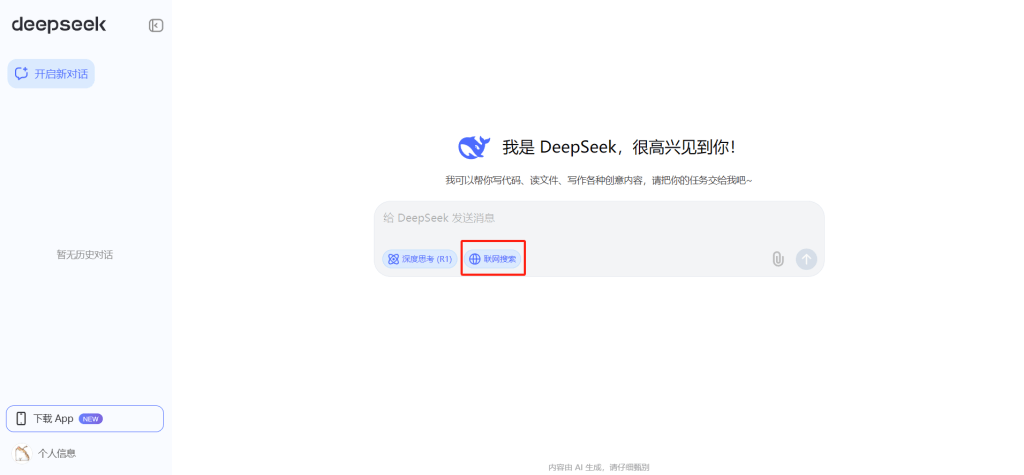
Deepseek is a web search function launched by China's leading AI large model company, supporting real-time information retrieval and context understanding, providing users with precise search experiences. Deepseek web search adopts advanced natural language processing technology, capable of understanding complex query intents, integrating multi-source information, providing structured search results and detailed analysis reports, widely used in research, learning, and work scenarios.
Grok DeepSearch
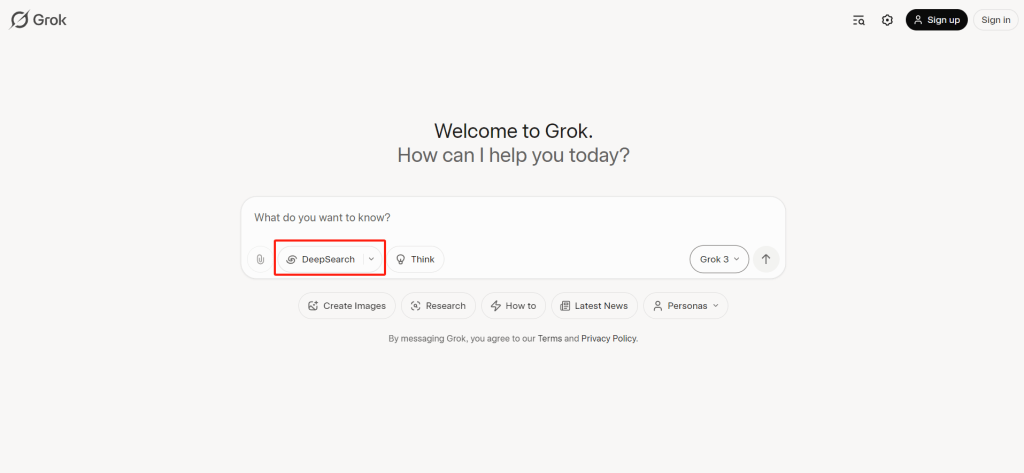
Grok is an AI assistant launched by xAI. Its DeepSearch function focuses on deep information retrieval and comprehensive analysis, capable of handling complex queries and reasoning about conflicting facts, providing concise reports. Grok DeepSearch adopts advanced reasoning capabilities, can explain its logical process, suitable for research, data analysis, and brainstorming scenarios, providing users with deeper information insights.
Other large models supporting web search: Including mainstream AI models like Claude and Gemini, all expand application boundaries by integrating web search functionality, providing users with more comprehensive information acquisition capabilities.
Core differences between the two types of AI search:
| Comparison Dimension | Native AI Search Engines | Large Language Models with Web Search Integration |
|---|---|---|
| Data Acquisition | Rely on self-built crawlers and real-time indexing (e.g., Perplexity crawls 1B+ web pages) | Mostly call third-party APIs (e.g., ChatGPT relies on Bing search) |
| Interaction Logic | Tend towards "search as conversation" (chat-style interface) | Retain traditional search box and overlay AI functions (e.g., Google Gemini's answer summary module) |
| Commercialization | Mostly adopt subscription model (e.g., Perplexity Pro $20/month) | Profit through advertising or ecosystem binding (e.g., Bing integrates Microsoft 365 services) |
With breakthroughs in multimodal reasoning and deep semantic analysis technology, AI search may continue to differentiate: vertical fields (such as law, healthcare) rely on industry knowledge bases to build barriers, while general products achieve cross-platform task execution through Agents (intelligent agents), like Fellou and Arc.
How to Choose and Use Search Engines: Practical Guide
When choosing a search engine, first consider whether privacy protection is needed. If yes, DuckDuckGo, Brave Search, or Qwant are recommended. If not, consider other factors. If searching for content in specific countries or languages, use the corresponding local search engines (such as Baidu for China, Yandex for Russia, Naver for South Korea), but note that local engines may have insufficient coverage of international content.
If you need quick answers or overviews, use AI search (Perplexity, ChatGPT) with traditional search verification. AI search provides direct answers and natural interaction, but may be inaccurate, have opaque sources, and require verification. For professional or academic content, combine Google Scholar, professional databases, and general search, and cross-verify multiple sources.
Search Engine Selection Decision Tree
For daily information queries, primarily use Google for comprehensive results, with DuckDuckGo as a privacy backup, and compare results from both engines. For academic research, first use Google Scholar to find academic papers, then use general search to supplement materials, and finally use professional databases for in-depth research.
For privacy-sensitive queries, prefer DuckDuckGo or Brave Search, but verify important information across multiple engines. For quick answers, first use AI search (Perplexity, ChatGPT) for an overview, then use traditional search to verify key information, and finally check original sources.
For local service queries, use local search engines (such as Baidu for China) combined with Google international version for comparison.
Search Engine APIs
Large language models themselves do not have web search capabilities. Their knowledge bases are limited by the timeliness of training data (usually up to a specific point in time) and cannot directly access real-time web information or dynamic databases. To overcome this limitation, developers need to "connect" large models to the internet through search engine APIs, building a Retrieval-Augmented Generation (RAG) framework. Below are some websites providing search API services, usually B2B or developer-oriented services:
Bocha: Web Search "Shovel Seller"
Bocha is a Hangzhou-based company. According to official introduction, as of March 2025, Bocha Search API daily call volume has reached 30 million (approximately 1/3 of Microsoft Bing), handling 60% of domestic AI applications' web search requests: Deepseek, Meta (uncertain) web search official Provider, appears to have contracted most domestic B2B search business, Bing's search API is too expensive.

Brave

Brave owns Brave Browser and Brave Search Engine, focusing on no-tracking, no user data storage browsing and search experience, rejecting algorithm filtering and content censorship, ensuring free access to information. As of March 2024, it has over 73.32 million monthly active users and 26.26 million daily active users. Anthropic's Claude and Mistral's Le Chat real-time search is provided by Brave API. There are two ways to submit websites to Brave: 1. Direct website submission; 2. Join the Web Discovery Project program (as shown below).
Brave Web Discovery Project is a website submission and optimization program launched by Brave. Website owners can join this program to help Brave search engine better index and discover website content. This project not only helps websites get indexed but also optimizes interaction metrics, improving website performance in Brave search results.

Exa
Exa is an AI search company founded by Harvard alumni, committed to building the next-generation search engine designed specifically for artificial intelligence, providing efficient search API services. Exa adopts neural search and semantic search technology, capable of understanding the deep meaning of queries rather than simple keyword matching, providing more accurate search results for AI products. The company has received multiple rounds of funding, with a valuation of $700 million, providing optimized search solutions for various AI applications including AI chatbots and content generation tools, helping developers quickly integrate high-quality search functionality.

SerpApi

SerpApi is an API service focused on providing real-time, structured search engine result page (SERP) data, supporting almost all mainstream search engines and e-commerce platforms including Google, Bing, Yandex, YouTube, Amazon, eBay, etc. SerpApi uses proxy servers and browser automation technology to simulate real user search behavior, returning structured JSON data, including search results, ads, knowledge graphs, related searches, and other complete information. The service is widely used in SEO monitoring, market research, price tracking, content aggregation, and other scenarios, providing developers and enterprises with reliable search engine data acquisition solutions.
Other providers of search APIs include:
- Zhipu Web-Search-Pro (API Documentation)
- Tiangong Search (Product Documentation)
How Search Engines Work: Technical Deep Dive
Search engines are complex software systems that work through multiple technical modules to achieve the complete process from web page discovery to result presentation. Core technologies include: web crawlers (automatically discover and crawl web content), indexers (parse web content into structured data and build inverted indexes), retrievers (match and rank results based on user queries), and ranking algorithms (use hundreds of factors to rank results).
Understanding how search engines work is crucial for SEO optimization and website technical architecture design. Search engines discover pages through crawlers, build search libraries through indexers, and rank results through algorithms. The entire process involves complex technical systems. Google's crawling system Trawler, indexing system Alexandria, ranking system Mustang, and query processing system SuperRoot work together to ensure users get the most relevant search results quickly.
To learn more about search engine technical principles, how crawlers work, how indexes are built, how ranking algorithms use various factors to rank results, and technical SEO optimization methods, check out our "How Search Engines Work: Technical Deep Dive" complete guide.
Future Trends: What You Need to Know
Search engines are transitioning from "searching for links" to "directly generating answers." AI understands query intent and generates personalized responses, with AI search features like Google SGE and Bing Copilot developing rapidly. Multimodal search capabilities are enhancing, with image, video, and audio search supporting "search by image" and "voice search." Updates to features like Google Lens and Bing Visual Search are worth watching. User demand for privacy protection is increasing, and decentralized search solutions may emerge. The impact of regulations like GDPR and CCPA on the search industry will continue.
In terms of business models, the advertising model (Google, Bing) remains mainstream but faces privacy regulation challenges. Subscription models (such as Kagi) may grow in niche markets but will not become mainstream. Ecosystem integration (Google, Microsoft) will continue to deepen, forming closed-loop ecosystems.
In content and indexing trends, professional search tools for academic, code, and legal searches will become more precise, and general search engines will integrate more vertical search functions. Requirements for indexing speed of real-time content like news and social media are higher, and AI search may integrate more real-time data sources. Indexing and search capabilities for minority languages will improve, and cross-language search (such as searching English content in Chinese) will become more intelligent.
For SEO and content creators, AI search emphasizes content quality and originality over keyword stuffing, making E-E-A-T (Experience, Expertise, Authoritativeness, Trustworthiness) principles more important. Structured data helps AI better understand and display content, and Schema.org markup will become standard configuration. Optimization is needed not only for search engines but also for AI search, social media search, and more. Content needs to adapt to multiple display formats (text, images, video).
Conclusion
The global search engine market is experiencing dual transformations in technical paradigms and user value: traditional keyword retrieval is gradually upgrading to AI-driven semantic understanding and multimodal interaction, with generative engines (such as Perplexity, Bing Copilot) achieving "search as answer"; regionalization and verticalization trends are parallel, with Baidu, Yandex, etc., consolidating advantages through local ecosystems, and vertical searches such as academic and e-commerce rising; privacy protection (such as DuckDuckGo) and subscription services (such as Kagi) are reshaping business models. In the future, search engines will not only be information entry points but also cross-scenario intelligent service hubs, continuously reconstructing the way humans connect with information under the drive of AI agents and data compliance.