Introduction
Affiliate marketing tools have revolutionized how businesses manage partner programs, automate commission tracking, and scale revenue through strategic partnerships. This comprehensive guide explores the best affiliate marketing tools for 2026, featuring Rewardful, Tolt, Tapfiliate, Lasso, Postaffiliate, Firstpromoter, Trackdesk, and Cello. We cover automated commission calculation, real-time tracking, fraud prevention, and partner management features that streamline affiliate program operations. For businesses seeking comprehensive affiliate marketing strategies, our detailed affiliate marketing guide provides essential insights into program setup and optimization.
Affiliate Marketing Tools: Types & How They Work
Traditional affiliate tracking relied on manual coupon codes, basic URL parameters, and spreadsheet-based commission calculations. Modern affiliate marketing tools automate this entire process through sophisticated tracking pixels, server-side attribution, and real-time analytics. These platforms eliminate manual errors, prevent fraud, and provide detailed insights into partner performance. While traditional methods work for small programs, automated tools become essential as you scale to hundreds or thousands of affiliates. The shift from manual tracking to automated platforms represents the biggest advancement in affiliate marketing technology.
Best Affiliate Marketing Tools 2026
Here are the top affiliate marketing tools for 2026, offering comprehensive solutions for commission tracking, partner management, and program automation. These tools cater to different business sizes and technical requirements, from startups to enterprise-level operations.
1. Rewardful: AI/SaaS Focused

Rewardful stands out as the most popular affiliate marketing tool specifically designed for AI and SaaS companies, making it the go-to platform for tech startups and software businesses. Trusted by thousands of AI/SaaS companies worldwide, Rewardful has become the industry standard for automated affiliate program management in the tech sector. Its specialized features cater specifically to subscription-based businesses with complex commission structures, lifetime value tracking, and recurring revenue attribution.
The platform excels in handling sophisticated commission models common in AI/SaaS products, including multi-tier affiliate structures, lifetime commissions, and performance-based bonuses. Rewardful's fraud prevention system uses advanced algorithms to detect suspicious activities while maintaining high attribution accuracy. API integrations with popular tools like Stripe, Zapier, and major CRMs make it seamless to incorporate into existing tech stacks. For AI/SaaS companies, Rewardful represents the most reliable and feature-rich solution available.
2. Tolt: Simple & Effective
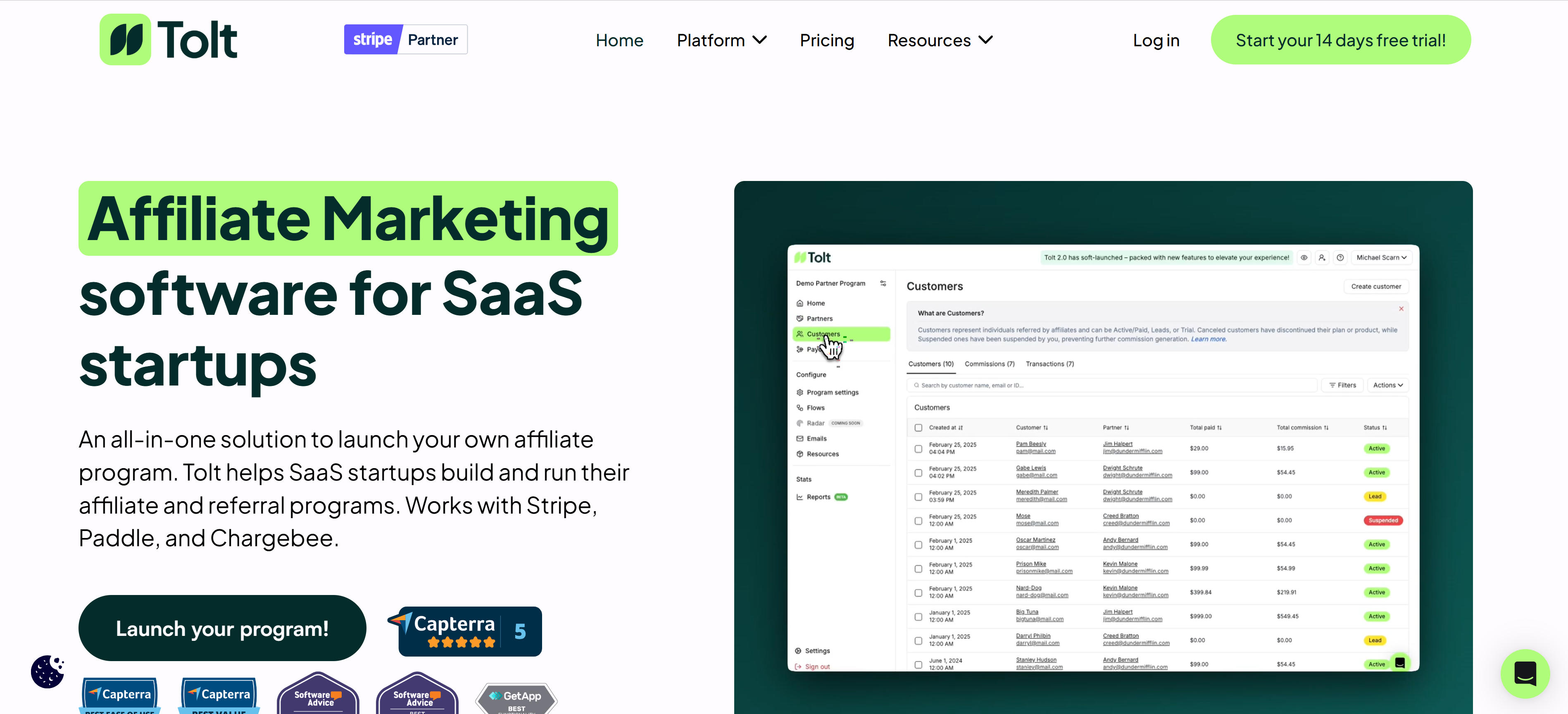
Tolt offers a streamlined approach to affiliate marketing, focusing on simplicity and effectiveness for businesses that want powerful features without complexity. The platform provides essential affiliate program management tools with an intuitive interface that gets you up and running quickly. Tolt's strength lies in its balance of comprehensive functionality and user-friendly design, making it accessible for teams without dedicated affiliate managers.
Core features include automated commission tracking, customizable affiliate dashboards, and detailed performance analytics. The platform supports multiple commission structures and provides real-time reporting on affiliate performance. While not as enterprise-focused as some competitors, Tolt delivers reliable results for growing businesses looking to scale their affiliate programs efficiently.
3. Tapfiliate: Enterprise Features

Tapfiliate delivers enterprise-grade affiliate marketing capabilities with advanced features for large-scale programs and complex commission structures. The platform handles sophisticated attribution models, multi-tier affiliate networks, and custom integration requirements that smaller tools cannot accommodate. Tapfiliate's robust infrastructure supports high-volume affiliate programs with thousands of active partners.
Enterprise features include advanced fraud detection, custom attribution rules, and comprehensive API access for seamless integration with existing systems. The platform provides detailed analytics on affiliate performance, conversion tracking, and ROI measurement. While more expensive than simpler alternatives, Tapfiliate's scalability and reliability make it the preferred choice for established businesses with mature affiliate programs.
4. Lasso: Shopify Integration

Lasso specializes in e-commerce affiliate programs with seamless Shopify integration, making it the ideal choice for online stores and digital product sellers. The platform's deep integration with Shopify automates commission tracking, order attribution, and payout processing directly from your store's backend. This eliminates manual reconciliation and reduces administrative overhead for e-commerce businesses.
Beyond Shopify integration, Lasso provides comprehensive affiliate management tools including automated email campaigns, performance dashboards, and conversion tracking. The platform supports multiple commission structures and provides detailed analytics on affiliate performance and ROI. For Shopify merchants, Lasso represents the most streamlined solution for launching and managing successful affiliate programs.
5. Postaffiliate: Comprehensive Suite

Postaffiliate offers a comprehensive affiliate marketing suite with extensive customization options and advanced tracking capabilities. The platform supports complex commission structures, multi-level affiliate programs, and custom integration requirements. Postaffiliate's flexibility makes it suitable for businesses with unique affiliate program needs that cannot be met by more standardized platforms.
Advanced features include custom attribution models, detailed performance segmentation, and comprehensive reporting tools. The platform supports multiple payment methods, automated payouts, and partner communication tools. While requiring more setup than simpler alternatives, Postaffiliate's extensive feature set and customization capabilities make it valuable for businesses needing tailored affiliate program solutions.
6. Firstpromoter: Developer Friendly
Firstpromoter caters to developers and tech-savvy businesses with its API-first approach and developer-friendly features. The platform provides extensive API access, webhooks, and integration options that allow seamless incorporation into custom tech stacks. Firstpromoter's developer focus makes it ideal for businesses with technical teams that want full control over their affiliate program implementation.
Core features include automated commission tracking, partner management dashboards, and detailed analytics. The platform supports multiple programming languages and frameworks, with comprehensive documentation and developer tools. While requiring technical expertise for full implementation, Firstpromoter offers unparalleled flexibility for businesses needing custom affiliate program solutions.
7. Trackdesk: Advanced Tracking

Trackdesk specializes in advanced affiliate tracking and attribution with sophisticated algorithms for accurate conversion measurement. The platform uses multiple attribution models, including first-touch, last-touch, and multi-touch attribution, ensuring commissions are allocated correctly across complex customer journeys. Trackdesk's tracking accuracy makes it valuable for businesses with long sales cycles or multiple touchpoints.
Advanced features include custom attribution rules, fraud detection algorithms, and detailed performance analytics. The platform supports complex commission structures and provides real-time reporting on affiliate performance. While focused primarily on tracking, Trackdesk integrates well with other affiliate management tools for comprehensive program management.
8. Cello: Modern Interface
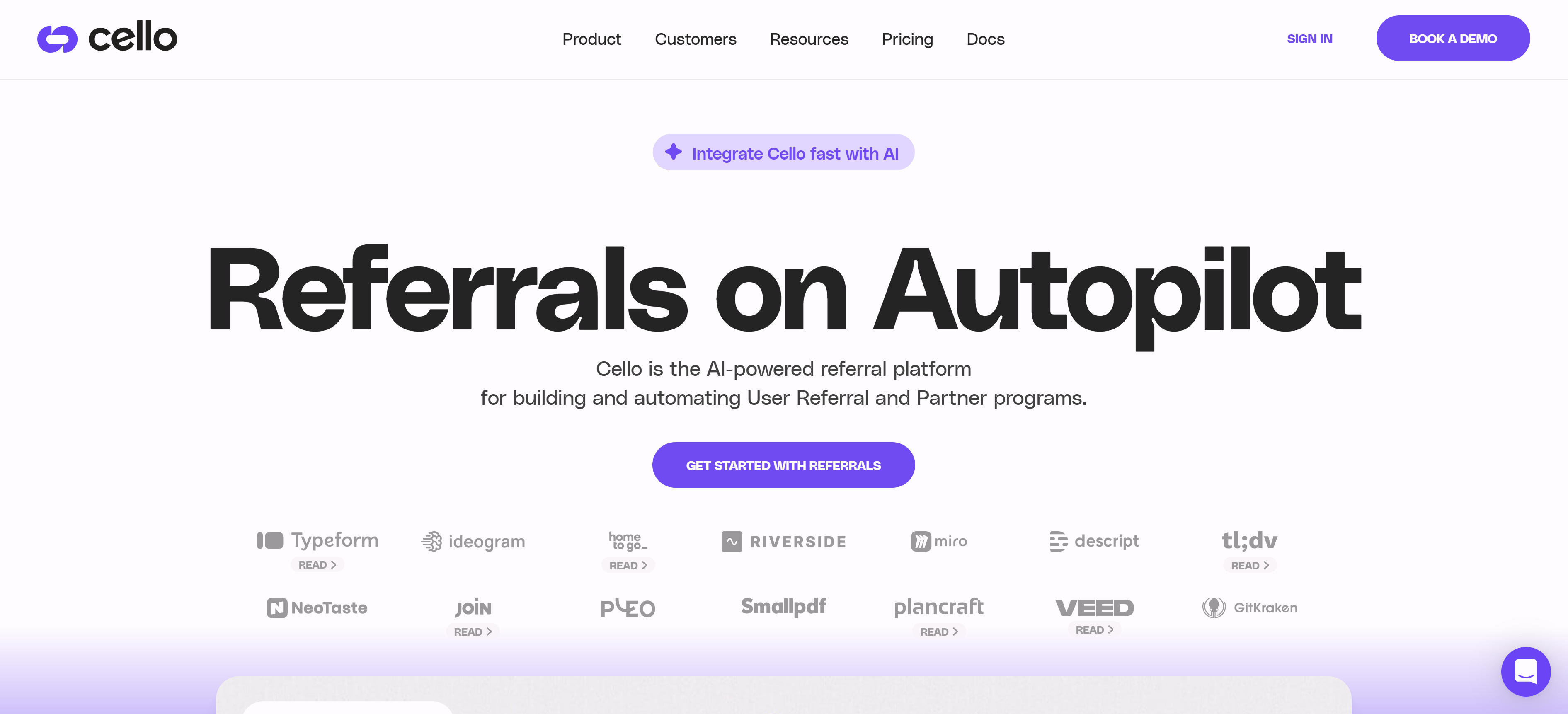
Cello offers a modern, intuitive interface for affiliate program management with a focus on user experience and ease of use. The platform combines powerful affiliate tracking capabilities with a clean, modern design that simplifies program administration. Cello's user-friendly approach makes it accessible for businesses without dedicated affiliate managers while still providing essential features for effective program management.
Core features include automated commission tracking, partner management tools, and performance analytics. The platform supports multiple commission structures and provides real-time reporting on affiliate performance. Cello's modern interface and streamlined workflows make it an excellent choice for growing businesses looking to scale their affiliate programs without complexity.
Affiliate Marketing Tools Comparison
Here's a detailed comparison of the top affiliate marketing tools to help you choose the best solution for your business needs:
Use Cases: From E-commerce to SaaS
1. E-commerce Stores
E-commerce businesses leverage affiliate marketing tools to automate commission tracking across large product catalogs and multiple sales channels. These tools handle complex attribution across web, mobile, and social commerce touchpoints, ensuring accurate commission payouts while scaling with business growth. For online stores, affiliate tools provide the automation needed to manage hundreds of affiliates without manual reconciliation headaches.
2. SaaS Companies
SaaS companies use affiliate marketing tools to track recurring revenue attribution and lifetime customer value from partner referrals. These platforms handle subscription-based commission structures, churn attribution, and multi-year revenue recognition that traditional tracking cannot manage. For AI/SaaS businesses, specialized tools like Rewardful provide the sophisticated tracking needed for complex subscription models.
3. Content Creators
Content creators and influencers use affiliate marketing tools to manage their own affiliate networks and track earnings from sponsored content. These platforms provide creator dashboards, automated link tracking, and performance analytics that help monetize audience relationships. For creators with large followings, affiliate tools enable systematic partner management and revenue optimization.
4. Digital Agencies
Digital marketing agencies use affiliate marketing tools to manage client affiliate programs and track campaign performance across multiple brands. These platforms provide white-label solutions, multi-client management, and detailed reporting for agency-client relationships. Agencies benefit from tools that handle complex attribution and provide client-ready analytics dashboards.
5. Marketplace Platforms
Marketplace platforms employ affiliate marketing tools to manage commissions across thousands of sellers and complex transaction flows. These tools handle multi-vendor attribution, cross-platform tracking, and automated payouts for marketplace ecosystems. For platforms with diverse seller networks, affiliate tools provide the scalability needed for enterprise-level partner management, especially when combined with influencer marketing tools for comprehensive creator partnerships.
How to Choose Affiliate Marketing Tools
1. Evaluate Business Scale & Budget
Assess your current business size and affiliate program scope. Small businesses may prefer simple, affordable tools like Tolt, while enterprise operations need comprehensive platforms like Tapfiliate with advanced features and scalability.
2. Consider Integration Requirements
Evaluate your existing tech stack and integration needs. Shopify stores should prioritize Lasso, while businesses with custom systems may prefer Firstpromoter's extensive API capabilities.
3. Assess Tracking & Attribution Features
Determine your attribution complexity needs. Simple businesses can use basic tracking, while companies with long sales cycles or complex customer journeys require advanced attribution like Trackdesk offers.
4. Review Reporting & Analytics
Check analytics depth and reporting capabilities. Businesses focused on ROI tracking need detailed performance metrics, while those managing large affiliate networks require comprehensive partner dashboards.
5. Check Support & Compliance Features
Verify fraud prevention, compliance tools, and customer support quality. Ensure the platform meets your industry regulations and provides reliable technical assistance for your team.
Conclusion
Affiliate marketing tools have evolved from basic tracking solutions to comprehensive platforms that automate every aspect of partner program management. From Rewardful's dominance in the AI/SaaS space to Tapfiliate's enterprise capabilities, these tools provide the automation and insights needed to scale affiliate programs effectively. The right tool depends on your business model, technical requirements, and growth stage.
Choose Rewardful for AI/SaaS subscription tracking, Tapfiliate for enterprise-scale programs, or Lasso for seamless Shopify integration. Each platform offers unique strengths that can transform your affiliate marketing efforts from manual processes to automated, scalable revenue streams. The future of affiliate marketing lies in sophisticated tracking, fraud prevention, and partner relationship management.