What Are Influencer Marketing Tools
Influencer marketing tools use AI and data technology to help brands and marketing teams discover, contact, and manage influencer collaborations. These tools automate influencer search, data analysis, and collaboration management, helping marketing teams run influencer campaigns more efficiently and boost brand influence and marketing effectiveness.
Influencer marketing tools automate influencer discovery, analyze influencer data intelligently, provide detailed collaboration recommendations, and support end-to-end collaboration management. They collect influencer information from multiple social media platforms, score influencers intelligently, analyze follower quality and engagement rates, and execute collaboration invitations and management automatically. Modern influencer marketing tools deliver professional influencer data with high accuracy, coverage, and functionality.
Influencer marketing tools are widely used in brand promotion, product launches, and content marketing. They suit marketing teams needing quick influencer identification, lacking influencer resources, or requiring improved collaboration efficiency. AI tools should act as collaborative partners in influencer marketing, handling data collection and repetitive tasks, allowing marketing teams to focus on building relationships and creating quality content. For more insights, check our comprehensive influencer marketing guide and affiliate marketing strategies.
How Influencer Marketing Tools Work
Modern influencer marketing technology uses big data analysis, AI, and automation to understand brand needs, learn influencer characteristics, and automatically discover and evaluate qualified influencers. Compared to traditional influencer marketing, influencer marketing technology significantly improves discovery efficiency, data analysis accuracy, and collaboration management efficiency.
Core advantages include influencer discovery (automatically discovering potential influencers from multiple social platforms), data analysis (analyzing follower quality, engagement rates, and content quality), intelligent matching (matching the most suitable influencers based on brand needs), and collaboration management (automating collaboration workflows, tracking effectiveness). Different tools use different architectures: discovery tools rely on social media APIs and data crawlers; analysis tools use machine learning algorithms; management tools combine CRM and workflow automation; comprehensive platforms integrate complete workflows.
Best Influencer Marketing Tools 2026
Below are the most recommended professional influencer marketing tools for 2026. These tools are designed specifically for influencer marketing, providing high-quality influencer data, supporting multiple marketing scenarios and collaboration methods, especially suitable for marketing teams needing quick influencer identification, improved collaboration efficiency, or professional data support.
1. Lessie AI: AI Agent Influencer Search
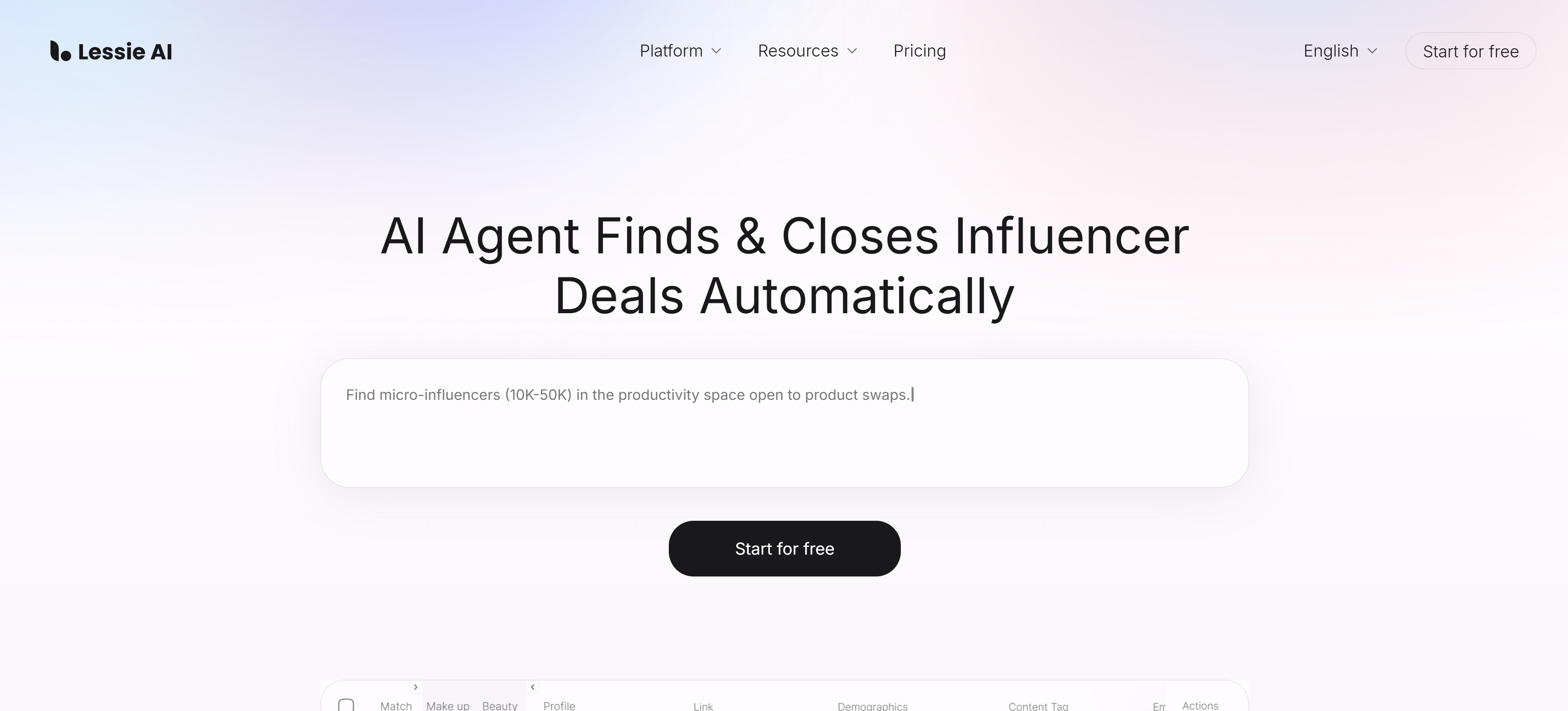
Lessie AI is an AI-driven influencer search tool with AI Agent, automating the entire influencer discovery and collaboration workflow. It helps users quickly find ideal influencers through AI Agent, supports advanced filters and intelligent matching, and improves collaboration effectiveness through AI-driven personalization. The tool provides a powerful influencer database covering multiple social media platforms, supporting advanced search and filtering.
Lessie AI's AI Agent understands brand needs, automatically searches and matches the most suitable influencers. AI personalization creates personalized influencer recommendations for each brand, improving collaboration match quality.
2. Stormy.ai: Influencer Discovery Platform
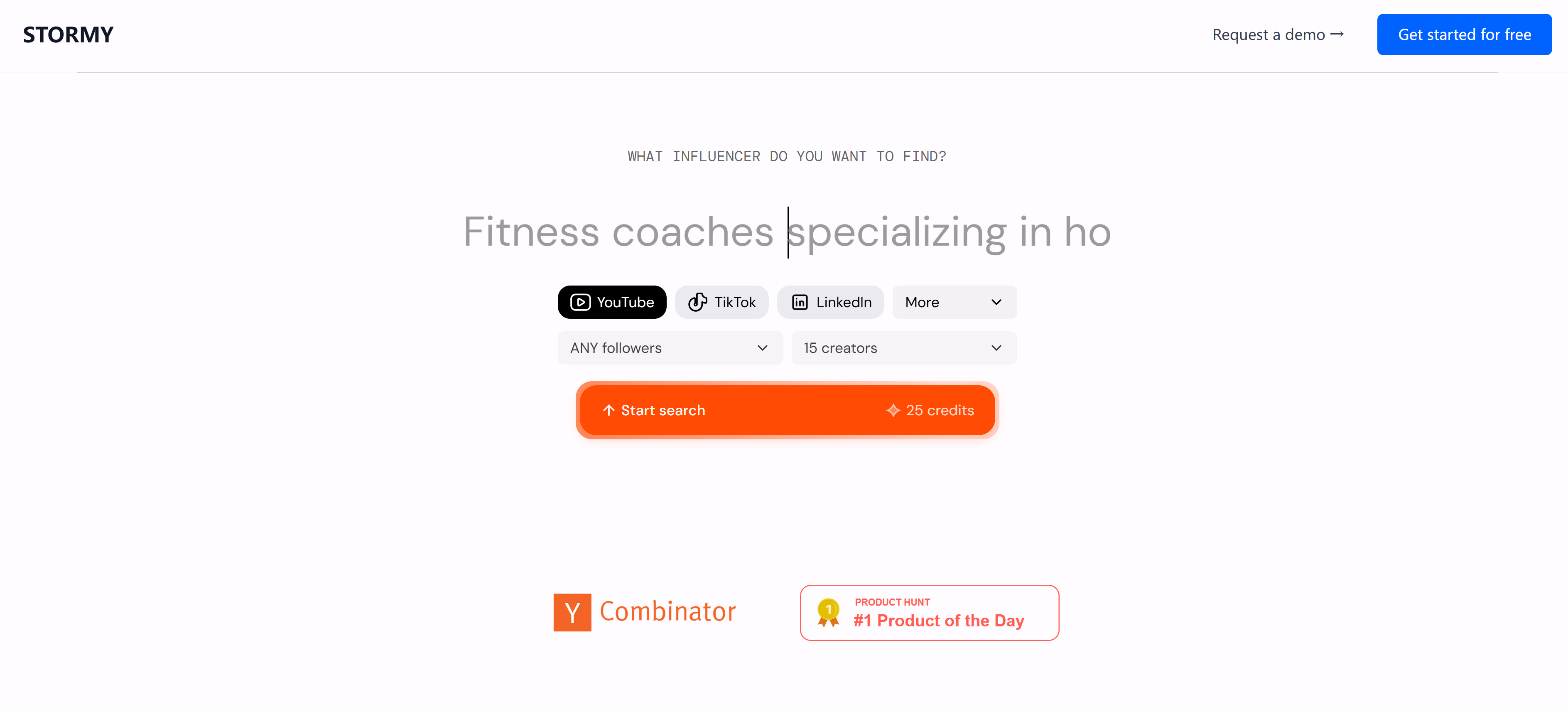
Stormy.ai is a professional influencer discovery and analytics platform helping brands quickly find suitable influencers and analyze their performance. It provides a powerful influencer database covering multiple social platforms, supporting advanced search and filtering, helping users find the best matches.
Stormy.ai provides influencer analytics, analyzing follower quality, engagement rates, and content quality. Multi-platform data integration analyzes influencer data across Instagram, TikTok, YouTube. Collaboration management tracks progress and manages content, improving collaboration efficiency. Stormy.ai's professional discovery and analytics capabilities make it ideal for marketing teams needing comprehensive influencer data.
3. Passionfroot: B2B Influencer Marketing Platform
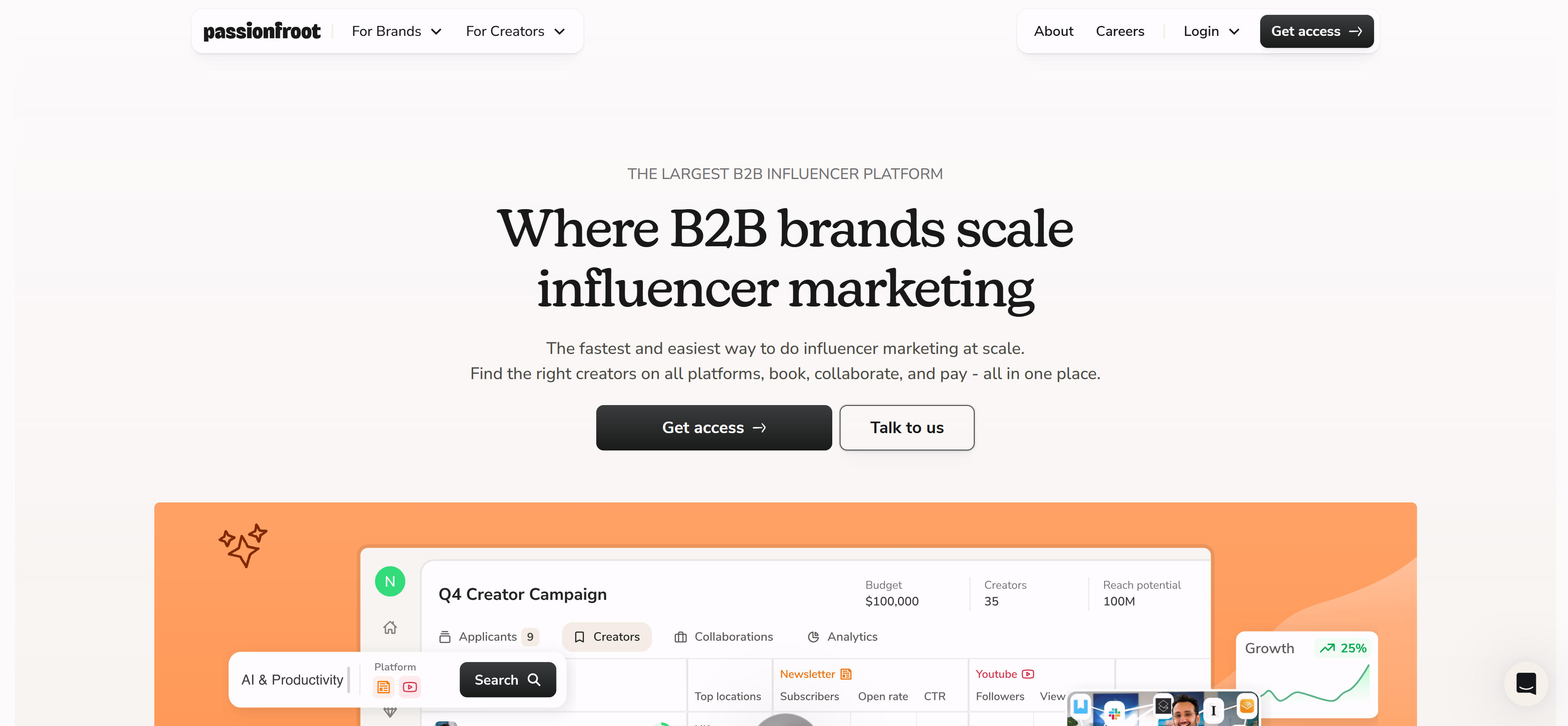
Passionfroot is the world's leading B2B influencer marketing platform, helping B2B brands achieve scalable growth through creator partnerships. The platform provides the world's largest B2B creator network, covering Newsletter, LinkedIn, YouTube, Instagram, Twitter, Podcast, and other platforms, helping brands quickly discover, book, and manage creator collaborations.
Passionfroot's core advantages include AI-driven creator search, direct booking functionality, automated payments, and performance tracking. The platform offers AI creator search that can search across all platforms and find suitable creators in minutes.
4. Aha: Influencer Marketing Management
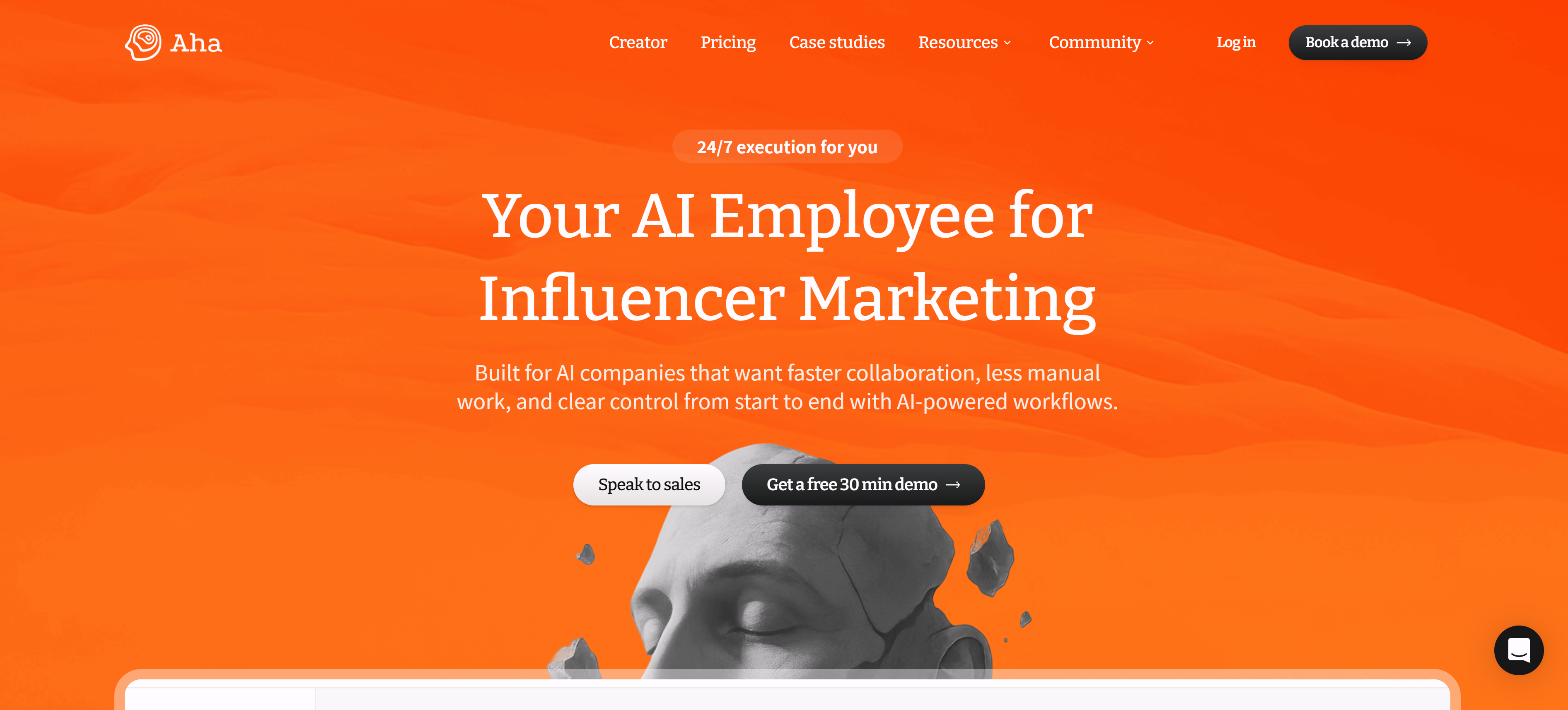
Aha provides complete influencer marketing management solutions, helping brands manage entire influencer collaboration workflows. It integrates influencer discovery, collaboration management, and performance analysis, providing a unified platform enabling marketing teams to simplify workflows and improve marketing efficiency.
Aha's influencer discovery finds qualified influencers in seconds. Performance analysis uses data-driven methods to evaluate collaboration effectiveness. Workflow automation captures each collaboration, accelerating each project. Aha's platform integration capabilities support multiple social platforms and marketing tools, making it ideal for teams needing unified influencer marketing platforms.
5. Partnrup.ai: AI Influencer Matching
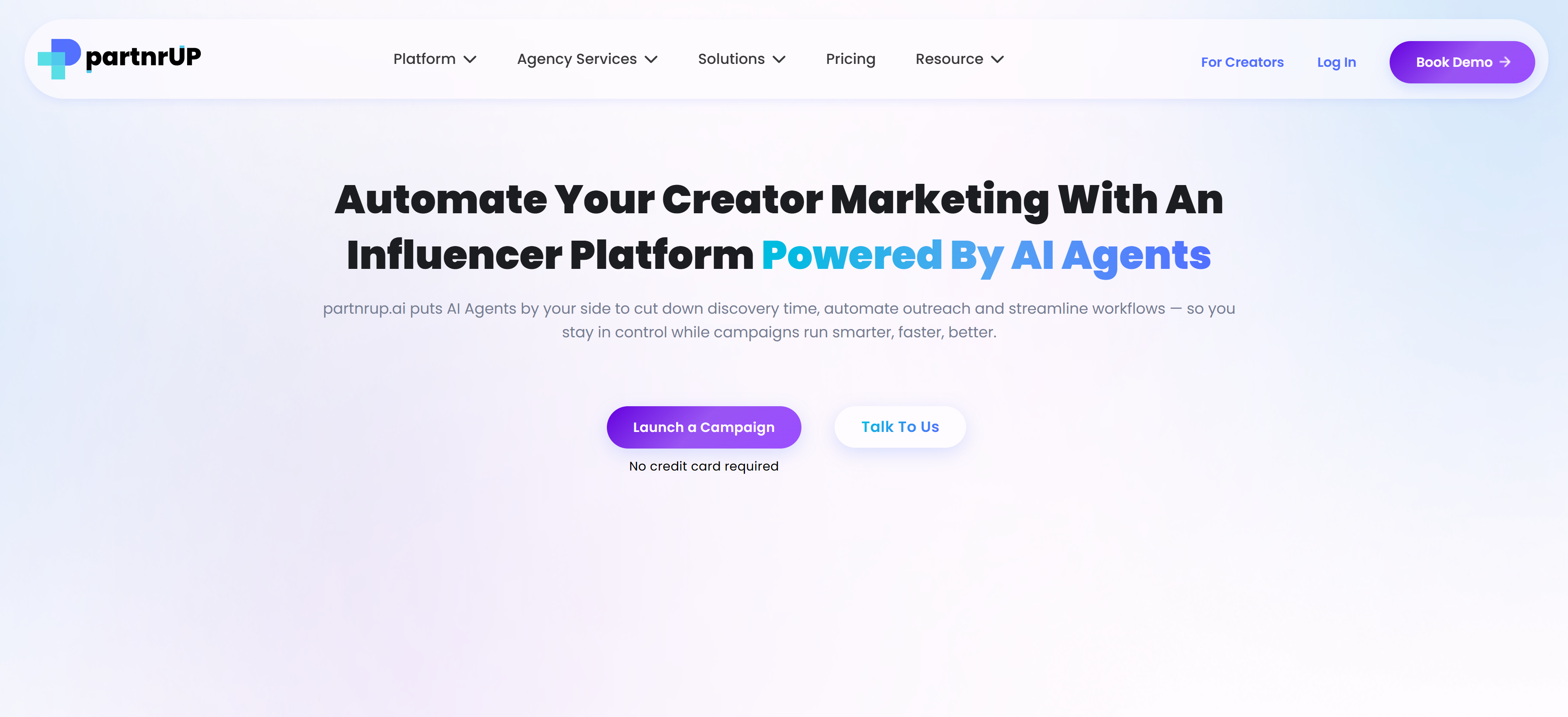
Partnrup.ai is an AI-driven influencer matching platform using AI to help brands find the most suitable influencer partners. It integrates AI matching algorithms, influencer databases, and collaboration management, helping teams run influencer marketing efficiently.
Partnrup.ai's AI matching uses machine learning algorithms to analyze brand needs and influencer characteristics, automatically matching the most suitable influencers. Influencer database covers multiple social platforms, supporting advanced search and filtering. Collaboration management tracks progress and manages content. AI personalization creates personalized influencer recommendations for each brand.
6. Favikon: Influencer Analytics Tool
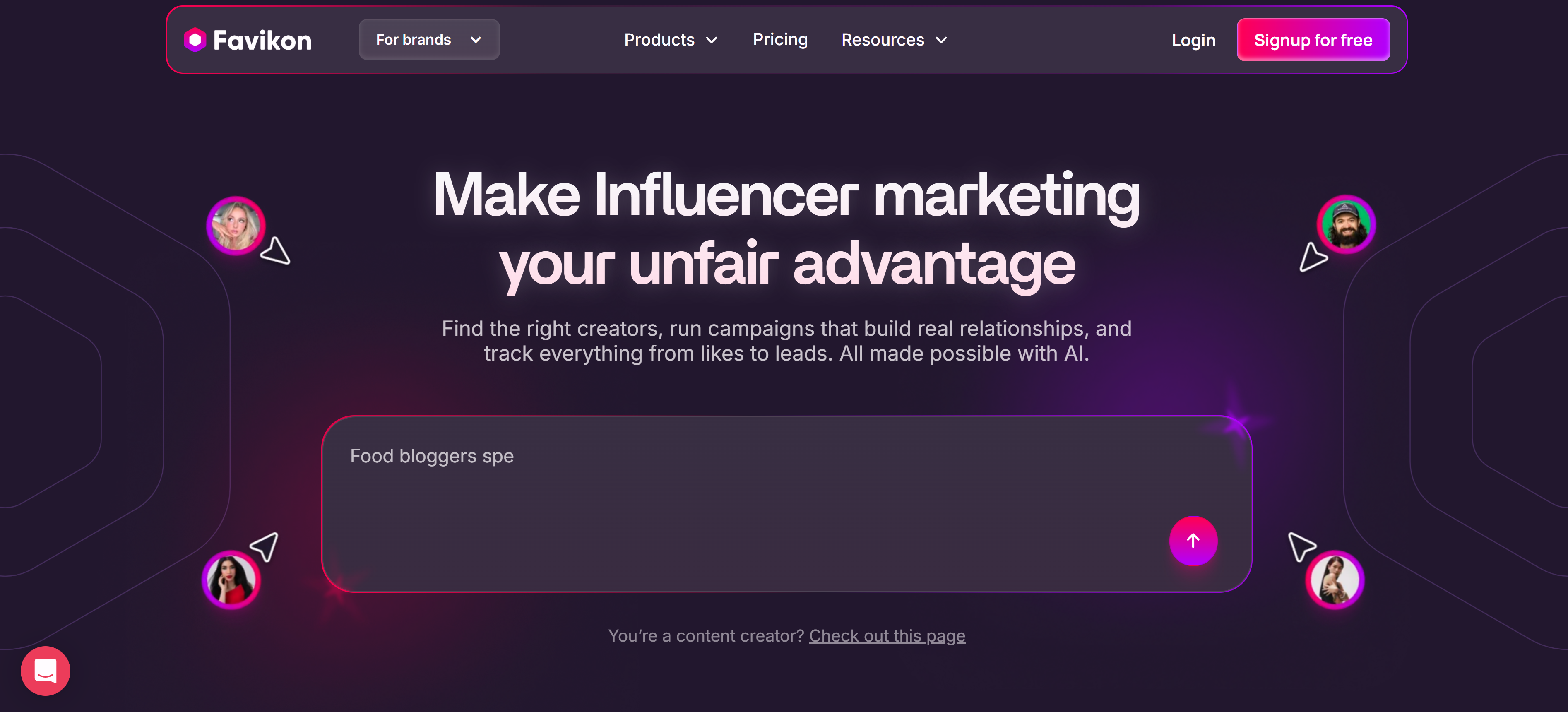
Favikon is a professional influencer analytics and ranking tool helping brands understand influencer performance and influence. It provides in-depth influencer data and analytics, supports multi-platform data integration and ranking, improving marketing decision accuracy.
Favikon provides influencer ranking, ranking influencers across multiple dimensions. Data enrichment enhances existing influencer data, ensuring accuracy and completeness. Multi-platform support analyzes influencer data across Instagram, TikTok, YouTube. Favikon's professional analytics capabilities make it ideal for marketing teams needing in-depth influencer data.
7. AspireIQ: Influencer Marketing Platform
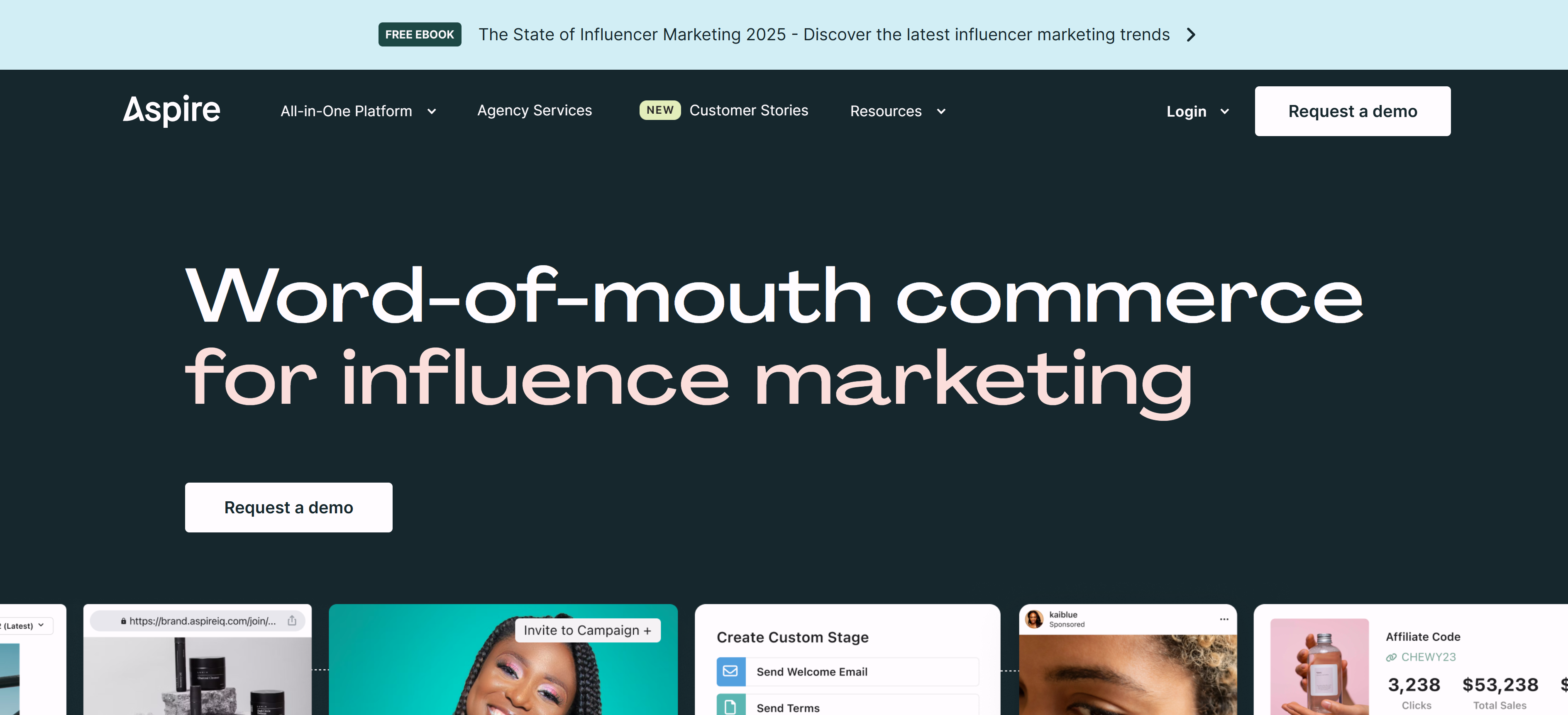
AspireIQ is a comprehensive influencer marketing platform that empowers brands to discover, connect, and collaborate with influencers at scale. It combines influencer discovery, relationship management, content creation, and performance analytics into a unified platform, helping marketing teams streamline their influencer marketing processes and maximize ROI.
AspireIQ's influencer discovery uses advanced algorithms to identify relevant influencers based on brand criteria. Relationship management maintains organized influencer databases and communication history. Content creation supports influencer-generated content workflows. Performance analytics provides detailed campaign metrics and ROI tracking. AspireIQ's comprehensive platform capabilities make it ideal for marketing teams needing end-to-end influencer marketing solutions.
8. Upfluence: Influencer Discovery & Management
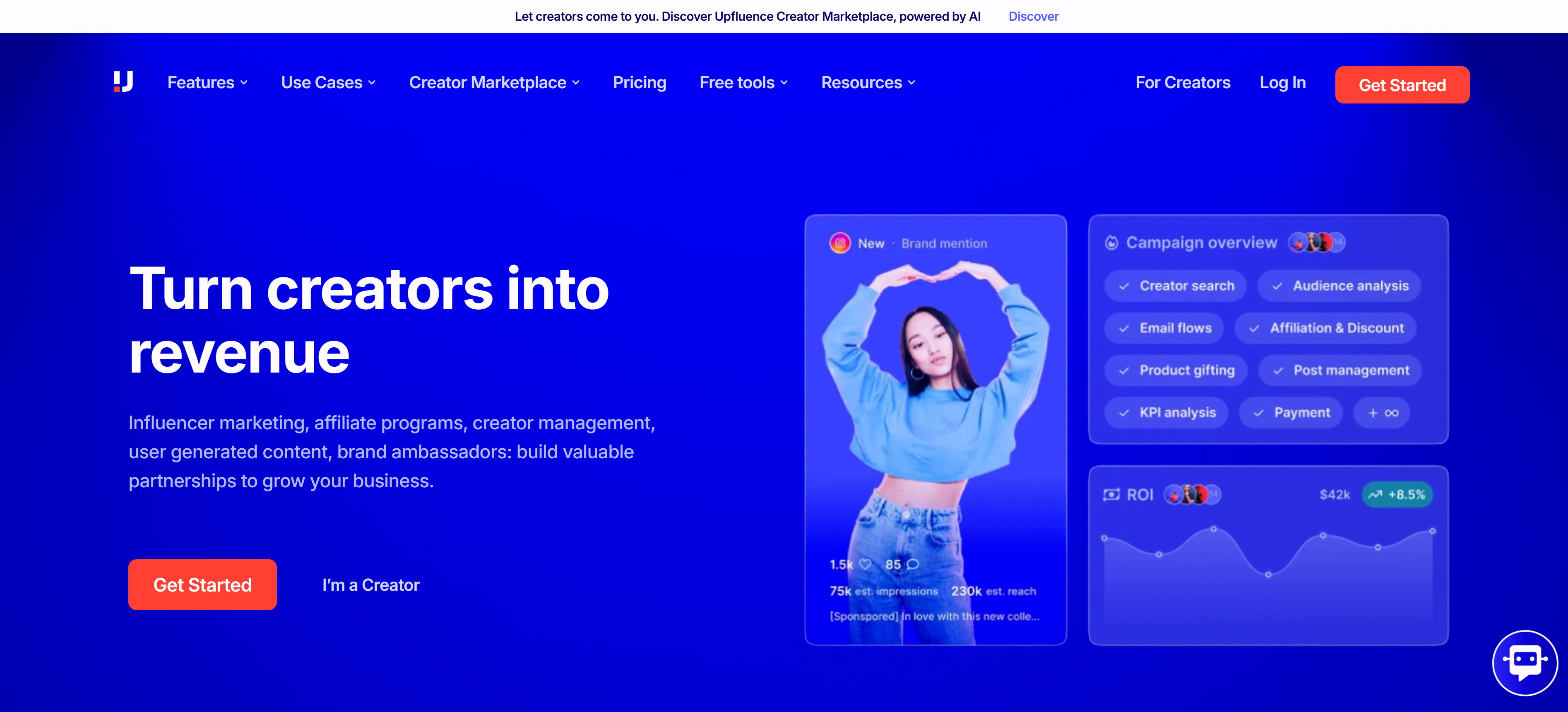
Upfluence is a comprehensive influencer marketing platform providing influencer discovery, collaboration management, and multi-platform integration capabilities. It helps brands find suitable influencers, manage collaborations, and track performance across multiple social media platforms.
Upfluence's influencer discovery uses advanced search and filtering capabilities to find relevant influencers. Collaboration management provides workflow automation and progress tracking. Multi-platform integration supports Instagram, TikTok, YouTube, and other platforms. Performance analytics offers detailed campaign metrics and ROI insights. Upfluence's comprehensive capabilities make it ideal for marketing teams needing integrated influencer marketing solutions.
Influencer Marketing Tool Comparison
Below is a detailed comparison of mainstream influencer marketing tools to help you quickly understand each tool's features, application scenarios, and suitability:
| Tool Name | Core Features | Main Use Cases | Target Users |
|---|---|---|---|
| Lessie AI | AI Agent, automated discovery, intelligent matching | Influencer search, collaboration management | Marketing teams, brands |
| Stormy.ai | Influencer discovery, analytics, multi-platform support | Influencer discovery, performance analysis | Marketing teams, agencies |
| Passionfroot | B2B creator network, AI search, direct booking | B2B influencer marketing, creator partnerships | B2B brands, enterprises |
| Aha | Workflow management, performance analysis, platform integration | Influencer marketing management, campaign tracking | Marketing teams, agencies |
| Partnrup.ai | AI matching, influencer database, personalized recommendations | Intelligent matching, precise collaboration, marketing strategies | Brands, marketing agencies |
| Favikon | Influencer analytics, ranking features, multi-platform support | Influencer analytics, data research, marketing decisions | Marketing teams, analysts |
| AspireIQ | Comprehensive platform, collaboration management, performance analysis | Influencer marketing platform, one-stop service, marketing teams | Large brands, agencies |
| Upfluence | Influencer discovery, collaboration management, multi-platform integration | Influencer discovery, collaboration management, data analytics | Marketing teams, enterprises |
Use Cases: 3 Practical Applications
Influencer marketing tools play important roles across multiple fields, from brand promotion to product launches, from content marketing to event promotion, with different tools suited to different scenarios. Here are three key practical applications that demonstrate how AI transforms influencer marketing.
Brand Promotion
Brand promotion is one of the most widespread applications of influencer marketing tools, helping brands quickly find suitable influencers for product launches and brand building. Tools like Lessie AI, Stormy.ai, and AspireIQ enable brands to rapidly identify and connect with relevant influencers for product promotion, significantly increasing product exposure and brand awareness. These platforms excel at finding influencers whose audience demographics and interests align perfectly with brand target markets.
For brand building, Aha, Partnrup.ai, and Upfluence help brands establish long-term influencer partnerships through creator programs and affiliate marketing strategies. These tools support ongoing relationship management, content calendars, and performance tracking across multiple campaigns, enabling brands to build authentic, sustained connections with their audience through trusted influencer voices.
Content Marketing
Content marketing represents another critical application where influencer marketing tools demonstrate their value in content creation and multi-platform distribution. Platforms like Aha, Partnrup.ai, and Upfluence facilitate collaboration between brands and influencers to produce high-quality, authentic content that resonates with target audiences. These tools provide content workflow management, approval processes, and distribution tracking across multiple social media platforms.
For multi-platform content distribution, Stormy.ai, Favikon, and AspireIQ offer comprehensive analytics and cross-platform data integration, enabling brands to optimize content performance across Instagram, TikTok, YouTube, and other social media channels. These platforms provide detailed engagement metrics, audience insights, and content performance analysis to help brands refine their content marketing strategies and maximize reach and impact.
Event Promotion
Event promotion is a specialized application where influencer marketing tools help brands amplify event reach and engagement through strategic influencer partnerships. Tools like Stormy.ai, Favikon, and AspireIQ provide powerful discovery and analytics capabilities that are particularly valuable for events requiring large-scale influencer participation, including product launches, conferences, festivals, and marketing campaigns.
For B2B brands, Passionfroot offers specialized B2B influencer marketing capabilities across professional platforms like LinkedIn, newsletters, and industry podcasts. This enables precise targeting of decision-makers and industry professionals, delivering targeted event promotion that drives qualified attendance and engagement. The platform's AI-driven matching ensures influencers have the right expertise and audience to effectively promote B2B events and professional gatherings.
How to Choose Influencer Marketing Tools
Choose the right influencer marketing tool based on your target platforms, influencer types, collaboration methods, budget considerations, and data analytics capabilities to significantly improve influencer marketing efficiency and ROI.
1. Identify Target Platforms
Identify your target platform. Instagram suits visual content marketing; TikTok suits young audiences and short videos; YouTube suits long videos and deep content; LinkedIn suits B2B marketing. Different tools support different platforms. Choose tools matching your platform focus and target audience characteristics.
2. Evaluate Influencer Types
Evaluate influencer scale (micro, mid-tier, or macro influencers), influencer niches (specific niches), and influencer quality (how tools assess quality). Choose tools providing required influencer types based on campaign goals and target audience. For niche markets, choose tools with strong niche filtering; for broad reach, choose tools with diverse influencer databases.
3. Assess Collaboration Management Features
Evaluate collaboration management, performance tracking, payment management, and content review features. Choose tools providing required features based on collaboration methods. For complex campaigns, choose tools with comprehensive management features; for simple campaigns, choose tools with streamlined workflows.
4. Consider Budget and Pricing Models
Pricing models vary significantly. Subscription plans offer fixed features; project-based pricing suits occasional users; enterprise editions provide customized solutions. Choose appropriate plans based on usage frequency and budget. Try free trials first, compare different tools' cost-effectiveness, then choose the most suitable plan.
5. Evaluate Data Analytics Capabilities
Evaluate data accuracy, analysis depth, and reporting features. If needing in-depth performance analysis, choose tools with strong analytics capabilities. For ROI tracking, choose tools with comprehensive reporting; for quick insights, choose tools with simplified dashboards.
Conclusion
Influencer marketing tools are revolutionizing marketing, providing unprecedented data support and automation for marketing teams. From AI-driven influencer search tools like Lessie AI to comprehensive platforms like Aha and AspireIQ, to professional analytics tools like Stormy.ai, Favikon, and Upfluence, these tools cover the complete marketing workflow from influencer discovery to collaboration management.
For quick influencer identification needs, tools automatically search and match influencers, significantly shortening discovery time. For large-scale collaborations, automated management tools provide powerful workflows and tracking capabilities. For in-depth analysis needs, professional analytics tools provide detailed data and reports to help teams optimize marketing strategies.
AI tools should act as collaborative partners in influencer marketing, handling data collection and repetitive tasks, allowing marketing teams to focus on building relationships, understanding audience needs, and creating quality content. Whether you are a brand, agency, or content creator, choosing the right influencer marketing tool can significantly improve your marketing efficiency and results.