Search Indexing Tools: Fast Indexing and Search Visibility
Key Takeaways
This guide explores the best search indexing tools, helping SEO professionals and site admins choose the right solution. It also covers selection criteria, comparisons, and practical tips for implementation. The sections below compare options, use cases, and practical selection criteria.
- Search indexing tools support bulk URL submission and automated index management for search visibility.
- Compare IndexNow, Google Indexing API, Bing Indexing API, IndexJump, Indexly for features and use cases.
- Consider submission speed, bulk capability, AI search optimization, and ease of use.
- Learn about technical principles and workflows with AI search engines and website builders.
What Are Search Indexing Tools
Search indexing tools help website administrators submit URLs to search engines and notify them of page updates or deletions. They use Push indexing via APIs and protocols. Suited for faster indexing and search visibility.
In the workflow, AI search engines handle AI search; AI website builders handle site-building.
How Search Indexing Tools Work
Search indexing tools work through Push indexing, where websites notify search engines of URL changes via APIs or protocols. Versus crawling, they improve discovery speed.
- Fast discovery: Push indexing immediately notifies search engines of URL changes, ensuring new or updated content is discovered quickly without waiting for crawlers.
- Automated submission: Tools automate URL submission processes, handling bulk submissions and reducing manual work for website administrators.
- Real-time updates: The technology supports real-time content updates, ideal for dynamic websites with frequently changing content like e-commerce and news sites.
- Bulk processing: Advanced tools support bulk URL submission, enabling websites to submit hundreds or thousands of URLs simultaneously.
- Multi-engine support: Some tools support multiple search engines through protocols like IndexNow, enabling single submission to notify multiple engines.
Different search indexing tools use different architectures optimized for their specific use cases.
2026 Best Search Indexing Tools: Fast Indexing & Search Visibility
Leading search indexing tools offer comprehensive solutions for different needs. Official tools provide free, reliable indexing while third-party tools offer advanced features and automation for better SEO performance.
1. IndexNow: Index Protocol
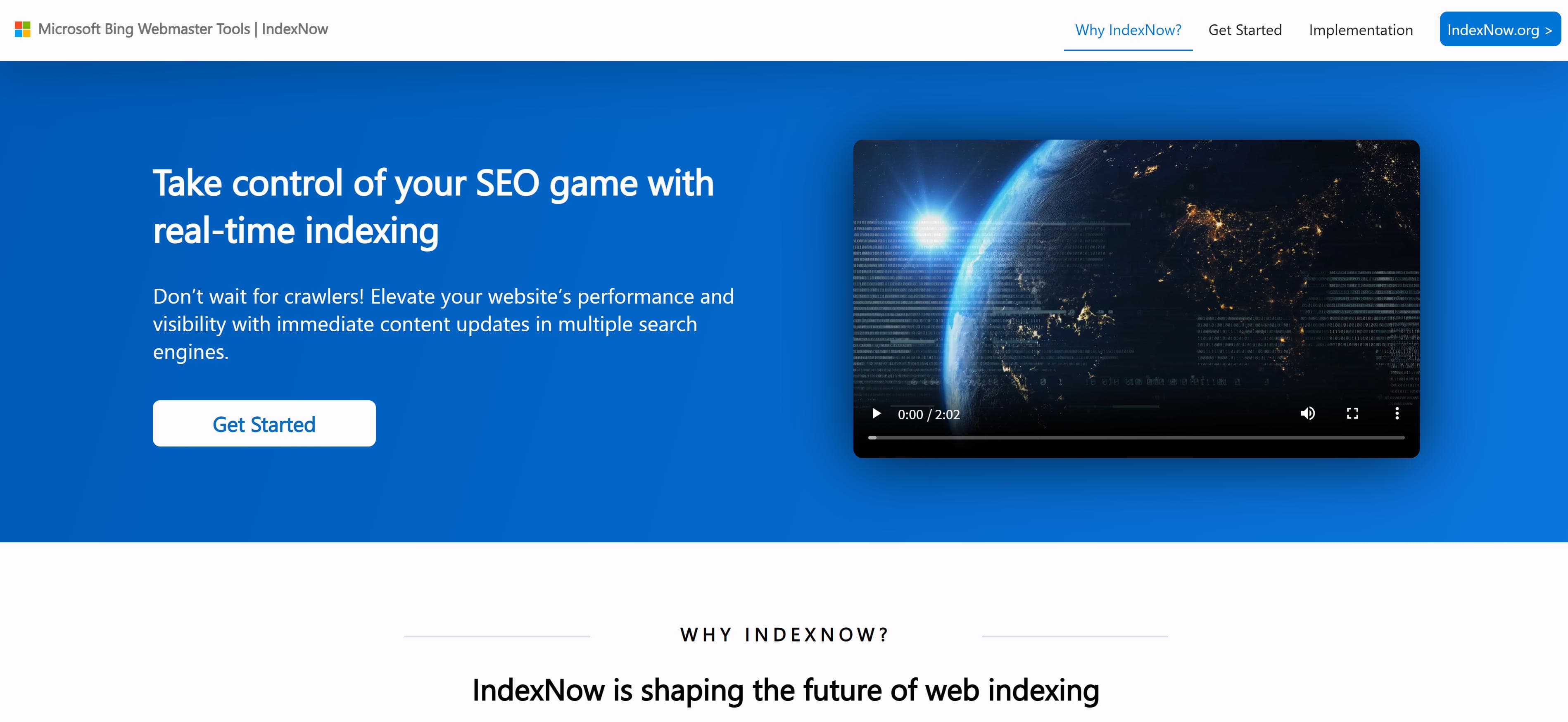
IndexNow is an open-source protocol by Microsoft and Yahoo for faster indexing. Websites notify search engines of URL changes through simple HTTP requests. Supported engines include Bing, Naver, Seznam.cz, Yandex, and Yep. IndexNow requires only an API key saved as a text file in the website root; no complex OAuth. Websites submit URLs via HTTP GET or POST. Advantages include simplicity, multi-engine support in a single submission, no quota limits, and real-time notifications. For websites needing to submit large volumes of URLs, IndexNow provides the most efficient solution.
2. Bing Indexing API:
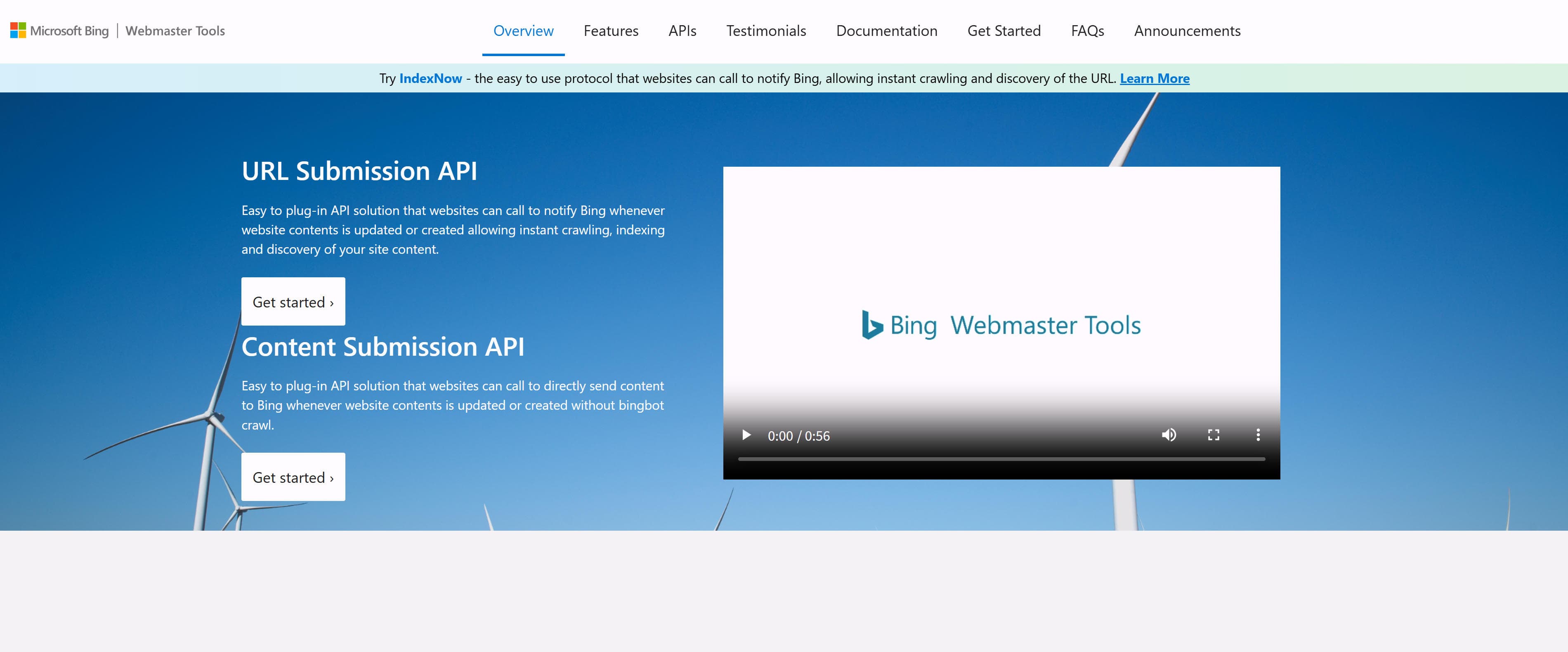
Bing Indexing API is Microsoft's official API for bulk URL submission to Bing search engine. It provides programmatic access to submit URLs for indexing, deletion, or updates. The API requires registration and verification through Bing Webmaster Tools, followed by API key generation and access permission configuration. Similar to Google Indexing API, it uses API key authentication for secure submissions. Bing Indexing API offers advantages like direct integration with Bing's indexing system, bulk submission capabilities for multiple URLs, and real-time indexing notifications. It's particularly useful for websites with high content update frequencies needing immediate Bing visibility. For Bing-focused websites, the official API provides the most reliable indexing solution with direct support from Microsoft.
3. Google Indexing API:

Google Indexing API provides programmatic access to submit URLs for immediate crawling and indexing. It's specifically designed for time-sensitive content including job postings and live video streams. The API uses OAuth 2.0 authentication requiring Google Cloud project creation and service account setup. Google limits API usage to 200 URLs per day to prevent abuse. The API supports URL_UPDATED and URL_DELETED notification types for precise indexing control. While Google Indexing API offers immediate content crawling capabilities, it has strict limitations. It's only available for job posting websites and live video content embedded in VideoObject schema. Regular website content cannot use this API, making it unsuitable for most websites. For eligible content types, it provides immediate Google indexing, crucial for competitive, time-sensitive information.
4. IndexJump:
IndexJump specializes in fast URL submission and indexing with comprehensive bulk submission features. The tool helps websites quickly submit large volumes of pages to search engines and understands AI search engine indexing mechanisms. IndexJump provides dedicated support for OpenAI and other AI search engines, offering specialized optimization features. It includes advanced URL management, bulk submission workflows, and AI-specific indexing strategies. IndexJump offers fast processing speeds, handles large URL volumes efficiently, and provides detailed submission analytics. It's particularly suitable for e-commerce websites and content publishing platforms needing rapid indexing of numerous pages. The tool's AI search engine focus makes it valuable for websites targeting improved visibility in ChatGPT, Perplexity, and other AI-powered search platforms.
5. Indexly:
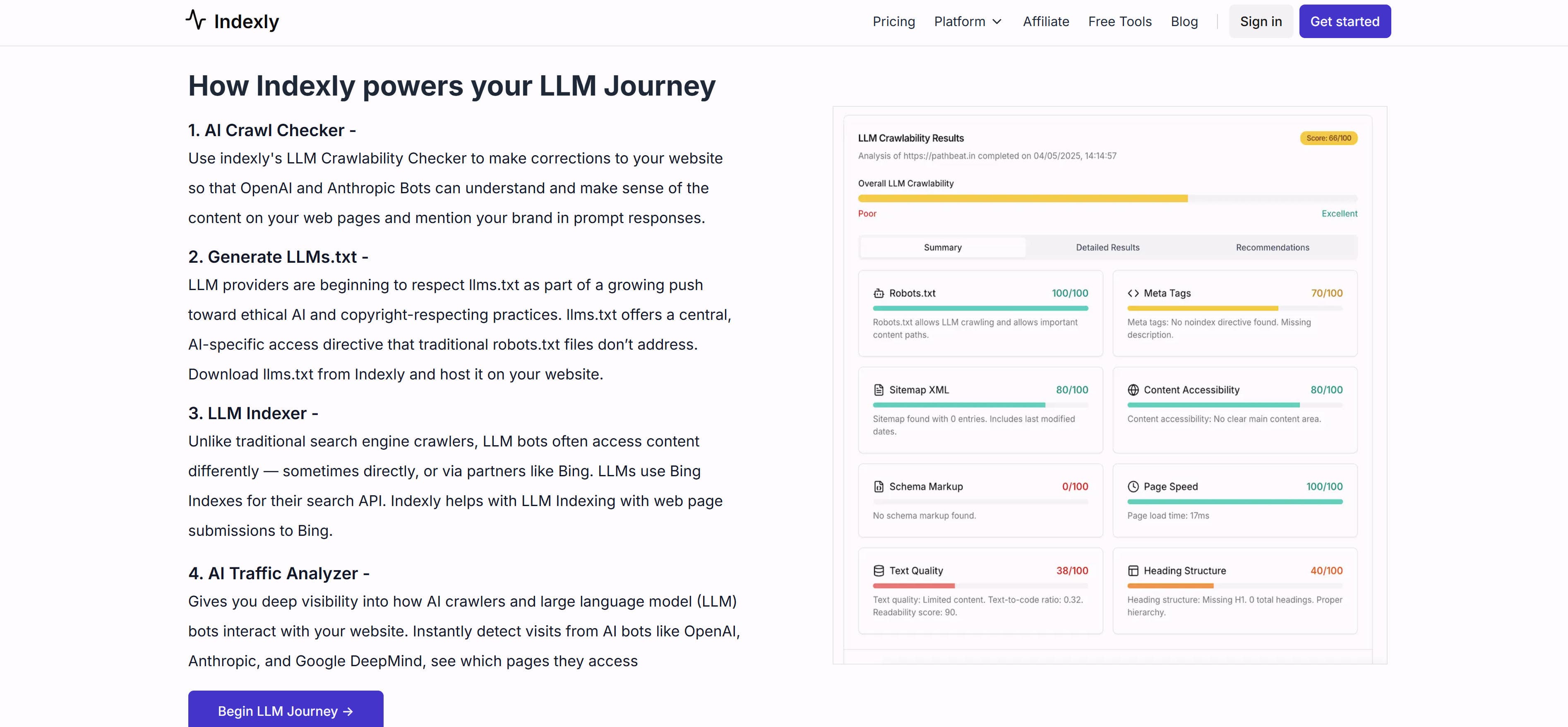
Indexly is an AI-driven indexing platform that automates URL submissions and provides intelligent performance monitoring. The tool uses AI algorithms to optimize submission timing and frequency for maximum indexing success. Indexly offers comprehensive indexing automation, real-time performance tracking, and AI-powered optimization recommendations. It provides detailed analytics on indexing success rates, crawl frequency, and ranking improvements. Indexly supports multiple search engines simultaneously and offers priority queue management for important pages. The platform's AI capabilities help predict optimal submission times and identify pages most likely to benefit from manual indexing. It's ideal for SEO agencies and large websites managing extensive content inventories needing automated, intelligent indexing solutions.
6. SEOClarity AI Search Indexer:
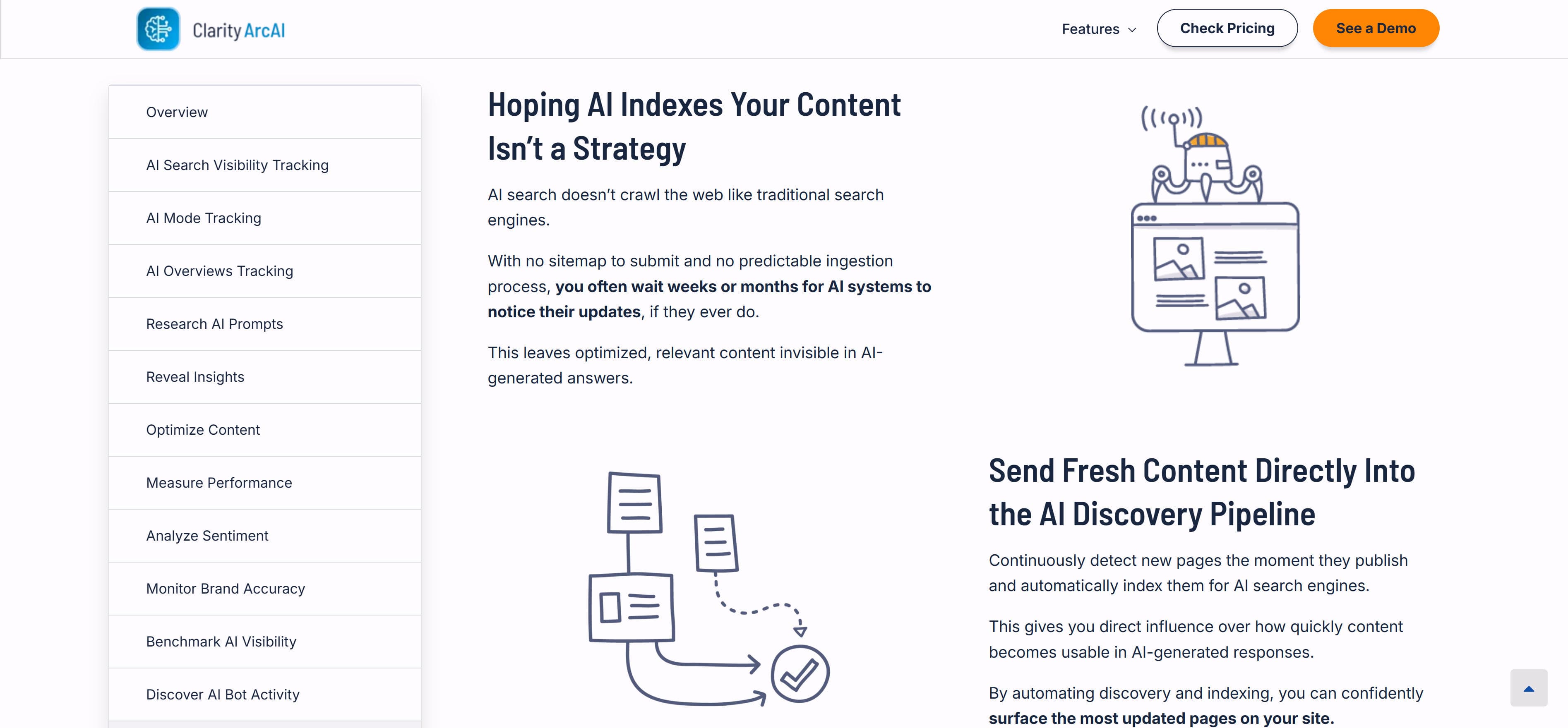
SEOClarity AI Search Indexer integrates indexing capabilities into a comprehensive SEO platform, combining URL submission with broader SEO workflows. The tool provides indexing monitoring, analysis, and AI search optimization features. SEOClarity offers unified SEO management combining indexing with keyword research, competitor analysis, and performance tracking. It provides detailed indexing reports, success rate analytics, and actionable recommendations. The platform supports integration with existing SEO toolsets and provides automated workflows for continuous indexing optimization. SEOClarity is particularly valuable for SEO agencies and enterprises needing comprehensive indexing solutions integrated with broader SEO strategies. The tool's AI capabilities provide intelligent recommendations for improving indexing success and overall search performance.
7. TrySight:
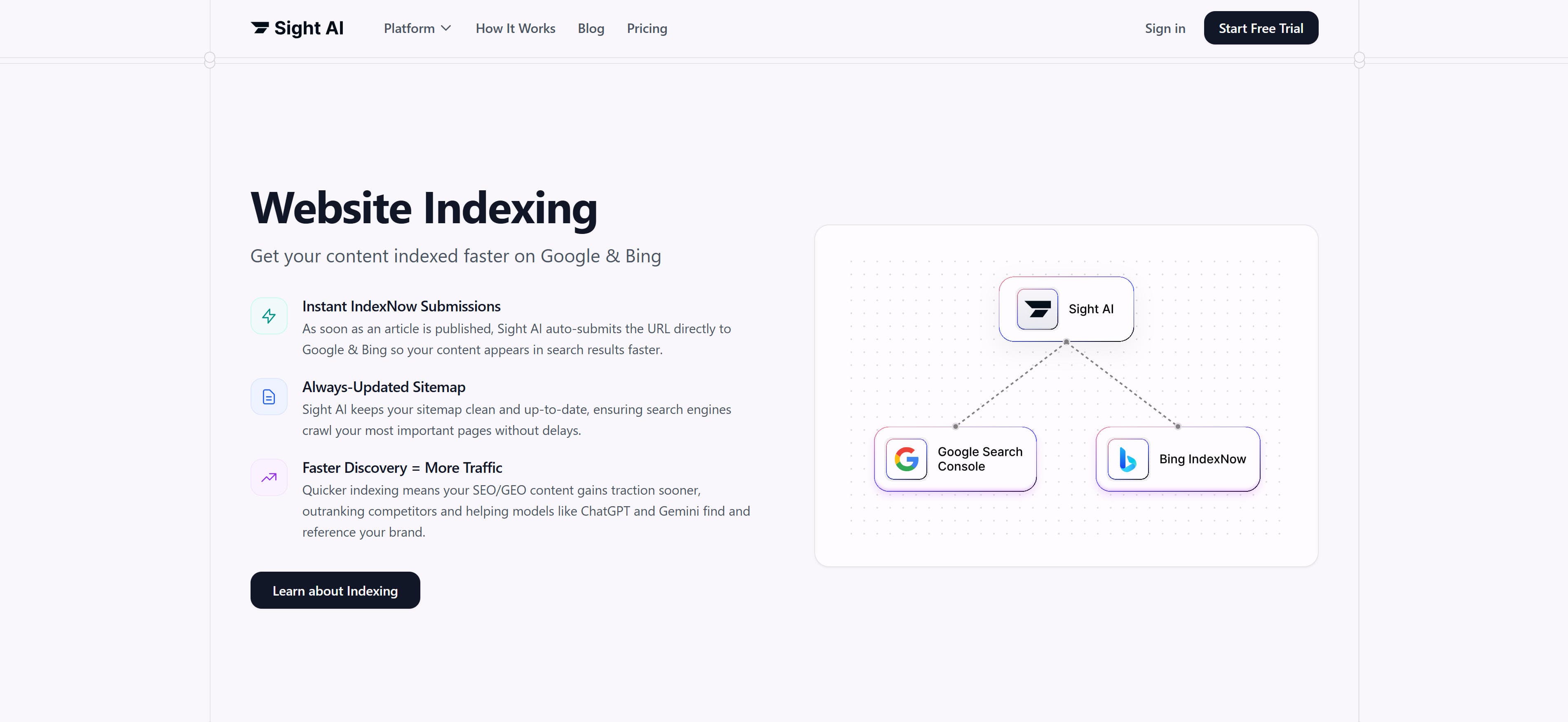
TrySight provides indexing features within a comprehensive SEO tool, integrating URL submission, indexing monitoring, and indexing analysis into broader SEO workflows. The tool supports bulk submission across multiple search engines including traditional and AI search engines. TrySight offers comprehensive SEO solutions combining indexing with backlink analysis, technical SEO audits, and performance monitoring. It provides detailed indexing analytics, submission tracking, and optimization recommendations. The platform supports integration with existing SEO processes and provides automated reporting for indexing performance. TrySight is suitable for websites needing comprehensive SEO solutions, especially those optimizing both traditional and AI search visibility. The tool provides convenient indexing solutions within a broader SEO management framework.
How to Choose Indexing Tools
Follow these 5 steps to select the perfect indexing tool for your needs. Evaluate website size, technical capabilities, target search engines, budget, and tool features to make an informed decision.
1. Assess Website Size and Update Frequency
Small websites with low update frequency can use manual submission methods or simple automation tools. Large websites with frequent updates need bulk submission tools with API capabilities for automated processing. E-commerce sites with many product pages need specialized bulk submission tools that can handle high-volume indexing requests efficiently.
2. Evaluate Technical Capabilities and Resources
Websites with technical teams can use API-based tools for automated submission and integration. Websites without technical teams can use third-party tools offering user-friendly interfaces and automation features. Third-party tools typically offer more features but require paid subscriptions. Note that some APIs have specific use case restrictions, so verify compatibility with your website type.
3. Determine Target Search Engines
If multiple search engines need coverage, choose tools supporting multi-engine protocols for efficient submission. If focusing on AI search engines, use tools specifically supporting AI search optimization. For specialized content types like job postings or live videos, consider tools with dedicated APIs for those formats. Evaluate protocol simplicity, quota limits, and multi-search engine support.
4. Consider Budget and Tool Costs
Official tools are typically free but require technical capabilities for implementation. Third-party tools offer more features but require paid subscriptions. Choose tools based on budget and needs, with small websites prioritizing free tools. For websites needing advanced features and AI search optimization, consider third-party tools with comprehensive capabilities.
5. Evaluate Tool Features and Integration
If detailed indexing analysis and monitoring are needed, choose tools providing richer analytics features. If integration with existing CMS or workflows is needed, choose tools supporting APIs and webhooks. Evaluate whether tool features meet needs to avoid over-investment. Regardless of tool choice, combine with website structure optimization and internal linking strategies for comprehensive SEO optimization.
Conclusion
Search indexing tools provide essential solutions for improving website visibility in search engines. From official protocols like IndexNow to advanced third-party platforms, these tools enable faster content discovery and indexing. Push indexing methods offer immediate notifications for time-sensitive content, while traditional crawling suits stable websites.
Choosing the right indexing tool depends on website size, technical capabilities, and target search engines. For most websites, IndexNow provides the best balance of simplicity and effectiveness. Third-party tools offer advanced features for SEO agencies and large enterprises needing comprehensive indexing solutions. Regardless of the tool chosen, indexing tools work best when combined with solid SEO foundations including optimized content structure and internal linking strategies.