AI Voice Cloning: Preserve and Recreate Distinctive Voices
Key Takeaways
This guide explores the best AI voice cloning tools for 2026, helping dubbing, audiobook, and content creation professionals choose the right solution. It also covers selection criteria, comparisons, and practical tips for implementation. The sections below compare options, use cases, and practical selection criteria.
- AI voice cloning supports short-sample cloning, emotional expression, and multilingual synthesis for dubbing and personalized voice.
- Compare VoiSpark, Speechify, Resemble.ai, Uberduck for features, pricing, and use cases.
- Consider clone quality, sample requirements, batch processing, and commercial licensing.
- Learn about technical principles and sample requirements for dubbing and audiobook workflows.
What Are AI Voice Cloning Tools
AI voice cloning tools use AI and deep learning to clone specific voices through short samples. They learn voice features via encoders and decoders. Suited for content creators, enterprises, and audiobooks.
In the workflow, AI text-to-speech tools handle text-to-speech; AI voice changer tools handle real-time voice style changes.
How AI Voice Cloning Works
Modern AI voice cloning uses deep learning to learn voice features from short samples. Versus traditional synthesis, it improves quality and personalization.
- Short sample cloning: The technology can clone voices through short audio samples, typically requiring only a few minutes of audio, making voice cloning accessible without extensive recordings.
- Text-to-cloned-voice conversion: Tools support text-to-cloned-voice conversion, allowing users to generate speech in cloned voices from any text input, enabling flexible content creation.
- Natural voice output: AI voice cloning generates natural voice output that closely matches the original voice, maintaining voice characteristics and personality.
- Emotion and tone control: Advanced tools support emotion expression and tone adjustment, allowing users to generate speech with specific emotional expressions in cloned voices.
- Batch processing and API integration: Many tools support batch processing and API integration, enabling users to process large volumes of content or integrate voice cloning into automated workflows.
Transformer models learn context via attention. GAN-based models generate natural voice features. Each optimizes for its use case.
2026 Best AI Voice Cloning Tools: Voice Replication & Personalized Applications
The following voice cloning tools for 2026 cover personalized audiobook reading, enterprise applications, film production, music creation, and other scenarios, helping you choose the most suitable voice cloning solution based on your needs.
1. VoiSpark: High-Quality Voice Cloning Platform
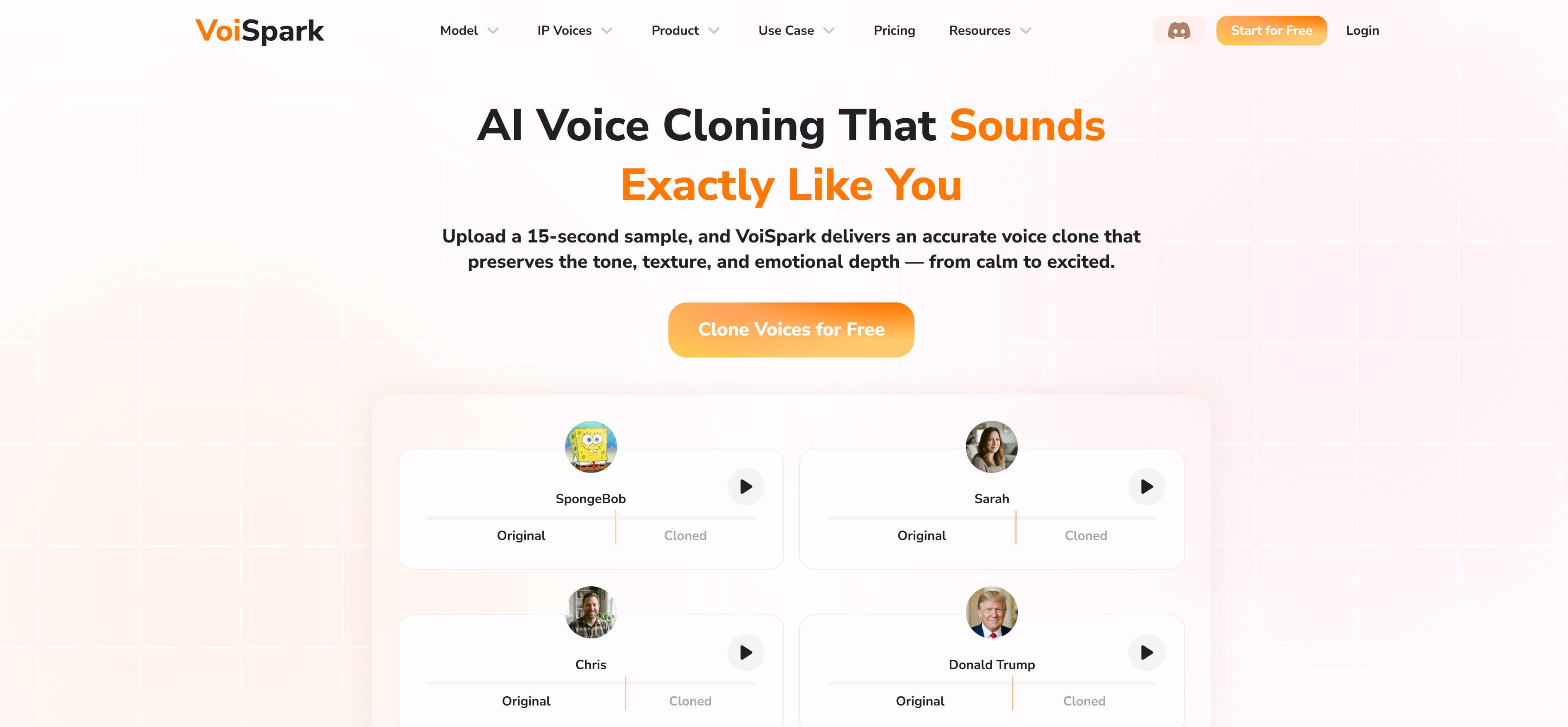
VoiSpark is a high-quality voice cloning platform supporting voice cloning through short audio samples and text-to-cloned-voice conversion. The platform provides advanced AI technology, generating cloned voices close to real human voices, supporting multiple languages and emotion expression. VoiSpark suits content creation, audiobook production, enterprise applications, providing professional-grade voice cloning services. Core advantages: high-quality cloning effects, fast processing speed, user-friendly interface, comprehensive API. The platform supports batch processing and custom timbre adjustment, enabling users to create personalized voices. Whether individual creators or enterprises, VoiSpark provides stable voice cloning solutions.
2. Speechify: Personalized Audiobook Tool
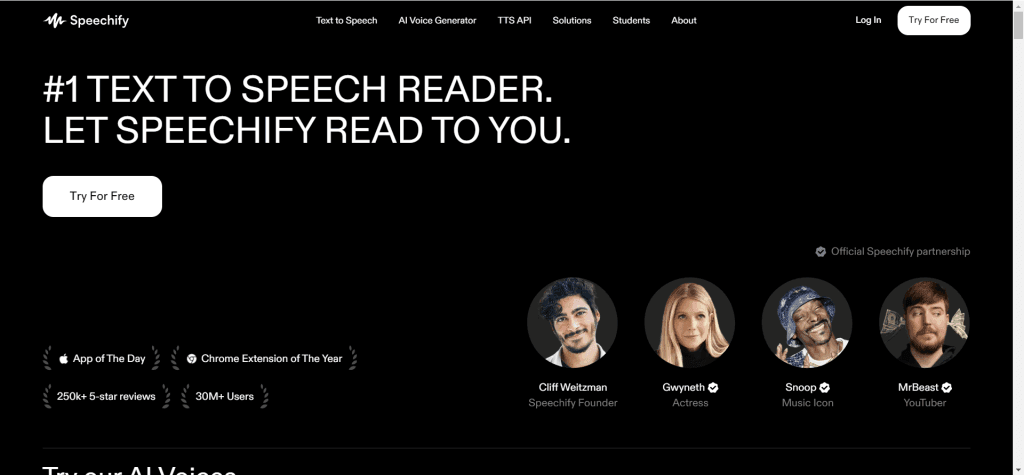
Speechify clones voices through short audio samples, supporting text-to-cloned-voice conversion, commonly used for personalized audiobook reading. Users only need to provide a few minutes of audio samples to create a personalized voice model, then use that voice to read any text content.
3. Resemble.ai: Enterprise Voice Cloning API Platform
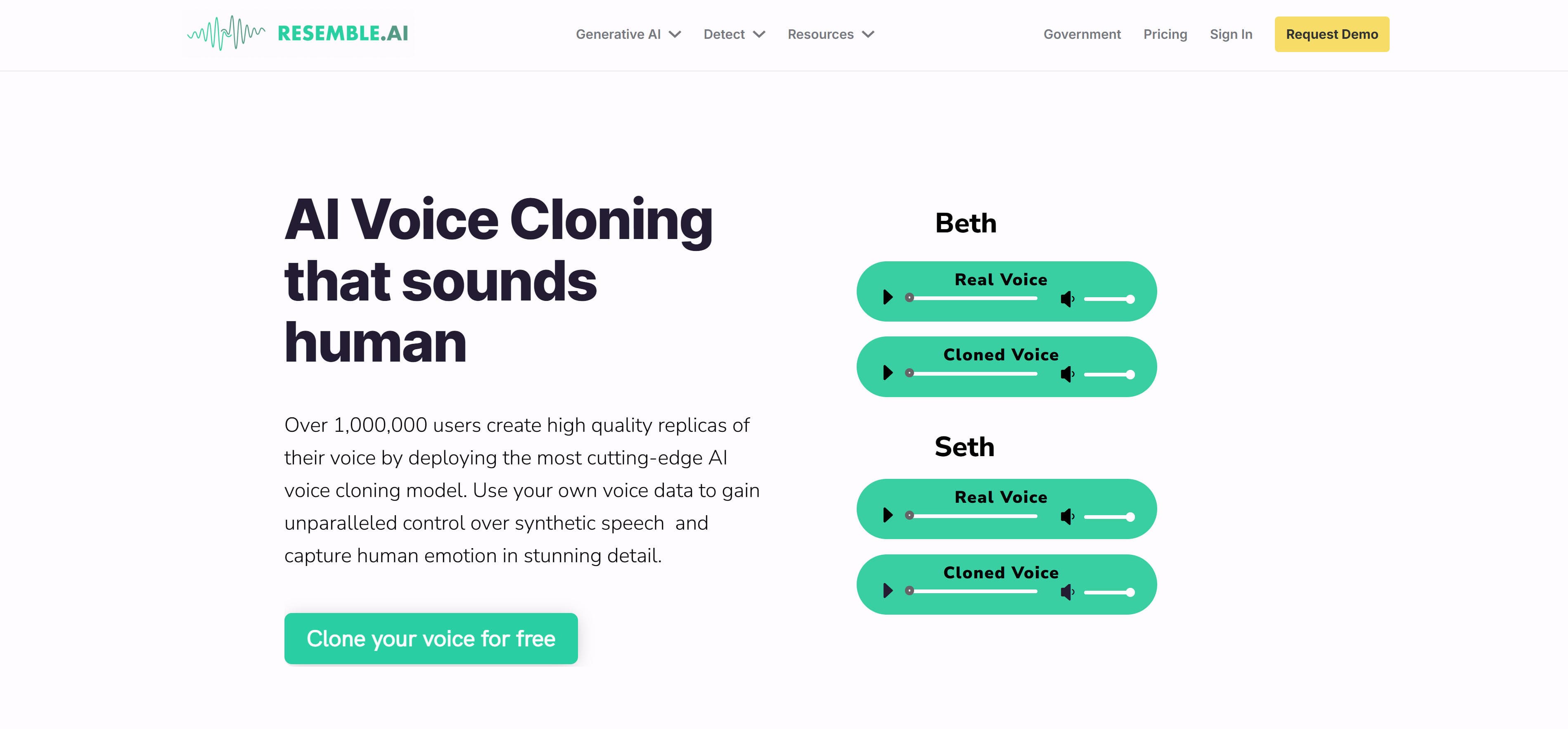
Resemble.ai provides high-fidelity voice cloning APIs. Enterprise users can use it to create brand virtual spokespersons. The platform provides strict data security and privacy protection, suitable for enterprise application scenarios.
4. Uberduck: Celebrity Voice Cloning Platform
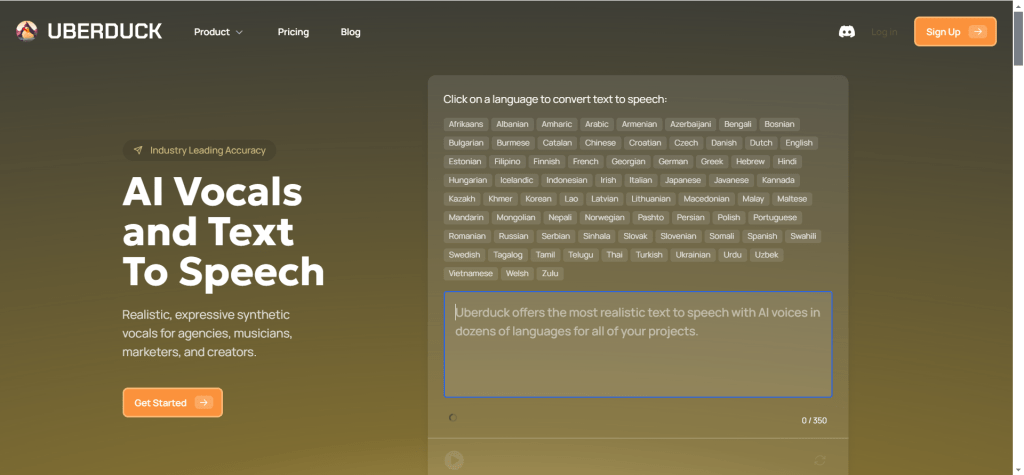
Uberduck features celebrity voice cloning, allowing users to generate celebrity voice content, but with higher copyright risks. The platform provides many preset celebrity voice models, suitable for entertainment and content creation scenarios.
5. Kits AI: Musician-Specific Voice Cloning Tool
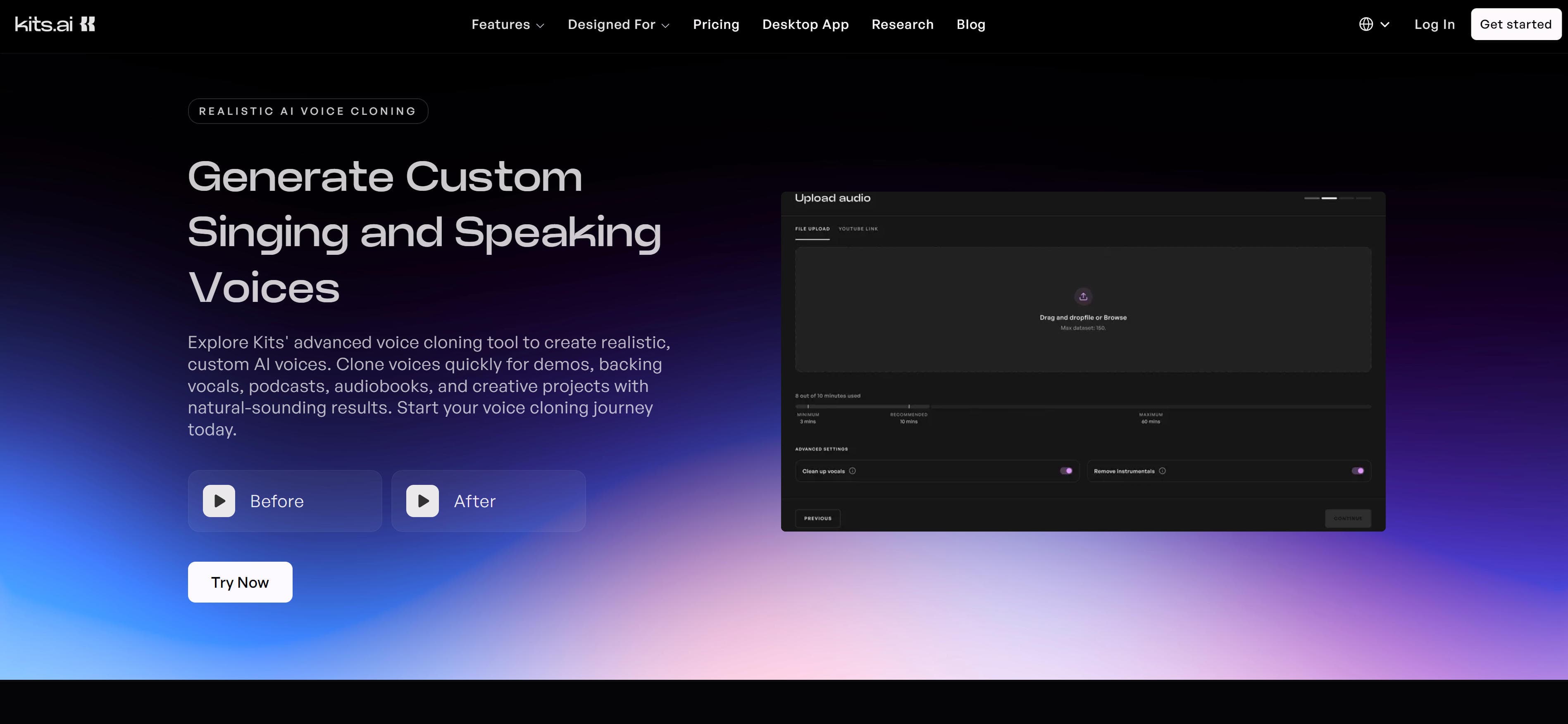
Kits AI targets musicians, supporting singer voice cloning and AI song generation, with both controversy and potential. The platform focuses on music creation scenarios, providing professional singer voice cloning services.
6. Respeecher: Film-Grade Voice Cloning Tool
Respeecher is a film-grade voice cloning tool that has been used to recreate deceased actors' voices in movies, with strict ethical review; it's also a lightweight personal tool suitable for general users creating personalized voice content.
AI Voice Cloning Tools Comparison
Here's a detailed comparison of the top AI voice cloning tools to help you choose the best solution for your needs:
| Tool Name | Core Features | Best For | Pricing |
|---|---|---|---|
| VoiSpark | High-quality voice cloning, multilingual support | Content creation, enterprise applications | TBD |
| Speechify | Personalized audiobook reading, simple operation | Individual users, audiobook production | TBD |
| Resemble.ai | Enterprise APIs, high-fidelity quality | Enterprise applications, brand voice | TBD |
| Uberduck | Celebrity voice models, entertainment-focused | Content creation, entertainment scenarios | TBD |
| Kits AI | Musician-specific, singer voice cloning | Music creation, AI singing | TBD |
| Respeecher | Film-grade quality, ethical review | Film production, personal use | TBD |
Use Cases: Transform Voice Applications
AI voice cloning tools transform how we create and use voice content.
Content Creation
AI voice cloning tools add professional voiceovers to videos and generate natural podcast voices. These tools enable content creators to produce high-quality audio content with consistent voice characteristics, transforming video production workflows and enabling creators to maintain brand voice consistency across multiple projects and platforms.
Audiobook Production
AI voice cloning tools create personalized audiobook experiences and generate high-quality narration for various types of books. The technology supports audiobook production in multiple languages, enabling publishers to produce localized content efficiently while maintaining consistent narration quality and character voice consistency throughout lengthy productions.
Virtual Characters and Games
AI voice cloning tools create unique voices for game characters and virtual assistants. The technology enhances gaming and VR experiences with personalized voices, enabling rich emotional expression and immersive interactive experiences that make virtual characters feel more lifelike and engaging for players.
Enterprise Applications
Enterprises use AI voice cloning tools to develop consistent brand voices for marketing materials and create AI-powered spokespersons. The technology generates voice content for employee training, improving brand consistency and communication effectiveness while enabling scalable voice solutions that maintain professional standards across all corporate communications.
Accessibility Services
AI voice cloning tools help create accessible voice content for users with disabilities. The technology enables personalized voice assistants, providing natural, human-like voices that improve user experience and accessibility, making digital content more inclusive and ensuring that voice interfaces are accessible to all users regardless of their abilities.
How to Choose Voice Cloning Tool
Follow these 5 steps to select the perfect voice cloning tool for your needs. Evaluate voice quality, sample requirements, language support, API integration, and budget to make an informed decision.
1. Evaluate Voice Quality Requirements
Evaluate voice quality: naturalness ensures realistic voice output; fidelity maintains accurate voice characteristics; emotion expression preserves emotional nuances; consistency maintains stable voice across different contexts. For high-quality needs like film production and brand voice, prioritize tools with advanced quality capabilities. Try multiple tools before deciding to compare results.
2. Assess Sample Requirements
Assess sample requirements: minimum duration varies from few minutes to 10+ minutes depending on tool capabilities; recommended duration of 20-30 minutes typically produces better effects; sample quality should be clear, noise-free, and single-speaker for optimal results; format support (WAV, MP3) ensures compatibility. If samples are limited, choose tools with lower requirements.
3. Evaluate Language Support
Confirm tools support required languages: some tools optimize for specific languages (Chinese, Japanese) with better pronunciation and naturalness; for multilingual needs, choose tools supporting more languages with comprehensive coverage. Quality may vary by language, so test with your target languages before committing.
4. Assess API Integration Needs
For API integration, consider: API documentation quality and completeness; SDK support for your programming languages; call limits and rate restrictions; stability and uptime guarantees; response speed and latency. For comprehensive API needs, prioritize tools with robust APIs, extensive documentation, and reliable infrastructure.
5. Consider Budget and Ethical Compliance
Consider pricing strategies: free tiers enable testing and basic use; subscription pricing provides predictable costs; pay-as-you-go offers flexibility; enterprise plans include advanced features and support. For commercial use, consider tools with ethical review mechanisms ensuring compliance (GDPR, CCPA) and data security to protect user privacy and meet regulatory requirements.
Conclusion
AI voice cloning tools are transforming audio content production, providing creators and enterprises with substantial efficiency and possibilities. From personalized audiobook tools like Speechify to enterprise tools like Resemble.ai to film-grade tools like Respeecher, these tools cover complete scenarios from personal use to professional production, enabling natural and fluent voice cloning with multiple emotions and tones.
Choose the right tool based on your voice cloning needs: Speechify for personalized audiobook creation, Resemble.ai for enterprise applications with API interfaces, Respeecher for film-grade quality, ElevenLabs for diverse voice options. Evaluate voice quality requirements, use cases, ethical considerations, and budget constraints to select the most suitable voice cloning solution.
AI voice cloning tools serve as collaborative partners in voice cloning, not replacements for human creativity. They handle technical and repetitive work, allowing creators to focus on content creation and storytelling. The best approach is human-AI collaboration: AI manages voice synthesis and technical processing, while humans provide creative direction, quality control, and ethical oversight, maximizing both efficiency and voice quality while ensuring responsible use.