What Are AI Essay Writers
AI essay writers are intelligent writing assistants powered by advanced language models that help create academic content, research papers, and essays. These tools combine natural language processing with specialized academic writing algorithms to generate high-quality, well-structured content while maintaining academic integrity and bypassing AI detection systems.
The core value of AI essay writers lies in democratizing academic writing, making it accessible to students, researchers, and professionals who may lack extensive writing experience or face time constraints. By automating the writing process while ensuring originality and academic standards, these tools serve as powerful companions in the modern educational landscape.
For comprehensive writing solutions, explore our Complete Guide to AI Text Tools and AI Productivity Tools.
How AI Essay Writers Work
Modern AI essay writers utilize large language models trained on extensive academic datasets, enabling them to understand complex topics, maintain logical flow, and generate content that meets academic standards. The technology combines natural language processing with specialized algorithms designed for academic writing.
Key capabilities include real-time citation management, plagiarism detection integration, and advanced paraphrasing techniques that create human-like content undetectable by AI detection tools. These systems can analyze writing prompts, research topics, and generate structured essays with proper formatting and academic tone.
Best AI Essay Writers 2026
1. Jenni AI: Research Assistant & Citation Management
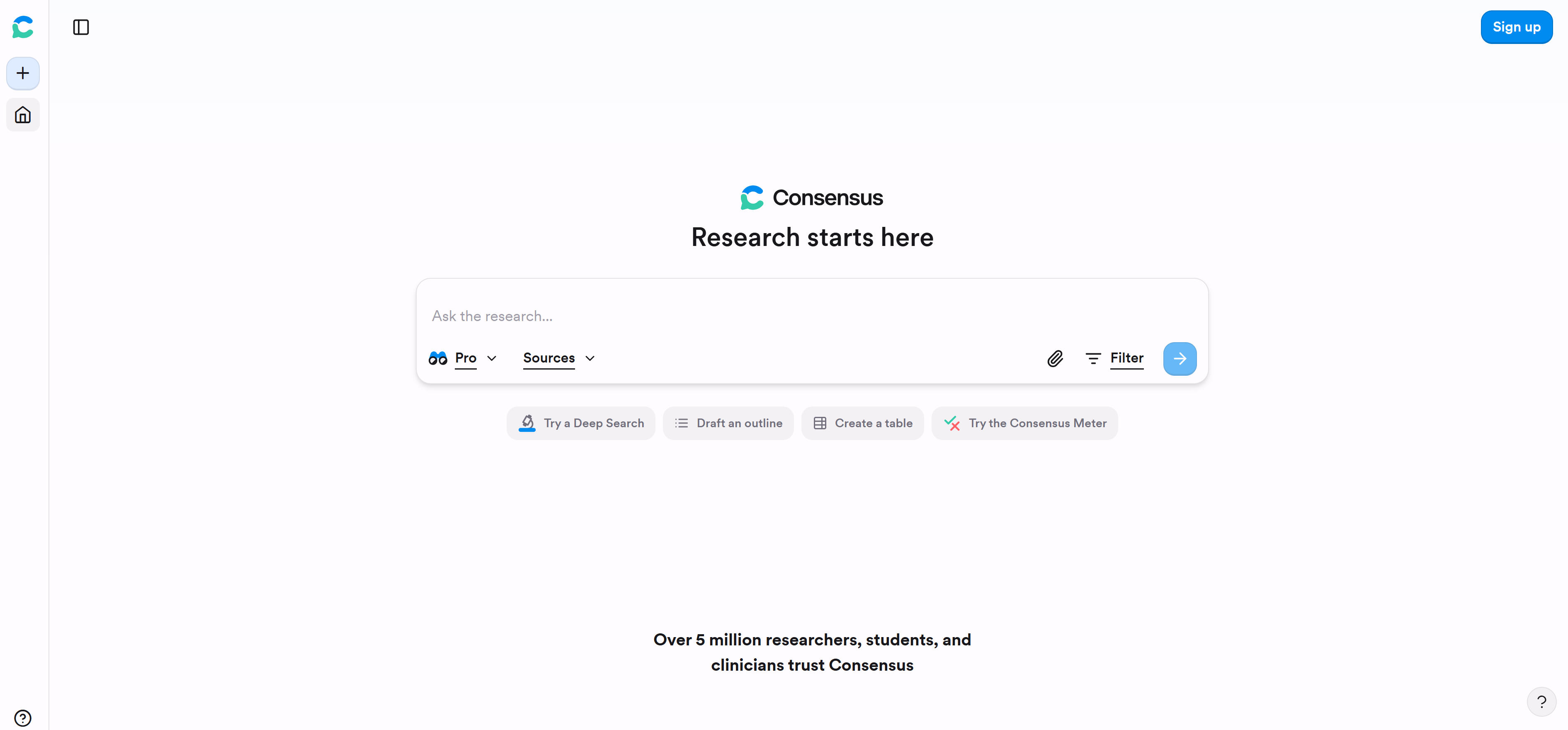
Jenni AI stands out as a comprehensive academic writing companion that combines AI-powered content generation with robust research capabilities. The platform offers intelligent citation management, real-time grammar checking, and advanced plagiarism detection integration. Users can generate essays, research papers, and academic content while maintaining complete control over tone, style, and academic requirements.
The tool's research assistant feature helps users find relevant sources, summarize articles, and integrate citations seamlessly into their writing. Jenni AI supports multiple citation styles including APA, MLA, and Chicago, making it ideal for students and researchers working on various types of academic projects. The platform also includes AI detection bypass technology to ensure generated content appears authentic and human-written.
2. Aithor: Undetectable AI Essay Generation
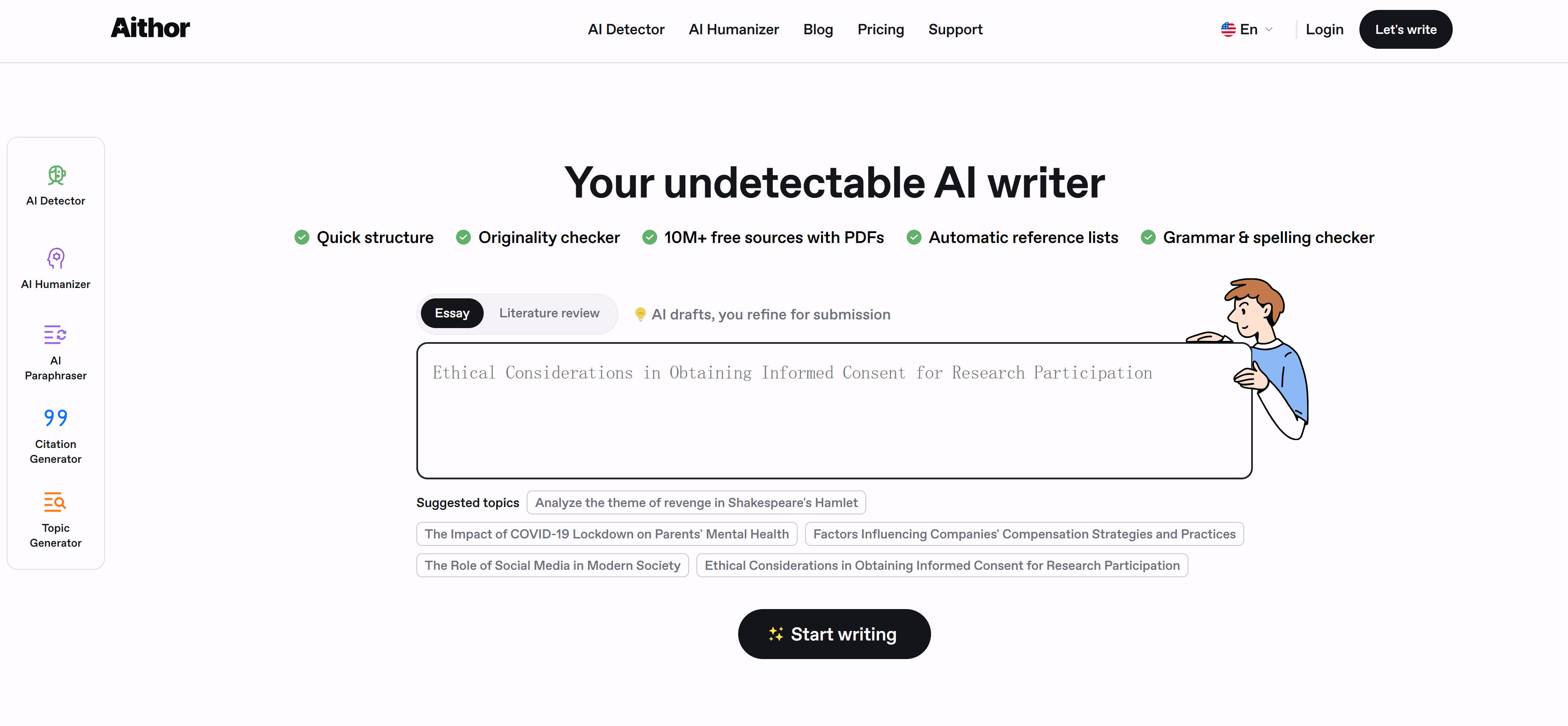
Aithor specializes in creating undetectable AI-generated content that passes advanced plagiarism detection and AI content analysis tools. The platform uses sophisticated language models and paraphrasing algorithms to produce essays that read as if written by human authors, with natural flow and authentic academic voice.
Key features include multi-language support, customizable writing styles, and advanced topic research capabilities. Aithor offers templates for various essay types including argumentative essays, research papers, and literature reviews. The platform also provides real-time editing suggestions and grammar corrections to ensure academic quality and readability.
3. Undetectable AI: AI Detection Bypass Technology
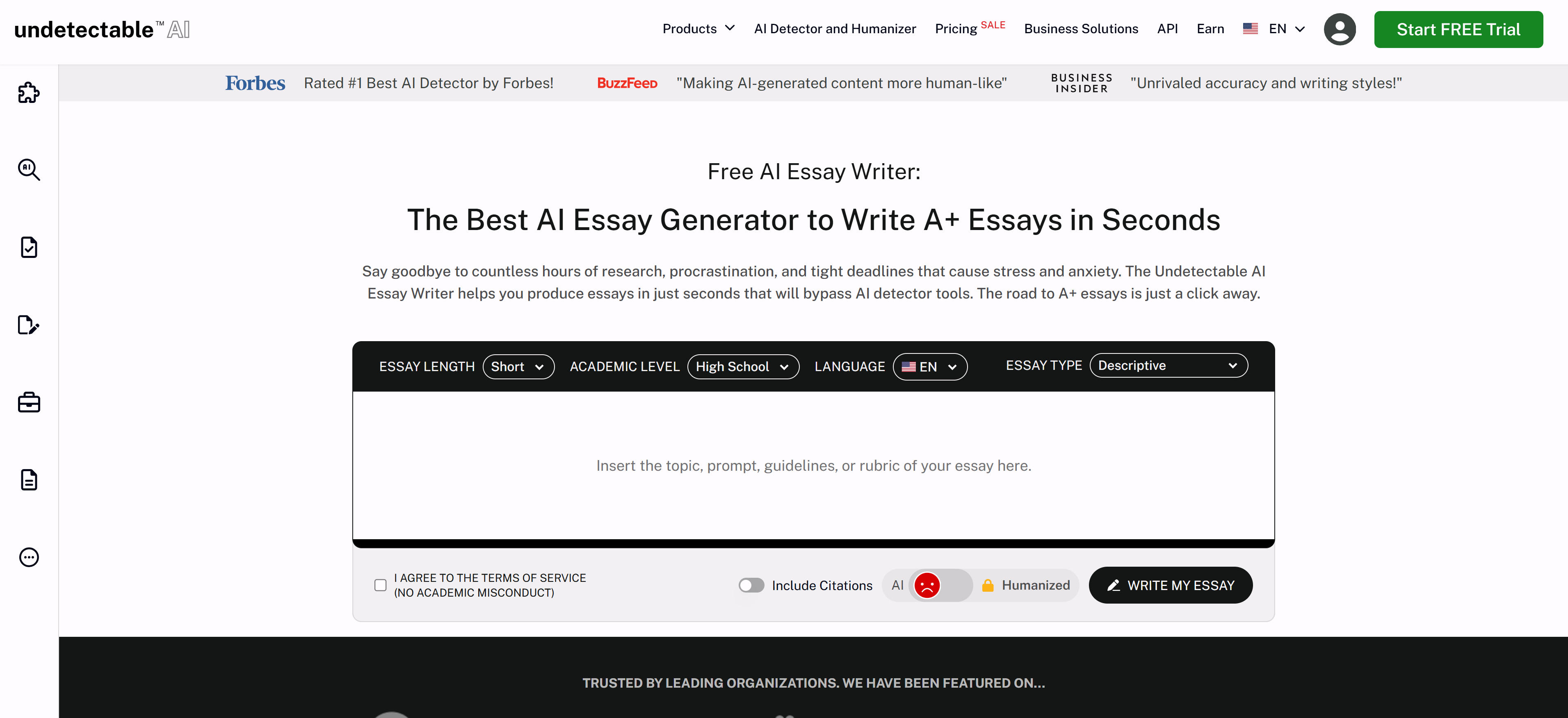
Undetectable AI focuses exclusively on bypassing AI detection algorithms used by educational institutions and content platforms. The platform employs advanced natural language processing to restructure AI-generated content, making it indistinguishable from human writing while maintaining academic quality and coherence.
The tool offers multiple processing modes including light editing, moderate paraphrasing, and complete rewriting. Users can upload existing AI-generated content or create new essays from scratch. Undetectable AI provides detailed reports on detection probability and offers suggestions for improving content authenticity.
4. NoteGPT: Free Essay Generation Platform
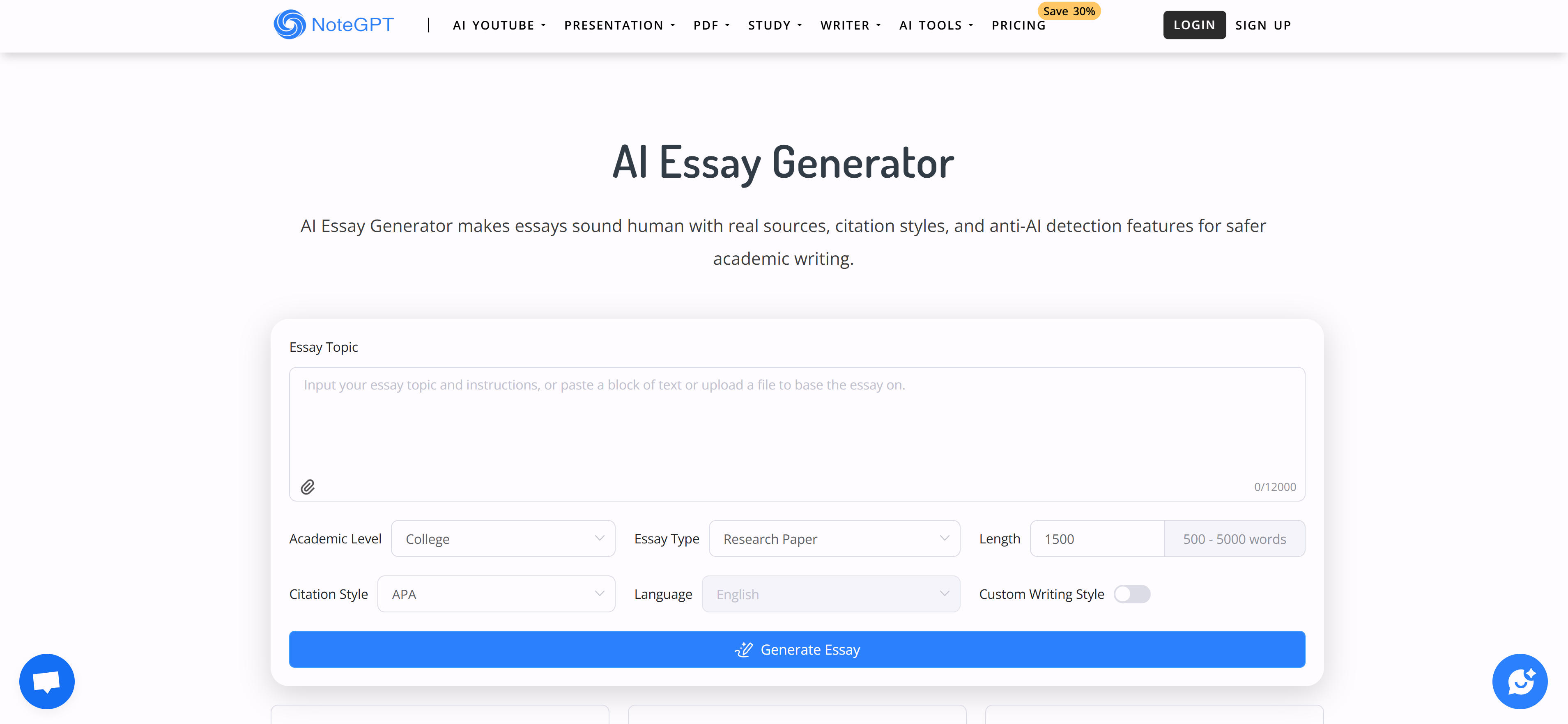
NoteGPT provides a free, accessible platform for AI-powered essay generation, making academic writing tools available to students and researchers without financial barriers. The platform offers comprehensive essay creation features including topic research, outline generation, and full essay composition.
Users can generate essays on various topics with customizable length, style, and academic level. NoteGPT includes built-in citation tools and supports multiple export formats. While offering a free tier, the platform also provides premium features for advanced users seeking more sophisticated writing assistance and academic formatting options.
5. EaseMate AI: Online Academic Writing Support
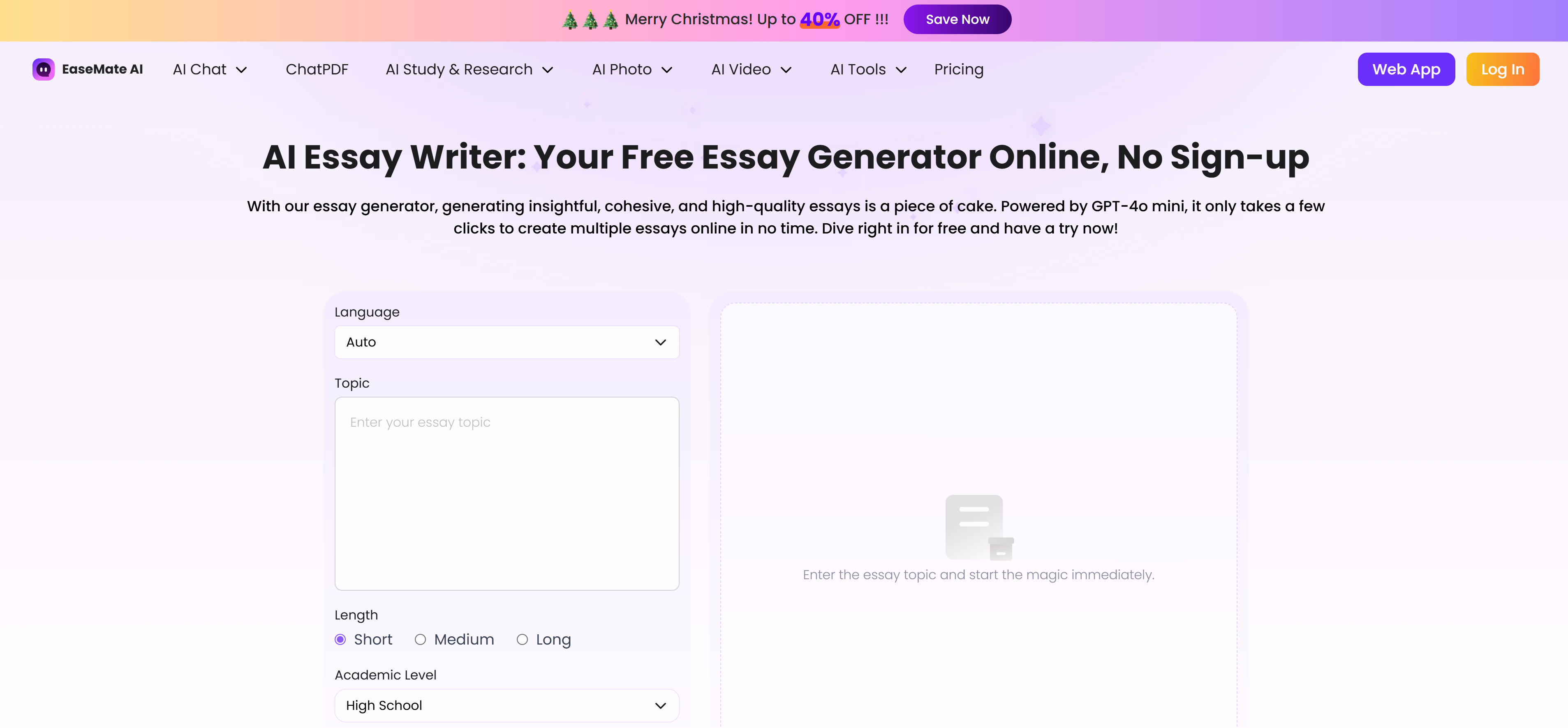
EaseMate AI delivers comprehensive online academic writing support through an intuitive web-based platform. The tool combines essay generation with research assistance, providing users with end-to-end academic writing solutions from initial research to final draft completion.
Key features include topic exploration, thesis statement generation, essay outlining, and full content creation. EaseMate AI supports multiple academic disciplines and writing formats, with built-in plagiarism checking and citation management. The platform offers collaborative features for group projects and real-time feedback on writing quality.
AI Essay Writers Comparison
Use Cases: Where AI Essay Writers Excel
AI essay writers serve diverse academic and professional writing scenarios, providing specialized support for different content creation needs. Each tool offers unique strengths that cater to specific writing challenges and academic requirements.
Academic Research Papers
AI essay writers excel in academic research paper creation, helping researchers structure complex arguments and maintain academic rigor. Tools like Jenni AI provide research assistance and citation management, while Aithor ensures content remains undetectable by academic integrity systems. These platforms help generate literature reviews, methodology sections, and discussion points with proper academic formatting.
Student Essay Assignments
For student essay assignments, AI essay writers offer comprehensive support from topic selection to final editing. Undetectable AI specializes in creating content that passes academic integrity checks, while NoteGPT provides free access for budget-conscious students. These tools help with essay planning, content generation, and grammar refinement across various subjects and academic levels.
Thesis and Dissertation Writing
Thesis and dissertation writing demands extensive research and structured argumentation, areas where AI essay writers provide significant value. Jenni AI's research capabilities and citation management prove particularly useful for graduate-level writing projects. The tools help generate chapter outlines, literature synthesis, and methodological discussions while maintaining academic standards.
Literature Reviews
Creating comprehensive literature reviews requires synthesizing multiple sources and identifying research gaps. AI essay writers assist in this process by helping organize existing research, generate analytical summaries, and create coherent narratives. EaseMate AI's collaborative features make it particularly suitable for team-based literature review projects.
Academic Presentations
Beyond written content, AI essay writers help create content for academic presentations and conference submissions. The tools generate presentation outlines, speaker notes, and supporting materials. Their ability to create clear, concise content makes them valuable for preparing academic talks and poster presentations.
Research Proposals
Research proposal writing involves clearly articulating research questions, methodologies, and expected outcomes. AI essay writers help structure these documents with proper academic language and logical flow. The tools assist in creating compelling problem statements, literature backgrounds, and research design sections.
Conference Papers
Conference paper submissions require concise, impactful writing within strict formatting guidelines. AI essay writers help researchers create polished papers that meet conference standards. The tools assist with abstract writing, paper structuring, and ensuring content fits within word limits while maintaining academic quality.
Educational Content Creation
Educators and content creators use AI essay writers to develop educational materials, course content, and learning resources. The tools help create study guides, assignment descriptions, and educational articles with appropriate academic tone and educational value.
How to Choose AI Essay Writers
Select the right AI essay writer based on your academic needs, budget constraints, content requirements, and ethical considerations to maximize writing efficiency and academic success.
1. Assess Academic Requirements and Writing Goals
Determine your primary writing objectives, whether it's research papers, essay assignments, or thesis work. Consider the academic level, subject matter complexity, and specific requirements like citation styles. Different tools excel in different areas - Jenni AI for comprehensive research support, Undetectable AI for bypassing detection systems, or NoteGPT for basic essay generation.
2. Evaluate AI Detection Bypass Capabilities
If academic integrity is a concern, prioritize tools with proven AI detection bypass capabilities. Undetectable AI and Aithor specialize in creating human-like content that passes advanced detection algorithms. Test different tools with sample content to verify their effectiveness against the detection systems used by your institution.
3. Check Citation and Research Features
For research-heavy writing, select tools with robust citation management and research assistance features. Jenni AI and EaseMate AI offer comprehensive citation support across multiple styles (APA, MLA, Chicago) and research capabilities. Evaluate how well the tool integrates with academic databases and research sources.
4. Consider Budget and Usage Frequency
Evaluate pricing models based on your usage needs. NoteGPT offers free access for basic requirements, while premium tools like Jenni AI and Aithor provide advanced features for intensive academic writing. Consider subscription costs versus pay-per-use models, and look for free trials to test functionality before committing.
5. Test Content Quality and Customization
Assess the quality of generated content by testing with your specific subject matter. Look for tools that allow customization of writing style, tone, and academic level. Check for grammar accuracy, logical flow, and ability to handle complex topics. The best tools should produce content that requires minimal editing rather than complete rewriting.
Conclusion
AI essay writers have revolutionized academic writing by combining advanced language models with specialized academic tools. From comprehensive research assistants like Jenni AI to specialized AI detection bypass solutions like Undetectable AI, these tools offer diverse solutions for different academic writing needs.
Whether you're a student working on essay assignments, a researcher crafting academic papers, or an educator developing course materials, there's an AI essay writer suited to your requirements. The key is selecting tools that align with your academic goals, ethical considerations, and budget constraints while maintaining the highest standards of academic integrity and content quality.
For more comprehensive writing solutions, explore our Complete Guide to AI Text Tools.