What Are AI Story Generators
AI story generators are intelligent tools that use artificial intelligence to automatically create narrative content from user inputs, keywords, or basic concepts. These platforms leverage natural language processing and machine learning to understand story structure, character development, and plot progression, enabling creators to generate complete narratives quickly and efficiently.
The technology primarily divides into two categories: video story generators and text story generators. Video story generators transform narrative concepts into complete visual content, including character animations, scene generation, and video synthesis. Text story generators focus on written content creation, producing plots, dialogue, and descriptions. Both serve different creative needs but share the common goal of democratizing storytelling.
For comprehensive content creation solutions, explore our Complete Guide to AI Video Tools and AI Text Generation Tools.
How AI Story Generators Work
Modern AI story generators combine advanced language models with specialized storytelling algorithms to produce coherent narratives. The core technology processes user prompts through multi-layered analysis, understanding narrative intent, character dynamics, and plot requirements.
Key capabilities include automated script generation, visual content creation, character consistency maintenance, and narrative flow optimization. Different platforms employ varying technical approaches - video generators integrate language models with video synthesis engines, while text generators focus on advanced language processing and creative writing algorithms.
Best AI Story Generators 2026
1. Medeo: AI Story Video Generator

Medeo represents a comprehensive AI-powered story video generator that transforms simple ideas into engaging video narratives. The platform provides an end-to-end solution covering script generation, visual creation, and video synthesis, designed specifically for content creators seeking efficient story production. Medeo excels in rapid content generation, capable of producing complete story videos in seconds through its intelligent story creation system.
The platform's core innovation lies in its integrated workflow that handles the entire video creation pipeline. Advanced features include instant story generation with coherent plot arcs, creative character development with distinct personalities and motivations, and professional visual synthesis that maintains narrative consistency. Medeo serves content creators across marketing, education, and entertainment sectors, providing professional-grade story video capabilities without requiring extensive technical expertise.
2. Magiclight: AI Story Video Platform

Magiclight pioneers as the world's first AI story video generator, transforming imagination into unlimited narrative experiences. The platform supports long-form story video creation up to 30 minutes, featuring AI-driven script generation and unparalleled character consistency across extended narratives. Magiclight specializes in complex storytelling, understanding story significance, character logic, and scene relationships to produce cohesive long-format content.
The platform's breakthrough technology enables unprecedented long-form narrative capabilities, with depth narrative understanding that creates emotionally resonant videos featuring unparalleled storytelling consistency. Advanced long-form coherence ensures seamless character development and plot progression across extended durations. Magiclight serves creators requiring complete narrative experiences, from children's stories and historical recreations to educational documentaries and feature-length content.
3. Katalist: Storyboard AI Generator

Katalist serves as a specialized storyboard AI generator that transforms scripts into comprehensive visual storyboards. The platform automates the storyboard creation process, supporting diverse story types and styles while maintaining visual consistency throughout the narrative. Katalist targets filmmakers, advertising professionals, and content planners requiring rapid visual planning and story visualization.
The platform's core functionality centers on automated storyboard generation, with advanced features including one-click script conversion, consistent character visualization across all panels, and precise scene control for seamless transitions. Katalist enables creators to visualize story concepts efficiently, bridging the gap between written scripts and visual storytelling through intelligent AI assistance.
4. HeyGen: AI Story Video Creation

HeyGen functions as an AI storytelling generator that helps creators overcome creative blocks and unlock inspiration. The platform provides complete story-to-video conversion, including script writing, character creation, and video synthesis, enabling rapid production of engaging video content. HeyGen specializes in comprehensive video creation workflows, handling the entire production pipeline from concept to final output.
Advanced capabilities include prompt-native video creation for instant concept-to-video transformation, end-to-end workflow management covering script development, image selection, audio integration, and editing automation. The platform's structured building approach ensures each video element is carefully designed to match target narratives. HeyGen serves content creators across marketing, education, and entertainment, delivering professional story video production without requiring extensive technical skills.
5. EaseMate: AI Text Story Generator
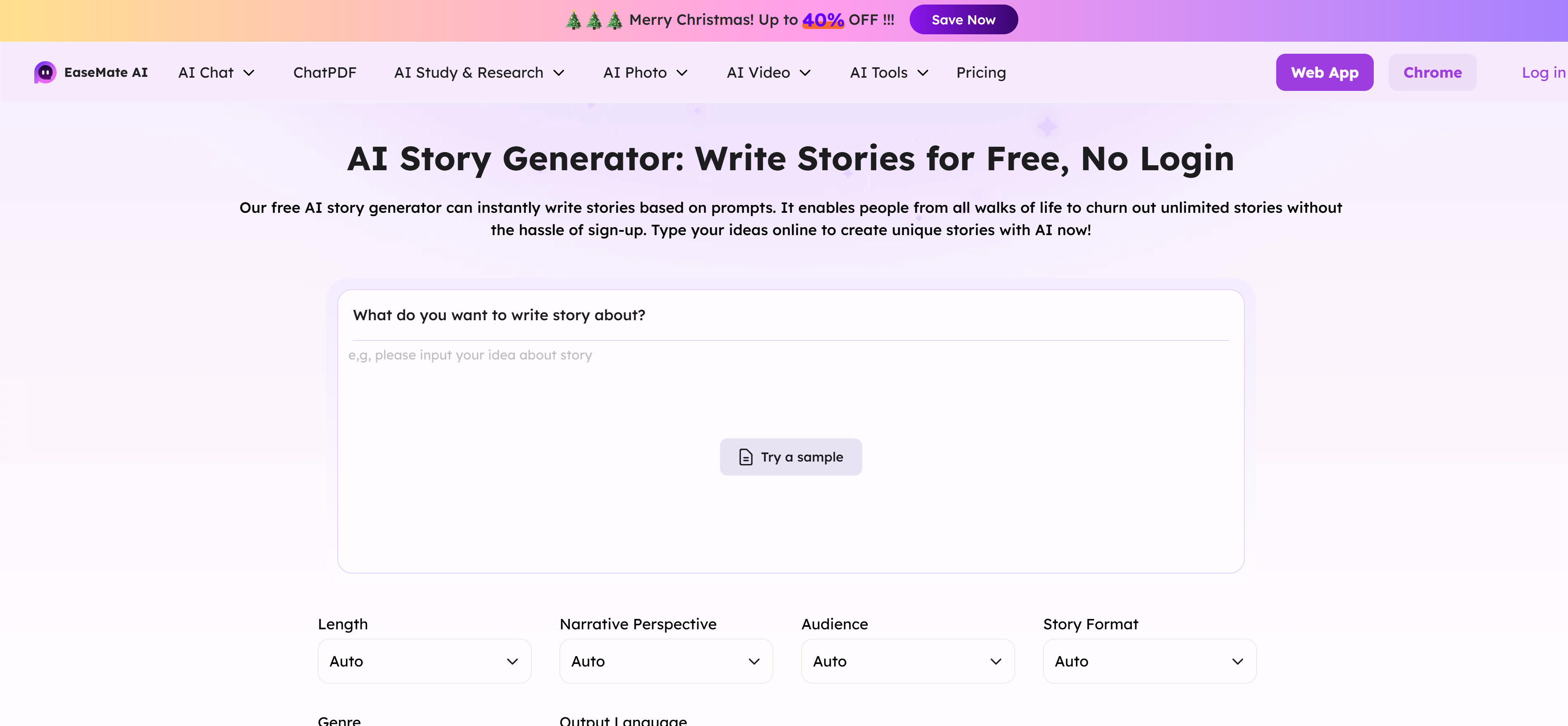
EaseMate operates as a free AI text story generator that produces original narrative content based on user prompts. The platform supports unlimited story creation across multiple genres, lengths, and styles without requiring registration. EaseMate prioritizes accessibility and simplicity, making professional story generation available to all content creators regardless of technical expertise or budget constraints.
Core features include complimentary story generation with instant output, unrestricted creative writing supporting science fiction, novels, romance, mystery, fantasy, thriller, and adventure genres. Advanced customization options allow precise control over story length, narrative perspective, and target audience age groups. EaseMate democratizes creative writing by removing financial and technical barriers to high-quality story production.
AI Story Generators Comparison
Use Cases: Where Story Generators Excel
AI story generators serve diverse applications across content creation, education, and entertainment industries, each tool offering specialized capabilities for different creative requirements.
Marketing Content Creation
Story generators revolutionize marketing content by creating emotionally compelling brand narratives that connect with audiences on a deeper level. Tools like Medeo and HeyGen enable brands to develop authentic storytelling experiences that transcend simple informational content. These platforms facilitate the creation of brand stories that build emotional connections, product demonstrations that engage viewers through narrative, and customer testimonials transformed into compelling story arcs that enhance credibility and purchase intent.
Educational Content Production
Educational storytelling transforms learning experiences through narrative-driven content that improves comprehension and retention. Magiclight and similar tools convert educational materials into immersive story experiences that make complex subjects more accessible and engaging. These platforms enable the creation of educational stories that develop imagination and convey moral lessons, historical recreations that bring past events to life with emotional resonance, and interactive learning experiences that enhance student participation and knowledge absorption.
Entertainment Content Creation
Entertainment content benefits from AI story generators that accelerate production while maintaining creative quality. Platforms like Medeo and HeyGen enable rapid generation of social media stories that maximize engagement, long-form video content creation for documentaries or series, and text story development for novels, screenplays, and other narrative formats. These tools democratize content creation by removing technical barriers and enabling creators to focus on artistic vision rather than production logistics.
How to Choose AI Story Generators
Select the right AI story generator based on your content type, creative requirements, technical capabilities, and budget constraints to maximize storytelling effectiveness.
1. Define Content Requirements
Clearly identify your content output needs before selecting tools. Video story generators like Medeo, Magiclight, and HeyGen excel at visual narratives, while Katalist specializes in storyboard creation. EaseMate serves text-based storytelling requirements. Understanding your primary content type helps narrow down the most suitable platform.
2. Evaluate Output Quality
Assess generated content quality through trials and examples. Consider story length capabilities, character consistency across scenes, narrative coherence, and stylistic versatility. Professional video requirements demand higher-quality tools like Magiclight, while basic content needs may be met by more accessible platforms.
3. Consider Budget and Pricing
Evaluate pricing structures based on usage patterns. EaseMate provides free access for basic needs, while premium platforms like Medeo and Magiclight offer advanced features through subscription models. Calculate return on investment by comparing content creation time savings against platform costs and explore promotional pricing options.
4. Assess Usability and Learning Curve
Prioritize user-friendly interfaces and manageable learning curves, especially for beginners. Test platform intuitiveness, documentation quality, and customer support responsiveness. Consider team collaboration features for multi-user workflows and ensure the platform integrates smoothly with your existing content creation pipeline.
5. Verify Feature Completeness
Ensure platforms provide all necessary capabilities for your workflow. Verify support for script generation, visual synthesis, character consistency, and content export formats. Evaluate whether the tool can scale with your growing content production needs and supports future content requirements beyond current projects.
Conclusion
AI story generators are fundamentally transforming content creation by providing unprecedented capabilities for narrative production. From comprehensive video story platforms like Medeo, Magiclight, and HeyGen to specialized storyboard tools like Katalist and text generators like EaseMate, these platforms cover the complete spectrum of storytelling needs.
The technology democratizes creative expression while maintaining professional quality standards. Whether accelerating content production workflows, providing creative inspiration, or enabling professional-grade storytelling, AI story generators serve as collaborative partners that enhance rather than replace human creativity. The most effective approach combines AI efficiency with human artistic vision, leveraging technological capabilities to amplify creative potential.