Article Introduction
In the realm of product development and user experience design, UX research serves as the critical bridge between user needs and successful products. This comprehensive guide explores 7 leading AI UX research tools, from traditional online survey platforms to advanced AI interview and simulation solutions, helping you choose the right research methodology to gain deeper user insights and drive product success.
What Are AI User Research Tools
AI UX research tools leverage technology to help businesses and researchers collect, analyze, and understand user data more effectively. These tools combine traditional research methodologies with artificial intelligence, enabling more efficient and insightful user understanding. From simple online surveys to complex AI-moderated interviews, UX research tools are transforming how we understand and serve users.
Today's UX research tools can be categorized into three main types: traditional survey tools that rely on standardized questionnaires and statistical analysis; AI research tools that use machine learning for intelligent interviews and data analysis; and predictive simulation tools that forecast user behavior and trends through AI models. Each category offers unique advantages and serves different research needs.
How AI User Research Tools Work
AI UX research tools integrate artificial intelligence throughout the research process. While traditional tools focus primarily on data collection, AI-powered solutions emphasize intelligent analysis and actionable insights. Through natural language processing, machine learning algorithms, and predictive modeling, these tools can understand user feedback, identify patterns, and provide data-driven recommendations.
Modern AI UX research platforms typically include capabilities for data collection, real-time analysis, pattern recognition, and predictive modeling. They can process vast amounts of user data, uncovering subtle differences that traditional methods might miss, and provide scientific foundations for product optimization and user experience enhancement.
Best Traditional Survey Tools 2026
1. SurveyMonkey: Online Survey Expert

SurveyMonkey has been the leader in online surveys for over 20 years, serving millions of users worldwide. It provides an intuitive interface with rich survey templates, helping users quickly create professional-grade questionnaires. SurveyMonkey supports multiple question types including multiple choice, rating scales, and open-ended questions.
SurveyMonkey's strength lies in its powerful data analysis capabilities and response collection efficiency. It offers real-time statistical charts, cross-tabulation analysis, and automatic report generation to help researchers quickly understand survey results. Additionally, SurveyMonkey supports multi-language surveys and mobile response collection, making it suitable for global user research initiatives.
2. Qualtrics: Enterprise Experience Management

Qualtrics is the market leader in enterprise experience management platforms, offering not just powerful survey capabilities but comprehensive coverage of customer experience, employee experience, and brand experience management. Qualtrics' competitive advantage lies in its advanced AI-driven analytics and enterprise-grade compliance assurance.
Qualtrics provides end-to-end solutions from survey design to data analysis. It supports complex logic branching, dynamic questions, and real-time feedback collection. Additionally, Qualtrics integrates advanced text analysis and sentiment recognition capabilities to extract valuable insights from open-ended responses.
Best AI Research Tools 2026
3. ListenLabs: AI Interview Platform

ListenLabs is an AI interview platform specifically designed for user research, capable of conducting automated in-depth interviews and generating actionable insights. ListenLabs combines AI moderators with advanced analytics technology to complete research projects that traditionally take weeks in just hours.
ListenLabs' core advantage lies in the intelligence of its AI moderator. It can dynamically adjust questions based on interview progress to deeply explore users' true thoughts and feelings. The platform also supports multi-language interviews and real-time transcription, providing convenience for global user research.
4. Outset: AI-Moderated Research

Outset focuses on revealing users' deep needs and motivations through AI-moderated qualitative research. It can conduct large-scale in-depth interviews in a short time and generate comprehensive insight reports through AI analysis. Outset is particularly suitable for modern research teams that need to quickly obtain high-quality user insights.
Outset's uniqueness lies in its AI moderator's ability to conduct dynamic follow-up questions, intelligently adjusting the interview direction based on user responses. This flexibility makes research results more in-depth and authentic. The platform also provides automated report generation capabilities to help researchers quickly share and apply research findings.
5. Atypica: Consumer Simulation
Atypica conducts user research by creating AI consumer personas that can participate in interviews and provide reliable insights and feedback based on real interview data. These AI personas can respond like real users with consistent personalities and behavioral frameworks.
Atypica's advantage lies in the authenticity and consistency of its AI personas. Through deep learning algorithms, the platform can create virtual users with realistic behavioral patterns and decision-making logic. This approach is particularly suitable for user testing and concept validation during early product development stages.
6. Maze: User Testing Platform
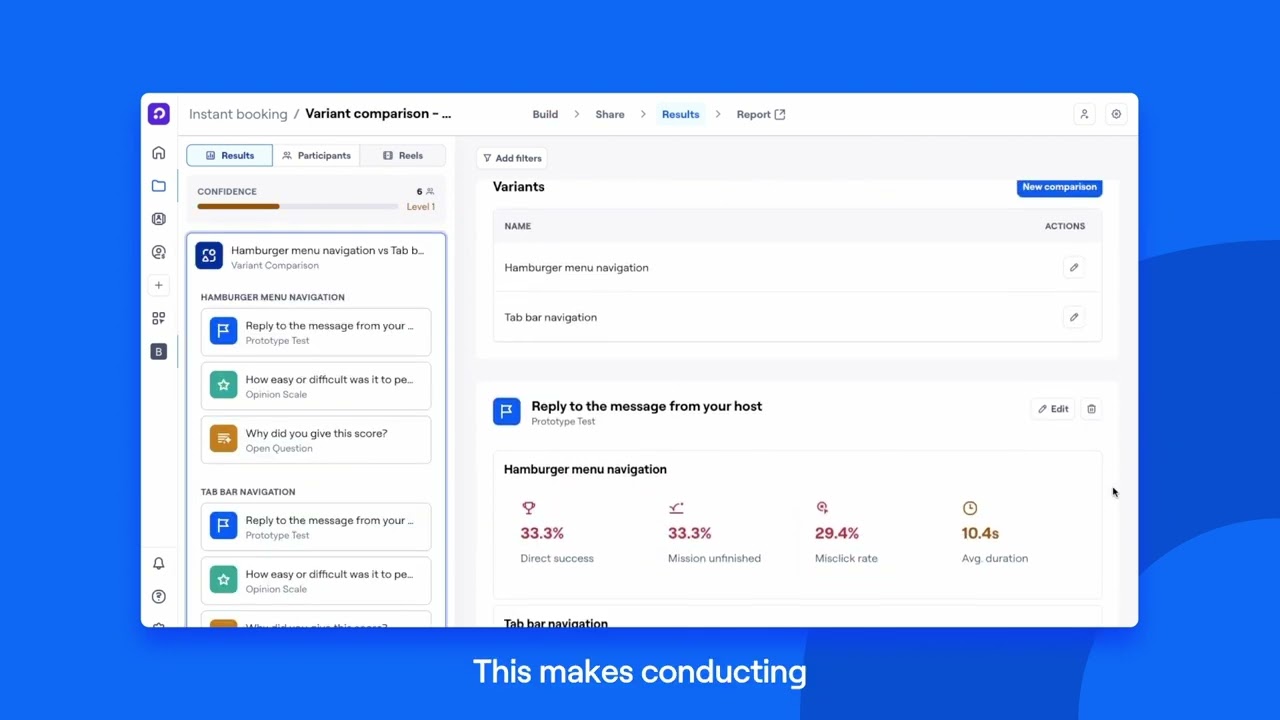
Maze is an efficient user testing platform designed specifically for product teams, providing complete solutions from prototype testing to launch validation. Maze can quickly recruit real users for remote usability testing, helping teams collect critical feedback at every stage of product development.
Maze's core advantage lies in the convenience and efficiency of its testing. Through no-code test creation and intelligent user recruitment systems, Maze can complete testing projects that traditionally take weeks in just hours. The platform also provides detailed heatmap analysis and behavioral insights to help product teams make data-driven optimization decisions.
7. Aaru: Predictive Simulation Platform
Aaru uses multi-agent simulation technology to predict user behavior and market changes. It can create virtual world scenarios to simulate how users respond in different situations, helping businesses and researchers predict user adoption rates and market performance after product launches.
Aaru's core technology is an AI-based multi-agent system capable of simulating the behavioral patterns of millions of users. By inputting different market conditions and product characteristics, Aaru can predict user adoption rates, satisfaction levels, and potential risk points, providing scientific foundations for strategic decision-making.
8. Conveo: AI-Led Interviews

Conveo is an AI-driven qualitative research platform that powers your entire research process from start to finish. It conducts authentic interviews with real people and instantly analyzes videos to deliver robust, actionable consumer insights at scale.
Conveo's core advantage lies in its AI host's intelligent capabilities and rapid research workflow. It can launch global interviews within 24 hours and provide instant consumer insights. The platform is particularly suitable for modern research teams that need to quickly gather consumer feedback.
9. Dialogue AI: Customer Research Platform
Dialogue AI is an AI-native customer research platform that helps teams uncover needs, test ideas, and capture authentic feedback through AI-moderated interviews. It supports the full journey from early exploration to lasting impact.
Dialogue AI's distinctive features include its intelligent participant screening and conversational AI interviews. It can intelligently recruit appropriate audiences based on research goals and conduct natural, adaptive interviews through AI hosts, generating instant insight reports and actionable recommendations.
AI User Research Tools Comparison: Choose What's Right for You
Use Cases: 6 Practical Applications
Product Development & Optimization
UX research plays a crucial role in the product development process. Through various research tools, businesses can collect user feedback on new features, understand pain points, and optimize product design based on real user data. AI research tools can quickly identify user needs, helping product teams make wiser development decisions.
User Experience Design
User experience design depends on deep user insights. UX research tools can help designers understand user behavior patterns, emotional responses, and usage habits. Through interview and simulation tools, designers can create product interfaces and interaction flows that better meet user expectations.
Market Research & Analysis
Market research is the foundation for business strategy development. UX research tools provide complete solutions from large-scale surveys to in-depth interviews, helping businesses understand market trends, competitive landscape, and consumer preferences, providing data support for market strategy formulation.
Brand Strategy Development
Brand building requires deep understanding of target users' mindset and values. UX research tools can reveal users' perceptions of brands, emotional connections, and expectations, helping businesses create more attractive brand images and communication strategies.
Customer Satisfaction Management
Continuously monitoring and improving customer satisfaction is key to business success. UX research tools provide systematic methods for measuring satisfaction and collecting feedback, helping businesses identify issues promptly and take corrective measures.
Trend Prediction & Analysis
Predictive UX research tools can simulate future market changes and user behavior trends. Through AI simulation, businesses can predict technology adoption rates and preference changes, providing scientific foundations for long-term strategic planning.
How to Choose AI UX Research Tools
With so many UX research tools available, how do you choose the solution that best fits your needs? These five key steps will help you make a wise choice.
1. Define research objectives and target users
First, clarify your research objectives: Are you measuring user satisfaction, testing new product concepts, or forecasting market trends? Also determine your target user group and sample size, as these factors will determine the type and complexity of tools you need.
2. Select appropriate research methodology
Choose the right methodology based on research objectives: Quantitative research is suitable for large-scale data collection and statistical analysis; qualitative research is suitable for deeply understanding user motivations; predictive research is suitable for trend analysis and risk assessment. Ensure selected tools support your required research methods.
3. Evaluate AI capabilities and automation level
Consider the AI intelligence level of tools: Basic tools provide data collection and simple analysis; AI-enhanced tools provide intelligent insight generation; advanced AI tools provide predictive simulation and automated research processes. Choose appropriate AI feature levels based on your technical capabilities and budget.
4. Check data security and integration capabilities
User research involves sensitive data, ensure tools comply with data protection regulations (such as GDPR). Also check whether tools can integrate with your existing systems, including CRM, analytics tools, and project management platforms, to achieve seamless data flow.
5. Assess cost-benefit and scalability
Calculate the total cost of ownership of tools, including subscription fees, training costs, and implementation time. Consider tool scalability to ensure it can grow with your research needs. Also evaluate the learning curve and team adoption difficulty.
Conclusion
UX research tools are undergoing a profound transformation from traditional methods to AI-driven approaches. From classic survey platforms like SurveyMonkey and Qualtrics to innovative AI tools like ListenLabs, Outset, Atypica, Maze, Aaru, Conveo, and Dialogue AI, each solution has its unique value and applicable scenarios.
Traditional survey tools are renowned for their stability and ease of use, suitable for standardized large-scale data collection; while AI research tools provide deeper insights and higher efficiency, representing the future direction of UX research. Choosing the right tools requires comprehensive evaluation based on specific research objectives, budget, and technical capabilities.
In today's digital transformation, UX research is no longer optional but a core driver of product success and business growth. By properly utilizing these AI UX research tools, businesses can more accurately understand user needs, improve product quality, and ultimately achieve sustainable business growth.