What Are AI Healthcare Tools
AI healthcare tools leverage artificial intelligence to assist healthcare professionals in improving clinical efficiency, enhancing patient care quality, and reducing administrative costs. These tools use natural language processing, computer vision, and machine learning to provide powerful support in clinical documentation automation, medical imaging analysis, intelligent diagnostic assistance, patient communication, and healthcare data management. According to Menlo Ventures research, 22% of healthcare organizations have implemented specialized AI tools, representing a 7x increase from 2024 and a 10x increase from 2023. Health systems lead with 27% adoption, followed by ambulatory practices (18%) and payers (14%).
The core value of AI healthcare tools lies in improving efficiency, enhancing patient experience, and reducing costs. Whether for large hospital systems or small clinics, these tools provide effective assistance, allowing healthcare professionals to focus on patient care rather than administrative tasks. Similar to AI meeting note tools, AI healthcare tools are more efficient and reduce human errors while improving care quality.
The best approach is human-AI collaboration: let AI tools handle documentation, data analysis, and preliminary diagnostic suggestions, while healthcare professionals focus on clinical decisions and patient communication. This maximizes AI efficiency while preserving professional judgment and human care.
How AI Healthcare Tools Work
Modern AI healthcare tools are based on large language models (LLMs), computer vision, and natural language processing, providing intelligent support in clinical documentation, medical imaging, diagnostic assistance, and patient communication. Compared to traditional healthcare information systems, AI tools offer significant improvements in automation, intelligent analysis, and functional diversity.
Core technologies include natural language processing (NLP), computer vision (CV), machine learning (ML), and knowledge graphs. NLP enables understanding and generating medical documents, CV analyzes medical images, ML learns patterns from vast healthcare data, and knowledge graphs understand relationships between medical concepts.
Key advantages are automation capabilities and intelligent analysis. Automation saves time by handling documentation, data extraction, and preliminary analysis. Intelligent analysis identifies anomalies, provides diagnostic suggestions, and optimizes treatment plans.
Best General Healthcare AI Platforms 2026
1. Google Health AI: Multimodal Healthcare AI
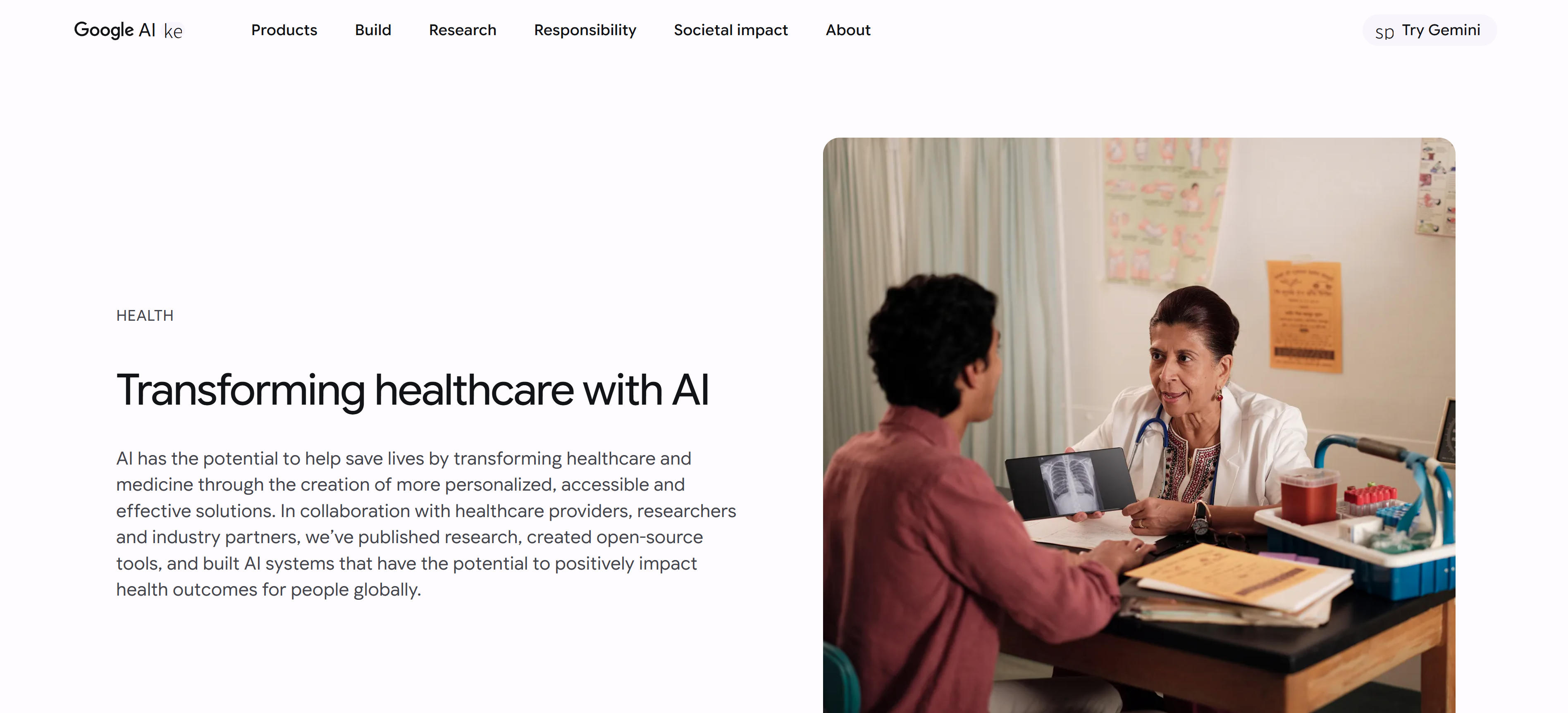
Google Health AI is a multimodal healthcare platform integrating Gemini models with medical expertise, providing comprehensive AI solutions for healthcare organizations. It supports medical imaging analysis, clinical documentation generation, intelligent diagnostic assistance, and patient communication. The platform's strength lies in powerful multimodal capabilities, processing text, images, and structured data simultaneously for comprehensive healthcare AI support. Google Health AI offers strict privacy protection and compliance support, ensuring data security and regulatory compliance. Ideal for large healthcare organizations needing comprehensive AI solutions.
2. Claude Healthcare: Secure Medical Conversations
Claude Healthcare is Anthropic's secure medical conversation platform, focused on providing safe, reliable AI assistance for healthcare professionals. Based on Claude models with healthcare-specific training, it understands medical terminology, generates clinical documents, provides diagnostic suggestions, and assists patient communication. The platform's strength is strict security and privacy measures, compliant with HIPAA and other healthcare data protection standards. Claude Healthcare offers explainable AI decisions, helping professionals understand AI recommendations and reasoning. Ideal for healthcare organizations needing secure AI conversation support.
3. OpenAI Healthcare: Medical GPT Applications
OpenAI Healthcare is OpenAI's medical GPT application platform, based on GPT-4 and advanced models, providing powerful AI capabilities for healthcare organizations. It supports clinical documentation automation, intelligent diagnostic assistance, patient communication, and healthcare data analysis. The platform's strength is powerful language understanding and generation, producing high-quality medical documents, accurate diagnostic suggestions, and natural patient conversations. OpenAI Healthcare offers API interfaces for easy integration into existing systems. Ideal for healthcare organizations needing flexible AI solutions.
Best Specialized Healthcare AI Tools 2026
4. Aidoc: Medical Imaging AI Analysis
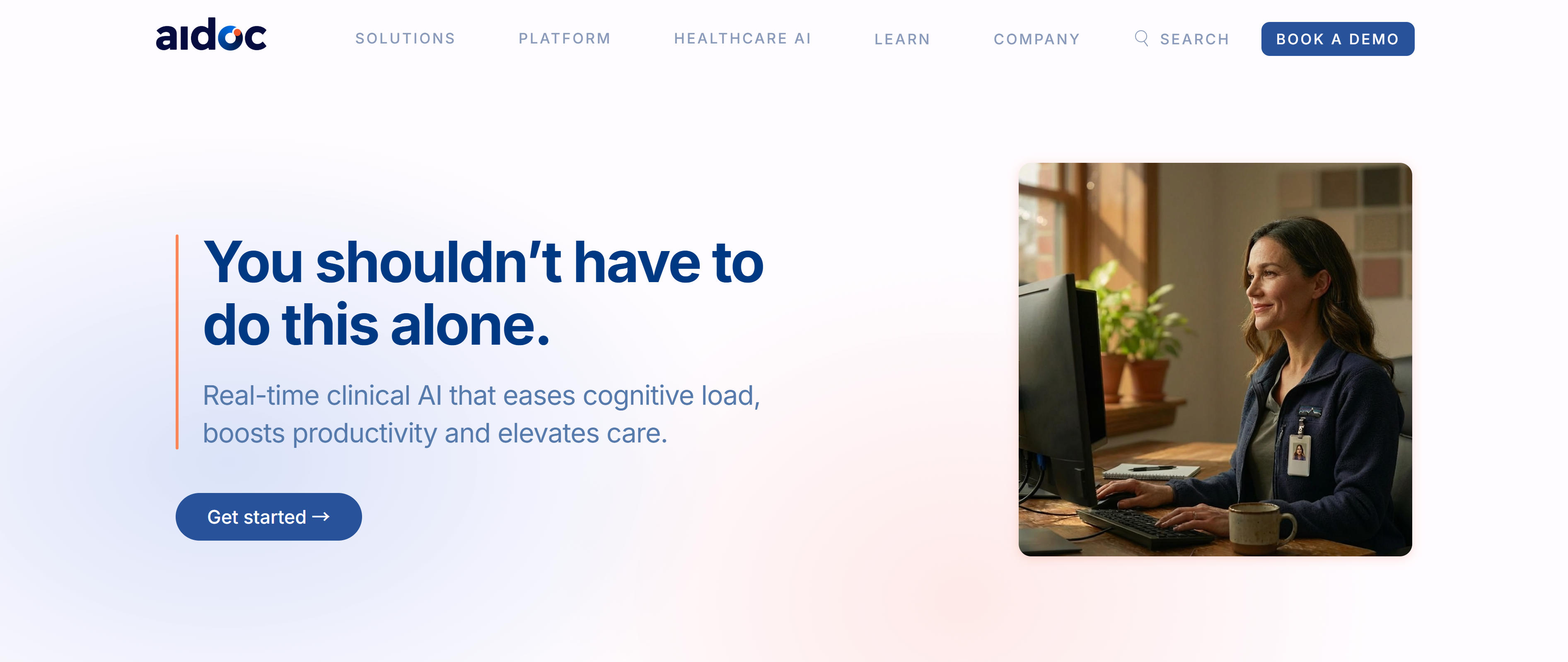
Aidoc is a leading medical imaging AI analysis platform, focused on providing intelligent imaging analysis and anomaly detection for radiologists. It supports CT, MRI, X-ray, and other medical imaging types, automatically identifying anomalies, annotating lesion areas, and generating preliminary diagnostic reports. According to Menlo Ventures reports, large healthcare organizations like Advocate Health have deployed Aidoc and similar imaging tools, significantly improving diagnostic efficiency and accuracy. Aidoc's strength is high-precision imaging analysis and seamless PACS integration, helping radiologists detect anomalies faster and reduce missed diagnoses. Ideal for healthcare organizations needing improved imaging diagnostic efficiency.
5. Abridge: Clinical Documentation Automation
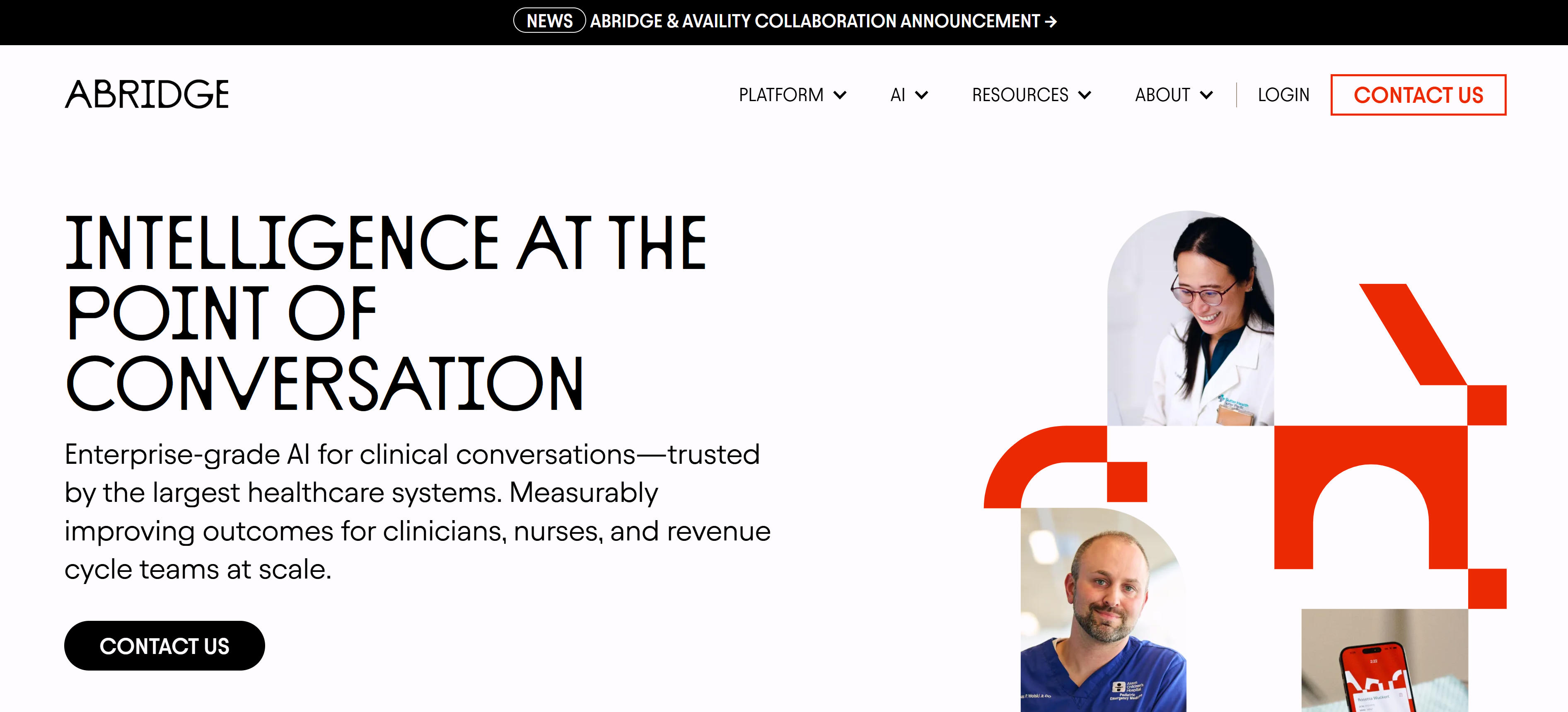
Abridge is a leading clinical documentation automation platform, focused on reducing physician documentation burden through ambient documentation technology. It uses AI to automatically record patient-physician conversations, generate structured clinical documents, and integrate directly into EHR systems. According to Menlo Ventures reports, Kaiser Permanente deployed Abridge across 40 hospitals and 600+ medical offices, representing the largest generative AI deployment in healthcare history and Kaiser's fastest technology implementation in over 20 years. Abridge's strength is its 30% market share and powerful EHR integration, significantly reducing documentation time and improving clinical efficiency. Ideal for healthcare organizations needing reduced documentation burden.
6. Freed: Behavioral Health Documentation
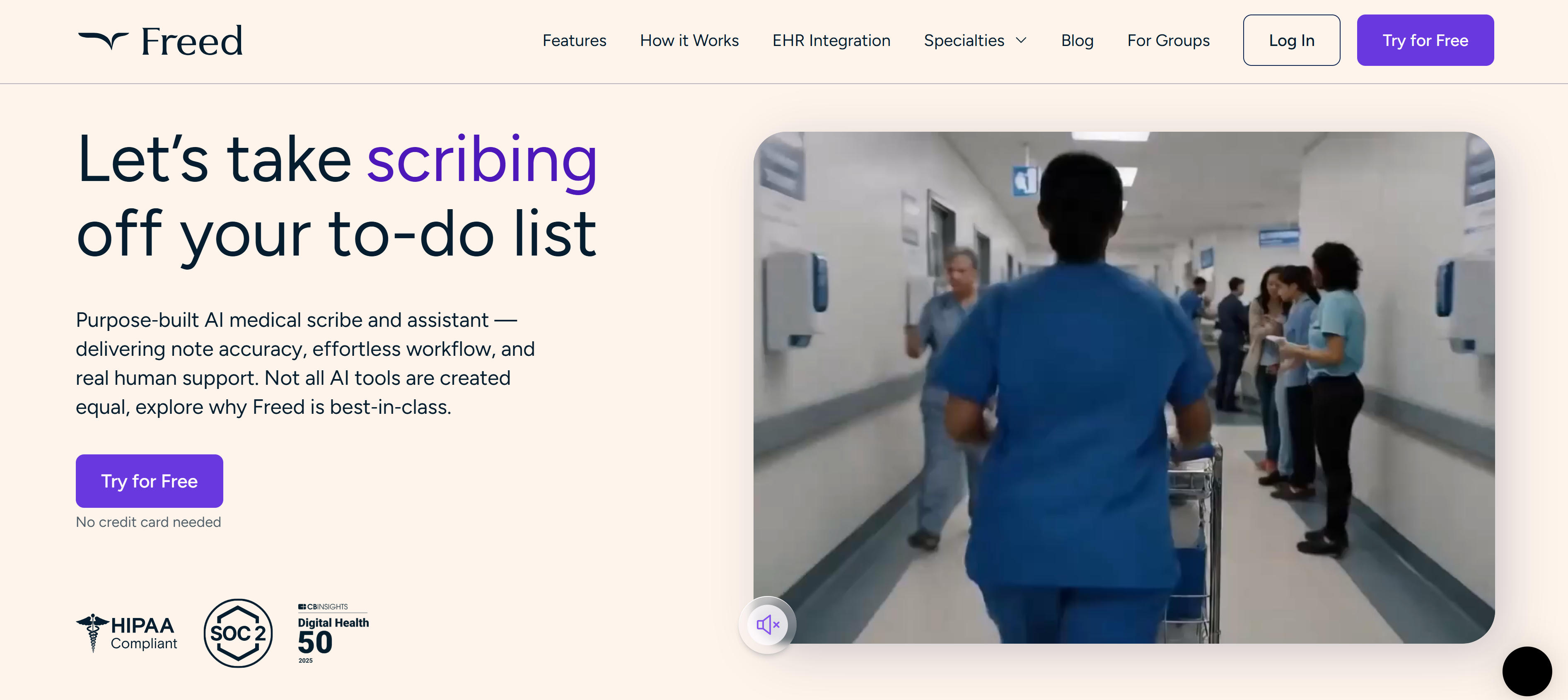
Freed is a clinical documentation assistant focused on behavioral health, providing intelligent documentation recording and treatment plan generation for mental health professionals. It uses AI to automatically record therapy sessions, generate structured documents, and assist in creating treatment plans and progress reports. According to Menlo Ventures reports, Freed is one of the leading documentation tools for behavioral health and post-acute care providers. Freed's strength is deep understanding of behavioral health and specialized documentation templates, helping mental health professionals save documentation time and focus on patient treatment. Ideal for behavioral health organizations needing improved documentation efficiency.
7. OpenEvidence: Evidence-Based Medicine Documentation
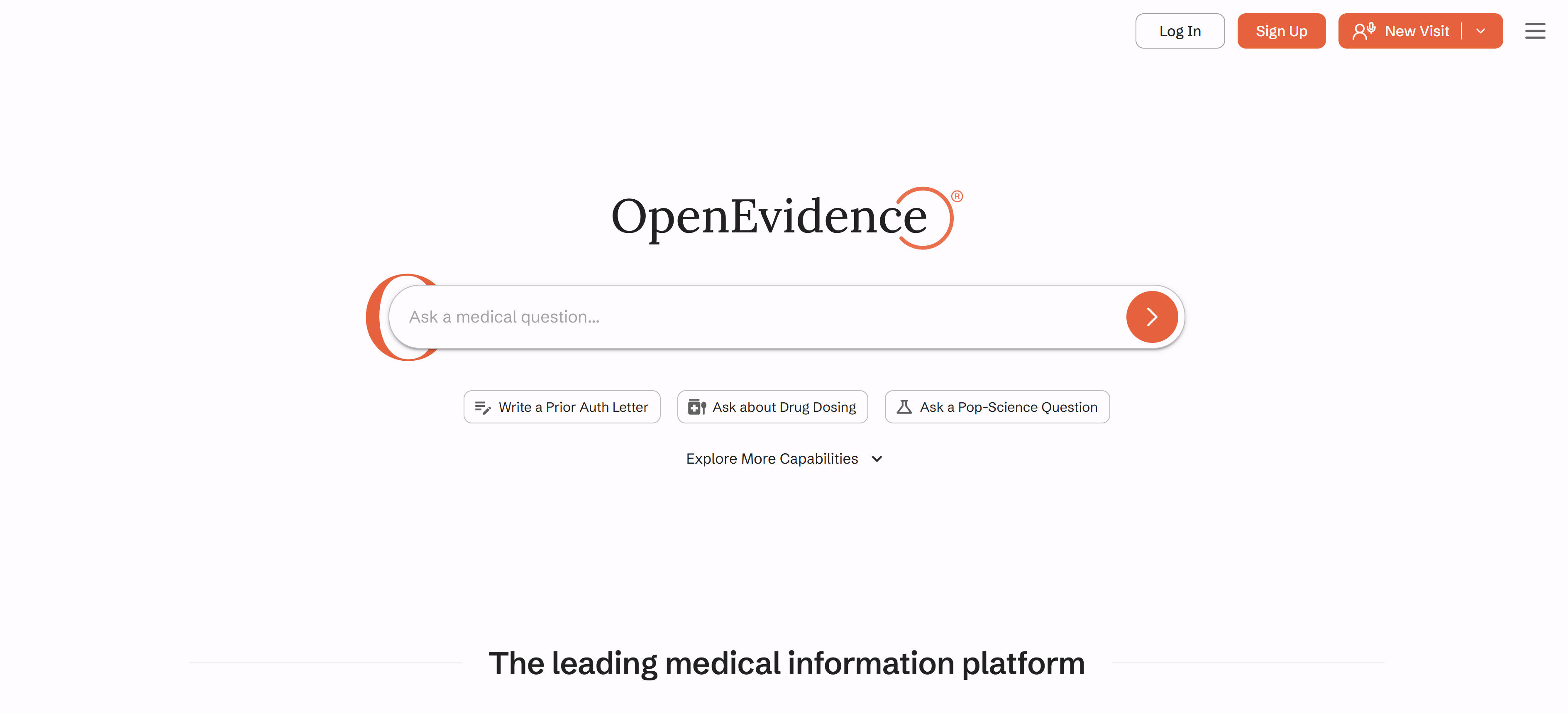
OpenEvidence is a clinical documentation platform focused on evidence-based medicine, providing documentation generation and decision support based on latest medical research for healthcare professionals. It uses AI to analyze vast medical literature, generate evidence-based documents, and provide treatment recommendations and decision support. According to Menlo Ventures reports, OpenEvidence competes with tools like Abridge in the medical documentation market, reducing clinical and administrative workload through automation. OpenEvidence's strength is powerful medical literature analysis and evidence-based medicine support, helping professionals make clinical decisions based on latest research. Ideal for healthcare organizations needing evidence-based medicine support.
AI Healthcare Tools Comparison
Different AI healthcare tools vary significantly in functionality, application scenarios, and technical features. The following table compares key characteristics of major AI healthcare tools to help you quickly understand each tool's features and applications.
Use Cases: 5 Major Healthcare Applications
AI healthcare tools have wide-ranging applications, covering nearly all scenarios requiring improved efficiency and quality. From clinical documentation to medical imaging, these tools provide effective assistance, making healthcare more efficient and intelligent.
1. Clinical Documentation Automation
In clinical documentation automation, AI healthcare tools automatically record patient-physician conversations, generate structured clinical documents, and integrate directly into EHR systems. Tools can transcribe conversations in real-time, extract key information, and generate medical-standard documents, helping physicians save significant documentation time. According to Menlo Ventures reports, the ambient documentation market reached $600 million, making it one of the largest healthcare AI application categories. Tools like Abridge and Freed specialize in clinical documentation automation, significantly reducing documentation burden and improving clinical efficiency. Ideal for healthcare organizations needing reduced documentation time.
2. Medical Imaging Diagnostic Assistance
In medical imaging diagnostic assistance, AI healthcare tools automatically analyze CT, MRI, X-ray, and other medical images, identifying anomalies, annotating lesion areas, and generating preliminary diagnostic reports. Tools use computer vision to quickly process large volumes of imaging data, helping radiologists detect anomalies faster and reduce missed diagnoses. Professional imaging AI tools like Aidoc excel in medical imaging analysis and have been adopted by multiple large healthcare organizations. Ideal for healthcare organizations needing improved imaging diagnostic efficiency.
3. Intelligent Diagnostic Recommendations
In intelligent diagnostic recommendations, AI healthcare tools provide diagnostic suggestions and treatment recommendations based on patient symptoms, medical history, and test results. Tools use natural language processing and knowledge graphs to understand relationships between medical concepts, providing evidence-based recommendations. General platforms like Google Health AI, Claude Healthcare, and OpenAI Healthcare offer diagnostic assistance, while OpenEvidence focuses on evidence-based medicine support. Ideal for healthcare organizations needing intelligent diagnostic support.
4. Patient Communication and Engagement
In patient communication and engagement, AI healthcare tools assist healthcare professionals in natural conversations with patients, answering questions, providing health education, and follow-up support. Tools use natural language processing to understand patient intent, generate personalized responses, and enhance patient experience. According to Menlo Ventures reports, the patient engagement market grew 20x annually, making it one of the fastest-growing healthcare AI categories. General AI platforms like Claude Healthcare and OpenAI Healthcare offer patient communication features. Ideal for healthcare organizations needing improved patient experience.
5. Healthcare Data Management and Analysis
In healthcare data management and analysis, AI healthcare tools analyze vast healthcare data, identify patterns, predict risks, and optimize treatment plans. Tools use machine learning to learn from historical data, providing data-driven healthcare decision support. General AI platforms like Google Health AI offer powerful data analysis capabilities, helping healthcare organizations optimize operations and improve patient care. Ideal for healthcare organizations needing data-driven decision-making.
How to Choose AI Healthcare Tools
Select appropriate AI healthcare tools based on your organization type, application scenarios, integration needs, privacy security, and budget requirements to significantly improve efficiency and patient care quality.
1. Identify Application Scenario Requirements
Choose tools based on specific needs: select Abridge or Freed for clinical documentation automation; Aidoc for medical imaging analysis; Google Health AI or Claude Healthcare for comprehensive solutions. Consider whether tools support your primary scenarios and if multiple tools are needed.
2. Evaluate EHR Integration Capabilities
Assess whether tools integrate with existing EHR systems like Epic, Cerner, or athenahealth. If your organization uses specific EHR systems, choosing seamlessly integrated tools greatly improves efficiency. Abridge and Freed offer strong EHR integration; Aidoc supports PACS integration; OpenAI Healthcare provides API interfaces.
3. Consider Privacy Security Compliance
Evaluate whether tools comply with HIPAA, GDPR, and other healthcare data protection standards, and if they offer enterprise-level security. For applications involving sensitive healthcare data, choosing compliant tools is crucial. Claude Healthcare provides strict privacy protection and HIPAA compliance; Google Health AI offers enterprise security; Abridge and other specialized tools meet healthcare data protection standards.
4. Evaluate Accuracy and Reliability
Test tool accuracy and reliability, especially for medical terminology, professional diagnoses, and complex scenarios. Choose tools with high accuracy and reliability to reduce medical error risks. Evaluate performance through trials or case studies. Aidoc excels in medical imaging analysis; Abridge holds 30% market share in clinical documentation; Google Health AI provides high-precision multimodal analysis.
5. Check Implementation and Support Services
Evaluate implementation difficulty and support services, including training, technical support, and ongoing optimization. For large healthcare organizations, choosing tools with comprehensive support ensures smooth implementation and continuous optimization. According to Menlo Ventures reports, health system procurement cycles shortened from 8.0 to 6.6 months; choosing easily implementable tools accelerates deployment. Enterprise tools like Abridge and Aidoc provide comprehensive implementation support; Google Health AI offers professional services.
Conclusion
Recommended AI healthcare tools excel in their respective fields, providing powerful AI support for healthcare organizations. Google Health AI, Claude Healthcare, and OpenAI Healthcare suit large organizations needing comprehensive solutions; Aidoc suits radiology departments needing medical imaging analysis; Abridge suits organizations needing reduced documentation burden; Freed suits behavioral health organizations; OpenEvidence suits organizations needing evidence-based medicine support.
According to Menlo Ventures research, healthcare AI investment reached $1.4 billion, with 85% flowing to startups, indicating rapid AI healthcare tool development. Try free versions or pilot projects first, then make final decisions based on actual experience. Remember AI tools are assistants; healthcare decisions still require professional judgment and human care.