Article Overview
This comprehensive guide explores the latest developments in AI code review tools for 2026, covering everything from AI-driven code analysis to intelligent defect detection, automated optimization suggestions, and more. We'll start by introducing the fundamental concepts and evolution of AI code review tools, then dive deep into 5 leading AI code review solutions with detailed feature analysis. Next, we'll compare these tools in a feature matrix to help you quickly understand their strengths and differences. Finally, we'll explore 6 practical applications of these tools across code quality assurance, team collaboration, continuous integration, and more, along with guidance on selecting the most suitable AI code review solution for your team. Whether you're a development team leader, quality assurance engineer, or someone interested in AI code review, you'll find valuable insights and recommendations for implementing AI-powered code quality assurance.
What Are AI Code Review Tools
AI code review tools represent a revolutionary advancement in software quality assurance, integrating artificial intelligence deeply into traditional code review processes. These tools go beyond basic static analysis to provide intelligent defect detection, automated code quality assessment, and contextual improvement suggestions. By 2026, AI code review tools have become essential quality assurance solutions for modern software development teams.
The core value of AI code review tools lies in transforming tedious code review processes into intelligent, automated quality assurance. Traditional human reviews are subjective and prone to fatigue, while AI tools maintain consistent standards 24/7, providing objective and comprehensive code analysis. This intelligence extends beyond simple rule-checking to understand code intent, context, and architectural patterns.
Modern AI code review tools typically feature multi-layered intelligent capabilities: foundational layers handle code standard compliance and basic defect detection, intermediate layers focus on code quality assessment and performance optimization recommendations, while advanced layers tackle architectural analysis and security vulnerability scanning. Different tools are optimized for various development team needs and project types, from individual developers' small projects to complex enterprise-level distributed systems. Throughout the entire software development lifecycle, AI code review tools serve as crucial bridges between coding, testing, and deployment phases, ensuring code quality is built in from the ground up. As the AI coding tools ecosystem continues to expand rapidly, code review has emerged as a critical quality assurance component, providing development teams with more efficient and reliable quality assurance solutions.
How AI Code Review Tools Work
AI code review tools employ advanced machine learning models and code understanding algorithms to analyze code structure, identify patterns, detect issues, and provide targeted improvement suggestions. Unlike traditional static code analyzers, AI-powered tools use deep learning approaches to understand code semantics and context, delivering more intelligent and accurate analysis results.
The AI software development workflow typically follows a "Plan → Code → Review" cycle, as outlined by industry experts at Andreessen Horowitz. This begins with LLMs helping developers create detailed feature specifications, then generating code through agentic loops with testing, and finally having developers review and adjust the AI's work. This collaborative human-AI approach represents the future of software development, where AI serves as an intelligent partner rather than just a code generation tool.
The core technical architecture includes code parsing engines, intelligent analysis models, knowledge graph construction, and natural language generation. Code parsing engines transform source code into structured intermediate representations, intelligent analysis models use massive code datasets to identify defect patterns and best practices, knowledge graphs establish relationships between code elements, and natural language generation converts technical findings into human-readable improvement suggestions. This multi-layered architecture ensures AI code review tools deliver high-quality analysis across different programming languages, frameworks, and project types.
AI code review tools typically combine cloud processing with local deployment to balance powerful AI analysis capabilities with data security and efficiency. Tools continuously learn and optimize models, improving analysis accuracy and recommendation quality over time. Users can configure review rules through user-friendly interfaces, view analysis results, and customize review strategies based on team requirements. This implementation approach keeps AI code review tools highly intelligent while maintaining excellent practicality and scalability. The advancement of AI code review technology has also driven progress in related AI coding tools like code completion tools, forming a comprehensive AI-driven development ecosystem.
Best AI Code Review Tools 2026
1. CodeRabbit CLI: AI-Driven Code Review
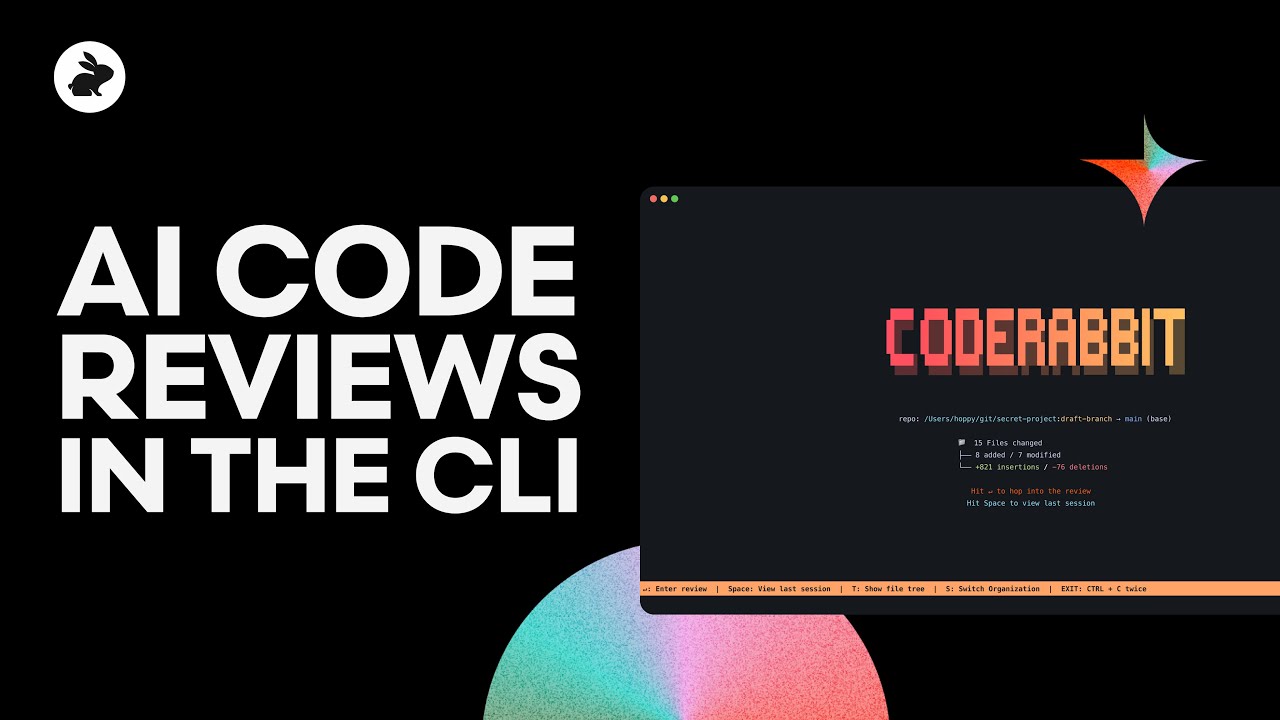
CodeRabbit CLI is an AI-powered code review tool designed specifically for modern software development teams, achieving fully automated code quality analysis and improvement suggestions through deep learning technology. CodeRabbit's core advantage lies in its powerful contextual understanding capabilities, able to deeply analyze code change backgrounds, intentions, and potential impacts, providing precise review opinions and optimization suggestions. The tool features rich programming language support and framework recognition, automatically detecting code standard violations, security vulnerabilities, performance bottlenecks, and more, while offering specific fix solutions. As an AI IDE tool, CodeRabbit seamlessly integrates into development environments, providing developers with real-time code quality assurance. Whether for new feature development or legacy code refactoring, CodeRabbit delivers high-quality code review services for development teams.
2. Baz: Intelligent Code Analysis Platform
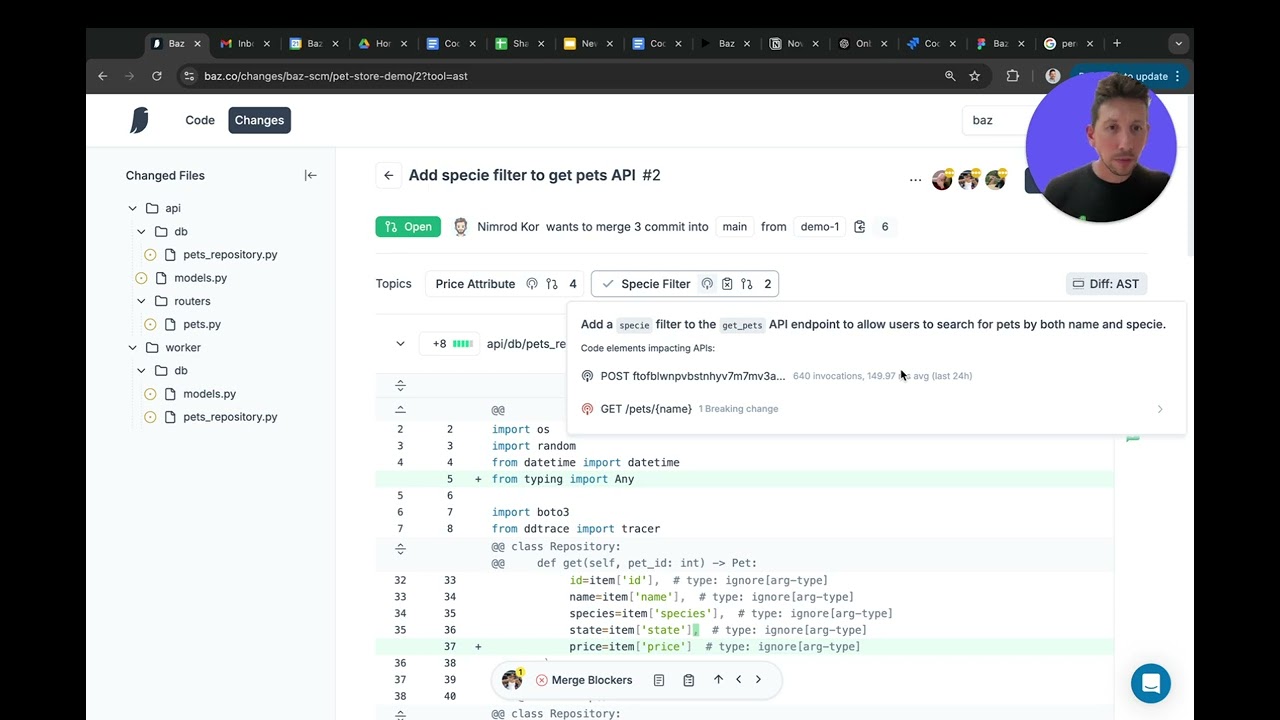
Baz is an AI platform focused on intelligent code analysis, providing development teams with comprehensive code quality assessment and optimization services. Baz's core feature is its multi-dimensional analysis capability, able to simultaneously perform in-depth analysis from multiple angles including code quality, security, maintainability, and performance, providing comprehensive improvement suggestions. The platform supports real-time code review and batch analysis, seamlessly integrating into existing development workflows. Baz is particularly suitable for large development teams, capable of handling complex code library analysis tasks and providing detailed analysis reports and improvement suggestions to help teams continuously improve code quality and development efficiency.
3. Bito: AI Code Review Assistant

Bito is an AI code review assistant designed specifically for developers, combining advanced machine learning technology with code understanding capabilities to provide development teams with intelligent code review services. Bito's core advantage lies in its learning AI engine, able to continuously optimize review suggestions based on team coding habits and project standards, providing increasingly accurate code improvement opinions. The tool supports multiple integration methods, including IDE plugins, AI CLI tools, and API interfaces, flexibly adapting to different development environments and workflows. Bito is particularly suitable for agile development teams, capable of quickly identifying code issues and providing practical improvement suggestions.
4. Graphite: Code Quality Enhancement Tool
Graphite is an AI tool focused on continuous code quality improvement, using intelligent analysis and automated optimization to help development teams build high-quality codebases. Graphite's core features include deep code analysis, automated refactoring suggestions, and quality metrics tracking, able to comprehensively assess code health and provide targeted improvement solutions. The tool particularly emphasizes preventive code review, able to identify potential risks before they occur and provide solutions. Graphite supports team collaboration, able to promote knowledge sharing and best practice dissemination during code review processes, helping the entire team improve coding levels together.
5. Greptile: AI Code Review Expert
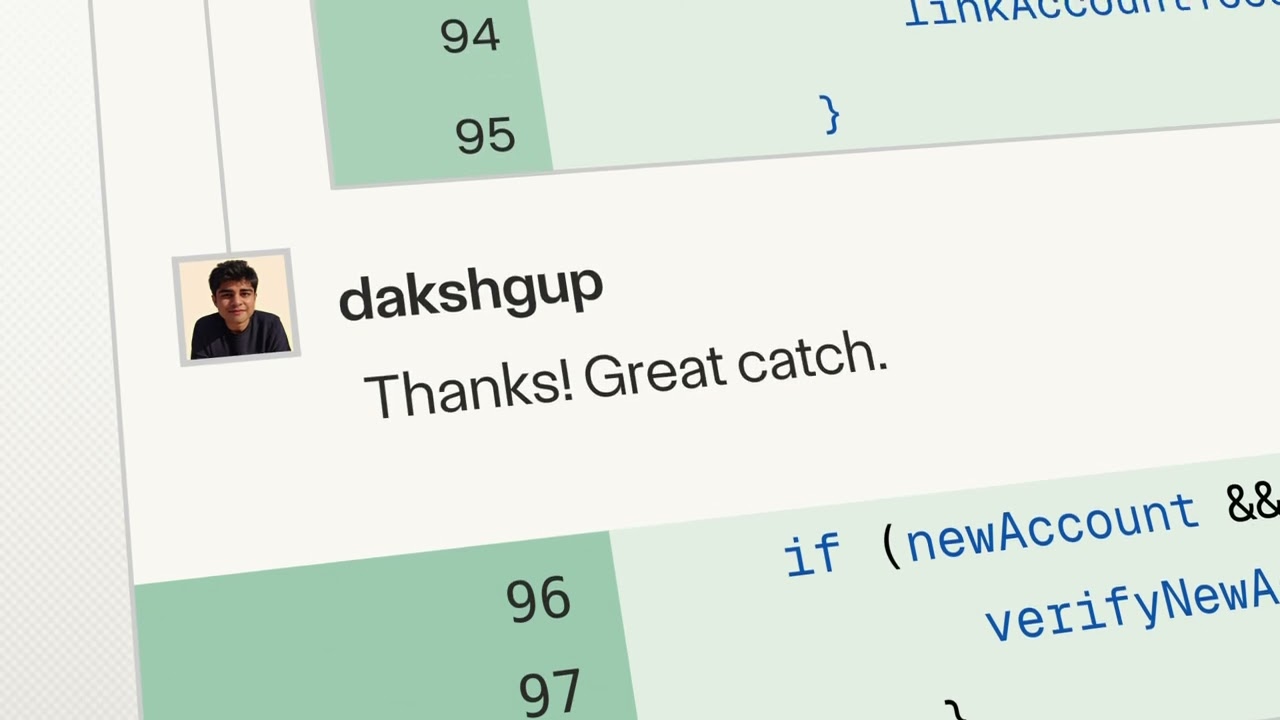
Greptile is a professional AI code review tool combining deep learning technology with expert-level code analysis capabilities to provide development teams with comprehensive code quality assurance services. Greptile's uniqueness lies in its expert-level analysis capabilities, able to understand complex code logic and architectural patterns, providing in-depth problem diagnosis and optimization suggestions. The tool supports large-scale code library analysis, capable of handling enterprise-level code review requirements and providing detailed review reports and improvement tracking. Greptile is particularly suitable for enterprises and open-source projects requiring high-level code quality assurance, able to help teams establish strict quality standards and continuously improve development practices.
AI Code Review Tools Comparison: Choose the Right One
Use Cases: What AI Code Review Tools Can Do
Code Quality Assurance
AI code review tools are most widely applied in code quality assurance, automatically detecting code standard violations, potential defects, and security vulnerabilities. Through static analysis and pattern recognition, these tools can identify potential issues before code commits, preventing defects from entering production environments. In agile development modes, AI tools can quickly complete code review tasks, ensuring development pace remains unaffected while maintaining high code quality standards.
Team Collaboration Optimization
Modern software development emphasizes team collaboration, and AI code review tools can standardize code review criteria, ensuring all team members follow consistent quality standards. These tools can learn team coding habits and preferences, providing personalized review suggestions while promoting knowledge sharing and best practice dissemination. In distributed teams, AI tools can compensate for communication barriers caused by time zones and geography, ensuring code quality consistency.
Continuous Integration Integration
AI code review tools can seamlessly integrate into CI/CD pipelines, providing automated code quality checkpoints. They automatically execute review tasks before code merges, promptly identifying and fixing issues to prevent defect accumulation in later stages. This automated integration not only increases release frequency but also reduces release risks, providing strong support for DevOps practices.
Beginner Developer Guidance
For junior developers, AI code review tools provide timely guidance and suggestions to help them quickly master coding standards and best practices. These tools not only point out problems but also explain the reasons and fix methods, serving as effective programming learning assistants. During code review processes, AI provides constructive feedback to help junior developers build good coding habits. Additionally, combined with natural language coding tools, beginners can learn programming concepts through simple natural language descriptions, achieving rapid conversion from ideas to code.
Legacy Code Refactoring
Handling legacy codebases is a challenge many development teams face, and AI code review tools can analyze large codebases, identify refactoring opportunities, and provide specific improvement suggestions. These tools can detect code smells, identify design problems, and suggest refactoring solutions to help teams gradually improve code quality. For long-term maintenance projects, AI tools can continuously monitor code health status and provide improvement priority suggestions.
Open Source Project Maintenance
Open source projects typically rely on community contributors, and AI code review tools can help maintainers quickly assess code quality, ensuring contributed code meets project standards. These tools can automatically check code style, test coverage, security aspects, and more, providing maintainers with objective review criteria. When handling large numbers of contribution requests, AI tools can significantly improve review efficiency, ensuring healthy development of open source projects.
How to Choose AI Code Review Tools
1. Evaluate Team Size and Project Complexity
First, clarify your team size and project complexity: Is it a small startup team or large enterprise development? Are the projects simple web applications or complex distributed systems? Different scale teams have varying requirements for tool ease of use, integration capabilities, and scalability. Small teams may focus more on quick adoption and cost-effectiveness, while large teams prioritize enterprise features and customization needs.
2. Check AI Analysis Capabilities and Accuracy
Thoroughly evaluate the tool's AI analysis capabilities: Are supported programming languages comprehensive? How is the accuracy of problem detection? Are suggestions practical? Test the tool's analysis effectiveness on your commonly used tech stacks, particularly focusing on false positive and false negative rates. Choose tools that have been validated through numerous real projects, avoiding solutions that only rely on theoretical performance.
3. Verify Integration Compatibility with Existing Workflows
Check the tool's compatibility with existing development toolchains: Does it support commonly used version control systems? Can it integrate into CI/CD pipelines? Are API interfaces complete? Evaluate integration difficulty and maintenance costs, ensuring new tools can seamlessly integrate into existing workflows rather than adding extra complexity.
4. Consider Data Security and Privacy Protection Measures
Evaluate the tool's data handling methods: Is code uploaded to the cloud? Are there local deployment options? How is data encryption and access control handled? For projects involving sensitive code, choose tools that support local deployment or private clouds. Understand data retention policies and service agreements to ensure compliance with enterprise security standards and regulatory requirements.
5. Test User Experience and Team Adoption Rate
Experience the tool's interface design and operational processes: Is the learning curve steep? Are documentation and support comprehensive? How is the team's acceptance level? Consider training costs and cultural adaptability, choosing tools that can gain broad team support. Good user experience is key to ensuring long-term effective tool usage.
Conclusion
AI code review tools are redefining the standards of software quality assurance, transforming from traditional manual review models to intelligent automated assurance systems. These tools not only significantly improve the efficiency and accuracy of code reviews but also can discover potential issues that are difficult for humans to detect, providing strong support for continuous software development improvement.
When selecting AI code review tools, choose appropriate solutions based on your team's specific needs, project characteristics, and tech stacks. Whether it's startup teams focused on rapid response or enterprise projects pursuing deep analysis, suitable solutions can be found in the current market. The key is to fully evaluate tool features, integration capabilities, and usage experience to ensure selected tools can truly bring practical value improvement to teams.
Looking ahead, as AI technology continues to advance, code review tools will become more intelligent and personalized, providing development teams with more precise and practical quality assurance services. Development teams should actively embrace this transformation, treating AI code review tools as indispensable components of modern software development, achieving dual improvements in code quality and development efficiency through continuous application and optimization.