Introduction: Why is Logo Design Important for AI Products?
Recently, Dreamina's logo sparked controversy for being strikingly similar to Tiamat's logo, which made us reconsider: How important is logo design for AI products?
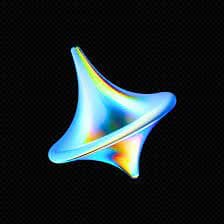 Dreamina Logo
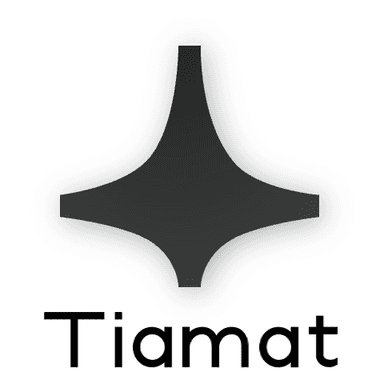 Tiamat Logo
A logo is a brand's first impression, and it's especially important for AI products. A good logo should not only convey a sense of technology and trustworthiness but also make users feel friendly and approachable. With the rapid development of the AI industry, AI product logo design has formed unique trends and standards.
Key Insight: Just as red, white, and blue barber poles indicate a barbershop, today's AI logos are more concerned with signaling industry membership than projecting a unique brand identity. However, finding the balance between industry recognition and brand uniqueness is a question every AI product needs to consider.
Historical Evolution of AI Logos
Early AI Logos (1981-2015)
The first U.S. artificial intelligence trademark was filed in 1981, and AI-related logos have been appearing since then. Early AI logos typically included:
- Abstract Human Heads: Used to represent the concept of intelligence, such as long-forgotten companies like Knowledge Based Silicon and Advanced Decision Systems
- Escher-Style Triangles and Stripes: Influenced by IBM's logo, this was very common in tech logos of that era
- HAL 9000's Influence: HAL from Kubrick's 1968 film "2001: A Space Odyssey," an AI with black eyes and fixed red pupils, influenced early AI visual design
The Turning Point for Modern AI Logos (Post-2015)
Over 99% of U.S. AI trademark applications were filed after 2015, bearing almost no resemblance to earlier designs. Human elements in these logos have largely disappeared, replaced by a series of minimalist design elements.
Data Insight: 2015 marked a major shift in AI logo design, transitioning from abstract humanoid designs to minimalist symbolic designs. This shift coincides closely with breakthroughs in deep learning technology and the emergence of products like ChatGPT.
Current Design Trends in AI Logos
Modern AI logos primarily exhibit the following design trends, each with its unique symbolic meaning and application scenarios.
Hexagon: From Cryptocurrency to AI
Hexagons are the star of crypto graphics, representing blockchain. Interestingly, hexagons also appear frequently in AI logos, with a 4.6x likelihood compared to logos in general, almost matching the 5.4x likelihood in cryptocurrency logos.
If AI continues to rise, it may take ownership of the hexagon symbol from the crypto industry. The hottest AI logo right now is OpenAI's "stylized hexagon", which has become one of the iconic designs in the AI industry.

Stylized hexagon, has become an iconic design in the AI industry
Rotation/Swirl🌀 Features
OpenAI's hexagon also incorporates another feature—rotation around a central point. This swirl🌀 characteristic also appears in companies like DeepMind, Stability AI, and Synthesia. Rotating designs symbolize dynamism, intelligence, and infinite possibilities, perfectly suited to express AI's generative capabilities and creativity.
AI companies using rotating designs include:
- DeepMind: Uses a clean rotating ring design, conveying a sense of dynamism and intelligence
- Stability AI: Uses more complex gradient swirl effects, emphasizing generative AI's creativity
- Synthesia: Conveys dynamism through partially rotating rings, suitable for video generation AI positioning
 DeepMind
 Stability AI
 Synthesia
Minimalist Small Robot🤖
In modern AI logos, minimalist small robots may be the embodiment of the faceless AI language models we can now interact with. These logos typically feature only a pair of dark eyes staring at us, possibly drawing some inspiration from Google's Android logo or Pixar's WALL-E's sleek companion EVE. Given growing concerns about the potential consequences of AI development, it seems fitting that these characters appear to inhabit a desolate wasteland.
AI products using robot designs include:
- Jasper: Uses a minimalist square robot design with only two dots as eyes, clean and modern overall design
- Hour One: Uses a circular robot design, also with minimalist eye design, conveying a friendly and approachable feeling
- Replika (parent company Luca): More abstract logo, using nested circular designs, conveying a friendly and open feeling
 Jasper
 Hour One
 Replika
Emoji as Logo: Making AI More Friendly
Companies like Spotify, Google, OpenAI, and Zoom are using emojis to make AI seem less concerning. The ✨ emoji is used to express excitement and magic, and branding new AI products with the ✨ emoji indicates these tools are exciting and magical, which may encourage more people to try the technology.
Use cases for the Sparkle Emoji (✨) include:
- Spotify: The shuffle button is overlaid with ✨, indicating it's AI-powered
- Zoom: AI assistant features ✨ identifier, providing AI-supported operations like summarizing meeting notes
- Google Meet: Uses ✨ to indicate AI-generated backgrounds

Hugging Face uses 🤗 as its literal logo. The company provides a platform where developers can collaborate on AI models, datasets, and applications. The hugging face emoji conveys openness and care, making it equally effective at countering any pessimistic views about AI. At the very least, it's a subtle hint that's unlikely to scare those who might be skeptical of AI technology. The use of emojis makes AI products appear more friendly and approachable.
Other Common Symbols
- A without a crossbar: Represents AI (Artificial Intelligence)
- Infinity symbol ♾️: Represents infinite possibilities, also common in cryptocurrency logos
- Speech bubbles: Suitable for chatbots and conversational AI
- Sound waves/microphone: Suitable for voice AI products
How to Design a Logo for Your AI Product
Based on the trend analysis above, here's a practical guide for designing a logo for your AI product.
1. Determine Product Positioning
Before starting the design, you need to clarify your AI product's positioning. Different positioning will affect the logo's design style and the message it conveys.
| Category Dimension | Options | Description |
|---|---|---|
| Product Type | General AI Products | AI assistants or platforms targeting broad user groups |
| Vertical Domain AI | AI solutions targeting specific industries or scenarios | |
| AI Infrastructure | Providing underlying technical support for other AI products | |
| AI Tools/Applications | Specific AI functional tools or applications | |
| Target Market | B2B Enterprise | Targeting enterprise customers, needs to convey professionalism and trustworthiness |
| B2C Consumer | Targeting general consumers, needs to be friendly and approachable | |
| Developer Tools | Targeting technical personnel, emphasizing technical sense and functionality | |
| Creative Tools | Targeting creators, emphasizing creativity and imagination |
2. Choose Design Direction
Based on your product positioning, choose an appropriate design direction. Different design styles suit different product types and target markets:
| Design Style | Suitable Scenarios | Representative Products |
|---|---|---|
| Hexagon Style | Technical platforms, infrastructure, enterprise AI products | OpenAI, technical infrastructure products |
| Rotation/Swirl Style | Generative AI, creative tools, content generation products | DeepMind, Stability AI, Synthesia |
| Robot Style | General AI assistants, chatbots, conversational AI | Jasper, Hour One, Replika |
| Emoji/Symbol Style | Consumer products, friendly AI, mass-market products | Hugging Face, Spotify AI features, Zoom AI assistant |
| Abstract Geometric Style | Enterprise-level, professional tools, products needing unique brand identity | IBM Watson (historical), professional AI tools |
3. Design Process
- Research and Reference
Research existing AI logos, you can refer to resources like Logopedia, but avoid direct copying
- Determine Core Visual Elements
Choose a main design element (hexagon, rotation, robot, etc.), ensuring it matches product positioning
- Choose Color Scheme
Common choices: tech blue, gradients (blue to purple), monochrome (black/white), brand colors. Consider dark mode compatibility
- Test Different Sizes
Ensure the logo is clearly recognizable at small sizes (favicon, mobile) and large sizes (website header, marketing materials)
- Ensure Scalability
Consider logo performance on different backgrounds (light/dark) and different media (digital/print)
- Trademark Check
Before finalizing, conduct a trademark search to avoid conflicts with existing brands (learn from Dreamina's lesson)
4. Avoid Common Mistakes
When designing an AI product logo, avoid the following common mistakes:
- ❌ Overly Complex Design
Modern AI logo trends favor minimalism. Complex designs lose recognition at small sizes. Keeping it simple is key to success.
- ❌ Too Similar to Other AI Products
Referencing Dreamina's case, overly similar designs can spark controversy and legal risks. Ensure your logo has a unique visual language.
- ❌ Using Overly Technical Symbols (Unless B2B)
B2C products should be friendlier, consider using emojis or gentler designs. Technical sense doesn't mean cold.
- ❌ Ignoring Mobile Display Effects
Ensure the logo is clearly recognizable on mobile device small screens. Testing display effects at different sizes is crucial.
- ❌ Not Considering Rebranding Costs
Choose a design that can be used long-term, avoiding brand loss from frequent logo changes. Brand consistency is important for user trust.
Conclusion
AI product logo design is going through a rapid evolution phase. From early abstract humanoid designs to current minimalist symbolic designs, AI logo design trends reflect the development direction of the entire industry.
Key Takeaways Summary
- 1.Balance Industry Recognition with Brand Uniqueness: Make users know it's an AI product while having a unique brand identity
- 2.Consider Target Users and Product Positioning: B2B and B2C product logo designs should differ
- 3.Avoid Over-Designing, Keep It Simple: Modern AI logo trends favor minimalism
- 4.Ensure Scalability and Multi-Scenario Application: Logo needs to be clearly recognizable at various sizes and backgrounds
- 5.Conduct Thorough Trademark Checks: Avoid conflicts with existing brands, learn from Dreamina's lesson
As the AI industry continues to develop, we may see more innovative logo designs. Hexagons may become the iconic symbol of AI, emoji usage may increase, but most importantly, each AI product should find its own unique visual language.
References
- Logopedia - Logo Database - The world's largest logo database and brand identity resource library
- Google Design - AI Sparkle Icon Research - Google's research and design thinking on AI Sparkle icons
- Sociodesign - AI Logo Design Trend Analysis - Sociological and design analysis of AI logo design
- Dreamina Logo Controversy Related Reports - Case study on AI product logo design similarity issues