Referral Program Tools: User Growth & Tracking Platforms
Key Takeaways
This guide explores the best referral program tools for 2026, helping SaaS and consumer brands choose the right solution. It also covers selection criteria, comparisons, and practical tips for implementation. The sections below compare options, use cases, and practical selection criteria.
- Referral program tools support referral tracking and reward allocation for user growth.
- Compare Cello, Impact, Partnerstack, Viral Loops, Mention Me, Referral Factory for features and use cases.
- Consider tracking capability, reward flexibility, analytics, and ease of use.
- Learn about technical principles and workflows with productivity and influencer marketing tools.
Use Cursor / OpenClaw to design referral program
npx skills add kostja94/marketing-skills --skill referral-programWhat Are Referral Program Tools
Referral program tools are SaaS platforms designed to create, manage, and optimize referral programs. They support automated tracking, reward allocation, and analytics. Suited for growth and marketing teams.
In the workflow, AI productivity tools handle workflows; influencer marketing tools handle growth.
How Referral Program Tools Work
Modern referral program tools manage the referral lifecycle through automated tracking, data analysis, and reward distribution. Versus manual tracking, they improve accuracy and scale.
- Automated tracking: Tools track referral sources automatically using unique URL parameters or cookies, eliminating manual tracking and ensuring accurate attribution.
- Automated reward allocation: The technology automatically allocates rewards based on preset rules, handling commission calculations and payouts without manual intervention.
- Data analytics and reporting: Advanced tools provide real-time conversion and ROI monitoring, offering detailed insights into referral program performance and optimization opportunities.
- Fraud prevention: AI systems detect fake referrals and anomalies automatically, protecting program integrity and ensuring legitimate rewards are distributed.
- Conversion optimization: Tools analyze referral patterns and optimize conversion funnels, improving program effectiveness and maximizing user growth.
Different referral program tools use different architectures optimized for their specific use cases.
2026 Best Referral Program Tools: User Growth & Tracking Platforms
Here are the top referral program tools for 2026, including AI-driven automation platforms, enterprise unified platforms, B2B partner management, and viral growth tools. Choose the best solution based on your product type and business needs.
1. Cello: AI-Driven Platform
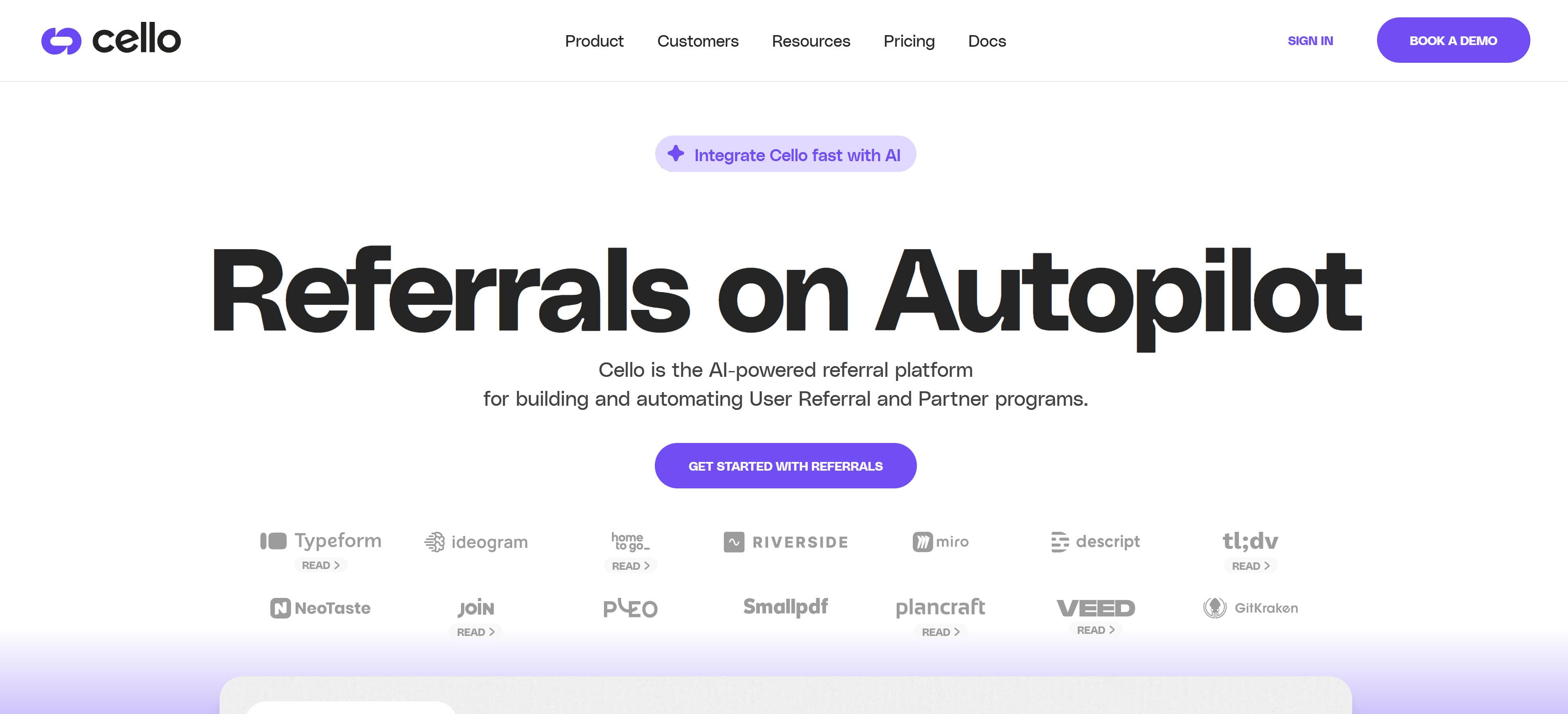
Cello is an AI-driven referral platform designed to build and automate user referral and partner programs. It offers in-product referral components with embedded SDKs for Web, iOS, Android, and React Native, automatically tracking referrals during registration and purchase flows. The platform supports multiple languages (6 built-in), complies with GDPR and CCPA, provides real-time analytics dashboards, and fully automated reward payments (0% currency conversion and payment transaction fees). Cello's user referral plans include a free tier (unlimited referrals, unlimited referral ARR, up to 1 partner campaign, up to 10 partners) and paid tiers (Grow $200/month, Scale $750/month, Enterprise custom pricing). Partner referral plans offer Plus ($200/month), Pro ($400/month), and Enterprise ($1000/month) tiers. Cello is ideal for SaaS products needing AI-driven automation and multi-platform support.
2. Impact: Enterprise Unified Platform
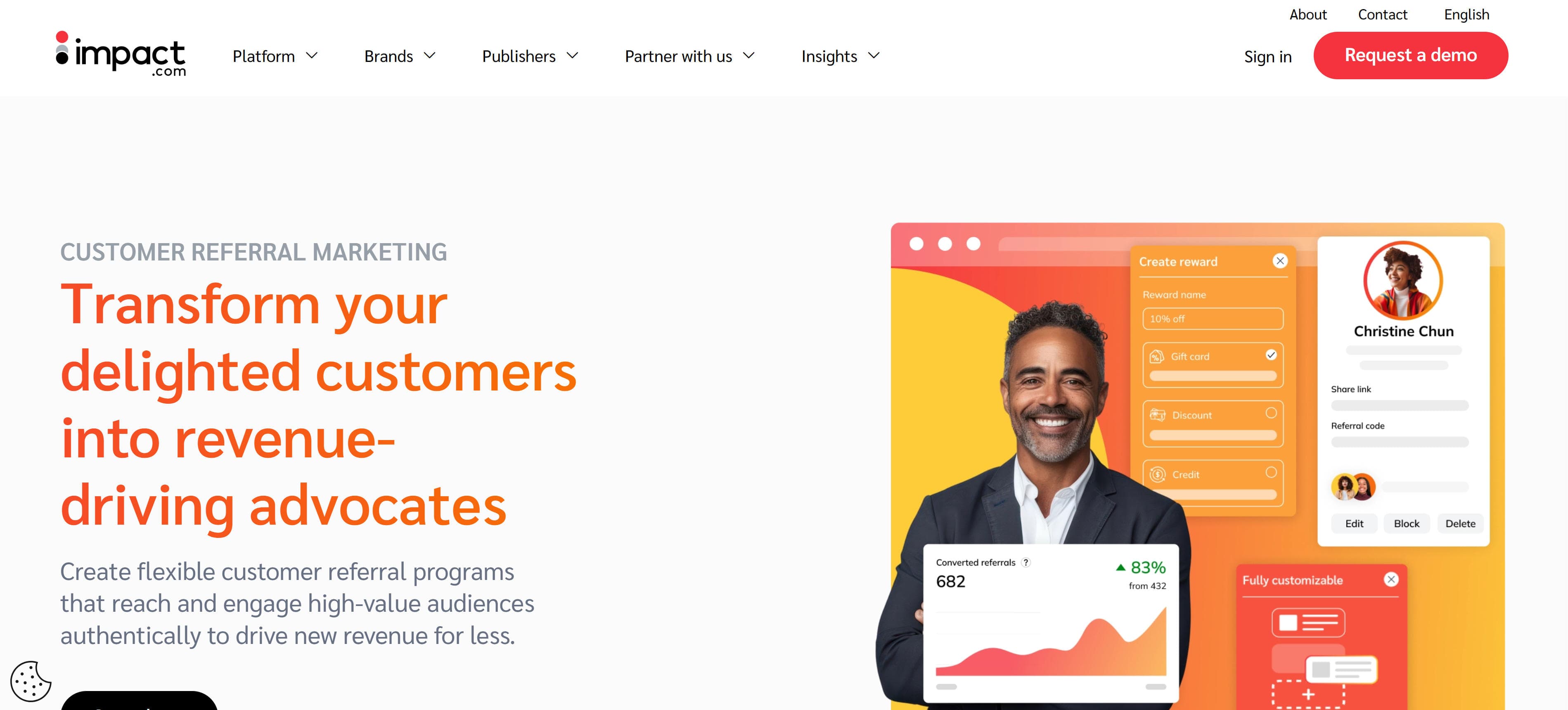
Impact 's Advocate is a scalable customer referral solution integrated into its unified Performance Platform, allowing brands to manage affiliate marketing and customer referrals in one place without additional fees. Impact provides branded referral experiences with customizable widgets, dashboards, and emails, supports flexible reward structures (discounts, points, gift cards, credits, custom rewards), and creates tiered and multi-objective program types. The platform integrates backend systems to track custom events (purchases, registrations), automates reward payments, and syncs referral data. Impact's Advocate includes personalized share links and codes, social and email sharing integrations, referral dashboards, and gamification features (leaderboards, reward redemption). Brands using Advocate achieve 2x higher conversion rates than paid ads, 5x higher than free trials, 18% higher average order value, and 5% higher lifetime value. Impact is ideal for large enterprises needing unified referral and affiliate marketing management.
3. Partnerstack: B2B Partner Tracking
Partnerstack provides comprehensive partner attribution and tracking. Each partner receives a unique referral link, can create custom links, and automatically adds UTM parameters based on partner groups. The platform monitors every click and conversion in real-time, tracking each transaction back to its source (90-day cookie window, resets on each new click). Partnerstack also offers deal registration (partners can register deals using custom forms, update deal stages, managers can approve/update deals directly from CRM), lead sharing (automatic lead routing, assigning qualified leads to partners with customizable rules), and CRM integration (bidirectional sync with major CRMs like Salesforce and HubSpot, custom field mapping, automatic stage updates). Once referrals are tracked, Partnerstack automatically applies payment rules and rewards partners based on verified attribution data. Commissions typically last for the customer account's entire lifetime, paid monthly via Stripe, PayPal, or direct deposit. Partnerstack Spark (entry-level) offers free setup with a 10% processing fee on commission payments. Partnerstack is ideal for SaaS products needing B2B partner management and deal tracking.
4. Viral Loops: Viral Growth Platform
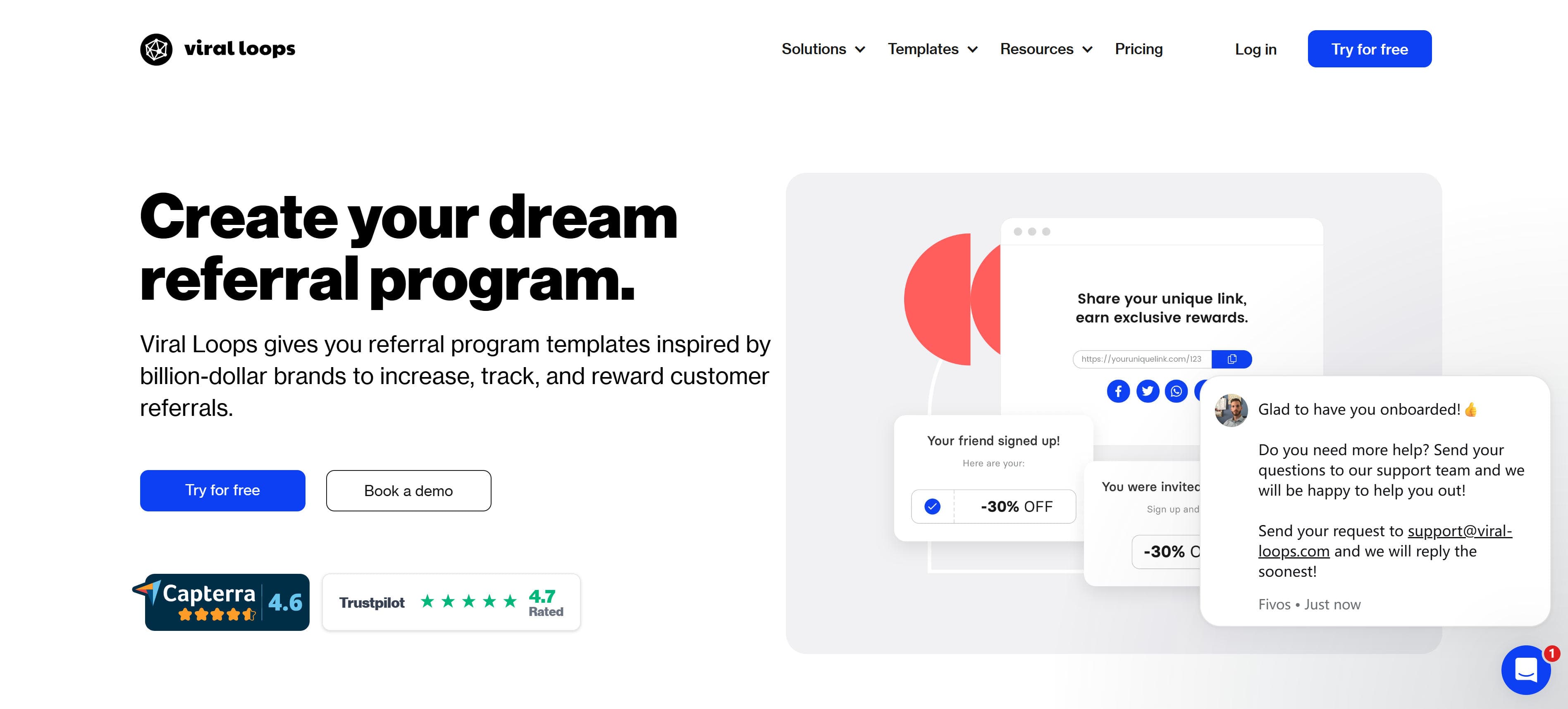
Viral Loops is an all-in-one referral marketing platform helping businesses create and manage referral programs inspired by billion-dollar brands. The platform offers referral program templates, referral waitlists, newsletter refer-a-friend campaigns, and invitation-based giveaways. Core features include access to all templates and unlimited campaigns, fraud detection and email notifications, import and export participants, conversion tracking and full API access, custom domains and CSS (premium plans), GA4 and HubSpot integrations, double opt-in verification, custom referral links and watermark removal (premium plans), and Viral Loops reward system. Viral Loops offers four main tiers (annual billing saves 30%): Start-up ($35/month, up to 1,000 participants), Growing ($159/month, up to 10,000 participants, includes concierge calls and custom implementation), Power ($279/month, up to 25,000 participants, includes one free custom implementation), and Enterprise (custom pricing, unlimited participants, includes account management and company onboarding). Monthly billing versions cost more (Start-up $49/month, Growing $229/month, Power $399/month). The Growing plan is marked as the most popular choice. Viral Loops is ideal for startups and growing companies needing viral growth tools including referrals, waitlists, and contests.
5. Mention Me: Retail Referral Expert
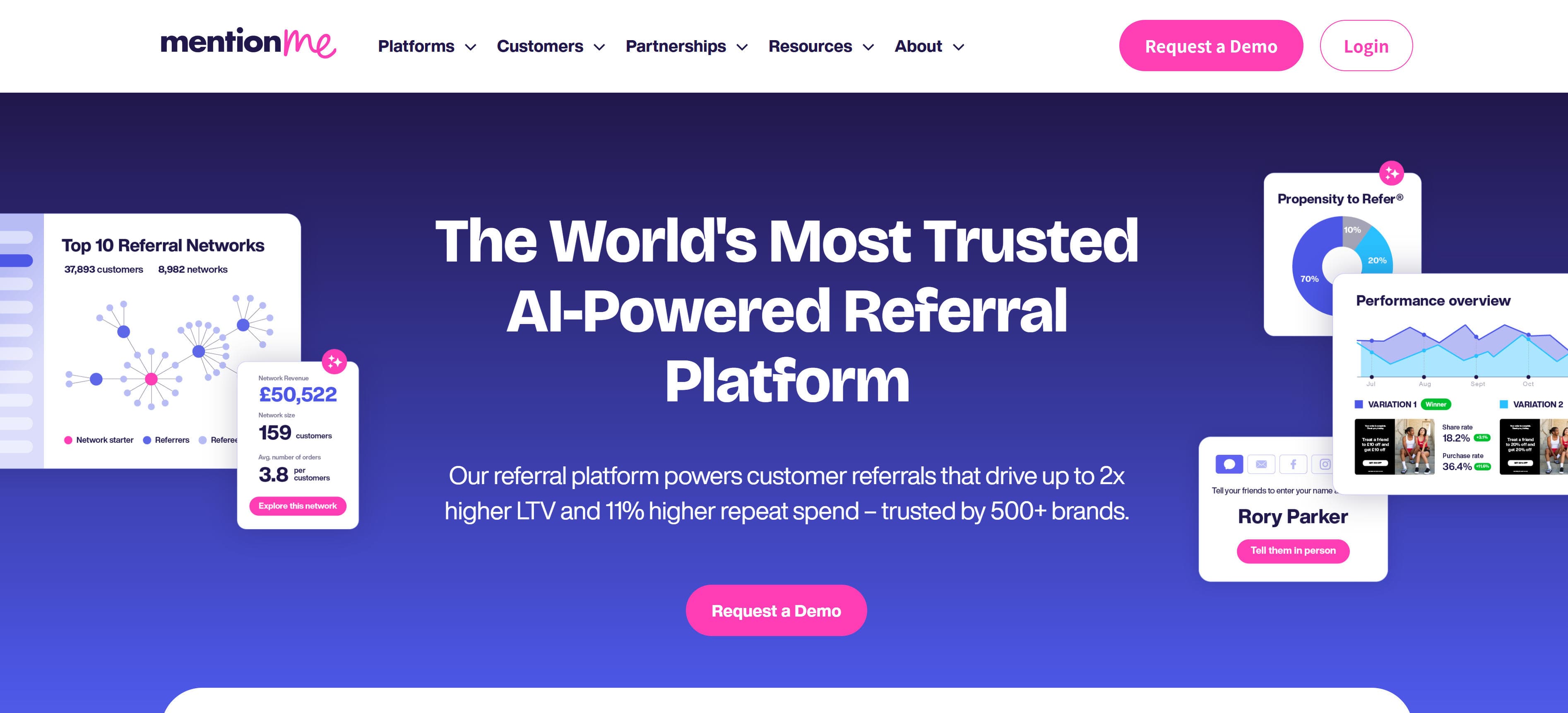
Mention Me doesn't publicly list standard pricing, instead offering customized plans based on business needs: Essentials, Advanced, or Ultimate packages. The platform requires a setup fee. Mention Me's core feature is Name Sharing®, allowing advocates to refer brands by sharing their name instead of links, capturing real-world and in-store conversations. Brands report 37%+ higher conversion rates compared to traditional link-based referrals. The platform also offers predictive personalization (AI-driven segmentation delivers the right incentives at the right time, increasing shares and conversions), network tracking (visualizing how word-of-mouth spreads through customer networks, identifying top performers and high-value clusters), A/B testing (built-in testing continuously optimizes, cohort A/B testing typically improves performance 4x within six months), micro-influencer activation (AI identifies loyal customers with strong networks, activating them from existing CRM as micro-influencers), and audience builder (converting referral data into high-converting lookalike audiences on Meta, Google, and TikTok, brands report 90% ROAS improvement). Mention Me serves 400+ brands globally, including Farfetch, Ted Baker, PUMA, and Charlotte Tilbury. Mention Me is ideal for mid-to-enterprise consumer brands in retail, beauty, and financial services.
6. Referral Factory: Highly Customizable
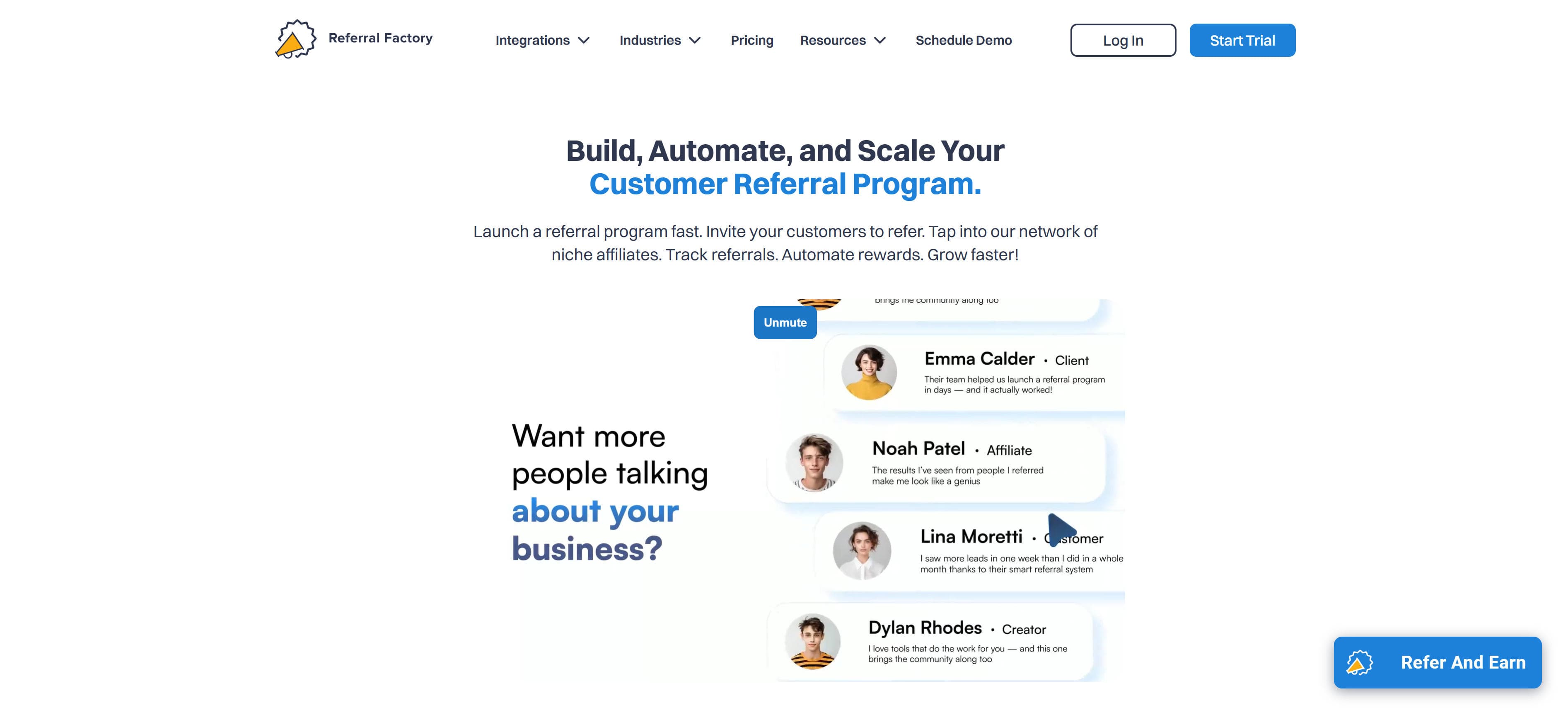
Referral Factory starts at $95/month, offering 100% customizable landing pages, integrations with 3,000+ applications, real-time referrer tracking and advanced analytics, and access to 100,000+ affiliate networks. Referral Factory supports AI-powered personalized program building, provides an easy-to-use interface, flexible rewards, email notifications, free trials, and dedicated support. The platform is ideal for enterprises needing high customization and extensive integrations, supporting all industries (SaaS, education, etc.). Referral Factory's real-time tracking and advanced analytics make it the top choice for businesses needing detailed referral data.
7. Referral Rock: SMB-Focused
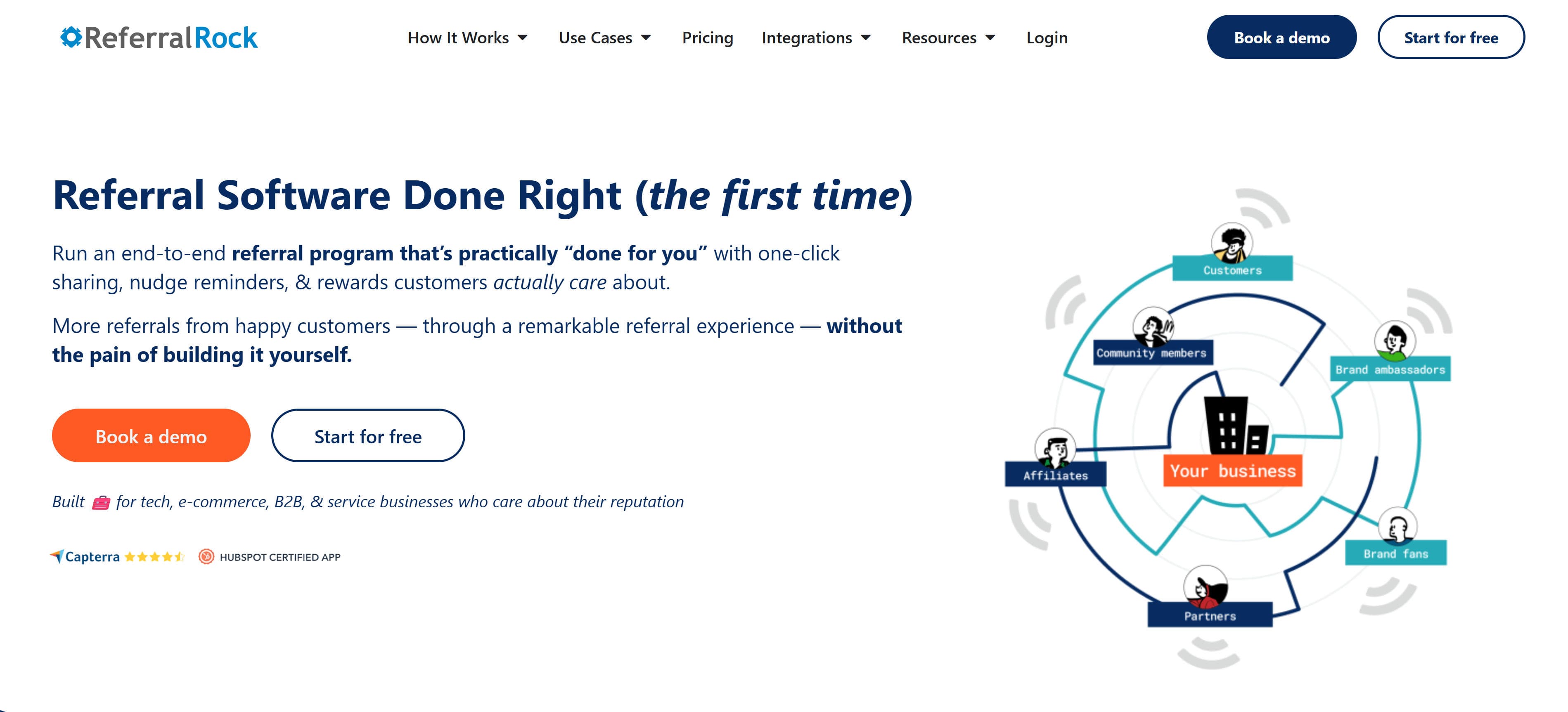
Referral Rock starts at $175-$200/month, offers multi-industry support, and is ideal for small and medium businesses. The platform provides an easy-to-use interface, flexible rewards, email notifications, free trials, and dedicated support. Referral Rock offers advanced analytics to help SMBs track and manage referral program performance. The platform is ideal for SMBs needing simple, easy-to-use referral program solutions.
8. ReferralCandy: E-commerce Expert
ReferralCandy starts at $39-$59/month, focusing on e-commerce and online stores. The platform provides an easy-to-use interface, flexible rewards, email notifications, free trials, and dedicated support. ReferralCandy is ideal for e-commerce businesses needing simple referral program solutions, offering deep integrations with e-commerce platforms like Shopify.
Referral Program Tools Comparison
Here's a detailed comparison of the top referral program tools to help you choose the best solution for your needs:
| Tool Name | Core Features | Best For | Pricing | Integrations |
|---|---|---|---|---|
| Cello | AI-driven, multi-platform SDK, automated payments | SaaS referrals | Free/$200/month | SaaS companies |
| Impact | Unified platform, enterprise features, high conversion | Enterprise referrals | Custom pricing | Large enterprises |
| Partnerstack | B2B tracking, deal registration, CRM integration | B2B partners | Free (10% commission) | B2B SaaS |
| Viral Loops | Viral growth, waitlists, contests | Viral growth | $35/month | Startups |
| Mention Me | Name Sharing, AI personalization, high conversion | Retail/beauty referrals | Custom pricing | Consumer brands |
| Referral Factory | Highly customizable, 3000+ integrations, AI support | All industries | $95/month | All businesses |
| Referral Rock | Simple, multi-industry support | SMB referrals | $175-$200/month | SMBs |
| ReferralCandy | E-commerce integration, simple | E-commerce referrals | $39-$59/month | E-commerce businesses |
Use Cases: From SaaS to E-commerce
Referral program tools serve diverse user growth needs, each scenario requiring different features and strategies.
SaaS Product Referral Programs
SaaS products use referral programs to drive user growth through existing users recommending new users. Users and referees both receive rewards (free months, discounts, or credits). Partners recommend enterprise customers through partner networks, earning commissions. Real-time tracking monitors referral conversion rates, user quality, and ROI, optimizing program effectiveness.
E-commerce Referral Programs
E-commerce businesses use referral programs where existing customers recommend new customers, both receiving discounts or credits. Social sharing through referral links rewards sharers. Optimized referral page design and reward structures improve conversion rates. Analytics analyze referral sources, conversion paths, and user value, optimizing referral strategies.
B2B Referral Programs
B2B referral programs enable partners to recommend enterprise customers, earning commissions or rewards. Deal registration tracks partner-registered deals, managing deal stages and reward allocation. Automatic lead routing assigns qualified leads to partners with customizable rules, improving conversion rates. CRM integration syncs referral data and deal information with existing systems.
How to Choose Referral Program Tool
Choosing the right referral program tool based on product type, business scale, technical needs, and budget significantly improves implementation efficiency and conversion results.
1. Evaluate Product Type
Choose tools based on product type: SaaS products need subscription tracking and recurring commission management; e-commerce businesses require shopping cart integration and order tracking; retail/beauty brands benefit from social sharing and influencer features; viral growth needs gamification and social mechanics; high customization needs require flexible program configuration.
2. Consider Business Scale
Select tools based on business scale: large enterprises need unified platforms with advanced analytics and partner management; SMBs benefit from cost-effective solutions with essential features; startups can start with free tiers or low-cost options and scale as they grow.
3. Assess Integration Needs
Evaluate tool integration capabilities: CRM integration enables automatic contact and deal updates; e-commerce platform integration ensures seamless order tracking; extensive integration support connects with multiple business tools; API access enables custom integrations and automation. Choose based on your existing tech stack and integration requirements.
4. Evaluate Budget Range
Choose tools based on budget: limited budgets can start with free tiers or low-cost plans; medium budgets balance features and affordability; high budgets enable enterprise-grade solutions with custom pricing and dedicated support. Consider total cost of ownership including setup, training, and ongoing maintenance.
5. Check Feature Requirements
Confirm tool core features: AI-driven automation reduces manual management; name sharing enables personalized referral links; B2B tracking supports partner relationship management; viral growth features include gamification and social mechanics; high customization allows flexible program design. Match features to your specific referral program goals.
Conclusion
Referral program tools provide powerful user growth and referral management capabilities, from AI-driven automation to enterprise unified platforms, from e-commerce referrals to B2B partner management. Tools like Cello, Impact, and Partnerstack improve implementation efficiency and expand growth possibilities, enabling businesses to build effective referral programs.
Choose the right tool based on your referral needs: Cello for AI-driven automation, Impact for enterprise unified platforms, Partnerstack for B2B partner management, Viral Loops for complete viral growth solutions, Mention Me for high-conversion retail referrals. Evaluate product type, business scale, integration needs, budget, and feature requirements to select the most suitable referral program solution.
Referral program tools serve as powerful assistants that enhance growth marketing efficiency, but they complement rather than replace strategic marketing planning and relationship building. The best approach is human-AI collaboration: AI handles program automation and tracking, while marketers provide strategic direction, relationship management, and program optimization, maximizing both referral efficiency and program quality.