Large Language Models: Intelligent Conversation & Creation
Key Takeaways
This guide explores the best general-purpose LLMs for 2026, comparison tables, and how to pair models with retrieval workflows. Below you will also find a plain-language explainer on benchmarks so you can interpret leaderboards without overfitting to a single score.
- General-purpose LLMs support conversation, content creation, and text understanding for diverse tasks.
- Compare GPT, Claude, Gemini, DeepSeek, Qwen, Kimi for features and use cases.
- Consider multitask capability, context length, inference speed, and ease of use. For rigorous math benchmarks and contest-style tasks, continue with the AI math LLM guide.
- Multimodal prompts—slides, screenshots, audio—need vision-aware stacks; follow the AI multimodal LLM guide after you finish this overview.
What Are Large Language Models
Large language models are AI models trained on massive datasets with powerful learning and reasoning capabilities. They support conversation, content creation, and multimodal input. Suited for diverse language and creation tasks.
In the workflow, AI coding LLMs handle programming tasks; AI reasoning LLMs handle logical reasoning.
How Large Language Models Work
Modern LLMs use deep learning and Transformers with self-attention and positional encoding. They learn patterns from large text datasets. Versus rule-based NLP, they improve flexibility and quality. In production, the same Transformer core is often wrapped with tool-calling layers, safety filters, and connectors into company-owned corpora via a knowledge base so factual answers can cite internal documents instead of guessing.
- Understanding capability: Models can generate coherent text from context, understanding long-term dependencies through self-attention mechanisms, producing contextually relevant natural language content.
- Generation capability: Supporting multi-turn conversations and long-text processing, models can generate long documents, dialogue records, and complex texts, meeting diverse content generation needs.
- Code capability: Supporting code generation and debugging, models understand programming language syntax and semantics, generating code that follows programming standards, helping developers improve efficiency.
- Multimodal capability: Supporting multimodal input/output such as text, images, and audio, models process different data types through multimodal architectures, providing richer functionality.
- Multilingual capability: Supporting multiple languages and domain knowledge, models learn patterns across different languages through multilingual training data, supporting cross-language content generation and understanding.
Different large language models use different architectures, optimized for their specific use cases. Vendors also vary post-training recipes—instruction tuning, preference optimization, mixture-of-experts routing, and long-context scaling—so two models with similar parameter counts can feel worlds apart in latency, price, and refusal behavior. Product teams usually standardize prompts, eval harnesses, and fallback models inside an AI workflow layer so experiments stay reproducible when providers ship weekly checkpoints.
How LLM Leaderboards Work (and Why They Disagree)
Public leaderboards are useful compasses, but they are not a single scoreboard that crowns one model for every workload. Roughly three families co-exist today: crowdsourced preference arenas such as the LMSYS Chatbot Arena, fixed academic or coding suites like MMLU, MMLU-Pro, GPQA, Humanity’s Last Exam, and software-engineering harnesses such as SWE-bench and LiveCodeBench, and vendor-maintained internal stress tests that never ship publicly. Each family optimizes for different failure modes—helpfulness vibes versus verifiable correctness versus repo-level engineering—so a product that feels magical in chat can still struggle when you demand citations, structured JSON, or a patch that passes CI.
Human-preference leaderboards summarize how blind reviewers vote when two anonymous models answer the same prompt. They track prompt mix, voter geography, and seasonality, which makes them excellent early-warning systems for regressions in tone, safety, or concision, but weak signals for specialized tasks like tax logic or low-level optimization. Automated academic benchmarks instead stress memorization, chain-of-thought reasoning under tight formats, multilingual coverage, and increasingly “Google-proof” science questions. As several classic multiple-choice sets began saturating near the top, maintainers layered harder benchmarks—wider option sets, vision inputs, tool use, or unreleased validation splits—specifically to reintroduce separation between frontier releases.
Whenever you read a headline like “Model A beats Model B,” slow down and inventory the protocol. Were both runs using the same reasoning preset (instant vs long “thinking” mode)? Was browsing or Python execution enabled? Were prompts public or cherry-picked? Aggregators often separate vendor “provisional” rows from independently verified reproductions; procurement decisions should lean on the latter when budgets are large. Likewise, multimodal claims should name the exact track—some suites allow OCR-style shortcuts unless the benchmark enforces vision-only constraints. Mixing scores from incompatible settings is the fastest way to invent a fictional ordering that collapses the moment your internal harness differs.
Leaders rarely choose models from leaderboards alone. They pair public signals with private datasets that reflect brand voice, regulated terminology, support macros, and proprietary code patterns. That is why repeatable evaluation pipelines matter as much as the model itself: you want versioned prompts, automated graders where possible, and human review where stakes are high. Treat our AI evaluation guide as the next stop once you have narrowed vendors. When answers need live citations to the open web, architect a Web Search API path instead of trusting parametric memory. Products that feel like “chatty Google” usually blend a frontier LLM with retrieval—compare conversational discovery flows in our AI search engine guide against fully headless retrieval for agents.
Finally, distribution is changing as fast as model cards: AI-native assistants increasingly summarize results without sending users to ten blue links. Teams now watch referral traffic and cited sources, not only traditional SERP rank. If your go-to-market depends on being recommended inside those assistants, pair LLM investments with a disciplined GEO (Generative Engine Optimization) practice so your documentation and proofs remain machine-quotable without turning your site into keyword spam.
Grounding, API Deployments, and Where Humans Still Matter
Parameter memory alone is brittle for regulated, fast-changing, or highly specific facts. Production stacks therefore layer grounding: retrieved passages from internal wikis, vector stores, or CRM exports that are injected into the prompt, plus optional rewrite steps that force the model to cite chunk IDs or URLs. That design trades a bit of latency for auditability—exactly what legal, finance, and healthcare reviewers ask for. Start by inventorying which facts must never be hallucinated, then route those intents through retrieval-first pathways while allowing more creative generations where risk is low.
Choosing between a hosted chat tab and an API integration is mostly a packaging decision, not an intelligence decision. Chat experiences optimize for exploration and demos; APIs optimize for deterministic schemas, rate limits, regional residency, and entitlement management. Many enterprises run both: the same underlying model powers a customer-facing chatbot while internal automations call the JSON endpoint. Regardless of surface, document prompt templates, safety escalations, and model fallbacks the way you would document microservices—future you should know which SKU answered a given ticket.
Developer-facing companies should also invest in living developer documentation portals: LLMs are fantastic at producing first drafts of README sections, migration notes, or error catalogs, but engineers still expect deterministic anchors—URLs, code samples, CLI flags—so agents can link to truth rather than inventing syntax. When documentation drift is the bottleneck, schedule periodic crawls and treat docs as part of the training-retrieval budget.
Finally, keep humans in the loop for judgment, not keystrokes. Models excel at drafting, summarizing, translating, classifying, and wiring boilerplate; reviewers still own policy interpretation, customer trust, and creative direction. Practitioners often spot-check model answers inside an AI browser when they need to visually confirm UI flows or region-specific pages. The organizations seeing the highest ROI use LLMs to collapse latency on repetitive work while tightening review gates on irreversible actions—exactly the posture we reinforce throughout this guide and the specialized LLM pages linked from the Key Takeaways.
2026 Best General Purpose LLMs: Conversation, Content Creation & Intelligent Search
Here are the most recommended general-purpose large language models for 2026, covering conversation, content creation, code generation, and intelligent search capabilities.
1. GPT: AI Research Pioneer
GPT (Generative Pre-trained Transformer) is OpenAI's generative pre-trained model series, including GPT-5.1, GPT-5, GPT-4.5, GPT-4o. OpenAI pioneers AI research and deployment, committed to making AGI benefit humanity. GPT models excel in general conversation, code generation, and creative writing, ranking among the world's most popular large language models. They are widely used in content creation, code development, and education. GPT offers free (GPT-3.5) and paid (GPT-4+) versions. Its powerful GPT-4+ architecture excels in complex tasks, making it one of the world's most popular conversation tools.
2. Claude: Safe AI Pioneer
Claude is Anthropic's large language model series, including Opus 4.5, Sonnet 4.5, Opus 4.1. Anthropic focuses on safety and controllability. Claude uses Constitutional AI technology, enabling models to autonomously follow ethical principles during training, excelling in safety and ethical alignment. Claude offers free and paid versions. Claude excels in safety and long-text processing, ideal for safe, reliable output scenarios like long-text analysis, document processing, and content review.
3. Gemini: Multimodal AI Powerhouse

Gemini is Google DeepMind's multimodal large language model, including 3.0 Pro, 2.5 Pro. Gemini supports text, image, audio, and video inputs, with advantages in cross-modal understanding and generation. Its unified multimodal architecture enables simultaneous processing of multiple media types. Gemini offers free and paid versions. Gemini has unique advantages in multimodal capabilities, ideal for processing images, audio, video, and other inputs.
4. Grok: Exploring Explainable Intelligence

Grok is xAI's AI chat model, including Grok 4.1. xAI focuses on developing Grok chat models, exploring Explainable Intelligence. Grok excels in conversation and content generation, ideal for exploratory conversation and deep analysis scenarios. Its explainability provides advantages in scenarios requiring understanding of model reasoning processes.
5. DeepSeek: Chinese-Optimized Large Language Model
DeepSeek is DeepSeek company's large language model, including v3.2. As a Chinese-native large language model, DeepSeek excels in Chinese understanding and generation, particularly suitable for Chinese users. DeepSeek performs excellently in code generation and understanding, offering free and paid versions with reasonable pricing. Its code generation capabilities make it a powerful assistant for developers.
6. Qwen: Chinese Enterprise LLM
Qwen is Alibaba's large language model series, including 3 Max. Qwen excels in Chinese understanding and generation, particularly suitable for Chinese users and enterprise applications. Qwen supports various scales, offering open-source and commercial versions. Its open-source and commercial versions provide flexible choices for enterprise users needing Chinese AI capabilities.
7. Kimi: Powerful Article Summarization
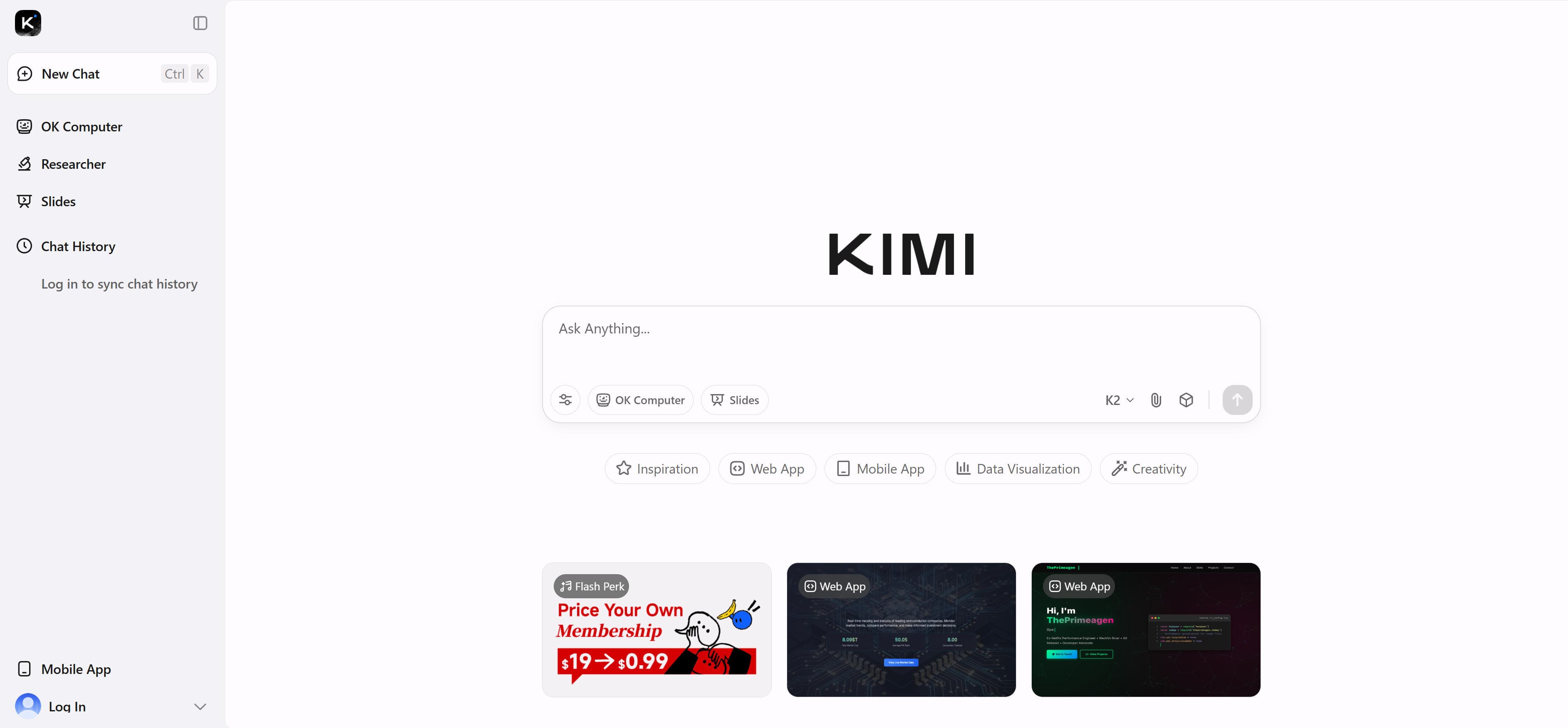
Kimi is Moonshot AI's large language model, including K2. Kimi excels in article summarization with powerful long-text processing capabilities. Kimi is ideal for long document processing, summarization, and content analysis scenarios. Its powerful long-text processing capabilities make it ideal for document processing.
8. Llama: Open-Source LLM
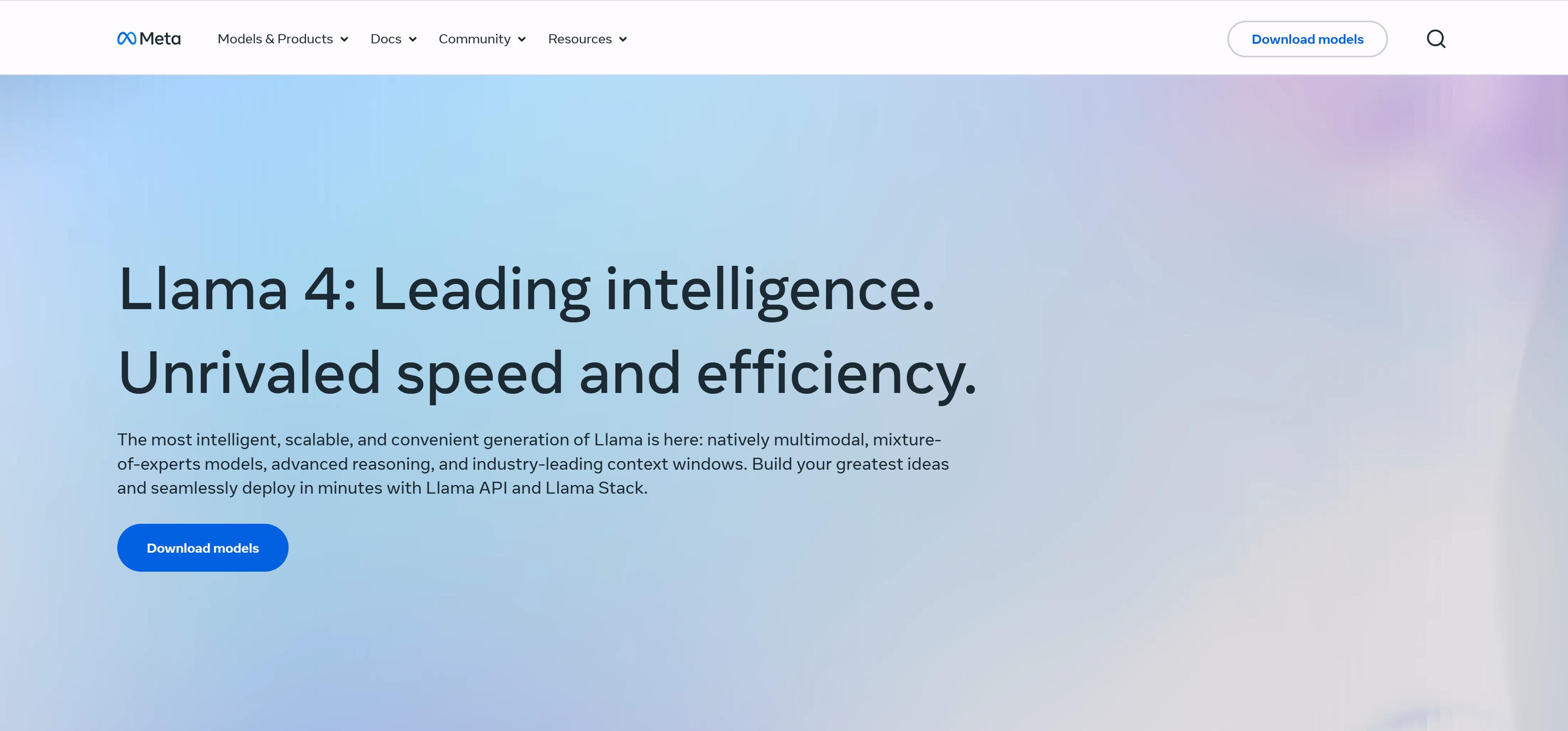
Llama is Meta's open-source large language model series. Llama models are known for open-source nature and powerful performance, providing researchers and developers with customizable LLM solutions. Llama models support various scales with multimodal capabilities, lightweight and efficient. Llama's open-source nature makes it the first choice for researchers and developers, ideal for customization and local deployment scenarios. Its powerful performance and multimodal capabilities also excel in commercial applications.
Other General Purpose LLMs
Beyond the main general purpose LLMs above, many other excellent models excel in specific domains or scenarios:
- GLM (Z.ai/Zhipu AI): Zhipu AI's large language model series, including GLM-4.7. GLM-4.7 supports up to 128K-200K long context processing, excels in code generation and complex reasoning tasks, ranking first among open-source models in Code Arena global user testing.
- MiniMax: MiniMax's large language model, including M2.1. M2.1 uses MoE (Mixture of Experts) architecture, achieving 99 tokens/s throughput with P90 latency stable under 500ms, ideal for high-concurrency online services and real-time content generation.
- StepFun (阶跃星辰): StepFun's large language model series, including Step-1, Step-1V, Step-2, Step-3. Step-1 excels in logical reasoning, Chinese knowledge, English knowledge, mathematics, and code, outperforming GPT-3.5; Step-1V ranked first in multimodal model evaluation, matching GPT-4V performance.
- Hunyuan (Tencent): Tencent's large language model, excelling in Chinese understanding and generation, ideal for Chinese users and enterprise applications. Hunyuan supports various scales and provides enterprise-level AI solutions.
- Mistral (Mistral AI): French open-source LLM innovator, Mistral models enhance chain-of-thought reasoning, excelling in reasoning tasks. Mistral offers open-source and commercial versions with significant influence in the European market.
- Tongyi (Alibaba): Alibaba's large language model series, including Tongyi Qwen 2.5. Tongyi series ranks first in China's enterprise LLM call market, with over 1 million customers, open-sourcing 300+ models with over 600 million global downloads.
- Baichuan (百川智能): Baichuan Intelligence's large language model, excelling in Chinese understanding and generation, offering various model scales, ideal for Chinese users and enterprise applications.
- Yi (01.AI): 01.AI's open-source large language model, performing excellently on general tasks, supporting diverse application scenarios, offering open-source and commercial versions.
- ChatGLM (Zhipu AI): Zhipu AI's conversational large language model, excelling in Chinese conversation and content generation, supporting various scales, ideal for conversation systems and content creation scenarios.
- InternLM (书生·浦语): Shanghai AI Lab's open-source large language model, performing excellently on general tasks, offering various model scales, ideal for research and enterprise applications.
Large Language Model Comparison
Here's a detailed comparison of the top large language models to help you choose the best solution for your needs. Treat the star bands as directional guidance only—your internal evals should trump any editorial summary, the same way draft copy should always pass through AI text generators with an editor rather than shipping raw.
| Tool Name | Core Features | Best For | Pricing | Integrations |
|---|---|---|---|---|
| GPT (OpenAI) | General conversation, code generation, creative writing | General conversation, content generation, code development | Free (GPT-3.5) + Paid (GPT-4+) | Math: ⭐⭐⭐⭐ | Agentic: ⭐⭐⭐⭐ | Coding: ⭐⭐⭐⭐⭐ |
| Claude (Anthropic) | High safety, long-text processing, ethical alignment | Long-text analysis, document processing, content review | Free + Paid | Math: ⭐⭐⭐⭐ | Agentic: ⭐⭐⭐⭐⭐ | Coding: ⭐⭐⭐⭐ |
| Gemini (Google) | Multimodal capabilities, unified multimodal architecture | Multimodal tasks, cross-modal understanding | Free + Paid | Math: ⭐⭐⭐⭐ | Agentic: ⭐⭐⭐⭐ | Coding: ⭐⭐⭐⭐ |
| DeepSeek | Chinese optimization, code generation, high cost-effectiveness | Chinese content generation, code writing, technical Q&A | Free + Paid | Math: ⭐⭐⭐⭐⭐ | Agentic: ⭐⭐⭐⭐ | Coding: ⭐⭐⭐⭐⭐ |
| Qwen (Alibaba) | Chinese optimization, enterprise applications, open source + commercial | Chinese content generation, enterprise applications | Open source + Commercial | Math: ⭐⭐⭐⭐ | Agentic: ⭐⭐⭐⭐ | Coding: ⭐⭐⭐⭐ |
| Kimi (Moonshot AI) | Article summarization, long-text processing, content analysis | Document processing, summarization, content analysis | Free + Paid | Math: ⭐⭐⭐ | Agentic: ⭐⭐⭐ | Coding: ⭐⭐⭐ |
| Llama (Meta) | Open source, customizable, multimodal, lightweight and efficient | Research development, customized applications, local deployment | Open source free | Math: ⭐⭐⭐ | Agentic: ⭐⭐⭐ | Coding: ⭐⭐⭐⭐ |
How to Choose a Large Language Model
Based on your task type, language needs, safety requirements, budget, and API integration needs, choosing the right large language model can significantly improve work efficiency and output quality. API programs are rarely “fire and forget”—treat integrations like managed infrastructure and audit them with the same rigor you would apply when onboarding a cloud API partner.
1. Evaluate Task Type Requirements
General conversation and content generation require versatile models with strong language understanding; long-text analysis benefits from models with extended context windows and strong processing capabilities; multimodal tasks need models supporting text, images, audio, and video. If the primary surface is conversational, borrow patterns from modern AI chatbot programs—clear escalation paths, source citations, and canned fallbacks matter more than squeezing another half-point on a public benchmark. Select models that provide corresponding capabilities based on task type.
2. Evaluate Language Requirements
If Chinese support needed, prioritize models optimized for Chinese with better performance for Chinese content and understanding. For English or other languages, choose models with strong multilingual capabilities. Different models may perform differently across languages, so test with your target languages before committing.
3. Evaluate Safety Requirements
High safety scenarios require models with strong safety features and ethical alignment using advanced safety technologies. For scenarios requiring sensitive data handling or special content safety requirements, choose models focused on safety with robust privacy protection measures and content safety mechanisms. Evaluate model data privacy protection measures and content safety mechanisms.
4. Consider Budget and Pricing Models
Choose plans based on usage frequency and budget: free versions suit small-scale use with basic features; subscriptions suit medium-scale use with higher limits; enterprise versions suit large-scale use with advanced features and support. Many models offer free versions with limitations. Compare pricing models across models, choose plans that fit budget and meet functional requirements.
5. Evaluate API Integration Needs
If integrating into existing systems, consider model API availability and documentation completeness: comprehensive API interfaces enable easy integration into existing workflows; good documentation reduces integration time; stable APIs ensure reliable service. Evaluate API ease of use, stability, and cost to choose the most suitable solution.
Conclusion
General-purpose large language models are transforming content creation, conversation interaction, and intelligent search, providing users with exceptional creative possibilities and efficiency improvements. From GPT, Claude, and Gemini to DeepSeek, Qwen, and Kimi, these models cover complete needs from personal creation to enterprise applications, enabling users to achieve higher productivity and quality.
Choose the right model based on your application scenarios: GPT, Claude, and Gemini for general conversation and content generation, Claude and Kimi for long-text analysis with strong processing capabilities, DeepSeek, Qwen, and Kimi for Chinese applications. Evaluate use cases, language requirements, feature needs, and budget constraints to select the most suitable large language model.
Large language models serve as collaborative partners, not replacements for human creativity. They handle repetitive and technical work, while humans focus on creativity, strategy, and decision-making. The best approach is human-AI collaboration: AI manages content generation and routine tasks, while humans provide strategic direction, quality control, and creative vision, maximizing both efficiency and output quality.
When you graduate from a shortlist of chat tabs into a durable stack, keep an eye on the surrounding toolchain—prompt ops, data residency, retrieval, and continual eval loops—by browsing our curated AI tools directory for adjacent categories that sit upstream and downstream of the foundation model.