What are AI Filmmaking Tools
AI filmmaking tools use machine learning and generative AI to assist the entire filmmaking process, from scriptwriting and storyboarding to editing, color grading, and sound design. They automate repetitive tasks and expand creative possibilities, letting filmmakers focus on storytelling and artistic vision. Compared to general AI video tools, AI filmmaking tools are optimized for film and television production, understanding cinematic language, supporting multi-shot narratives, and maintaining character consistency.
AI filmmaking tools generate cinema-quality video content from scratch and intelligently edit existing footage, adding or removing elements, changing backgrounds, and adjusting aspect ratios. They cover pre-production scriptwriting, storyboard generation, and pre-visualization, plus production and post-production stages including video generation, editing, VFX, color grading, and audio processing. Modern tools produce realistic effects meeting professional standards. AI tools serve as collaborative partners, handling technical and repetitive work so filmmakers can focus on storytelling and artistic creation.
AI Filmmaking Technology Overview
Modern AI filmmaking technology uses deep learning and neural network models to understand text descriptions, image content, and video structure, generating high-quality cinema-quality video content. Compared to traditional filmmaking technology, AI technology improves creative efficiency, quality stability, and functional diversity. Core advantages include: Understanding (natural language descriptions, cinematic language, visual content), Generation (video frames, actions, scenes, complete sequences), Consistency (characters, scenes, visual styles), Learning (motion patterns, cinematic grammar, visual styles from video data), Optimization (video quality based on user feedback).
Different AI filmmaking tools use different architectures: video generation tools rely on diffusion models and time-series modeling, storyboard tools use image generation and sequence prediction, script generation tools combine natural language processing and creative generation models, while post-production tools integrate video editing, VFX, and audio processing. As AI technology develops, capabilities improve through model scale expansion, increased training data, and algorithm optimization.
Best AI Filmmaking Tools 2025
The following professional AI filmmaking tools for 2025 are designed for film and television production, generating cinema-quality video content with multi-shot narratives and character consistency.
1. Google Flow: Cinema-Quality Video Generation
Google Flow is an AI filmmaking tool built on Google DeepMind's Veo model, designed for creative professionals. Flow creates cinema-quality clips, scenes, and stories with consistency and seamlessness. Users can bring their own assets or generate assets within Flow, then manage and reference these assets to generate clips. Flow's interface supports creative storytelling workflows from conception to iteration. Flow supports text-to-video, frame-to-video, asset-to-video modes, plus video extension, object insertion, and scene builder features.
Google Flow offers 180 free monthly credits. Users can upgrade to Google AI Pro ($19.99/month, first month free) with Veo 3.1, text-to-video, frame-to-video, asset-to-video, video extension, object insertion, scene builder, and 1080p super-resolution. Google AI Ultra ($124.99/month, 3 months) includes all Pro features plus higher monthly limits and Veo 3.1 fast generation.
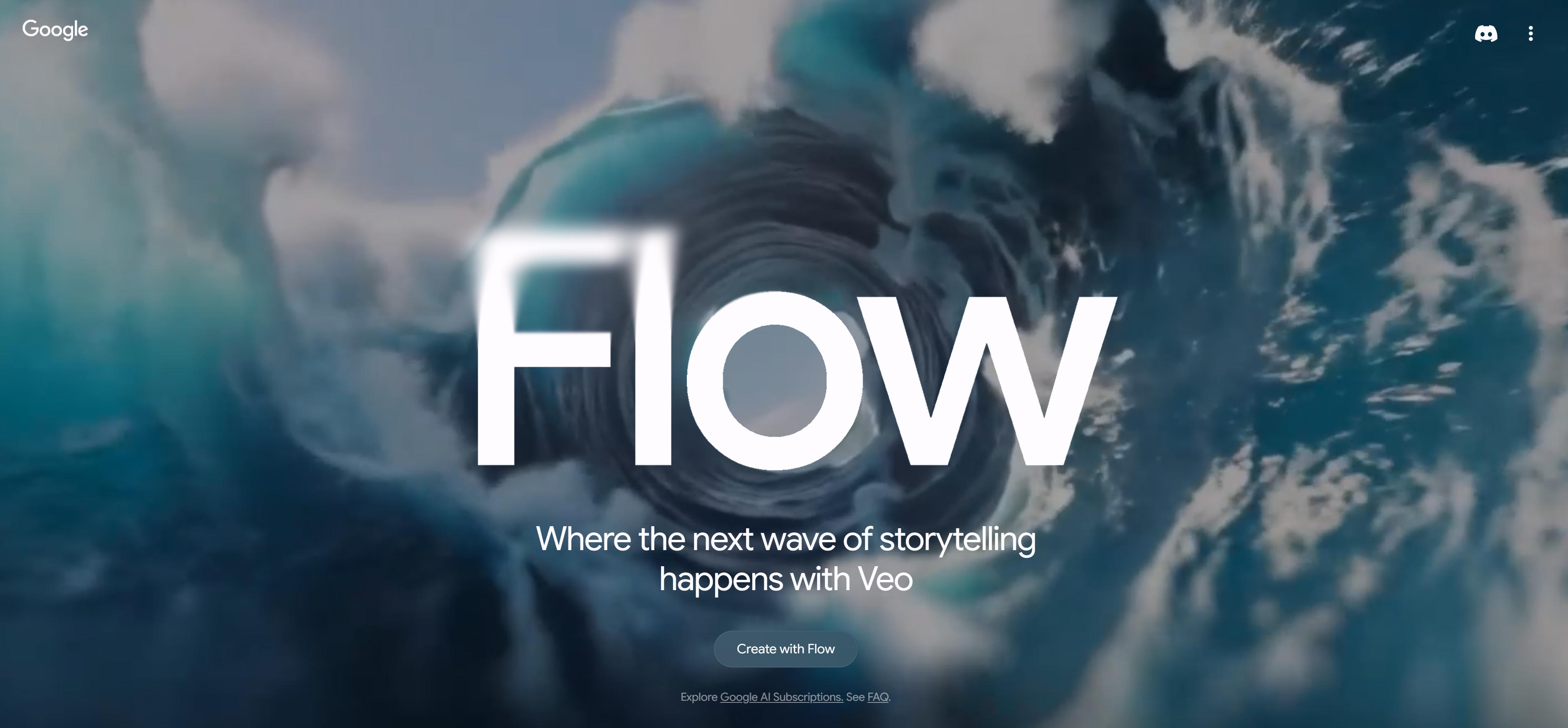
Google Flow suits filmmaking projects requiring cinema-quality video generation and scene construction. Its Veo 3.1 technology generates high-quality, consistent video content, supporting complex multi-shot narratives and character consistency. Ideal for professional filmmaking, advertising, and projects requiring high-quality visual effects.
2. LTX Studio: Complete Tool Suite
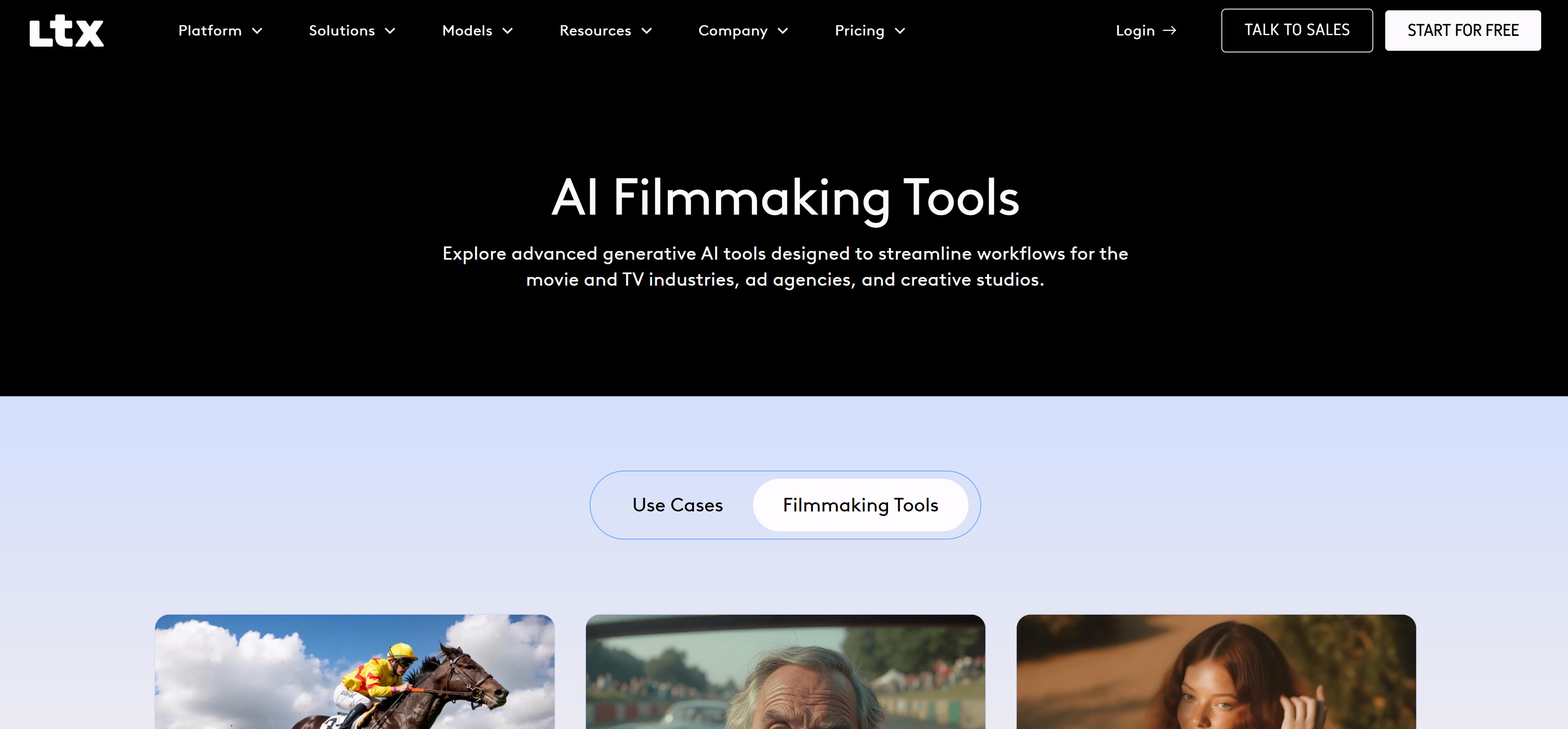
LTX Studio is an AI tool suite for the film and television industry, providing a complete workflow from script to video. Core features include AI script generator, AI storyboard generator, script-to-video conversion, AI timeline editor, AI image generator, and AI animation generator. These tools help filmmakers move from concept to final product, improving production efficiency. LTX Studio suits film and television production, advertising agencies, and creative studios. Its AI storyboard generator converts text or static images into dynamic visual sequences, letting filmmakers visualize scenes before shooting.
The script-to-video feature converts scripts into video content, shortening production time. The AI timeline editor provides AI-driven editing tools, supporting cutting, trimming, and enhancing projects. LTX Studio also provides an AI image generator that converts text to images and an AI animation generator supporting customized AI-generated animations.
LTX Studio's complete tool suite makes it ideal for the film and television production industry, providing an end-to-end solution from pre-production script creation and storyboard generation to post-production video editing and animation generation. It improves production efficiency for projects requiring rapid iteration and multiple creative directions. Ideal for projects requiring a complete production tool suite.
3. Utopai Studios: Cinematic Foundation Model
Utopai Studios is an AI-native film and television studio building cinematic foundation models, enabling creators to tell epic stories. Unlike most AI video models focusing on generating beautiful frames, Utopai builds a model that understands cinematic language, multi-shot narratives, character consistency, cinematic grammar, and visual continuity, supporting creators to produce cinema-quality works with professional precision. The model focuses on the overall narrative structure of cinema, understanding relationships between shots, character continuity, cinematic grammar, and visual continuity.
Utopai Studios' development roadmap includes a storytelling model for 2025, creating the strongest cinematic foundation model for the entertainment industry; layout and 3D-EnGen for 2024, supporting UE scene creation and AI-driven layout and PCG automation; 3D-PCG for 2023, automating agent-driven procedural scene generation. For projects requiring professional filmmaking and cinema-quality output, Utopai Studios provides powerful technical support.
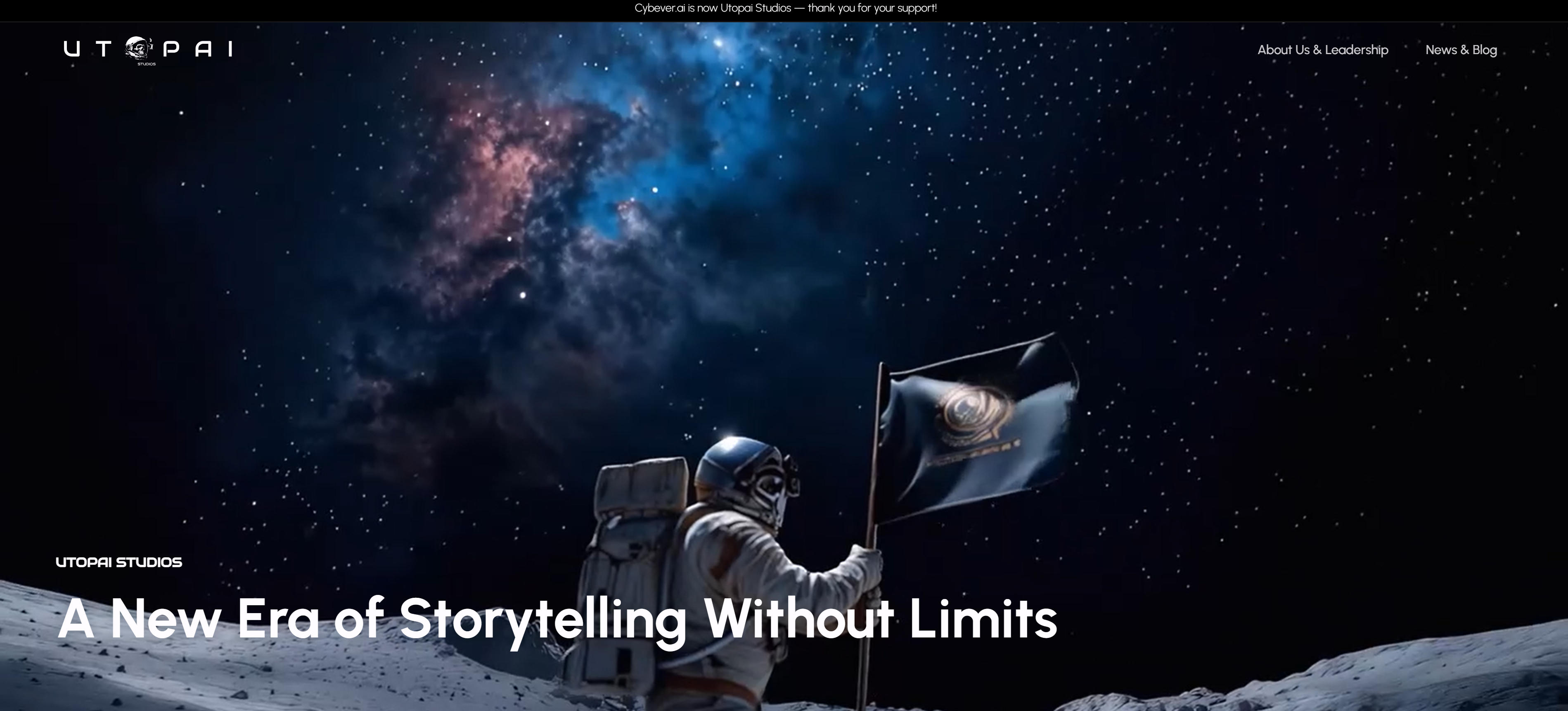
Utopai Studios suits projects requiring professional filmmaking and cinema-quality output. Its understanding of cinematic language enables generating video content that meets filmmaking standards, supporting multi-shot narratives, character consistency, and visual continuity. Ideal for projects requiring epic storytelling and complex narrative structures with professional filmmaking standards.
4. Escape.ai: Creator Ecosystem
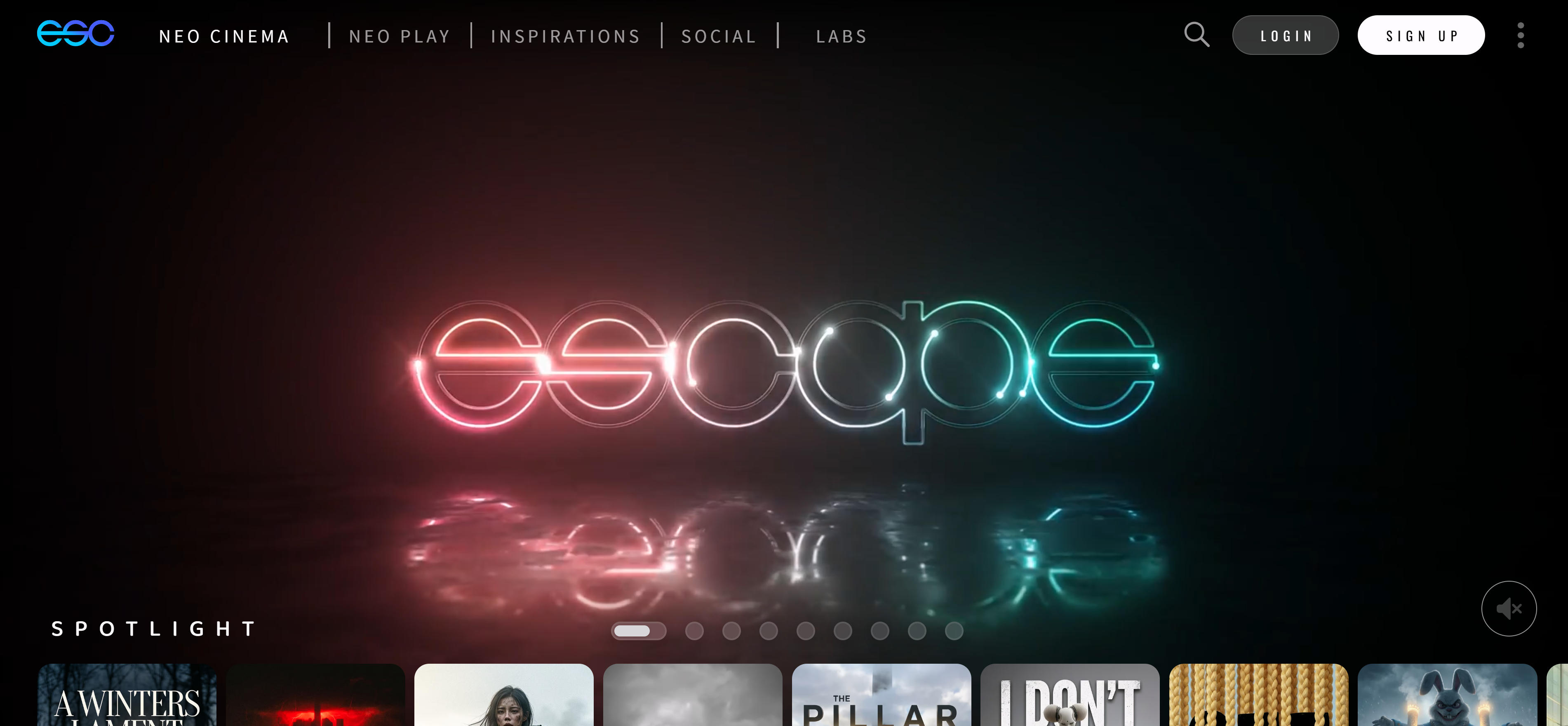
Escape.ai is a platform for curating and distributing new forms of entertainment, supporting creators who advance GenAI and gaming technology for storytelling, experiences, and art. Escape.ai is a complete creator ecosystem, providing a full solution from content creation to distribution. The platform features many short films, series, and original content created by creators using AI tools, covering genres such as horror, sci-fi, action, and animation.
Escape.ai also provides creator channels, collections, and series features, letting creators organize and showcase their work. Escape.ai suits creators who need to showcase and distribute AI-generated content. The platform provides complete creator tools and community support, letting creators focus on content creation without worrying about distribution and promotion.
Escape.ai's creator ecosystem makes it unique in the AI filmmaking space, providing tool support plus complete community and distribution solutions. Ideal for projects requiring work showcase, creator connections, or exploring AI filmmaking possibilities with community and distribution support.
5. Solo Twin Studios: Professional Production Services
Solo Twin Studios is a top-tier AI video production studio using AI-driven filmmaking technology to create original series, advertisements, and music videos. Solo Twin Studios has collaborated with well-known brands including Burger King, Mediawan, Klutch Sports Group, Character.ai, Blumhouse Productions, Sandwatch, Dreamflare, demonstrating professional capabilities in AI filmmaking. The studio has produced multiple original short films, including VALERIA, EVERYONE COMES OUT ALIVE, Rustlands, Alien Racing, THIS WORLD OF MINE, I MARRIED A ROBOT, VINLAND, THE FROG PRINCE, SLEEPY HOLLOW.
Solo Twin Studios is now part of Promise Studios, expanding its influence in the AI filmmaking space. For brands and companies requiring professional AI filmmaking services, Solo Twin Studios provides a complete solution from concept to final product, including original soundtracks.
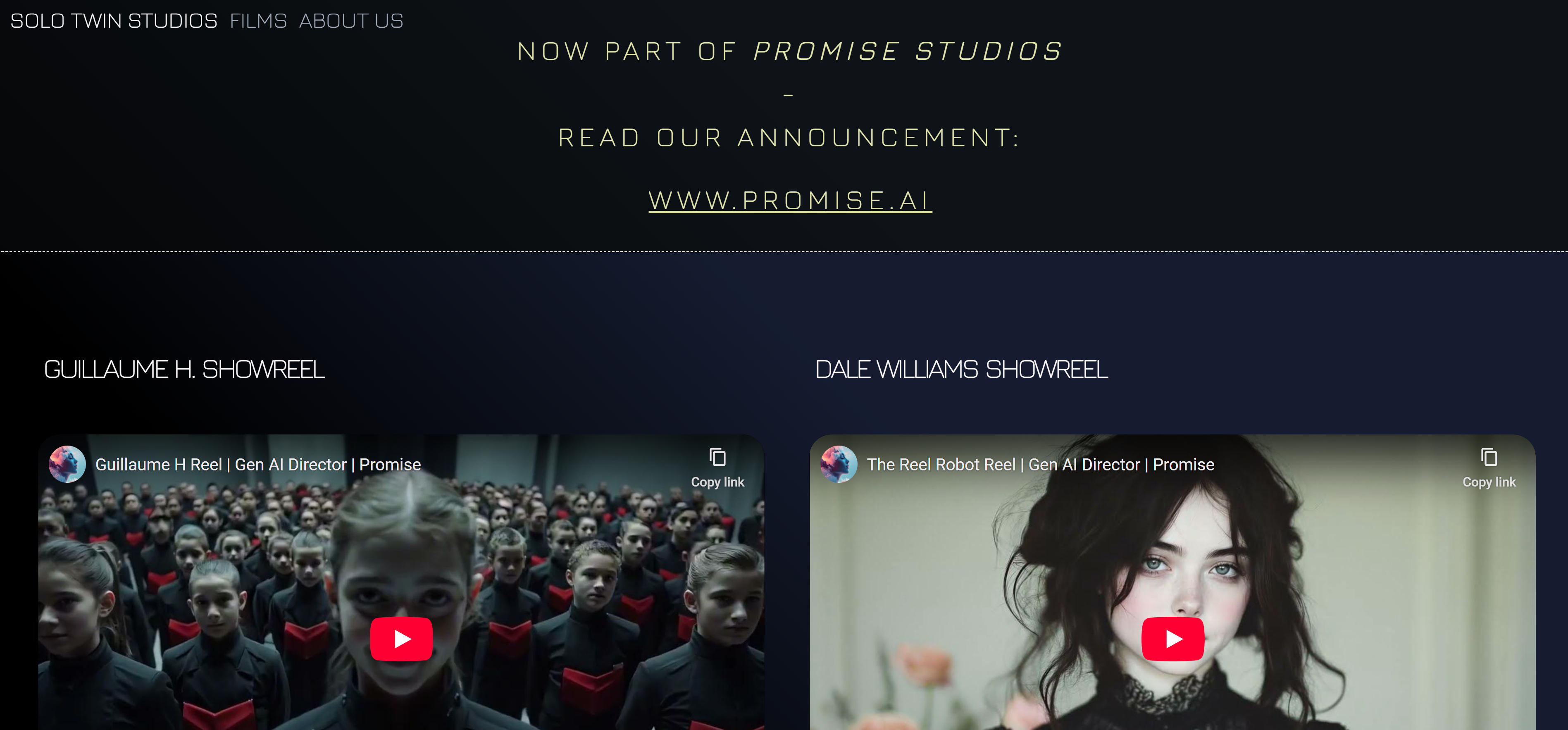
Solo Twin Studios suits brands and companies requiring professional AI filmmaking services. Its collaboration experience with well-known brands demonstrates professional capabilities. Ideal for projects requiring original series, advertisements, or music videos with professional production services and brand collaboration.
Other General AI Video Generation and Editing Tools
Beyond tools designed for filmmaking, many general AI video generation and editing tools can play important roles in various filmmaking stages. They provide powerful support in video generation, editing, VFX, audio processing, and more. For more information about AI video tools, including video generation, style transfer, digital human video generation, and video translation, check our Complete Guide to AI Video Tools.
Runway: A well-known generative AI video tool providing features such as generative fill, background removal, and motion tracking. Runway's Gen-3 model can generate high-quality video content, supporting multiple modes including text-to-video, image-to-video, and more. Its generative fill feature can intelligently add or remove elements in videos, the background removal feature can quickly separate foreground and background, and the motion tracking feature can precisely track moving objects in videos.
Adobe Premiere Pro: Professional video editing software integrated with various AI-assisted tools. The Remix feature can automatically adjust music length, Morph Cut can smooth jump cuts, and Auto Reframe can automatically adapt video formats for different platforms (such as social media). These AI features greatly improve video editing efficiency and quality.
Topaz Labs: Provides Video AI tools that can upgrade video footage to 4K or 8K resolution and enhance video quality. Video AI uses deep learning technology to intelligently improve video resolution, reduce noise, and enhance details, making it particularly suitable for projects requiring high-quality video output.
Voispark: An integrated AI voice tool supporting multiple cutting-edge TTS models (including Cartesia, MiniMax, ElevenLabs, Orpheus, OpenAI, FishAudio, Nari Labs, and Sesame), providing core features such as text-to-speech, voice cloning, and voice editing. Users can seamlessly switch between different models through a unified interface, quickly generating high-quality voice output that meets scenario requirements. For filmmaking projects requiring voice synthesis, dubbing, or voice editing, Voispark provides powerful support.
AI Filmmaking Tools Comparison
The following is a detailed comparison of mainstream AI filmmaking tools to help you quickly understand the features, application scenarios, and suitability of each tool:
| Tool Name | Core Features | Main Application Scenarios | Pricing Model |
|---|---|---|---|
| Google Flow | Based on Veo 3.1, cinema-quality, multi-mode generation | Cinema-quality clips, scenes, and story creation | 180 free credits/month, Pro $19.99/month, Ultra $124.99/month |
| LTX Studio | Complete tool suite, script-to-video, storyboard generation | Film, TV production, advertising agencies | Subscription |
| Utopai Studios | Cinematic foundation model, multi-shot narrative, character consistency | Professional filmmaking, multi-shot stories | Enterprise custom |
| Escape.ai | Creator ecosystem, content distribution, community support | AI content showcase, creator community | Platform service |
| Solo Twin Studios | Professional AI-driven filmmaking, brand collaboration | Original series, advertisements, music videos | Custom service |
| Runway | Generative fill, background removal, motion tracking | Video generation, editing, VFX | Subscription |
| Adobe Premiere Pro | AI-assisted editing, Remix, Morph Cut, Auto Reframe | Professional video editing, post-production | Subscription (Adobe Creative Cloud) |
| Topaz Labs | Video super-resolution, quality enhancement, noise reduction | Video enhancement, super-resolution | One-time purchase or subscription |
| Voispark | Multi-model TTS, voice cloning, voice editing | Voice synthesis, dubbing, voice editing | Subscription |
Application Scenarios
AI filmmaking tools play important roles in various filmmaking stages, from pre-production to production and post-production, improving production efficiency and creative possibilities.
Pre-Production
- Script Creation and Analysis: AI tools can help filmmakers with script creation and analysis, generating script outlines, improving dialogue, or providing complete script breakdowns (scenes, characters, props, camera angles) to assist scheduling and planning.
- Storyboards and Pre-Visualization: AI storyboard and pre-visualization tools can convert text prompts or static images into dynamic visual sequences or storyboards, allowing filmmakers to quickly visualize scenes before shooting. These tools are particularly suitable for projects requiring rapid exploration of different creative directions and visual styles.
Production and Post-Production
- Video Generation and Editing: Generative AI tools can create new video clips from scratch or manipulate existing footage by adding or removing elements, changing backgrounds, adjusting aspect ratios, and more.
- Visual Effects (VFX): AI tools can significantly accelerate the VFX production process, providing intelligent effect generation and editing capabilities.
- Color Grading: AI color grading tools can automate time-consuming color correction and match shots from different cameras, ensuring visual consistency throughout the film.
- Audio Processing: AI audio tools can assist with mixing, noise reduction, and generating music or realistic voice, greatly improving audio production efficiency.
How to Choose AI Filmmaking Tools
When choosing AI filmmaking tools, consider project requirements, quality requirements, feature requirements, budget, and more. The following are key factors to consider:
1. Project Requirements
Clarify the project type and requirements: Professional filmmaking requires cinema-quality output, multi-shot narratives, character consistency, and other professional features; General video production may only need basic video generation and editing features; Advertisement production requires rapid iteration and multiple style support; Personal creation may focus more on ease of use and cost. Different tools suit different scenarios, and clarifying requirements is the first step in tool selection.
2. Quality Requirements
Evaluate whether the tool's video quality meets project requirements: Resolution (supports high-quality output like 4K, 8K), Detail Performance (lighting, textures, details are rich), Consistency (characters and scenes remain consistent across different shots), Naturalness (movements and expressions are natural and smooth). Professional filmmaking projects require cinema-quality output, recommended choosing professional tools like Google Flow, LTX Studio, or Utopai Studios.
3. Feature Requirements
Evaluate whether the tool provides all required features: Video Generation (text-to-video, image-to-video, video-to-video), Script Generation (AI-assisted script creation), Storyboard Generation (rapid scene visualization), Post-Production (editing, VFX, color grading, audio processing), Batch Processing (batch generation of multiple videos), API Integration (integration into existing workflows). Choose tools that provide corresponding features based on feature requirements.
4. Budget Considerations
Pricing models vary significantly: Free Version (many tools offer free trials with limitations), Subscription (monthly or annual payment with more features), Pay-per-Use (payment based on generation count or usage), Enterprise Version (customized solutions for enterprise users). Choose the appropriate plan based on usage frequency and budget—small-scale use can choose free versions, medium-scale use can choose subscriptions, large-scale use is recommended to choose enterprise versions.
5. Workflow Integration
Evaluate whether the tool can integrate into existing workflows: API Interface (comprehensive API interfaces), Export Formats (common video formats supported), Compatibility (works with existing tools), Learning Curve (difficulty getting started). If integration into existing workflows is needed, choose tools that provide API interfaces.
Try 2-3 tools first, compare them, then choose the most suitable one. Different application scenarios may require different tools. For example, professional filmmaking may suit Google Flow, LTX Studio, or Utopai Studios; general video production may suit Runway or Adobe Premiere Pro; voice synthesis may suit Voispark. AI tools should serve as collaborative partners in filmmaking, not replacements for human creativity—they handle technical and repetitive work, allowing filmmakers to focus on storytelling and artistic creation.
Conclusion
AI filmmaking tools are revolutionizing the film and video production industry, providing creators with unprecedented creative possibilities and efficiency improvements. From professional filmmaking tools like Google Flow, LTX Studio, and Utopai Studios, to general video tools like Runway and Adobe Premiere Pro, these tools cover the complete workflow from pre-production to post-production. For professional filmmaking projects, dedicated AI filmmaking tools understand cinematic language, support multi-shot narratives, maintain character consistency, and generate cinema-quality video content.
AI tools should serve as collaborative partners in filmmaking, not replacements for human creativity. They handle technical and repetitive work, allowing filmmakers to focus on storytelling, artistic vision, and creative expression. As AI technology develops, these tools' capabilities will continue to improve, bringing more innovation and possibilities to the filmmaking industry. Whether you're a professional filmmaker, content creator, or enterprise user, choosing the right AI filmmaking tool can improve your work efficiency and creative quality.