AI Character Chat: Emotional Companionship and Roleplay
Introduction
This comprehensive guide explores the best AI character chat platforms for 2026, providing detailed analysis of emotional companionship and roleplay tools. Whether you're seeking AI girlfriend/boyfriend experiences, character roleplay, or creative writing assistance, this article covers Talkie, Janitor, Character.AI, PolyBuzz, SpicyChat, and Candy AI's capabilities to help you select the most suitable AI character chat solutions for your specific needs.
What Are AI Character Chat
AI character chat tools are intelligent systems that use artificial intelligence to create virtual characters and engage in natural conversations. These tools provide personalized dialogue experiences that enable users to form deep emotional connections with AI companions, serving emotional companionship, roleplay, and entertainment purposes. Modern AI character chat tools support character customization, emotion recognition, and long-term memory, providing complete conversational AI solutions for users seeking companionship, entertainment, and creative writing assistance.
How AI Character Chat Work
AI character chat technology is based on natural language processing, machine learning, and deep learning, using large language models to understand and generate dialogue content that matches character personalities. Core technologies include character personality modeling, emotion recognition, contextual memory, and dialogue generation, enabling the creation of AI characters with unique personalities and emotional expression capabilities. The technology employs neural networks trained on vast character dialogue datasets that learn personality patterns, emotional expressions, and conversation styles. Compared to traditional chatbots with limited personality and emotional depth, AI character chat significantly improves conversation quality, emotional connection, and user engagement, making personalized AI companions accessible to more users.
- Character personality modeling: Creating AI characters with unique personalities and traits, enabling diverse and engaging character interactions.
- Emotion recognition: Recognizing and responding to user emotions, creating empathetic and emotionally intelligent conversations.
- Contextual memory: Maintaining contextual memory across conversations, enabling long-term relationship building and personalized interactions.
- Dialogue generation: Generating dialogue content that matches character personalities, ensuring consistent and engaging conversations.
- Multimodal interaction: Supporting multimodal interaction including text, voice, and visual elements, enhancing immersive experiences.
Different tools employ different technical strategies: Talkie focuses on voice interaction, providing immersive experiences through speech synthesis and recognition; Character.AI and Janitor support character creation and customization, allowing users to design unique character personalities; PolyBuzz and SpicyChat offer numerous preset characters to meet diverse entertainment needs; Candy AI specializes in AI companion experiences, emphasizing emotional companionship and long-term relationship building. Technology trends include multimodal interaction, longer memory capacity, more natural emotional expression, and richer character customization options. These developments not only improve character chat quality and engagement but also provide more possibilities for users, making AI character chat tools more widespread.
2026 Best AI Character Chat Tools: Roleplay & Emotional Companionship
Here are the most recommended AI character chat platforms for 2026. Each tool offers unique features and advantages to help you choose the most suitable emotional companionship and entertainment solution based on your specific requirements.
1. Talkie: Voice-Powered Character Chat
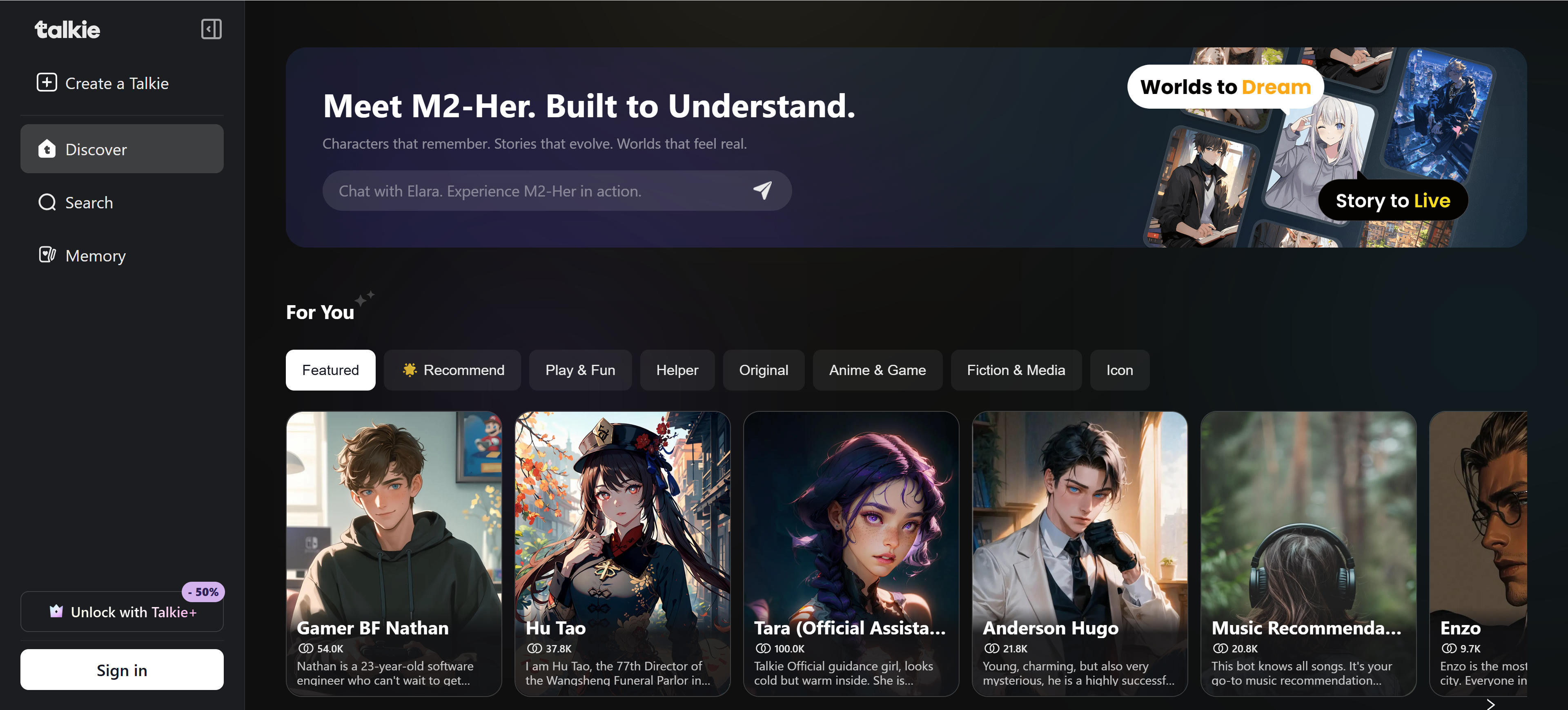
Talkie specializes in voice-based AI character chat, supporting real-time speech dialogue and character role-playing through advanced speech synthesis and recognition technologies. The platform delivers immersive conversational experiences with support for multiple languages and accents, featuring distinct character personalities ideal for language learning, entertainment, and emotional companionship. Voice quality remains excellent but requires stable internet connectivity. Particularly suited for users preferring voice interactions, Talkie represents the voice-enabled evolution of traditional text-based character chat, making character conversations more natural and engaging.
2. Janitor AI: Character Creation Expert
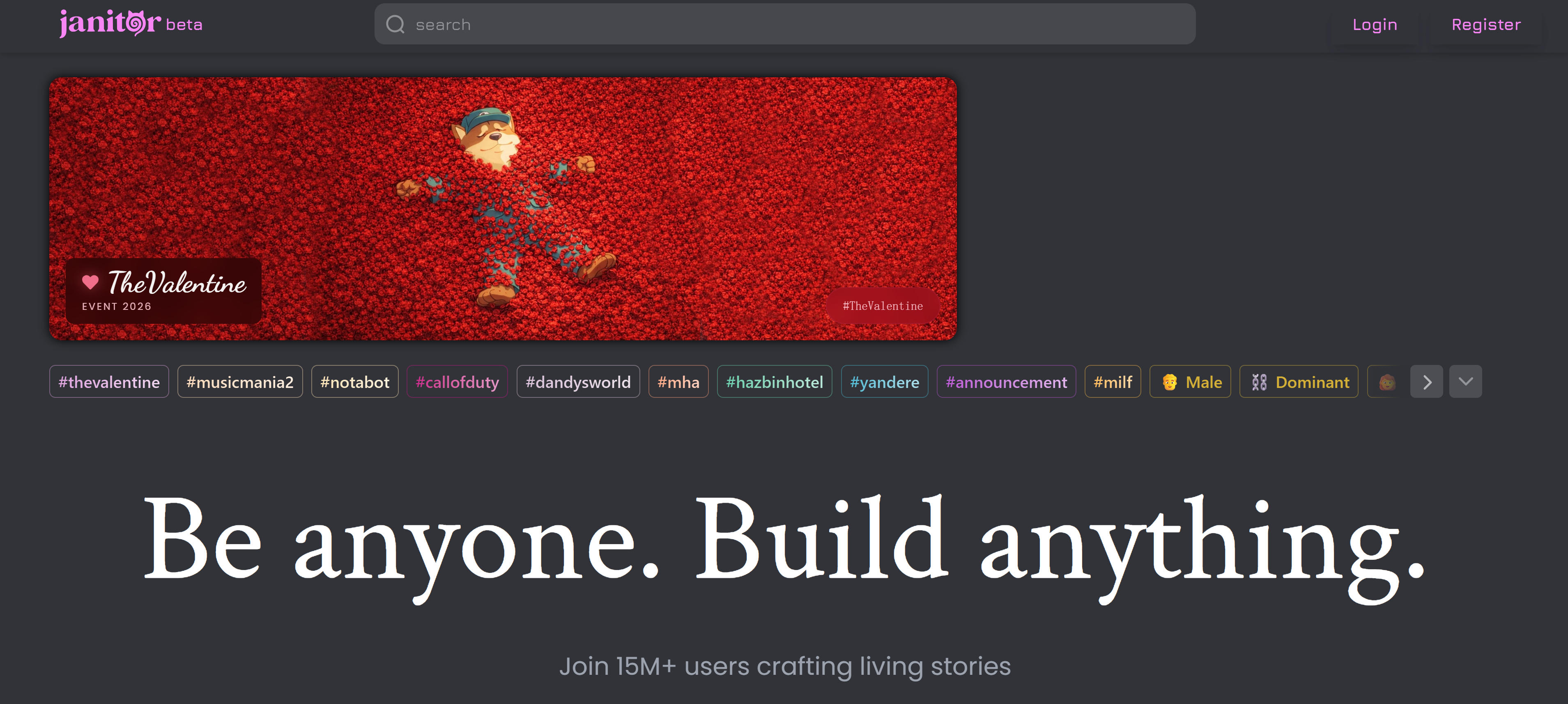
Janitor AI is a professional AI character chatbot platform specializing in character creation and customization. Users can create characters with unique personalities, backgrounds, and emotions for deep dialogue and emotional interactions. The platform supports multiple AI model backends including OpenAI, Kobold, and Hugging Face, providing flexible character customization options. Particularly suitable for users needing to create unique characters, supporting character personality development, memory retention, and emotional expression. While the interface is user-friendly, technical configuration is required, making it ideal for users with some technical background.
3. Character.AI: Role-Playing Platform

Character.AI leads in character-based conversational AI, offering access to over 10 million AI characters for users to choose from. Users can create and customize diverse characters for deep dialogue and emotional interactions. Powered by advanced AI models, the platform supports character personality development, memory retention, and emotional expression. Strong community features allow users to share and experience characters created by others. Particularly appealing for users seeking emotional companionship, creative writing assistance, and entertainment. While the interface is user-friendly, character quality varies and requires careful selection. Free version available, with premium options offering enhanced features.
4. PolyBuzz: Free Character Chat

PolyBuzz is a free AI character chat platform offering access to over 20 million AI characters. Supporting character chat, roleplay, and creative writing, the platform provides diverse character types including anime, celebrities, original characters, fantasy, horror, and romance. The platform supports character creation and customization, with AI remembering previous conversations for coherent dialogue experiences. Particularly suitable for users seeking free character chat experiences, supporting multiple languages and privacy protection. Free to use with optional membership for enhanced experience, ideal for individual users and small projects.
5. SpicyChat: Adult Roleplay
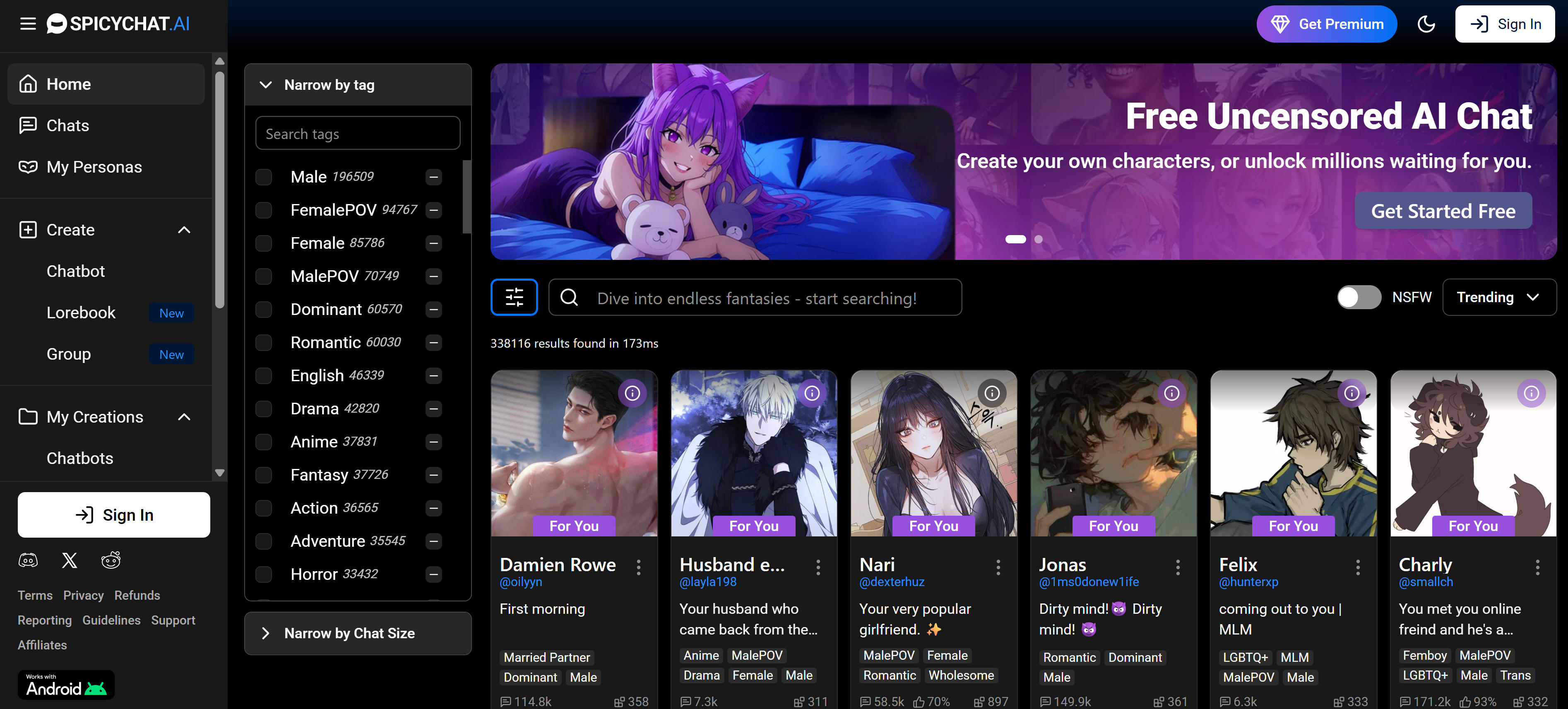
SpicyChat is an adult-oriented AI chatbot and roleplay platform supporting both NSFW and SFW content options. Users can create their own AI characters or browse millions created by others, supporting individual chats and group chat experiences with multiple bots. The platform offers premium features including user personas, conversation images, text-to-speech, semantic memory, and multiple AI model choices. Particularly suitable for users seeking adult roleplay experiences, providing rich character types and scenarios. Free core features available, with paid subscriptions offering premium functionality, suitable for users 18 and older.
6. Candy AI: AI Companion Expert

Candy AI is a professional AI companion platform specializing in AI girlfriend/boyfriend experiences and emotional companionship. Offering over 100 pre-built characters with diverse personalities and styles, users can create custom AI companions from scratch. The platform supports long-term memory, remembering past conversations, inside jokes, and preferences, with emotional intelligence to detect user mood and respond appropriately. Supporting multiple interaction methods including typing, voice messages, and direct voice chat, providing adaptive responses that match communication style and pace. Particularly suitable for users seeking emotional companionship and long-term relationships, offering 24/7 availability and personalized experiences.
AI Character Chat Comparison
| Tool Name | Core Advantages | Best For | Pricing |
|---|---|---|---|
| Talkie | Voice Interaction | Language Learning, Voice Users | Paid Subscription |
| Janitor AI | Character Creation | Character Customization, Technical Users | Free/Paid |
| Character.AI | Role-Playing | Entertainment, Creative Writing | Free/Premium |
| PolyBuzz | Free Use | Character Chat, Roleplay | Free/Membership |
| SpicyChat | Adult Content | Adult Roleplay | Free/Paid |
| Candy AI | AI Companion | Emotional Companionship, AI Girlfriend/Boyfriend | Free/Paid |
Use Cases: 5 Practical Applications
Emotional Companionship & Support
AI character chat serves as emotional companionship partners, providing emotional support spaces for psychological guidance and emotional assistance. Through natural language understanding and emotion recognition, AI characters can sense user emotional states and provide appropriate responses and suggestions. Particularly suitable for mental health platforms, personal companionship applications, and scenarios requiring emotional support, helping users alleviate loneliness and stress.
Roleplay & Entertainment
AI character chat supports rich roleplay experiences, allowing users to play different roles or interact with various AI characters, creating immersive entertainment experiences. Platforms offer numerous preset characters including anime, celebrities, original characters, fantasy, horror, and romance types, meeting diverse entertainment needs. Particularly suitable for users seeking entertainment and creative expression, gaining fun and relaxation through roleplay.
Creative Writing Support
AI character chat serves as creative writing partners, providing inspiration, plot suggestions, character development, and content optimization advice. Through dialogue, systems understand creators' writing intentions and provide targeted creative guidance. These writing assistants help creators overcome creative blocks, improve writing efficiency, and enhance writing skills and creativity through continuous creative dialogue.
Language Learning Assistant
AI character chat helps users practice language skills through natural conversations, providing real-time grammar correction, pronunciation guidance, and personalized teaching content. Systems support multilingual learning scenarios, adjusting dialogue difficulty based on user levels, and improving oral expression through continuous conversation practice. This immersive learning approach makes language learning more interesting and efficient.
Social Interaction & Companionship
AI character chat provides social interaction and companionship experiences, helping users alleviate social anxiety, practice social skills, or gain companionship. Through natural dialogue and emotional interaction, AI characters simulate real social scenarios, providing safe practice environments. Particularly suitable for users needing social support, improving social abilities and confidence through AI character interactions.
How to Choose AI Character Chat Tools
Selecting appropriate AI character chat tools requires considering your specific use cases, feature requirements, content types, and privacy security to maximize emotional companionship and entertainment effectiveness.
1. Determine Your Purpose and Use Case
Clearly define whether you need emotional companionship, roleplay, creative writing, language learning, or social interaction. Different use cases require different features: emotional companionship needs empathetic responses and long-term memory; roleplay benefits from character diversity and scenario support; creative writing requires narrative consistency and style control. Ensure selected features match your specific needs.
2. Evaluate Feature Characteristics
Select appropriate tools based on feature requirements: voice interaction capabilities for natural conversations, character creation tools for custom characters, preset character libraries for quick starts, companion features for emotional support, content filtering options for appropriate experiences. Evaluate conversation quality, memory capacity, character customization options, and interaction methods to ensure they meet specific needs.
3. Consider Content Type
Select appropriate tools based on content needs: safe content platforms with content moderation and age restrictions; adult content platforms with explicit content options; multilingual support for global users; character diversity for varied experiences. Consider content moderation policies, age restrictions, and content types to ensure they match usage requirements.
4. Check Privacy and Security
Evaluate tool privacy policies and security measures: review data storage methods, conversation record retention, user data usage and sharing policies. Choose tools with good privacy records, especially when involving sensitive conversation content. Ensure tools comply with privacy regulations to protect user data security and provide data control options.
5. Test Conversation Experience
Utilize free trials to test multiple tools: compare conversation quality, response speed, character personality expression, and memory capacity. Consider user feedback and community reviews, test different character types and dialogue scenarios. Start with small-scale tests and adjust choices based on actual experiences. Regularly evaluate tool performance and switch to more suitable solutions as needs change.
Other AI Character Chat Products
In addition to the main tools mentioned above, there are other noteworthy AI character chat products:
- Replika: AI companion platform focusing on emotional companionship and long-term relationship building, supporting text chat, voice calls, and AR interaction, providing mood tracking and mindfulness exercises, suitable for users seeking deep emotional connections.
- Emochi: Anime-style AI companion platform supporting character creation and customization, providing AI-generated visual stories and roleplay experiences, ideal for anime enthusiasts and creative writing users, offering rich character types and scenarios.
- Tolan: Emotional support AI companion focusing on helping users manage emotions and stress, providing emotional support and practical advice through natural conversations, emphasizing healthy relationship design and real-world connections, suitable for users needing emotional support.
These products each have unique features, suitable for different use cases and user needs. Users can choose the most suitable tool based on their specific requirements.
Conclusion
AI character chat is fundamentally reshaping human-computer interaction, from simple conversations to deep emotional connections, providing users with entirely new emotional companionship and entertainment experiences. Choosing appropriate AI character chat tools requires comprehensive evaluation based on specific needs, feature characteristics, and privacy security.
Whether seeking AI girlfriend/boyfriend experiences with Candy AI, roleplay-focused Character.AI, or free experiences with PolyBuzz, you can find the most suitable choice among these tools. As AI technology continues to advance, AI character chat will provide users with increasingly natural, personalized, and emotionally engaging interaction experiences, making every conversation full of surprises and warmth.