What Are AI Education Tools
AI education tools are specialized applications that leverage artificial intelligence to support learning and academic success across all educational levels. These tools use advanced algorithms, machine learning, and natural language processing to provide personalized learning experiences and efficient academic support.
The core value of AI education tools lies in improving learning efficiency and reducing educational barriers, allowing students to focus on understanding concepts and developing critical thinking rather than repetitive practice and memorization. Whether students need homework assistance or learners want to improve efficiency, these tools provide tremendous convenience and support. AI tools should serve as learning partners, offering instant feedback and personalized guidance to help students develop better learning habits. For comprehensive AI tool recommendations, explore our Complete Guide to AI Tools.
How AI Education Tools Work
Modern AI education tools are built on large language models (LLMs), computer vision, and natural language processing technologies that can understand student learning needs, analyze educational content, and provide personalized learning solutions. Compared to traditional learning tools, AI education tools show significant improvements in learning support timeliness, personalization, and interactivity.
The core foundation of AI education tools includes learning content analysis technology, personalized recommendation algorithms, intelligent problem-solving engines, and multimodal learning support. Learning content analysis technology provides targeted learning suggestions by analyzing student learning habits and knowledge mastery. Personalized recommendation algorithms suggest the most suitable learning materials and practice content based on student progress and preferences. Intelligent problem-solving engines can understand complex problem descriptions and provide detailed solution steps. Different tool types adopt different technical architectures: homework solving tools mainly use OCR recognition and mathematical reasoning technology to provide photo-solving functions; study tools help students organize learning materials through content analysis and memory algorithms.
Best AI Education Tools 2026
1. Upstudy: Multi-Subject Photo Solver
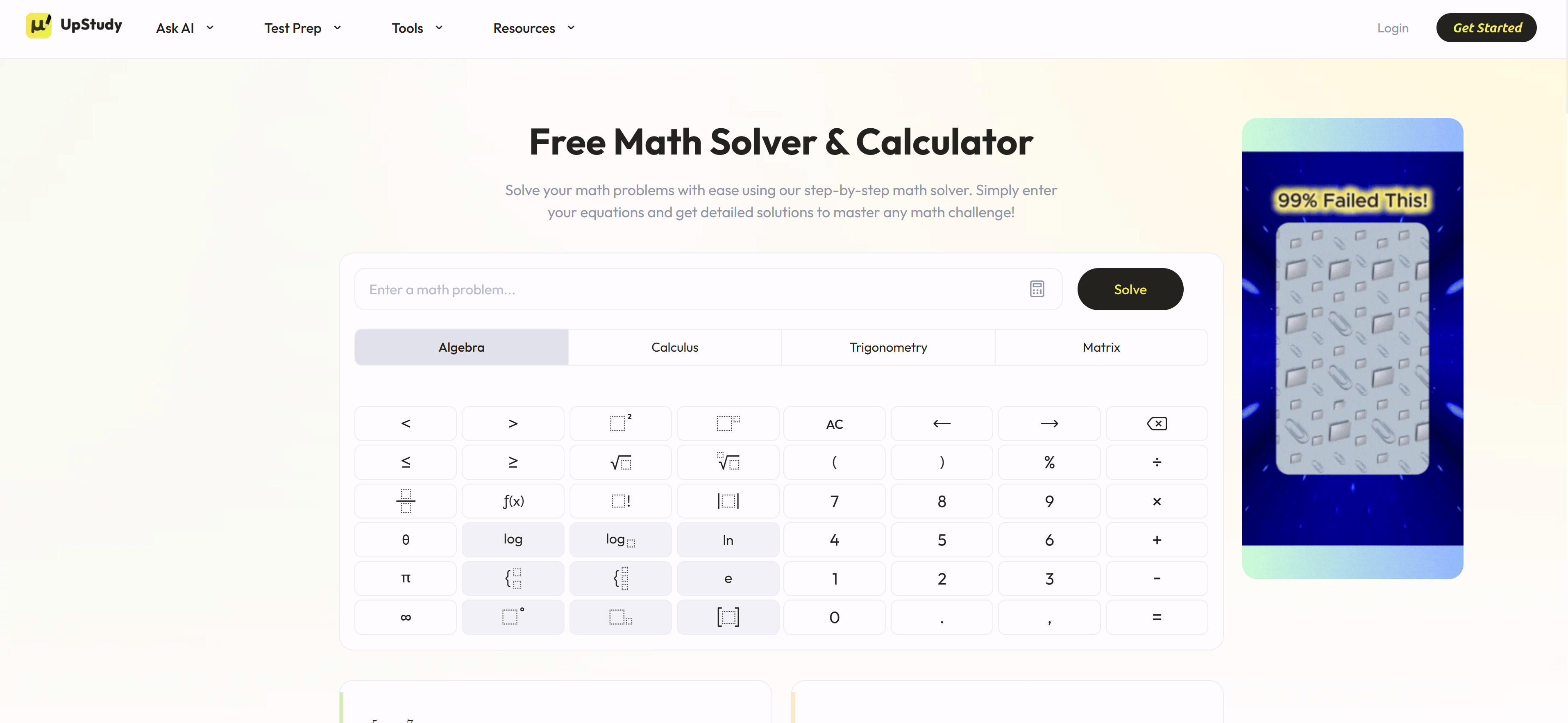
Upstudy is a powerful AI learning assistant designed specifically for students, supporting photo-solving functionality across mathematics, physics, chemistry, and multiple subjects. Through advanced OCR technology and AI reasoning engines, Upstudy can quickly identify problems and provide detailed solution steps. The tool not only gives final answers but also explains the reasoning process for each step, helping students truly understand problem-solving approaches. Upstudy's learning interface is clean and intuitive, supporting bilingual interfaces in Chinese and English, making it particularly suitable for students needing help with interdisciplinary learning. Whether it's elementary math problems or high school physics questions, Upstudy provides accurate and reliable solutions.
2. Gauth: Smart Math Photo Assistant
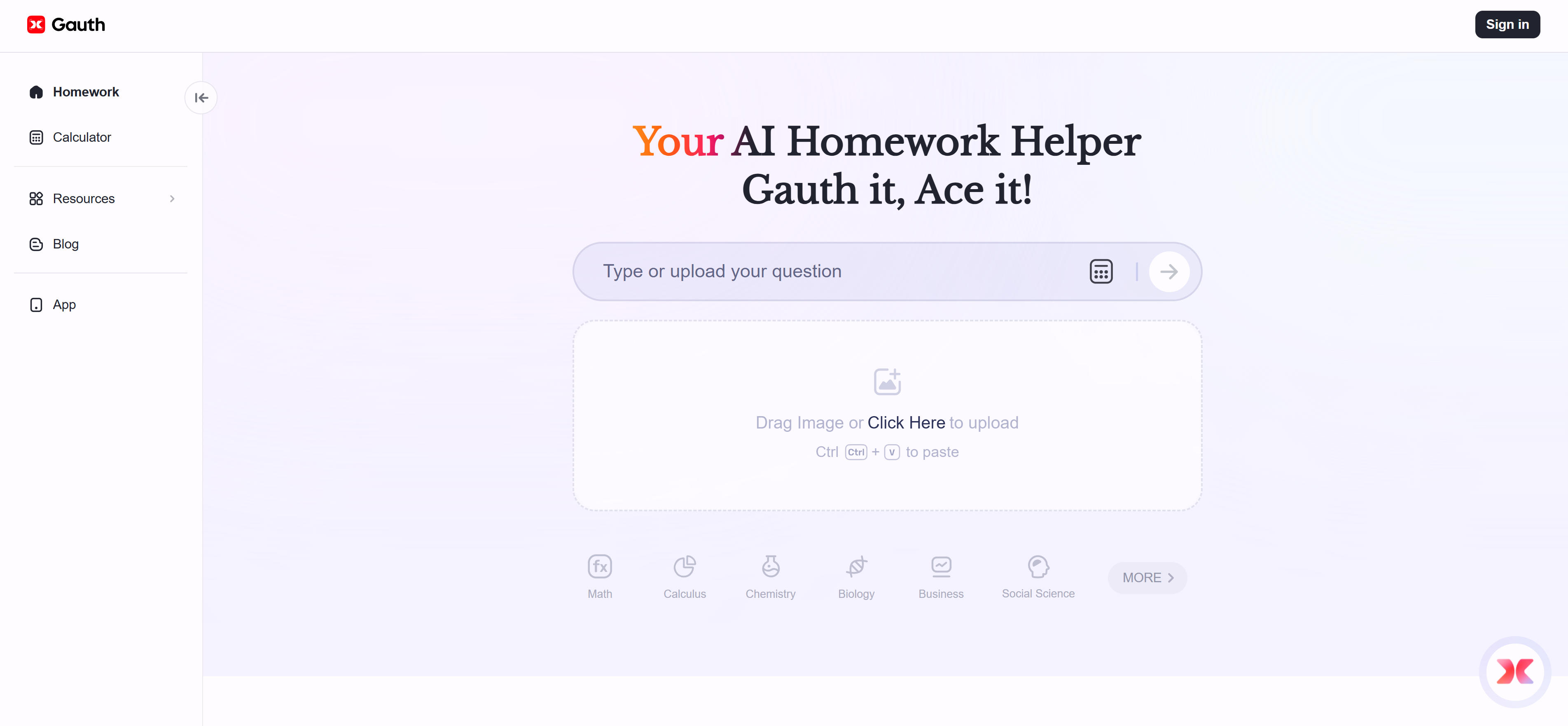
Gauth is an AI-powered math problem-solving tool that can identify and solve various types of math problems through smartphone camera photos. The tool features a powerful mathematical reasoning engine capable of handling everything from basic arithmetic to advanced mathematics. Gauth not only provides answers but also displays complete solution processes, including mathematical principles and calculation methods for each step. The user interface uses intuitive step-by-step displays, allowing students to easily follow solution logic. Gauth supports real-time interaction, where users can ask questions during problem-solving, and the AI provides additional explanations and related examples to help students build a solid mathematical foundation.
3. Answer AI: 24/7 Learning Assistant
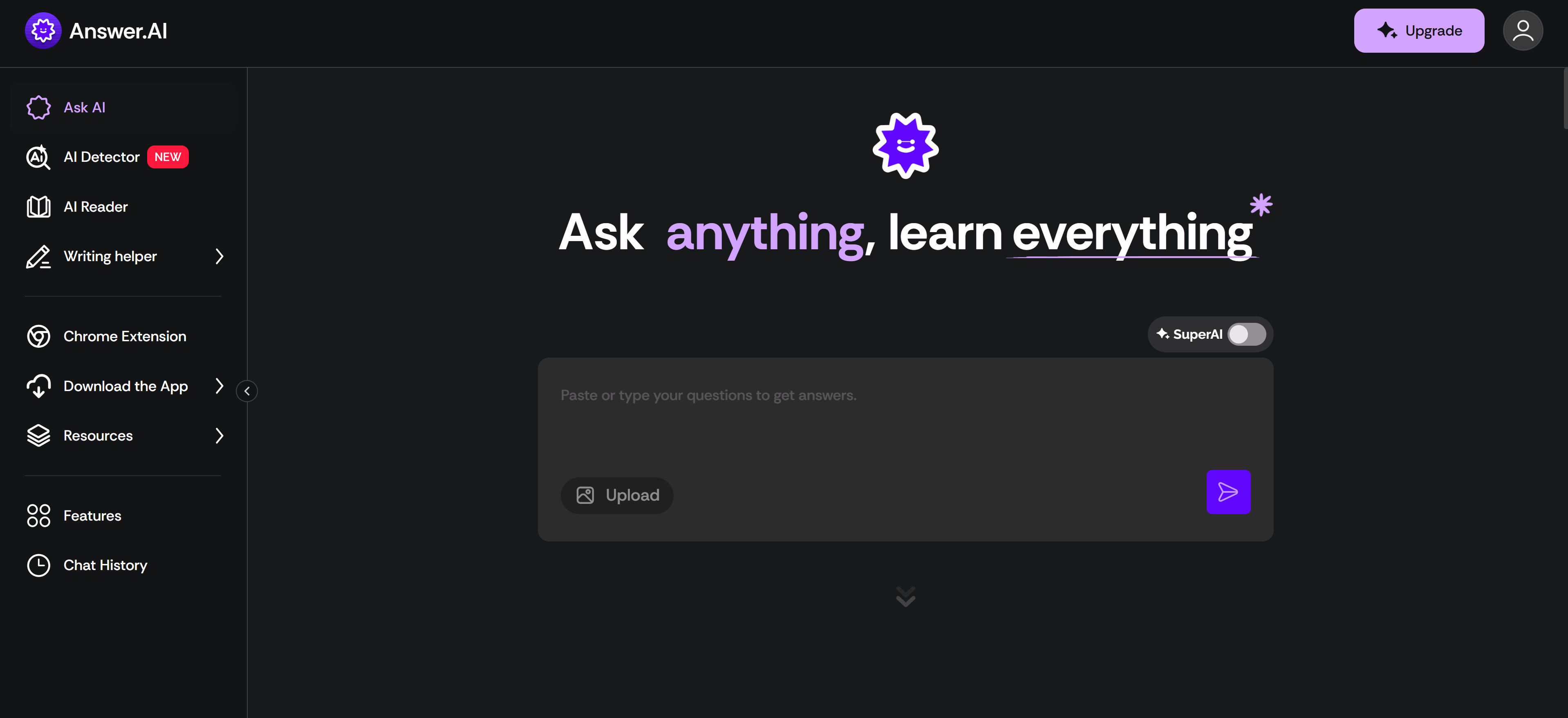
Answer AI is a 24/7 online AI learning assistant that provides comprehensive learning support and tutoring services across all subjects. The tool can not only answer questions from various disciplines but also provide writing guidance, reading comprehension help, and study plan suggestions. Answer AI uses advanced natural language processing technology to understand students' specific learning needs and provide personalized solutions. The platform supports multiple interaction methods, including text conversations, voice input, and file uploads, making the learning process more convenient. Answer AI is particularly suitable for students who need comprehensive learning support and can help them resolve various questions and difficulties in their studies.
4. Question AI: Smart Solver & Summarizer
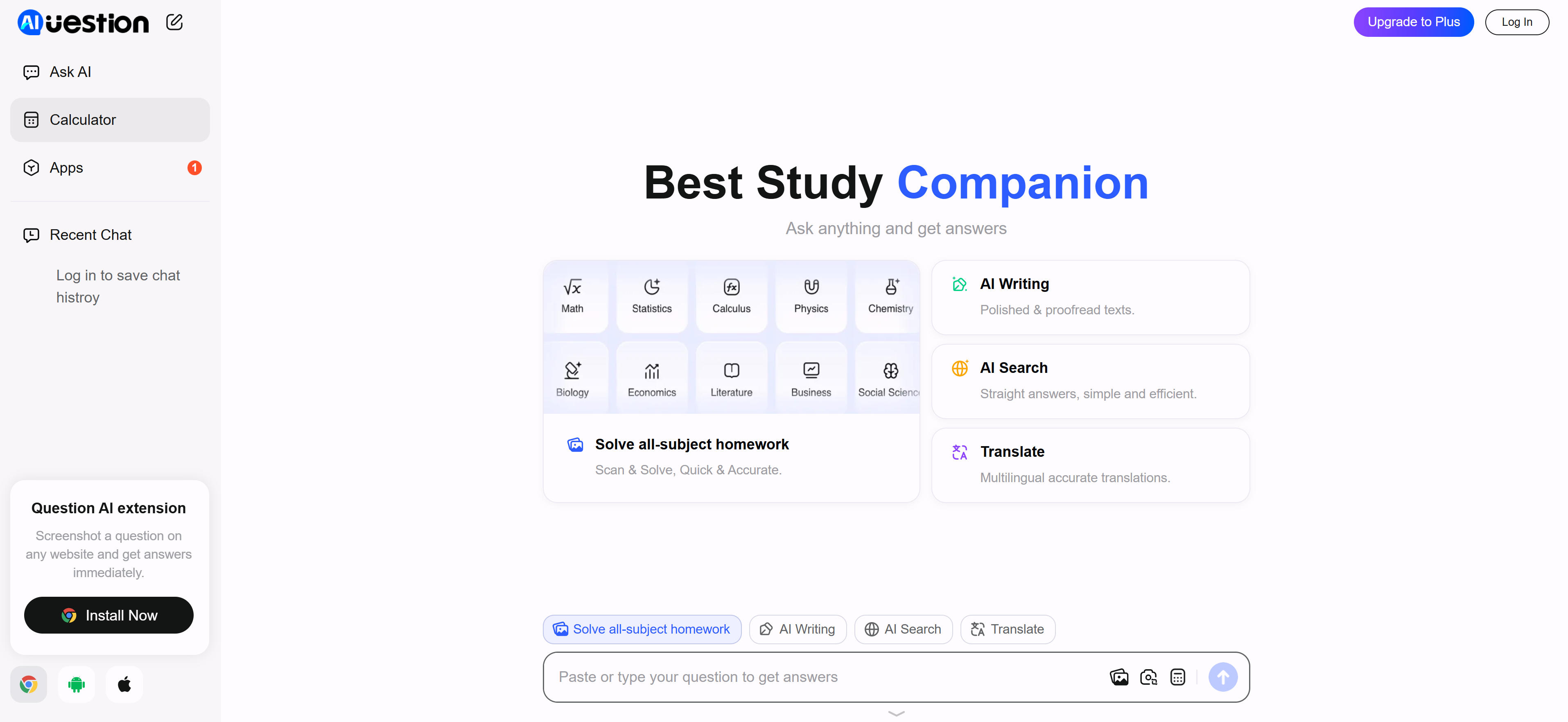
Question AI is an intelligent problem-solving and content summarization tool that can handle complex questions and provide concise summaries. The tool supports multiple input methods including text, images, and documents, making it suitable for various learning scenarios. Question AI uses advanced AI algorithms to understand context and provide accurate answers, particularly excelling in mathematical problem-solving, scientific explanations, and content summarization. The platform offers step-by-step solutions for math problems and clear explanations for complex concepts, helping students understand difficult topics. Question AI also supports multiple languages and can assist with translation and language learning tasks.
5. Solvely: AI Homework Helper
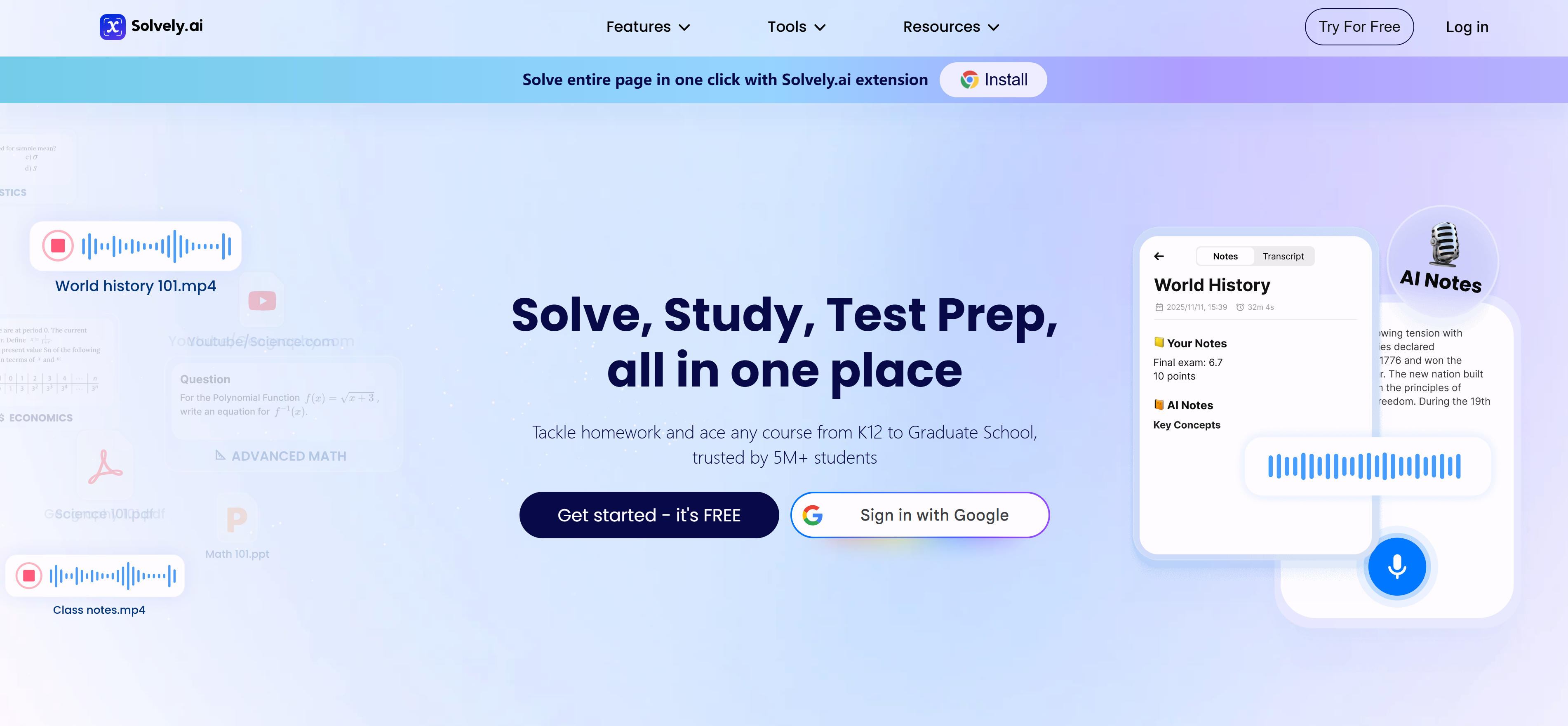
Solvely is an AI-powered homework helper that provides comprehensive assistance across multiple subjects including mathematics, science, literature, and history. The tool can solve complex problems, explain concepts, and provide step-by-step guidance to help students understand their homework. Solvely uses advanced AI to analyze problems and provide detailed explanations, making it particularly useful for students who need help with challenging assignments. The platform supports photo uploads for handwritten problems and provides instant feedback, helping students learn while completing their homework. Solvely also offers progress tracking and personalized learning recommendations based on student performance.
6. Scholarcy: Research Article Summarizer
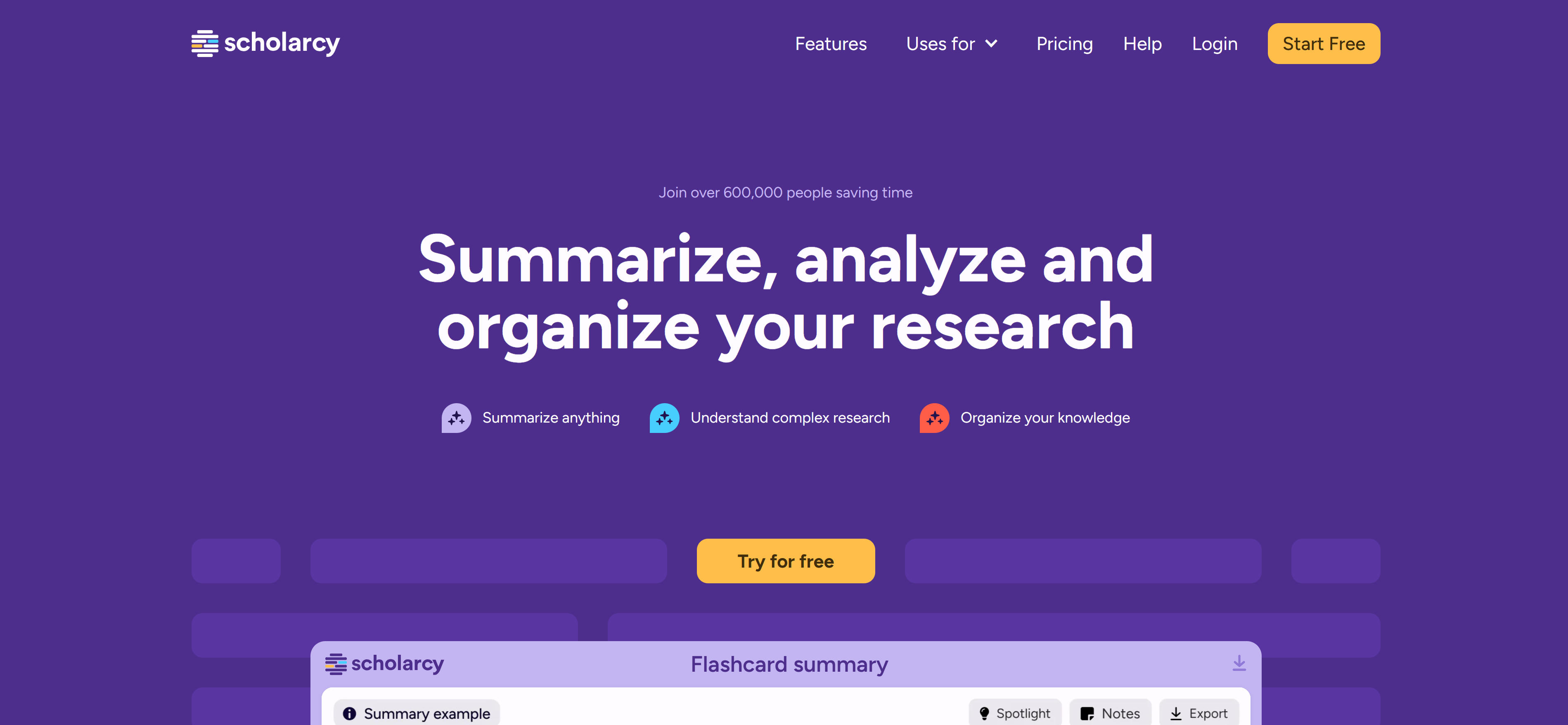
Scholarcy is an AI-powered research article summarizer that helps students and researchers quickly understand complex academic papers. The tool can analyze research articles, extract key information, and generate concise summaries highlighting the most important findings, methods, and conclusions. Scholarcy uses advanced natural language processing to identify the core contributions of papers and create structured summaries that capture the essence of the research. This is particularly valuable for students conducting literature reviews or researchers needing to quickly assess the relevance of papers to their work. The platform also supports citation extraction and reference management, making academic research more efficient.
7. Knowt: AI Study Notes Generator
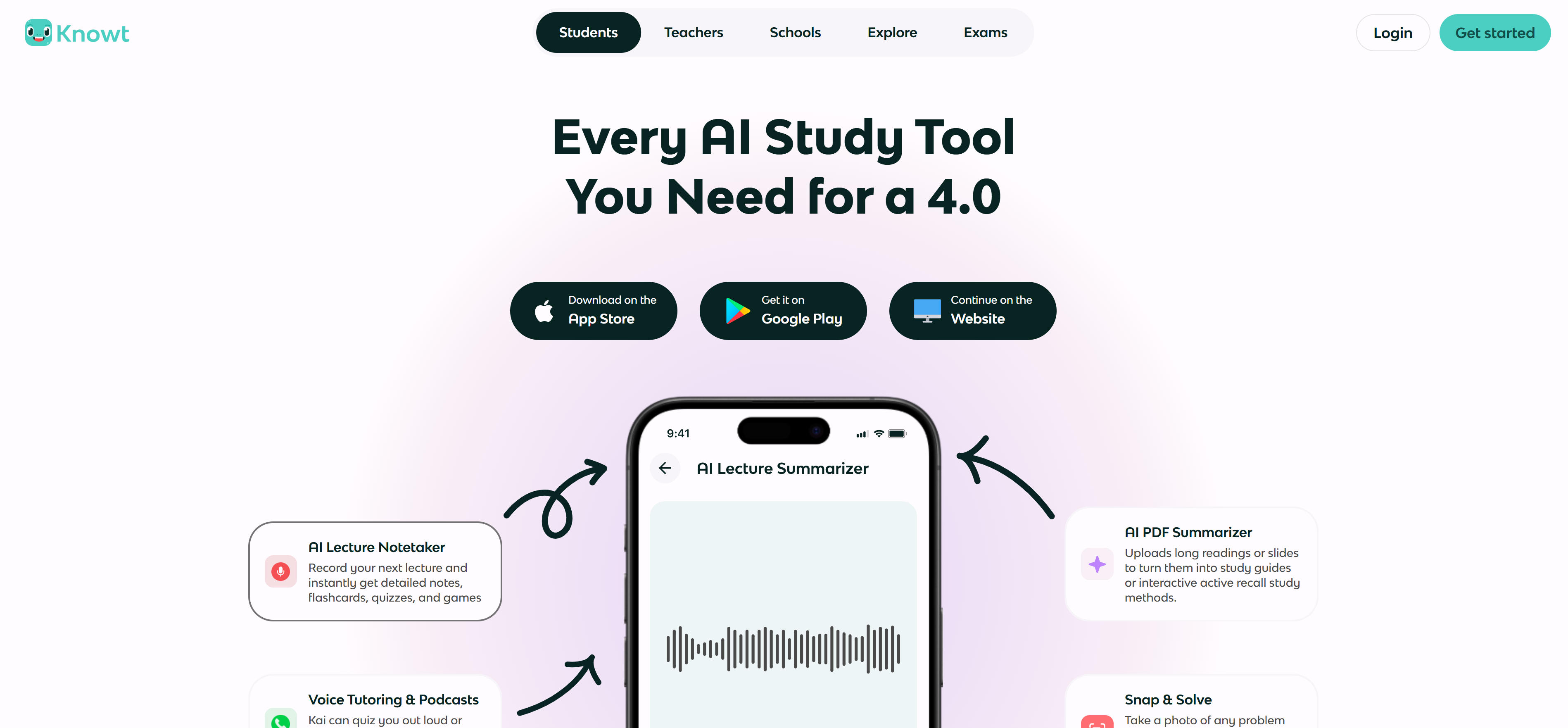
Knowt is an AI-powered study notes generator that transforms textbooks, articles, and lecture materials into comprehensive study guides. The tool uses advanced AI to analyze content and create structured notes with key concepts, definitions, and important details highlighted. Knowt can generate flashcards, quizzes, and mind maps from uploaded materials, making study preparation more efficient. Students can upload PDF documents, images of notes, or paste text, and Knowt will organize the information into digestible study materials. The platform also supports collaborative studying, allowing students to share and study together. Knowt is particularly useful for students who need to process large amounts of reading material quickly.
8. Quizlet: AI-Powered Flashcards
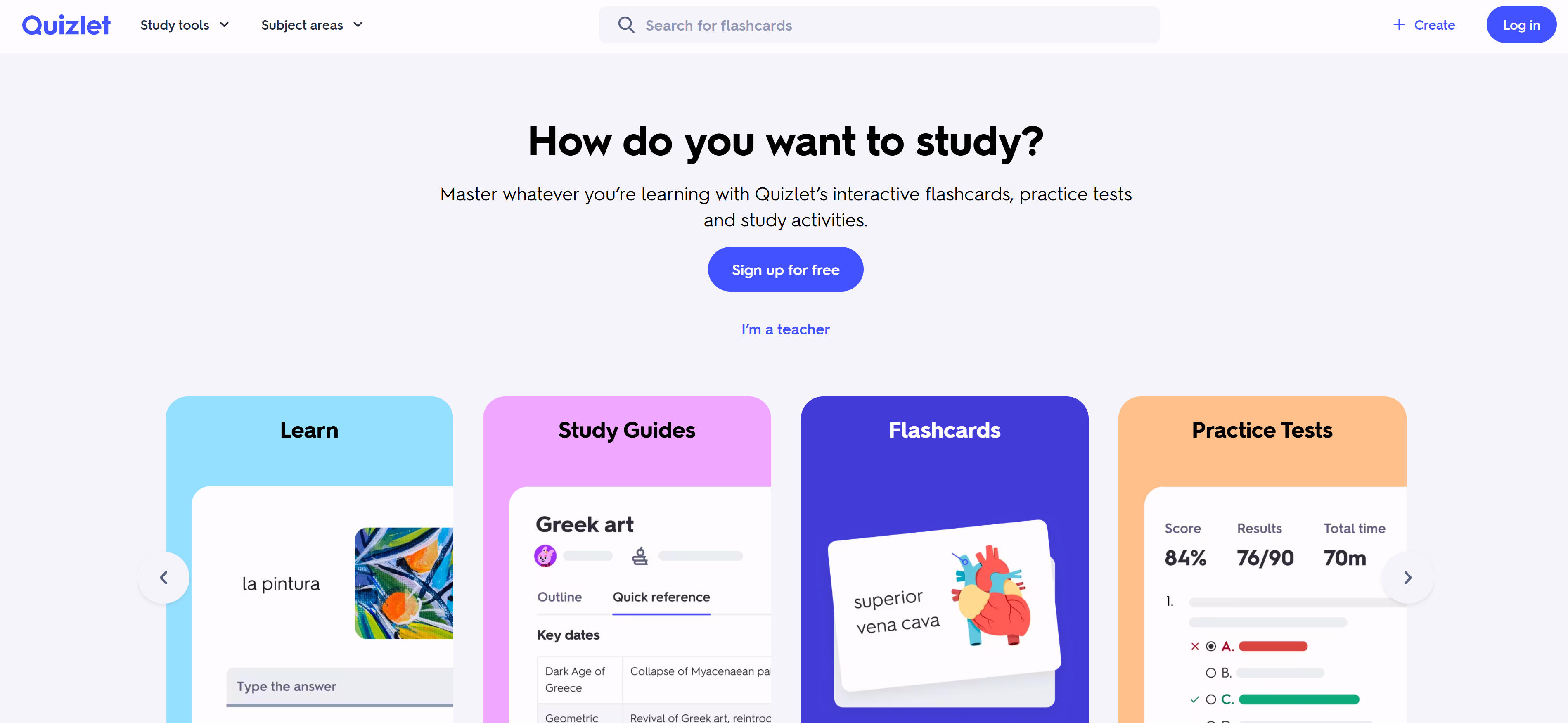
Quizlet is a popular flashcard platform that has integrated AI capabilities to enhance learning. The tool now uses AI to generate flashcards from text, create practice tests, and provide personalized study recommendations. Quizlet offers multiple study modes including traditional flashcards, matching games, and AI-generated quizzes. The platform's AI can analyze student performance and adapt question difficulty, creating a personalized learning experience. Teachers can also use Quizlet to create class sets and track student progress. With millions of existing flashcard sets covering virtually every subject, Quizlet provides a comprehensive study ecosystem that combines human-created content with AI-powered learning tools.
9. Speak: AI Language Conversation Partner
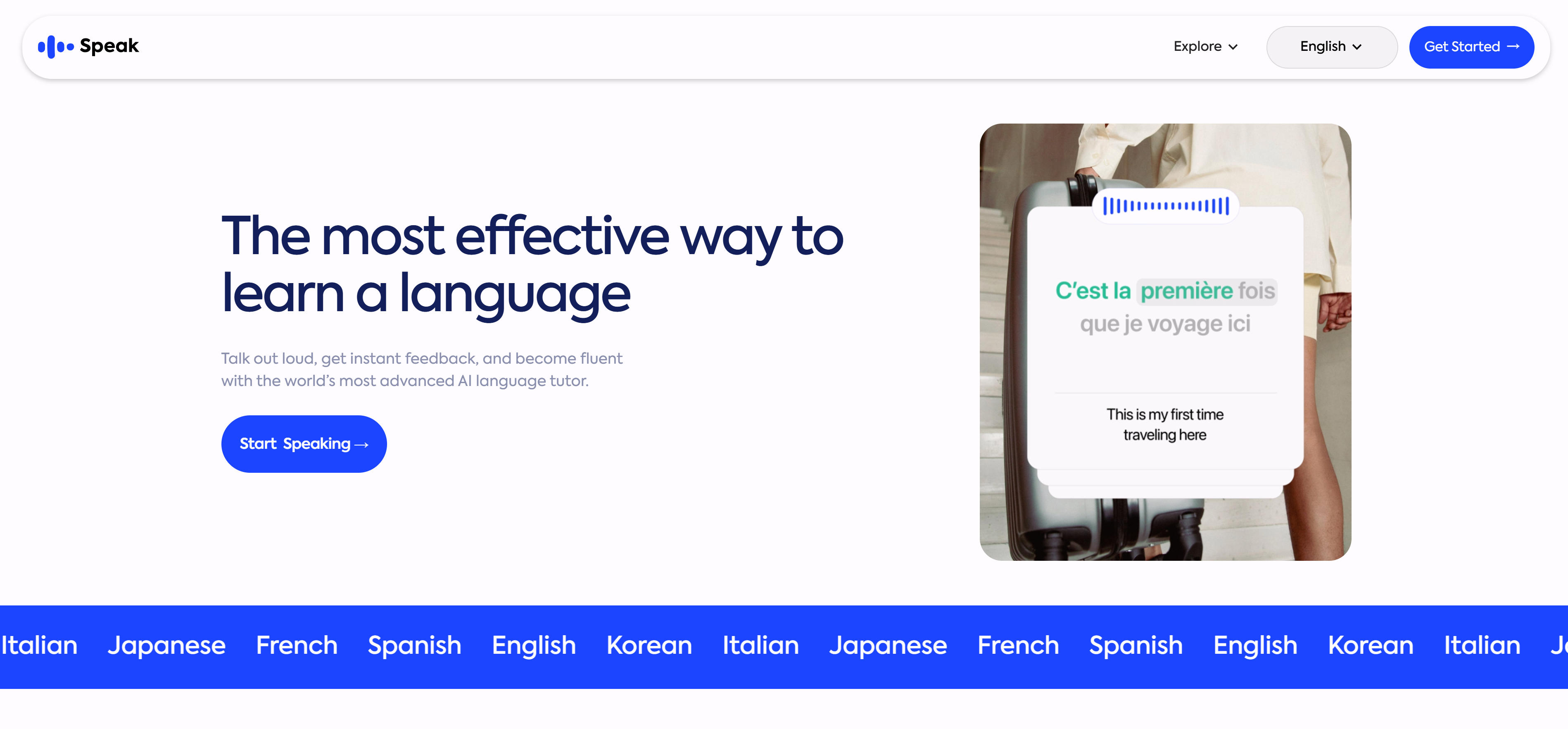
Speak is an AI-powered language learning platform that provides conversation practice with AI tutors. The tool offers personalized lessons, pronunciation feedback, and real-time conversation practice in multiple languages. Speak uses advanced speech recognition and natural language processing to provide accurate feedback on pronunciation, grammar, and fluency. Users can choose from various AI tutors with different personalities and teaching styles. The platform supports structured lessons as well as free conversation mode, making it suitable for both formal language learning and casual practice. Speak tracks progress and adapts difficulty based on user performance, providing a comprehensive language learning experience.
10. BoldVoice: Pronunciation Coach
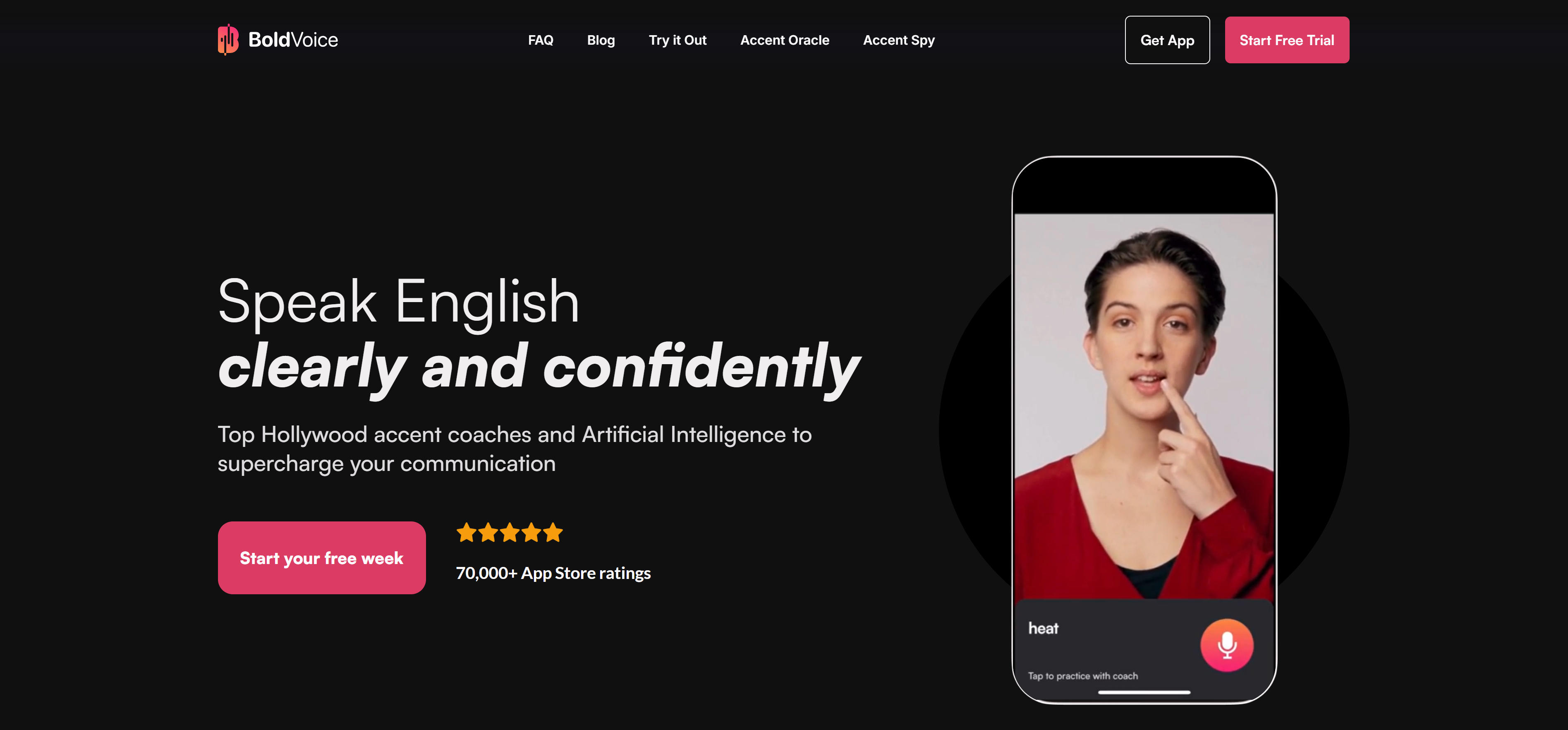
BoldVoice is an AI-powered pronunciation coach that provides detailed feedback on speech patterns and pronunciation accuracy. The tool analyzes speech in real-time, identifying pronunciation errors, intonation issues, and rhythm problems. BoldVoice offers personalized coaching sessions, practice exercises, and progress tracking to help users improve their speaking skills. The platform supports multiple languages and accents, making it valuable for language learners, professionals preparing presentations, and anyone looking to improve their spoken communication. BoldVoice uses advanced speech recognition technology to provide immediate, actionable feedback that helps users build confidence in their speaking abilities.
11. Duolingo: Gamified Language Learning
Duolingo is a gamified language learning platform that has integrated AI to enhance the learning experience. The app uses AI to personalize lessons, adapt difficulty based on performance, and provide contextual explanations. Duolingo offers bite-sized lessons that fit into busy schedules, covering reading, writing, listening, and speaking skills. The platform's AI analyzes user progress and identifies areas needing improvement, creating customized learning paths. With its engaging game-like interface, Duolingo has made language learning accessible to millions of users worldwide. The platform supports numerous languages and includes features like podcasts, stories, and live events to reinforce learning.
AI Education Tools Comparison
What AI Education Tools Can Do: 8 Practical Applications
1. Homework Help & Problem Solving
AI education tools excel at providing instant homework assistance across multiple subjects. Students can photograph math problems, science questions, or literature assignments to receive step-by-step solutions and explanations. These tools help students understand problem-solving methods rather than just providing answers, building critical thinking skills. Particularly valuable for complex subjects like calculus, physics, and chemistry where step-by-step guidance is essential for comprehension.
2. Study Organization & Note-Taking
AI-powered study tools help students organize learning materials and create effective study aids. Tools can generate flashcards from textbooks, create summaries of lecture notes, and organize information into digestible study guides. These applications use AI to identify key concepts, create mind maps, and suggest optimal study sequences based on the material's complexity and the student's learning style.
3. Language Practice & Pronunciation
AI language learning tools provide interactive conversation practice and pronunciation coaching. Students can engage in natural dialogues with AI tutors, receive real-time feedback on pronunciation, and practice speaking in various scenarios. These tools adapt to the learner's proficiency level and provide personalized correction, making language learning more engaging and effective than traditional methods.
4. Test Preparation & Review
AI tools assist with exam preparation by generating practice questions, identifying knowledge gaps, and creating personalized review plans. These applications analyze study patterns and performance to focus learning efforts on weak areas. Students benefit from adaptive testing that adjusts difficulty based on their progress, ensuring efficient use of study time.
5. Research Assistance & Summarization
AI research tools help students and researchers process academic papers and articles efficiently. These tools can summarize complex research papers, extract key findings, and identify relevant sources. Particularly useful for literature reviews and research projects where students need to quickly assess the relevance and quality of academic sources.
6. Writing Improvement & Feedback
AI writing assistants provide detailed feedback on grammar, style, clarity, and structure. These tools help students improve their writing skills by offering suggestions for better word choice, sentence structure, and argumentation. Particularly valuable for academic writing, essays, and research papers where clear communication is essential.
7. Personalized Learning Paths
AI education platforms create customized learning experiences based on individual student needs and progress. These systems adapt content difficulty, suggest optimal learning sequences, and provide targeted practice exercises. Students receive personalized attention that traditional classroom settings cannot provide, ensuring each learner progresses at their optimal pace.
8. Progress Tracking & Analytics
AI-powered analytics provide detailed insights into learning progress and patterns. Students and educators can track improvement over time, identify strengths and weaknesses, and make data-driven decisions about study strategies. These tools help create comprehensive learning profiles that inform both individual study plans and educational interventions.
How to Choose AI Education Tools
1. Evaluate Learning Needs
Assess your primary learning goals: homework help, language learning, test preparation, or research assistance. Different tools excel in specific areas - math solvers for STEM subjects, language apps for communication skills, study tools for memorization and review.
2. Check Subject Compatibility
Ensure the tool supports your specific subjects and learning level. Math tools should handle your grade level, language apps should match your proficiency, and study tools should accommodate your curriculum requirements.
3. Assess Learning Style Compatibility
Choose tools that match your preferred learning approach. Visual learners benefit from diagramming tools, auditory learners from speech-based apps, and kinesthetic learners from interactive platforms with gamification elements.
4. Review Privacy and Security
For student users, ensure the platform has strong privacy protections and age-appropriate content. Check data handling practices, especially for tools that collect academic performance data or personal learning information.
5. Test Free Versions First
Most AI education tools offer free trials or basic versions. Test multiple options to compare user experience, accuracy of solutions, and overall effectiveness before committing to paid subscriptions.
Conclusion
AI education tools are revolutionizing how students learn and teachers teach across all educational levels. From instant homework help with Upstudy and Gauth to comprehensive learning platforms like Answer AI, these intelligent tools provide personalized support that adapts to individual learning needs. Language learning becomes more engaging with Speak and Duolingo, while study organization improves dramatically with Knowt and Quizlet.
The key to maximizing the benefits of AI education tools lies in selecting the right combination for your specific learning goals and subjects. Whether you're struggling with math homework, preparing for language exams, conducting research, or organizing study materials, there's an AI tool designed to enhance your academic performance. As AI technology continues to evolve, these tools will become even more sophisticated in providing personalized, adaptive learning experiences that complement traditional education methods. For more comprehensive AI tool recommendations, explore our Complete Guide to AI Tools.