What Are AI Fashion Tools
AI fashion tools leverage artificial intelligence for design assistance, styling recommendations, virtual try-on, and trend analysis. These platforms use machine learning to understand fashion trends, analyze user preferences, and generate personalized recommendations for designers, brands, and consumers.
In the fast-paced fashion industry, AI tools transform traditional workflows and shopping experiences. From garment design to virtual try-on, these solutions enhance personalization and efficiency. Both professional designers and consumers benefit from these intelligent platforms.
While AI tools excel at pattern-based tasks, they complement rather than replace human creativity. The optimal approach is human-AI collaboration: AI handles repetitive tasks while humans focus on creative vision, strategy, and quality control.
How AI Fashion Tools Work
Modern AI fashion technology uses deep learning and computer vision to understand fashion trends and generate design solutions. Compared to traditional methods, AI significantly improves creation efficiency, trend prediction, and personalization.
Core advantages include: trend analysis capabilities (identifying patterns from fashion data), design generation capabilities (creating garments, color schemes, and styling suggestions), personalization capabilities (providing tailored recommendations based on preferences and body type), and virtual try-on capabilities (enabling AR/VR fitting experiences). Different tools use various architectures: design tools rely on generative AI and style transfer, recommendation systems use collaborative filtering, virtual try-on combines computer vision with 3D modeling.
Best AI Fashion Tools 2026
Here are the top AI fashion tools of 2026, covering the complete workflow from 3D design to virtual try-on. Each tool offers unique features to help you find the perfect fashion creation solution based on your needs.
1. Style3D AI: Comprehensive Fashion Platform
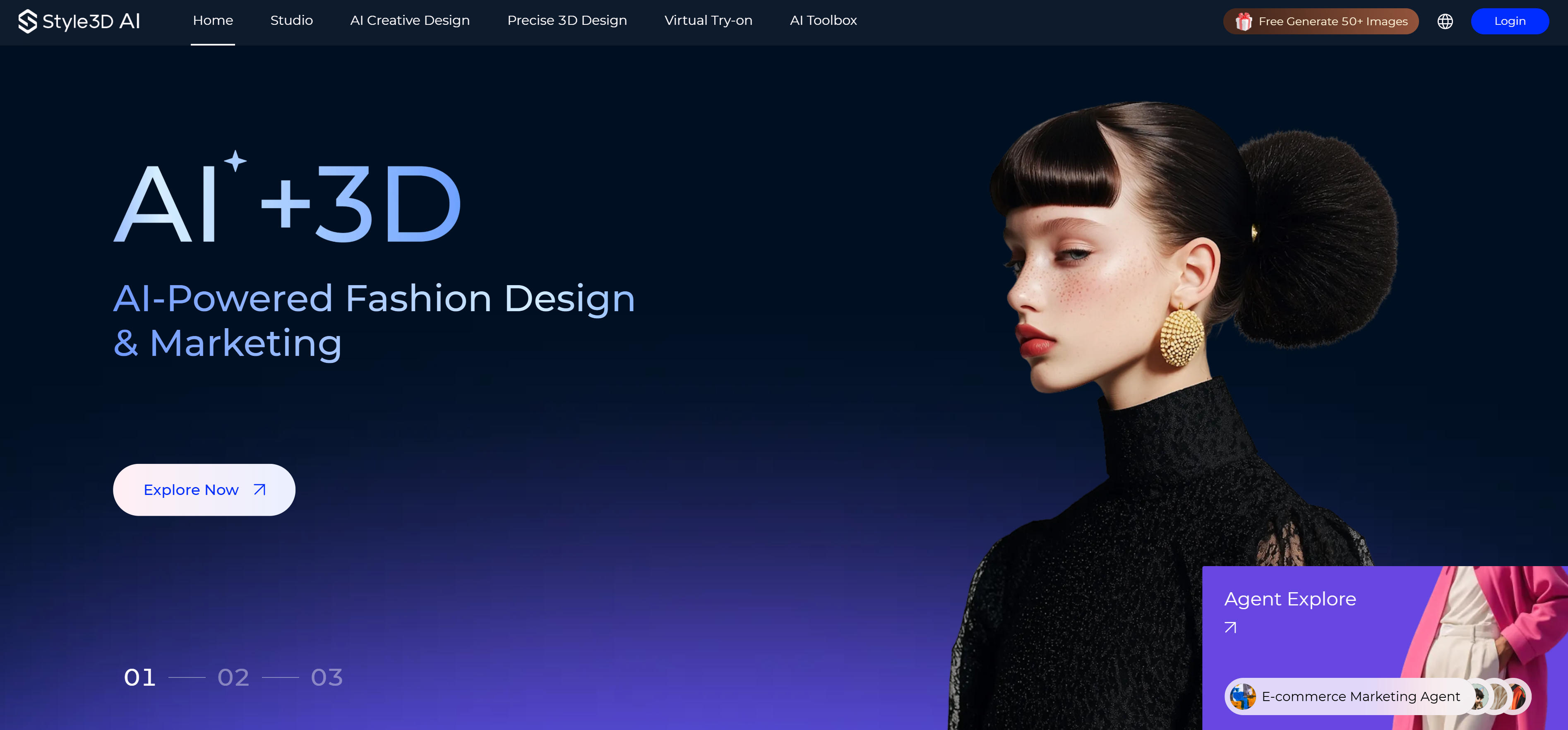
Style3D AI is the most comprehensive fashion AI platform in 2026, providing complete digital fashion workflows. The platform includes 10+ AI tools including virtual try-on, photoshoot creation, 3D garment simulation, pattern generation, and intelligent stitching. Designers can start from sketches to quickly generate 3D garment models, perform virtual fittings, and create professional product visualizations. Perfect for fashion brands and design teams requiring full workflows, the platform supports real-time collaboration and cloud storage, dramatically shortening time from design to finished product.
2. Botika: AI Fashion Model Generation
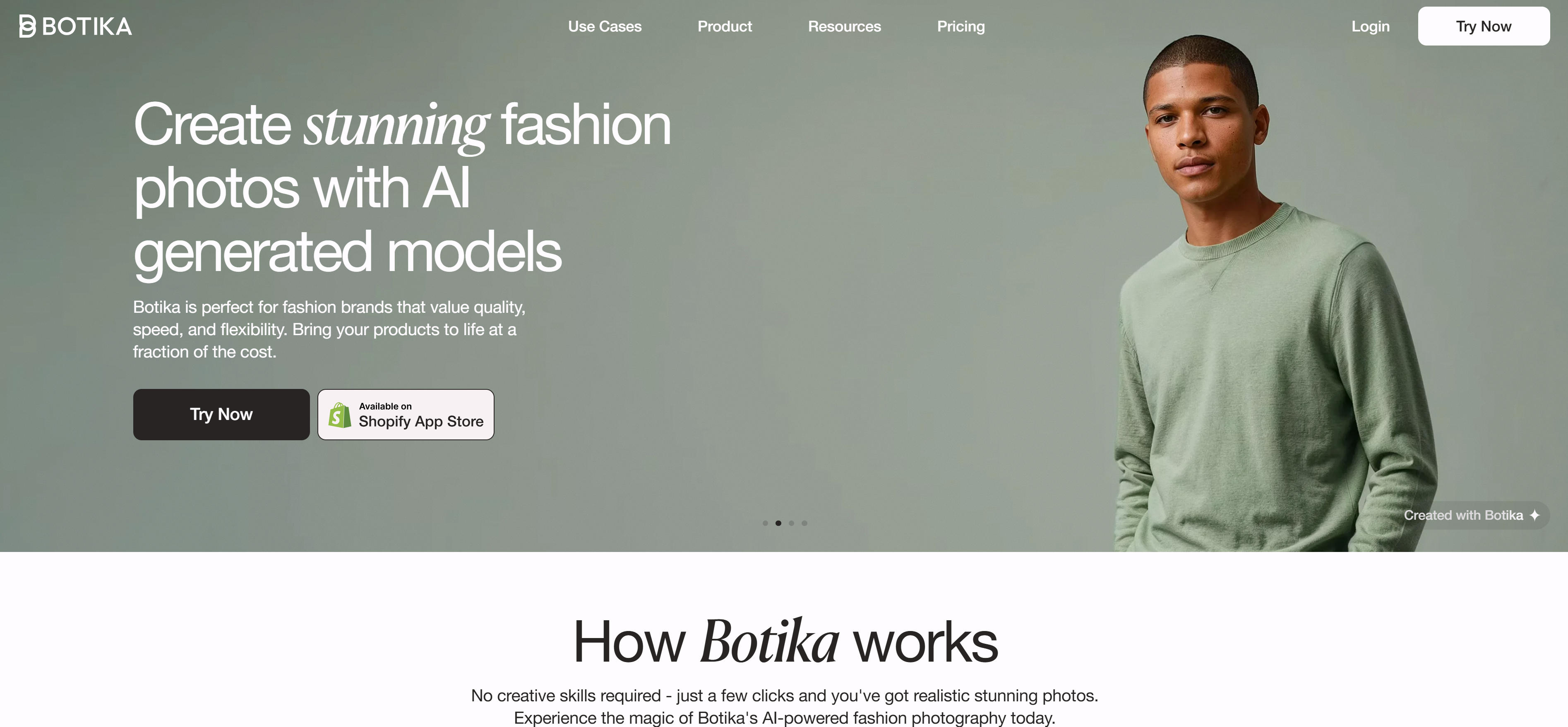
Botika is a generative AI platform designed for fashion brands and e-commerce, creating high-quality model photos quickly. Users can generate diverse photos based on brand style and product characteristics, including various body types, ages, genders, and styles. The platform excels at creating advertisement-level product showcase photos, helping brands reduce photography costs and accelerate product launches. Supports batch generation and custom style adjustments, ideal for e-commerce platforms and fast fashion brands. Generated model photos maintain high realism, effectively boosting product conversion rates.
3. The New Black: Clothing Design Generator
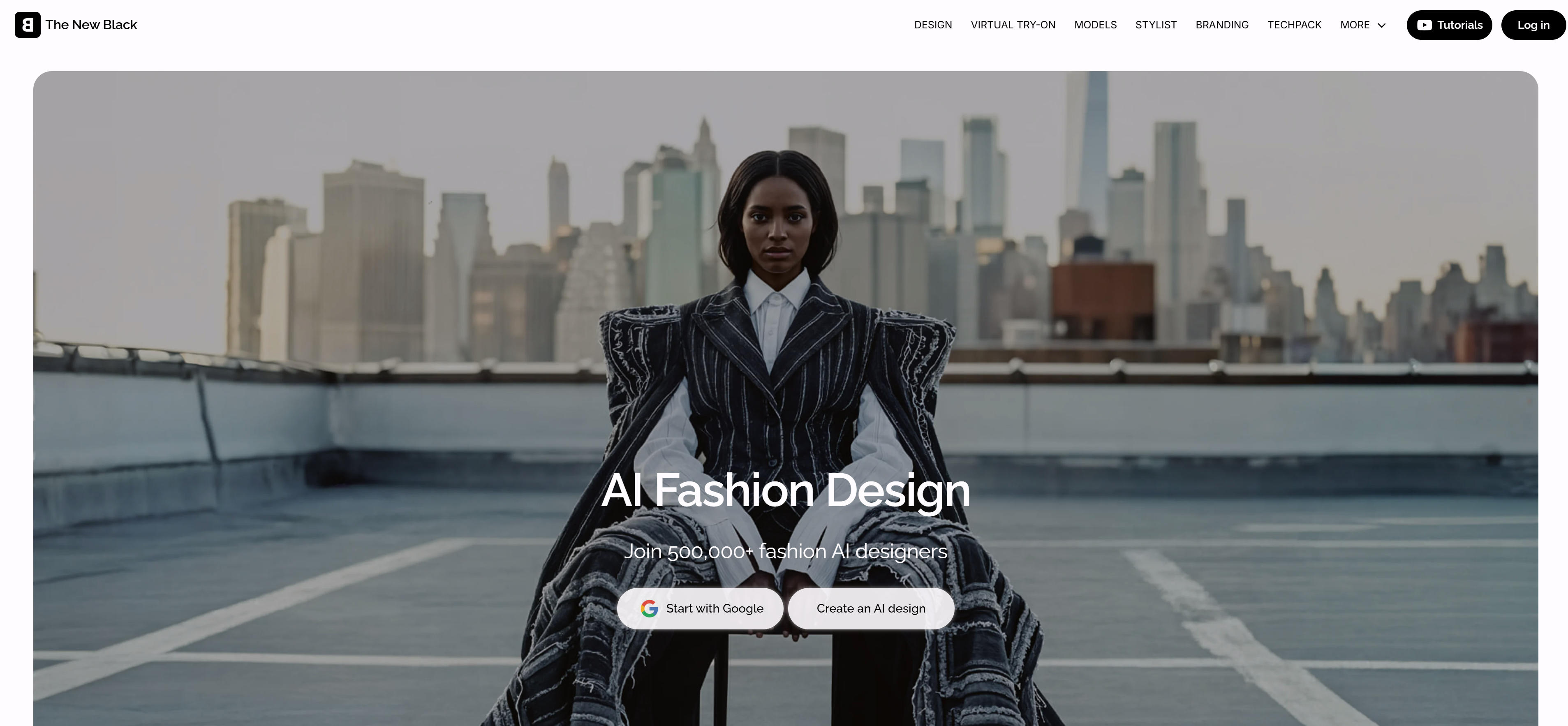
The New Black enables designers to generate original clothing designs from text descriptions. Users can input creative concepts to instantly receive multiple design variations, supporting fabric selection, color matching, and pattern creation. The platform integrates with major design software and provides real-time collaboration features. Particularly suitable for fashion designers and brands seeking innovative design solutions, dramatically accelerating the design process while maintaining creative quality.
4. Piccopilot: AI Models & Virtual Try-On
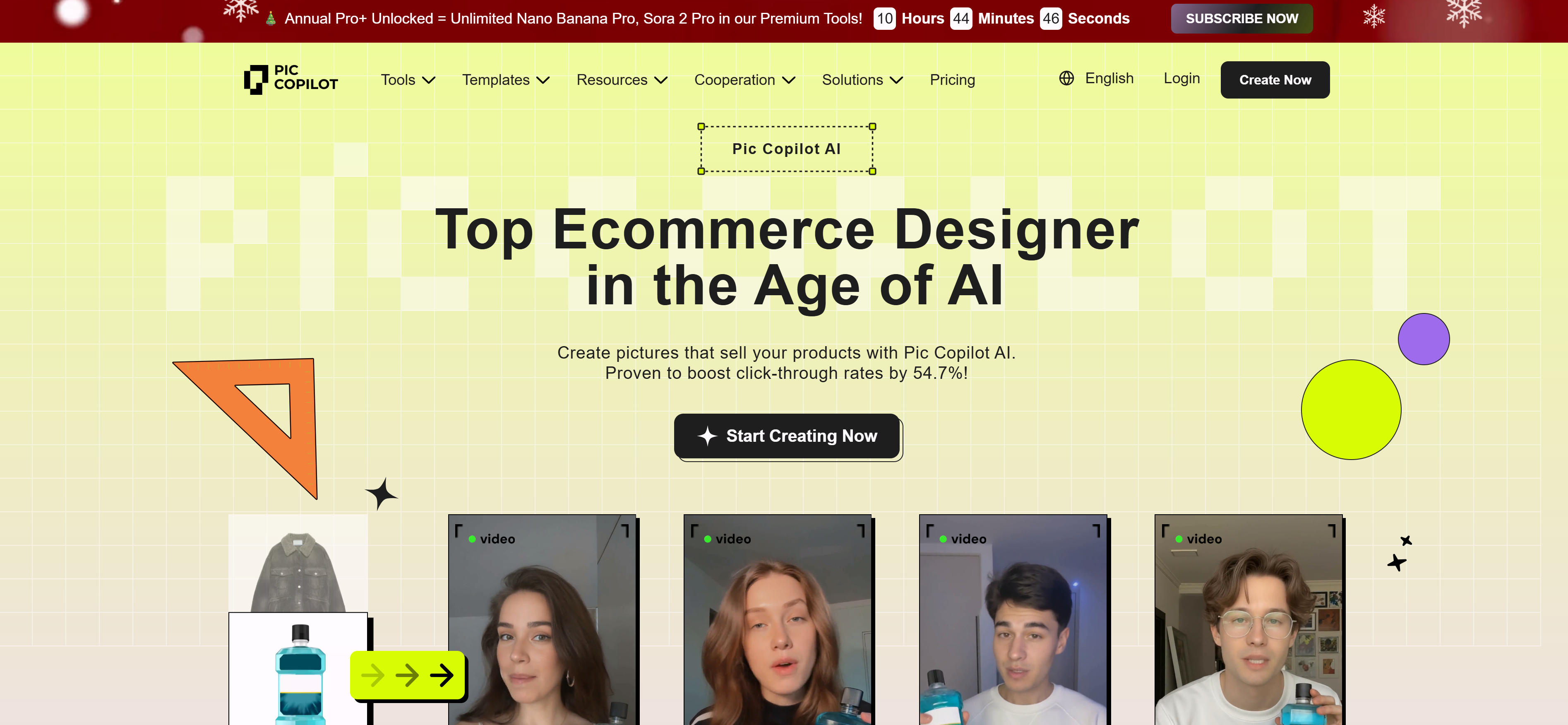
Piccopilot combines AI model generation with virtual try-on capabilities, creating professional product photography without traditional shoots. The platform generates diverse models and handles automatic product placement and styling. Advanced algorithms ensure realistic results across different body types and poses. Ideal for e-commerce brands needing consistent, high-quality product imagery at scale, supporting multiple product categories and style variations.
5. Caimera: Generative Fashion Models
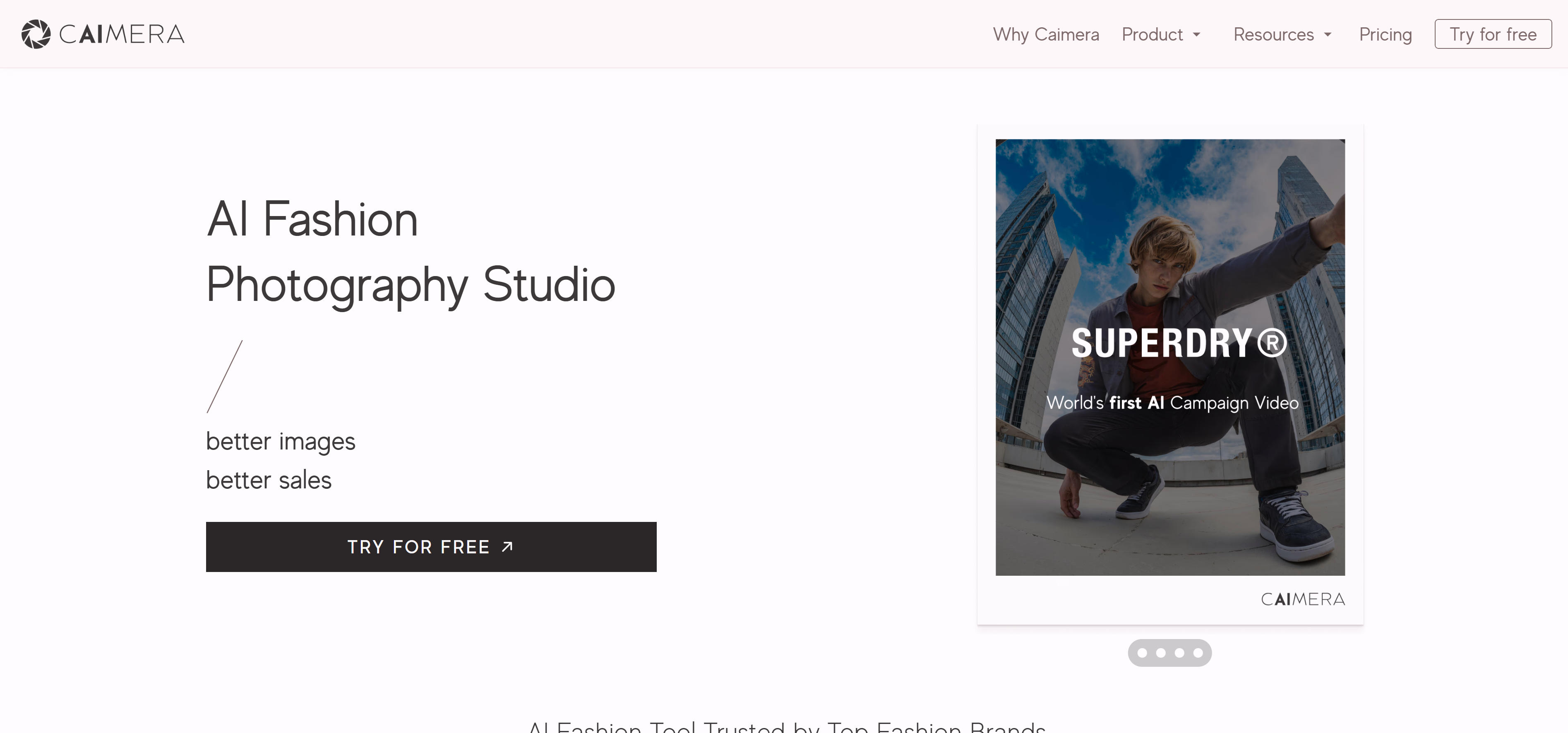
Caimera specializes in generating marketing and advertising model images using advanced AI. The platform creates diverse, photorealistic models for various campaign needs, supporting different demographics, styles, and brand aesthetics. Intelligent algorithms ensure brand consistency while providing creative flexibility. Perfect for brands needing high-volume, high-quality marketing assets without extensive photography budgets.
6. Fits: AI Personal Stylist
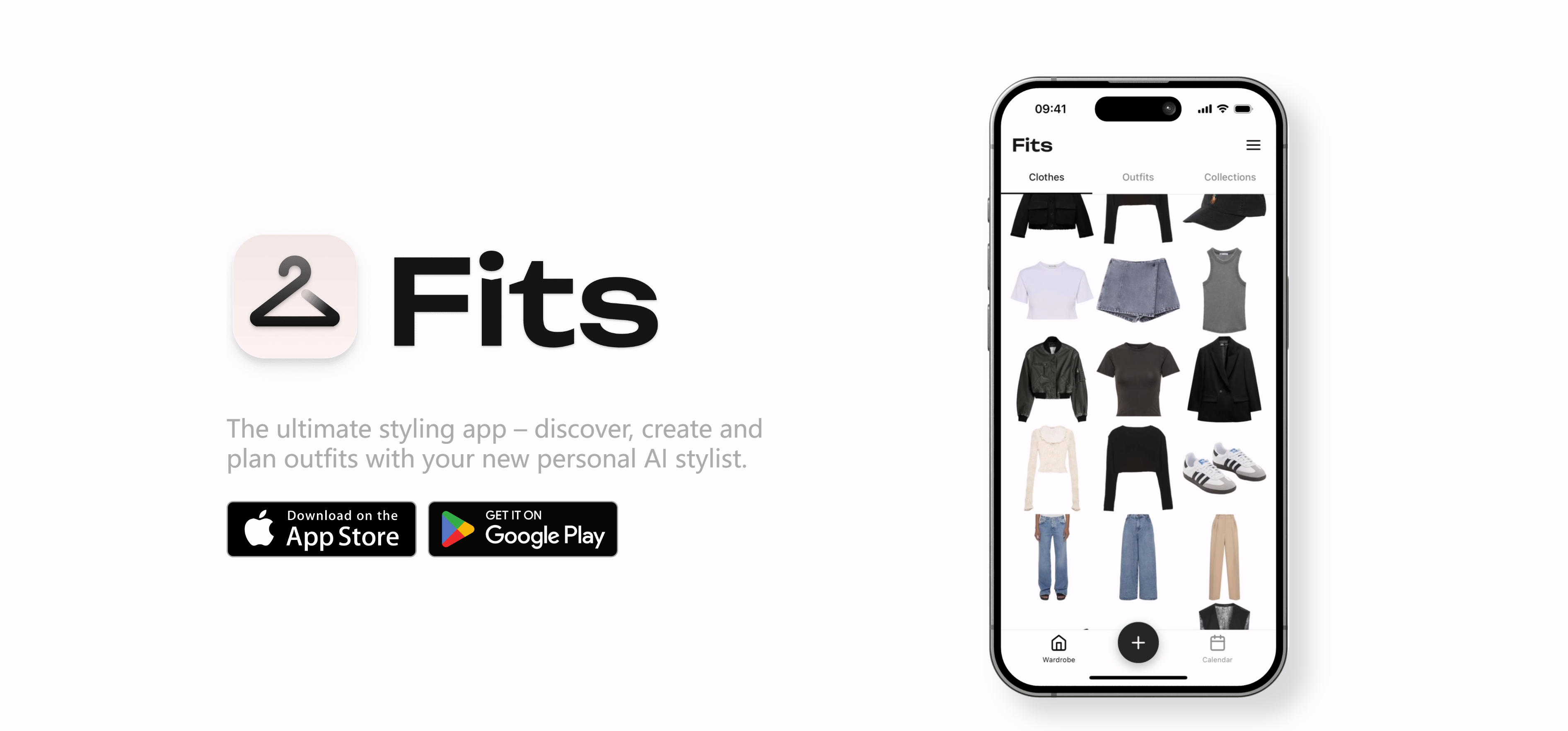
Fits is an AI stylist app designed for consumers, providing personalized outfit recommendations. Users can digitize their wardrobe and receive daily styling suggestions based on body type, style preferences, and occasions. The platform supports seasonal recommendations and special occasion styling, continuously refining suggestions based on user feedback. Ideal for professionals and fashion enthusiasts seeking to enhance their personal style, the app offers practical and personalized recommendations.
7. FASHN: AI Fashion Studio
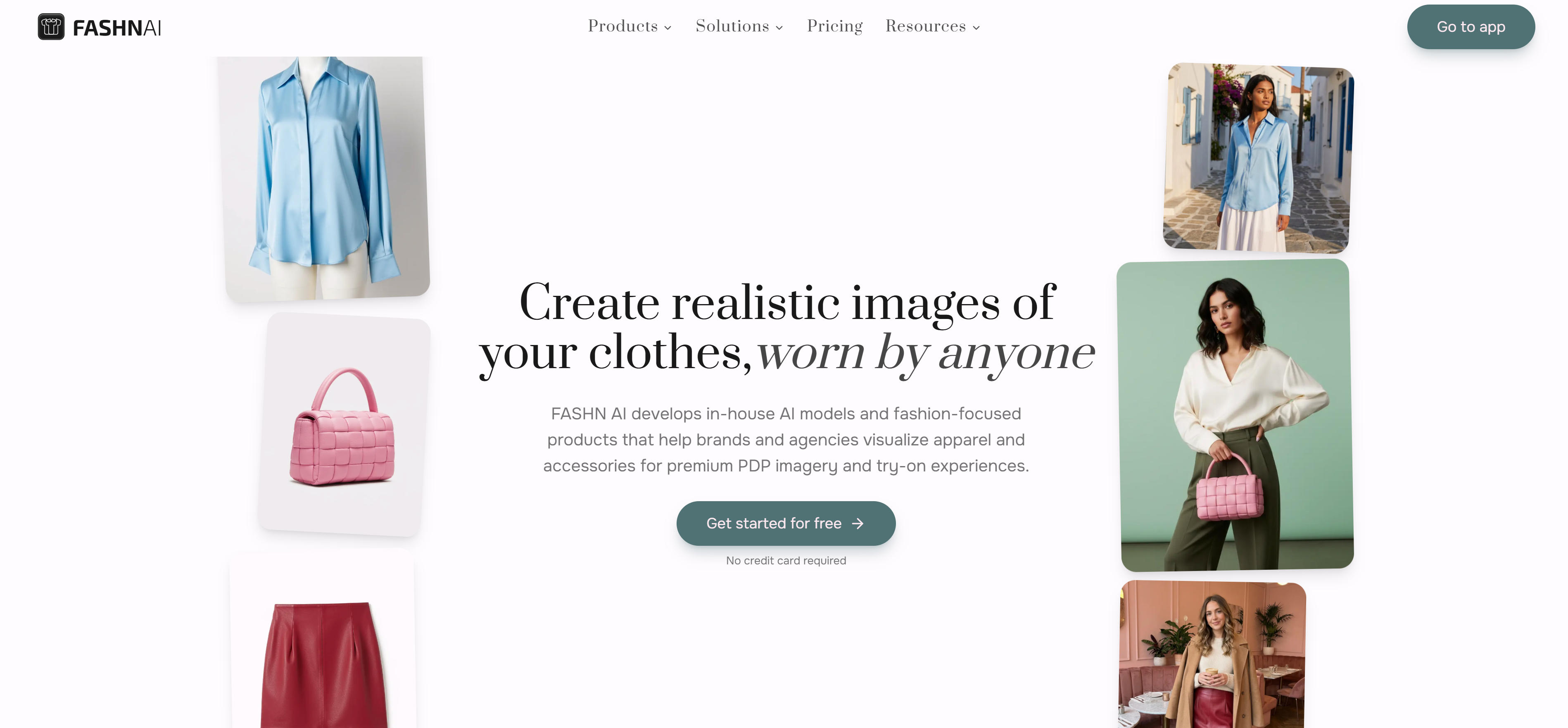
FASHN provides comprehensive AI fashion solutions including virtual try-on and model generation. The platform enables users to visualize garments on different models and body types, supporting e-commerce applications. Advanced algorithms ensure realistic fit visualization and style recommendations. Suitable for online retailers and fashion brands needing to enhance customer shopping experiences through interactive, personalized styling tools.
8. NewArc: Sketch to Image Conversion
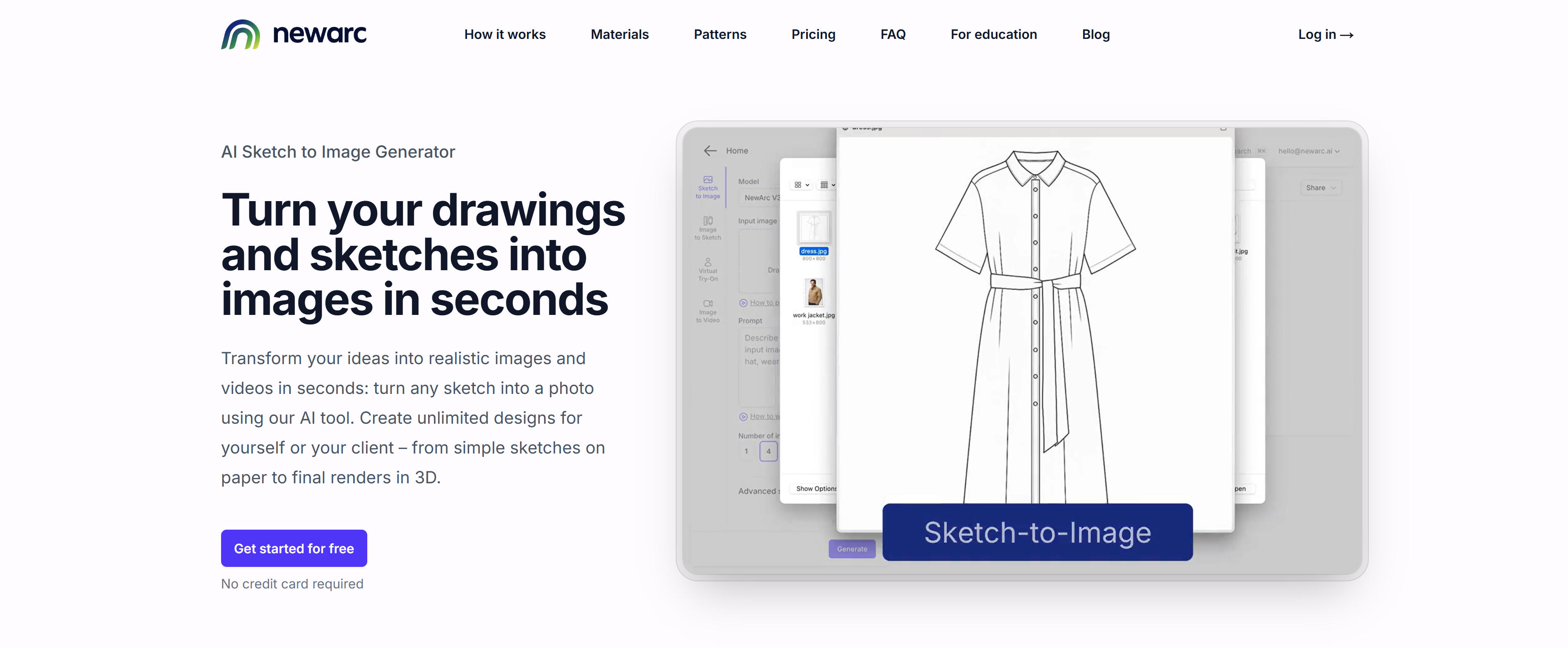
NewArc transforms designer sketches into high-quality finished images using AI. Designers upload clothing sketches and receive photorealistic renderings with accurate fabrics, patterns, and details. The platform handles shoes, accessories, and complex garments, supporting precise adjustments and customization. Essential for designers and brands needing to convert concepts into professional presentations, significantly improving design validation and communication efficiency.
AI Fashion Tools Comparison
| Tool Name | Core Features | Applications | Price |
|---|---|---|---|
| Style3D AI | 3D design, virtual try-on | Professional design teams | $49/month |
| Botika | AI model generation | E-commerce, advertising | $29/month |
| The New Black | Clothing design generation | Designers, brands | $19/month |
| Piccopilot | Virtual try-on, video generation | E-commerce, marketing | $39/month |
| Caimera | Generative models | Marketing, advertising | $25/month |
| Fits | Personalized styling | Personal fashion | $4.99/month |
| FASHN | Virtual try-on, model swapping | E-commerce, studios | $35/month |
| NewArc | Sketch conversion | Designers, prototyping | $15/month |
AI Fashion Applications: 6 Practical Use Cases
AI fashion tools play increasingly important roles in modern fashion industry across various applications:
1. Fashion Design & Creation
AI tools generate multiple design options from designer concepts or sketches. From fabric selection to color matching and pattern design, AI provides comprehensive support. Designers use Style3D AI for 3D prototyping or The New Black for text-to-design creation, dramatically improving design efficiency and creative output.
2. Virtual Try-On & Shopping Experience
Online shoppers preview garments virtually without physical try-ons. Tools like Piccopilot and FASHN provide realistic virtual fitting based on body measurements, reducing return rates and enhancing shopping experiences.
3. AI Model Generation & Photography
Brands generate diverse product showcase photos without professional models or expensive shoots. Botika and Caimera create various body types, ages, genders, and styles, particularly valuable for e-commerce platforms and fast fashion brands.
4. Personalized Styling Recommendations
Consumers receive AI-powered personalized outfit suggestions based on wardrobe and preferences. Apps like Fits analyze body type, occasions, and seasons to provide daily styling recommendations, helping users improve fashion sense and appropriateness.
5. Marketing Content Creation
Brands create extensive marketing materials efficiently. From product ads to social media content and video production, AI provides high-quality visuals. Caimera excels at advertisement-level images while FASHN creates complete e-commerce content workflows.
6. Fashion Trend Analysis & Forecasting
Brands and designers predict future fashion directions using AI analysis of social media, runway shows, and consumer data. Some AI tools include trend analysis features to help brands make informed product planning and market decisions.
How to Choose AI Fashion Tools
Select the right AI fashion tools based on your specific needs, use cases, and budget to maximize creative efficiency and results.
1. Define Your Purpose and Use Cases
First determine your primary needs: fashion design, virtual try-on, AI model generation, or personalized styling? Different tools excel in different areas. Fashion designers prefer Style3D AI and The New Black; e-commerce professionals benefit from Botika and Piccopilot; consumers find Fits ideal for personal styling. Choose tools that best match your specific use case.
2. Evaluate Features and Quality
Check if tool features are complete and output quality meets requirements. Design tools need realistic generation and detail processing; virtual try-on tools require natural fit visualization; AI model tools need professional photo diversity. Try multiple tools and compare actual outputs before deciding, avoiding choices based solely on marketing claims.
3. Consider Budget and Cost-Effectiveness
AI fashion tools range from a few dollars to dozens per month. Free or low-cost tools suit personal testing or small-scale use, while professional tools work for commercial applications. Calculate return on investment based on usage frequency and expected benefits. Many tools offer free trials to evaluate actual value and suitability.
4. Assess Usability and Learning Curve
Evaluate tool usability and learning curve. Professional designers may need powerful tools, while beginners prefer intuitive interfaces. Check for detailed tutorials, community support, and customer service. Some tools provide API interfaces for technical teams needing workflow integration.
5. Review Privacy and Data Security
Fashion tools often involve personal photos and designs, making privacy protection crucial. Review privacy policies and data handling practices, choosing tools that don't permanently store user data. Commercial users should also consider intellectual property protection, ensuring generated AI content doesn't infringe copyrights. For confidential business materials, select enterprise-level security tools.
Conclusion
AI fashion tools are profoundly transforming fashion industry creation methods and workflows, providing designers, brands, and consumers with unprecedented convenience and creative possibilities. From Style3D AI's 3D design to Botika's AI model generation, from The New Black's clothing design to Piccopilot's virtual try-on, these tools collectively build a comprehensive AI fashion ecosystem.
Choose appropriate AI fashion tools based on specific needs and scenarios. Professional designers prioritize Style3D AI and The New Black for design tools; e-commerce brands select Botika and Caimera for model generation; consumers try Fits for personalized styling recommendations. Regardless of your category, these tools significantly enhance fashion domain creation efficiency and results quality.
For comprehensive AI tool insights, explore our complete AI tools guide to discover more AI applications across design, video, and other domains.