What Are Generative Engine Optimization Tools
Generative Engine Optimization (GEO) represents the next evolution of SEO for the AI era. Unlike traditional SEO that focuses on keyword rankings, GEO aims to enhance brand visibility and citation rates within AI generative engines like ChatGPT, Claude, and Gemini. These tools help monitor AI search mentions, optimize content for AI comprehension, and analyze performance across different AI platforms.
The core value of GEO tools lies in AI-native optimization. As users increasingly search through AI assistants, brands need to establish presence in AI models' "knowledge." These tools provide both technical solutions and strategic guidance for adapting to AI-driven search ecosystems, fundamentally reshaping digital marketing approaches.
How Generative Engine Optimization Tools Work
GEO tools utilize AI and big data analytics to monitor and analyze brand performance in AI search results. These platforms typically integrate natural language processing, machine learning algorithms, and multi-platform data aggregation, extracting valuable insights from massive AI response datasets.
Key advantages include real-time monitoring and intelligent analysis. While traditional SEO tools rely on search engine index data, GEO tools directly analyze AI model outputs, understanding brand citation frequency, context, and sentiment orientation, providing enterprises with more precise AI marketing insights.
Best AI Visibility Monitoring Tools 2026
1. Profound: AI Brand Visibility Monitoring Platform

Profound is a leading AI brand visibility monitoring platform focused on helping enterprises understand and improve brand citation rates in AI search results. Through real-time monitoring of multiple AI platforms including ChatGPT, Claude, and Gemini, it accurately tracks brand mention frequency, context, and sentiment orientation. Profound provides detailed analytics reports to help marketing teams identify opportunities in AI search and optimize brand presence in generative engines. The platform is particularly suitable for large enterprises and brands requiring comprehensive mastery of AI-era brand exposure.
2. Goodie: AI Citation Tracking & Brand Monitoring

Goodie specializes in brand citation tracking and sentiment analysis within AI search. It monitors brand mentions in AI conversations, including positive reviews, negative feedback, and neutral descriptions. Through advanced natural language processing, Goodie not only counts citation frequency but also analyzes citation context and user sentiment, helping enterprises understand authentic brand perceptions from AI users. The tool is particularly suitable for SMEs requiring refined brand management, providing real-time AI citation insights and supporting rapid responses to brand-related discussions in AI search.
Best GEO Content Optimization Tools 2026
3. Amplift: AI Content Structure Optimization
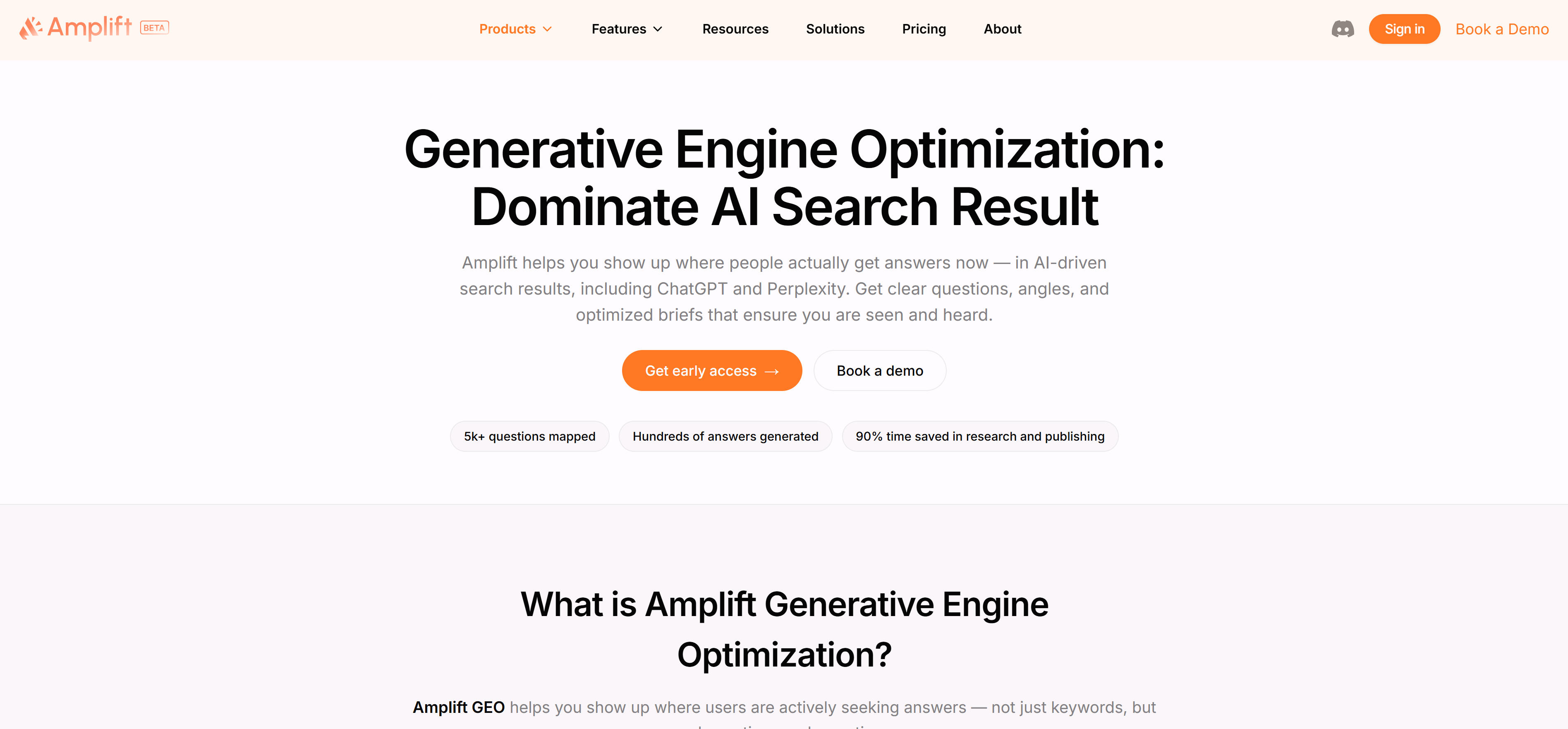
Amplift specializes in AI-powered content structure optimization for better AI comprehension. The platform analyzes content readability, structure, and semantic clarity to enhance how AI models understand and reference brand content. Amplift provides actionable recommendations for content restructuring, heading optimization, and semantic markup improvements. By making content more AI-friendly, Amplift helps brands increase citation rates in generative AI responses. The tool is ideal for content marketers and SEO specialists looking to optimize their content strategy for the AI era.
4. Daydream: AI Content Enhancement Platform
Daydream is an AI-powered content enhancement platform that optimizes existing content for better AI search visibility. The platform uses advanced NLP algorithms to analyze content quality, relevance, and AI-readability factors. Daydream provides comprehensive enhancement suggestions including keyword optimization, content structure improvements, and semantic enrichment. By making content more attractive to AI models, Daydream helps brands achieve higher citation frequencies and better contextual placement in AI-generated responses. Suitable for content creators and marketing teams aiming to maximize their content's AI search performance.
Best AI Search Performance Analysis Tools 2026
5. Writesonic: AI Content Optimization Suite
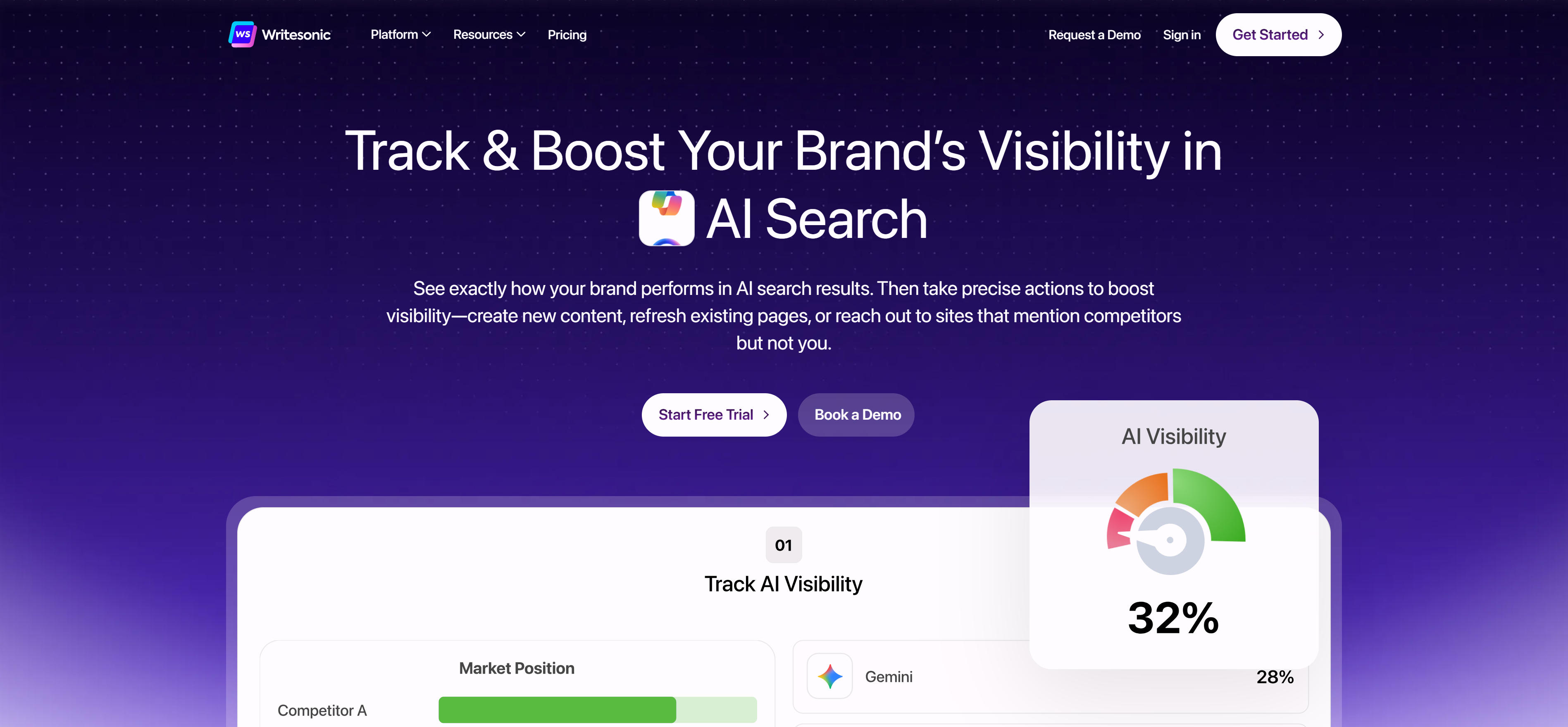
Writesonic offers a comprehensive AI content optimization suite combining traditional SEO with generative engine optimization. The platform provides real-time content analysis for both search engines and AI models, identifying optimization opportunities for improved visibility across platforms. Writesonic includes AI content generation, optimization suggestions, and performance tracking across multiple AI platforms. The tool helps content creators and marketers optimize their content strategy for maximum impact in both traditional and AI-driven search environments. With its integrated approach, Writesonic serves teams transitioning from traditional SEO to comprehensive AI-era content optimization.
6. Semrush: Comprehensive SEO & GEO Analytics
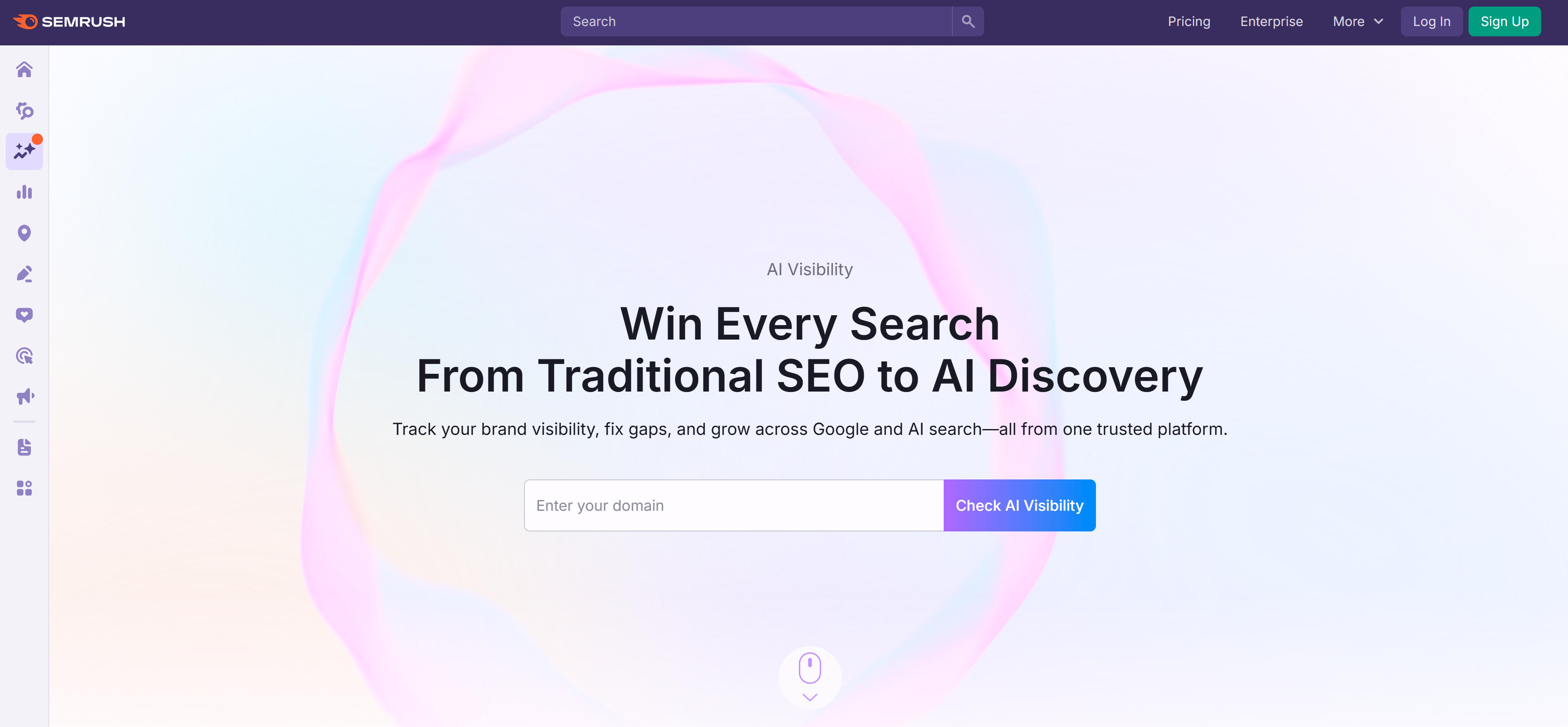
Semrush provides comprehensive SEO and GEO analytics, bridging traditional search optimization with AI-driven visibility analysis. The platform offers detailed insights into brand performance across AI platforms, combining keyword research, content optimization, and AI citation tracking. Semrush's GEO tools include AI visibility monitoring, content optimization recommendations, and competitive analysis for AI search performance. The platform serves enterprises undergoing digital transformation, providing unified analytics for both traditional and AI-powered search ecosystems. With its extensive feature set and reliable data, Semrush is the choice for organizations requiring comprehensive visibility into AI search performance.
Generative Engine Optimization Tools Comparison
Use Cases: 8 Practical Applications for GEO Tools
1. AI Visibility Monitoring & Brand Tracking
GEO tools continuously monitor brand mentions and citations across AI platforms, providing real-time visibility into how brands perform in AI-generated responses. Organizations can track citation frequency, context, and sentiment to understand their AI search presence and identify opportunities for improved brand visibility.
2. Content Optimization for AI Comprehension
Tools analyze and optimize content structure to improve AI model comprehension and citation likelihood. By enhancing content readability, semantic clarity, and structural organization, brands can increase their chances of being referenced in AI responses and improve overall content performance in AI search environments.
3. Competitive Analysis in AI Search
GEO platforms provide competitive intelligence by analyzing how competitors perform in AI search results. Organizations can benchmark their AI visibility against industry peers, identify competitive advantages, and develop strategies to improve their positioning in AI-generated content and responses.
4. Content Performance Tracking & Analytics
Advanced analytics tools track how content performs across different AI platforms, measuring engagement metrics, citation rates, and visibility improvements. This data-driven approach helps content teams optimize their strategies and focus efforts on high-impact content that resonates with AI search algorithms.
5. AI Search Optimization Strategy Development
GEO tools inform comprehensive AI search optimization strategies by identifying patterns in successful AI citations and content performance. Organizations can develop data-driven approaches to improve their AI search visibility and create content that aligns with AI comprehension preferences.
6. Brand Awareness in AI Ecosystems
Tools help build and maintain brand awareness within AI model knowledge bases by monitoring and optimizing brand mentions across AI conversations. This proactive approach ensures brands remain top-of-mind in AI-generated responses and maintain consistent brand presence in AI search environments.
7. AI-Native Content Strategy Planning
GEO insights inform content strategy development specifically tailored for AI consumption patterns. Organizations can create content that aligns with AI comprehension preferences, improving citation rates and ensuring their content performs well in AI-generated search results and responses.
8. ROI Measurement for AI Marketing Efforts
Comprehensive analytics platforms measure the return on investment for AI marketing and GEO optimization efforts. By tracking improvements in AI visibility, citation rates, and brand mentions, organizations can quantify the impact of their AI search optimization strategies and justify continued investment in GEO tools.
How to Choose Generative Engine Optimization Tools
1. Assess Current SEO Maturity Level
Evaluate existing SEO infrastructure and AI readiness before implementing GEO tools. Organizations with strong traditional SEO foundations can focus on advanced GEO capabilities, while those new to AI search should start with basic visibility monitoring and content optimization tools.
2. Define Clear GEO Objectives & KPIs
Establish specific goals for GEO implementation, including target AI visibility improvements, citation rate increases, and content performance metrics. Clear objectives ensure tool selection aligns with business outcomes and provides measurable ROI for GEO investments.
3. Evaluate Budget & Integration Requirements
Consider total cost of ownership including subscription fees, implementation costs, and training requirements. Ensure selected GEO tools integrate seamlessly with existing marketing technology stack and data platforms for unified analytics and workflow efficiency.
4. Review Data Privacy & Compliance Standards
Verify GEO tools comply with data protection regulations and privacy standards. Ensure transparent data handling practices and clear terms regarding AI model data usage, especially when monitoring brand mentions across multiple AI platforms and services.
5. Test Scalability & Ongoing Support
Assess tool scalability for growing content volumes and expanding AI platform coverage. Evaluate vendor support quality, documentation completeness, and community resources to ensure long-term success with GEO implementation and optimization.
Conclusion
Generative Engine Optimization represents the future of search engine optimization in the AI era. As AI assistants become primary search interfaces, brands must establish strong presence in AI model knowledge bases. GEO tools like Profound, Amplift, and Semrush provide essential capabilities for monitoring AI visibility, optimizing content for AI comprehension, and analyzing performance across AI platforms.
Success with GEO requires combining technical tools with strategic thinking. Organizations should start with comprehensive visibility monitoring, then focus on content optimization and performance analytics. As AI search continues evolving, GEO will become increasingly critical for maintaining competitive advantage in digital marketing.